When walking past a high-rise construction site, the intricate web of steel tubes and planks surrounding the building is often taken for granted. Yet, this temporary structure is the primary lifeline for workers and the essential framework for structural assembly.
Beyond simple platforms, modern temporary support systems have evolved into precision-engineered assemblies. The integration of adjustable components allows these structures to adapt to uneven terrain and varied ceiling heights, ensuring that safety is not compromised by site irregularities.
For those entering the construction sector or managing a project, understanding what is scaffolding involves looking past the poles and exploring the technical synergy between load-bearing stability and height flexibility.
At its core, scaffolding is a temporary structure used to support a work crew and materials to aid in the construction, maintenance, and repair of buildings, bridges, and all other man-made structures. While historically made of wood, the modern industry relies almost exclusively on high-strength steel and aluminum.
The fundamental goal is to create a safe, stable, and elevated workspace. This requires a balance between rigidity—to prevent swaying under load—and adaptability, allowing the system to be erected on uneven ground or around complex architectural curves.
A professional support system consists of several interconnected entities: standards (vertical tubes), ledgers (horizontal tubes), and transoms (cross-beams). These are secured by couplers and pins to ensure that the vertical load is transferred directly to the foundation. The strength of the system depends heavily on the quality of these connections, as any slippage can lead to structural instability.
Beyond the primary frame, accessories like Adjustable Jack Base U Heads and Scaffolding Couplers provide the necessary interface between the steel structure and the building. These components allow for precise leveling, ensuring that the working platform remains perfectly horizontal regardless of the slope of the base surface.
Load mechanics in these systems are primarily compressive. The vertical props must withstand the dead weight of the structure and the live weight of workers and equipment. This is why precision-threaded components, such as those found in steel props, are essential to prevent the inner tube from shifting under extreme pressure.
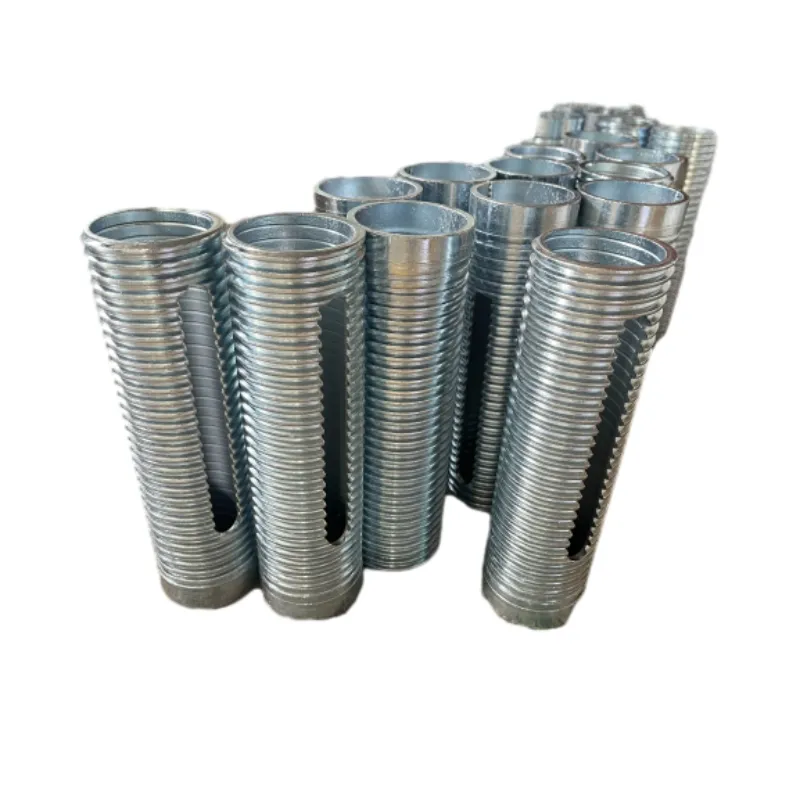
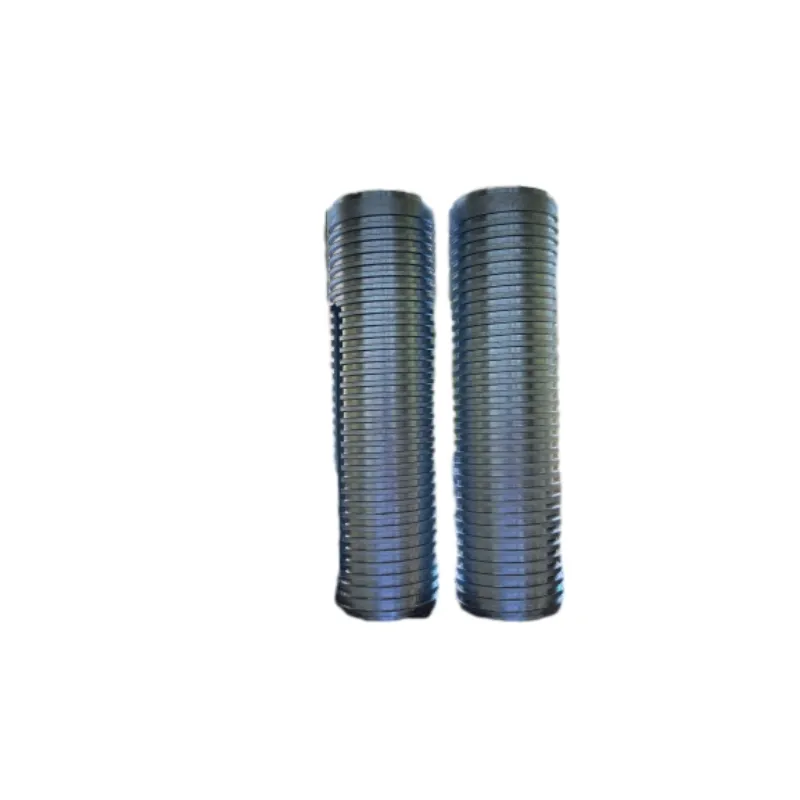
One of the most overlooked but vital elements in vertical support is the prop sleeve. These threaded couplings engage with the outer surface of the prop, enabling workers to extend or retract the inner tube with millimeter precision.
The integration of a high-quality prop sleeve transforms a fixed-length support into a versatile tool, allowing a single prop to be reused across various floor heights and structural alignments without the need for multiple customized sizes.
This adjustability is particularly crucial during concrete pouring. As fresh concrete exerts immense downward pressure on formwork, any slight misalignment can cause uneven curing or structural failure. Prop sleeves allow for micro-adjustments that ensure the formwork is perfectly aligned, distributing the load evenly across the entire support network.
Evaluating the effectiveness of a support system requires looking at several performance indices. Stability is not just about the thickness of the steel, but how the load is distributed. A well-engineered sleeve reduces stress concentration, which prevents the steel from buckling under heavy tonnage.
When comparing different manufacturing methods, such as Rolling Screw versus CNC Screw prop sleeves, the primary difference lies in wall thickness retention and thread precision. Rolling threads typically maintain the full wall thickness of the tube, offering higher maximum strength for high-pressure environments.
In a typical industrial setting, such as the construction of a multi-story bridge or a tunnel, the environment is rarely uniform. Uneven ground and varying elevation levels make rigid support systems impractical. Contractors rely on adjustable steel props and Ringlock scaffolding to create stable platforms at different levels quickly.
The ability to fine-tune height using prop sleeves allows for the rapid modification of the support structure without needing to disassemble the entire system. This operational efficiency significantly reduces labor hours and minimizes the risk of accidents associated with frequent dismantling and re-erection of supports.
The industry is shifting away from bespoke, site-welded supports toward highly modular systems. Components like the AL-Form Tie System and Scaffolding Cuplock allow for faster assembly and a more predictable safety profile. These modular elements are designed to interlock with minimal tolerance, reducing the reliance on manual measurement.
Material selection has also evolved. While high-strength steel remains the standard for heavy-duty shoring, the use of galvanized coatings and precision machining for parts like the Formwork Wing Nut has extended the lifespan of the equipment. Reusability is now a key economic driver, as durable components can be deployed across dozens of projects.
Future developments are likely to focus on "smart" support systems that can monitor load distribution in real-time. However, the physical foundation—the precision of the threaded sleeve and the integrity of the steel tube—will remain the primary determinant of site safety.
When selecting a support system, buyers must weigh the trade-offs between initial cost, adjustability, and load capacity. A cheaper, fixed-length prop may seem attractive but often leads to higher costs in the long run due to the need for multiple sizes and increased labor for installation.
A professional evaluation framework should consider the precision of the threading, the material grade of the steel pipes, and the ease of the locking mechanism. For instance, using prop sleeves produced via rolling rather than CNC can provide a higher safety margin in heavy-load scenarios.
Ultimately, the goal is to achieve the highest possible "stability-to-effort" ratio. Systems that offer integrated adjustability, such as those provided by WRK, enable contractors to adapt to non-standard project specifications without purchasing additional customized equipment.
| Selection Factor | Fixed Support | Standard Adjustable | Precision Modular |
|---|---|---|---|
| Height Versatility | Very Low | High | Excellent |
| Installation Speed | Medium | High | Very High |
| Load Distribution | Direct/Rigid | Adjustable | Optimized |
| Material Waste | High (Multiple Sizes) | Low | Very Low |
| Safety Risk (Slip) | Low | Medium | Very Low |
| Long-term Value | Low | High | Excellent |
In modern construction, scaffolding is a complex, temporary structural system—typically made of steel or aluminum—that provides safe, elevated access for workers and supports materials. Unlike simple ladders, it creates a comprehensive working platform that can be scaled to the height of the building and designed to support significant weights, including heavy machinery and building materials.
Prop sleeves provide a robust, threaded locking mechanism that secures the inner tube of a steel prop at a specific height. This prevents the prop from collapsing or shifting under the massive vertical pressure of freshly poured concrete or structural elements. By ensuring a secure grip and evenly distributing the load, they eliminate the risks associated with unstable, fixed-length supports.
Rolling screw sleeves are created by pressing the thread into the metal, which retains the original wall thickness of the steel pipe and maximizes structural strength. CNC screw sleeves are machined by cutting away material to create the thread, which can offer higher precision but may slightly reduce the wall thickness. Rolling is generally preferred for heavy-duty load-bearing applications.
Yes, provided the prop is equipped with a high-quality adjustable sleeve. These sleeves allow for fine-tuning within a specific range, meaning the same equipment can be used for a 2.5-meter ceiling in one room and a 3.2-meter ceiling in another. This versatility reduces the need for contractors to purchase and transport multiple prop sizes.
Buyers should evaluate the material grade (e.g., galvanized steel), the precision of the threading to avoid jamming, and the load-bearing certification. It is also important to ensure compatibility between components, such as ensuring that the prop nuts match the screw steps of the outer tubes to maintain a secure lock under pressure.
Modular systems, like Ringlock or Cuplock, offer significantly faster assembly times and higher consistency in safety. Because they use pre-engineered connection points, there is less room for human error compared to manually clamping tubes. This results in increased labor efficiency and a more predictable structural response to loads.
Understanding the technical nuances of temporary supports—from the basic definition of scaffolding to the precision of a prop sleeve—is essential for ensuring site safety and operational efficiency. The shift toward adjustable, modular systems reflects a broader industry trend toward precision and reusability.
By investing in high-strength, precision-engineered components, construction firms can reduce their logistical complexity while significantly enhancing the stability of their structures. In an environment where millimeter-level accuracy can prevent catastrophic failure, the quality of the support system is the most critical variable on site.