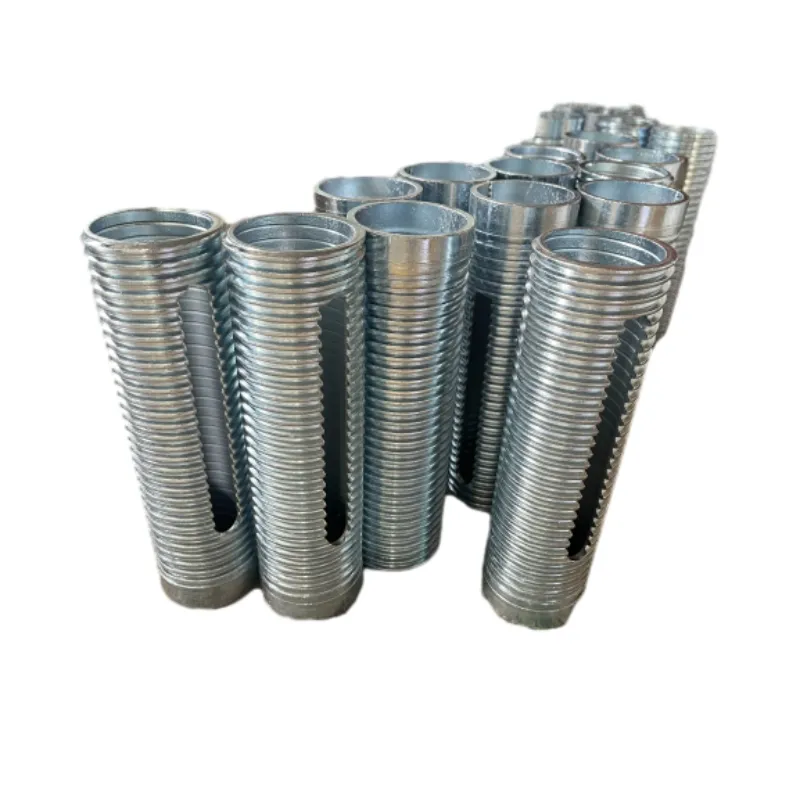
When users search for how to make scaffolding in minecraft, they are often looking for a digital shortcut to build height and accessibility within a virtual sandbox. However, in the physical world of structural engineering and metal fabrication, scaffolding is a matter of life safety, load-bearing calculations, and precision manufacturing.
The transition from virtual construction to industrial reality reveals a massive gap in complexity. While a game simplifies support structures to a few blocks, real-world scaffolding requires high-grade ductile iron, galvanized steel, and specialized accessories to withstand the immense pressure of fresh concrete and the weight of personnel.
Understanding the engineering behind these systems provides a deeper appreciation for the components that keep modern skylines stable. By analyzing the materials and mechanisms used in professional formwork, we can bridge the gap between conceptual building and industrial execution.
Historically, scaffolding was a rudimentary arrangement of timber and rope. As the industrial revolution pushed cities upward, the need for metallic structural supports became paramount. The shift to steel and ductile iron allowed for predictable load-bearing capacities and standardized components.
Today, the industry has moved toward modular systems. Instead of custom-building every support, engineers use prefabricated ringlock scaffolding, steel props, and adjustable jack bases. This modularity mirrors the logic of "how to make scaffolding in minecraft" but adds the critical layer of material science to prevent catastrophic failure.
Industrial scaffolding relies on the principle of triangulation and vertical load transfer. Every component, from the Scaffolding Coupler to the Ringlock system, is designed to distribute force evenly. The primary goal is to ensure that the lateral pressure—especially during concrete pouring in formwork systems—does not lead to panel misalignment or structural collapse.
Material selection is the first line of defense. For components like combin nuts, ductile cast iron (such as JIS FCD450) is preferred over standard gray iron due to its higher tensile strength and elasticity. This prevents the hardware from cracking under the cyclic loading and unloading typical of construction sites.
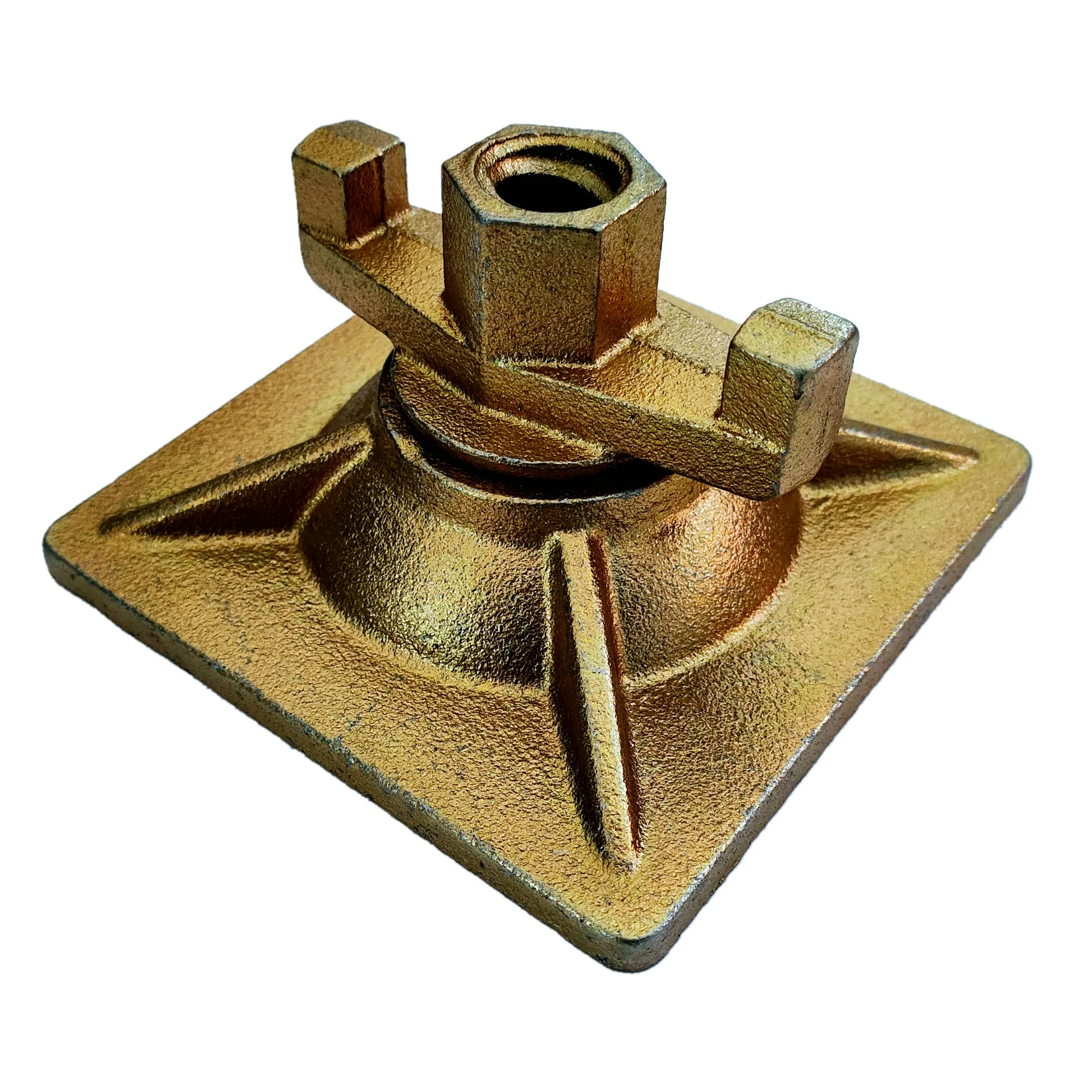
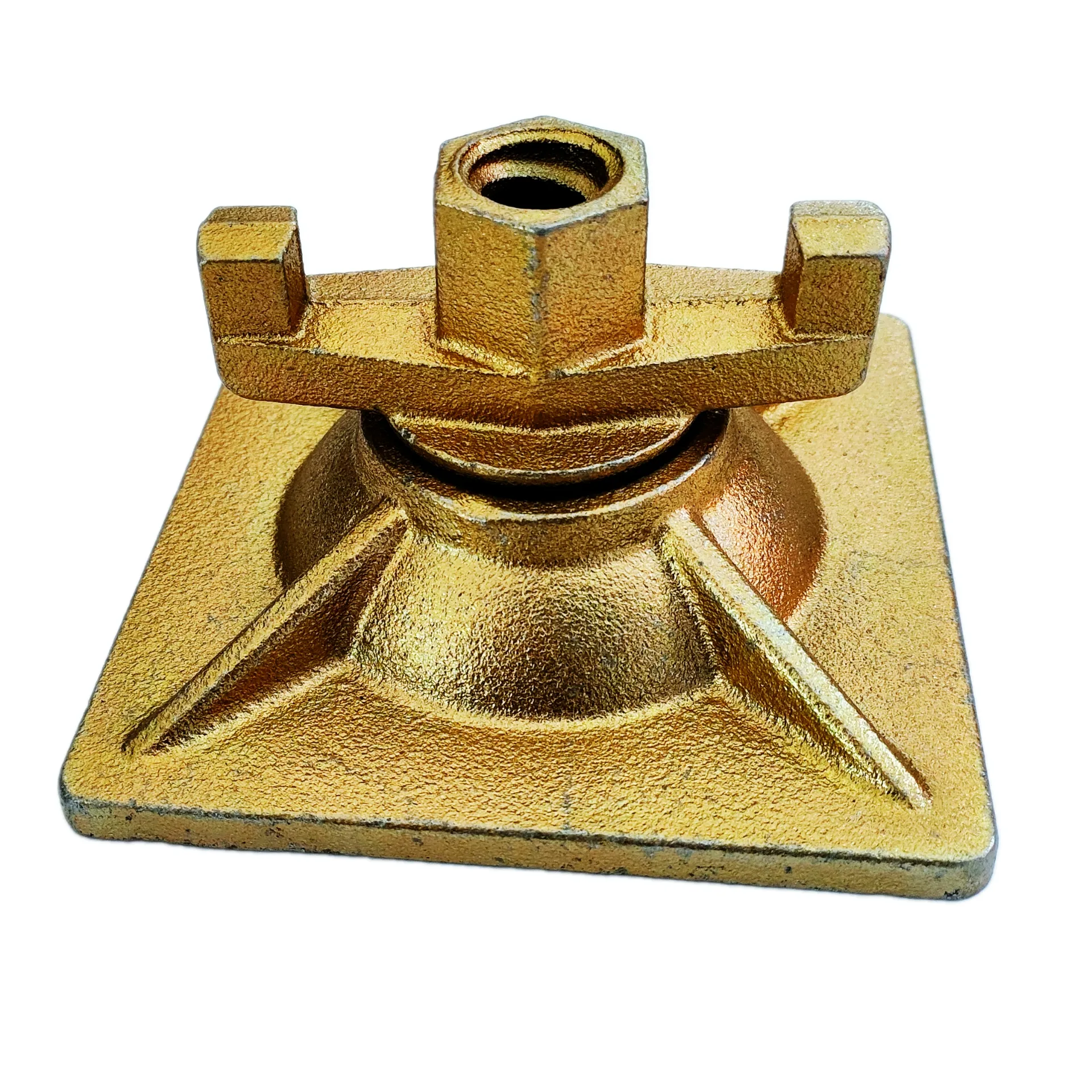
Beyond the main frames, the "small" parts dictate the efficiency of the site. Accessories such as wingnut pivot plates and formwork tie rods create a cohesive network. When these components are properly integrated, they allow for the rapid assembly and disassembly of complex structures without sacrificing the structural integrity of the cast concrete.
In any scaffolding or formwork system, the connection point is the most vulnerable area. A single failed bolt or a stripped thread can compromise an entire section of a high-rise project. This is why the manufacturing process for hardware, including thread rolling and in-ladle treatment for nodulizing ductile iron, is so strictly controlled.
The efficacy of a formwork system depends less on the strength of the panels and more on the security of the connection between the panels and the tie rods, making the combin nut a critical fail-safe component.
Modern innovations have introduced the wingnut pivot plate, which solves a common productivity bottleneck. By allowing manual tightening and loosening without external tools, it reduces labor time significantly. This ergonomic shift ensures that alignment can be fine-tuned in real-time, which is essential for maintaining the exact dimensions of a structural wall.
Stability in scaffolding is not just about the weight it can hold, but how it handles dynamic forces. When concrete is poured, it exerts immense lateral pressure. High-quality tie systems and combin nuts must withstand loads often exceeding 180KN to ensure the formwork remains rigid.
The following index illustrates the relative importance of different technical factors in ensuring the stability of a professional scaffolding system compared to a conceptual model.
In a typical high-rise construction setting, the integration of Ringlock scaffolding and adjustable props creates a versatile platform. For example, when building a core wall, the formwork tie rod system—supported by combin nuts—prevents the panels from bowing outward under the weight of wet concrete. This precision is what differentiates a professional site from a simple temporary structure.
Furthermore, in outdoor projects subject to high humidity or salt spray, the use of yellow or silver galvanized coatings becomes a primary requirement. Without these corrosion-resistant layers, the structural integrity of the fasteners would degrade rapidly, increasing the risk of on-site accidents and reducing the reusability of the hardware.
The industry is moving toward "Smart Scaffolding," where sensors are integrated into the support props to monitor real-time load stress. This data-driven approach allows project managers to identify potential failure points before they become hazardous, moving the industry from reactive maintenance to predictive safety.
There is also a significant push toward higher-grade sustainable materials. While ductile iron remains the standard for strength, new alloys are being tested to reduce the total weight of the scaffolding system without compromising the 180KN+ loading capacity. This reduces transport costs and improves worker safety during assembly.
Lastly, the trend of OEM customization is growing. As architectural designs become more complex, the demand for bespoke stamped hardwares and customized casting parts increases. The ability to produce specific designs based on customer requirements is becoming a key competitive advantage for manufacturers in the metal structural sector.
Selecting the right hardware involves a trade-off between installation speed, initial cost, and long-term durability. A traditional pivot plate may be cheaper upfront but increases labor costs due to the need for specialized tools. In contrast, a wingnut pivot plate optimizes the workflow, making it more cost-effective for large-scale, high-frequency projects.
When evaluating suppliers, the focus should be on ISO 9001 certification and the specific grade of iron used. Ductile iron JIS FCD450/500 ensures that the components can handle the necessary tension and compression cycles without deformation.
The following table provides a comparative framework for choosing between different fastener types based on project requirements.
| Component Type | Primary Advantage | Installation Effort | Relative Durability |
|---|---|---|---|
| Traditional Pivot Plate | Low Material Cost | High (Tools Req.) | Moderate |
| Wingnut Pivot Plate | Rapid Adjustment | Low (Manual) | High |
| Standard Hex Nut | High Torque Security | Moderate | High |
| Combin Nut (Ductile) | Load Distribution | Moderate | Very High |
| Rapid Clamp | Fast Locking | Very Low | Moderate |
| Adjustable Jack Base | Leveling Precision | Moderate | High |
Ductile iron, such as JIS FCD450, contains spheroidal graphite, which gives it significantly higher tensile strength and ductility compared to gray iron. In scaffolding and formwork, this prevents hardware like combin nuts from cracking under sudden impact or extreme pressure, making it safer for high-load construction environments.
The wingnut design allows workers to tighten and loosen the plate manually without using wrenches or other tools. This drastically reduces the time spent on adjusting panel alignment and height, which is particularly beneficial in high-rise projects where frequent adjustments are necessary for precise concrete pouring.
Combin nuts provide the secure connection between formwork panels and tie rods. They ensure that the panels can withstand the massive lateral pressure of fresh concrete, maintaining the intended shape and structure of the wall until the concrete has fully cured and can support itself.
Prioritize suppliers who hold ISO 9001 certification, as this guarantees a standardized quality control process. Additionally, verify the material specifications (e.g., JIS FCD450 for ductile iron) and ensure they offer galvanized coatings to prevent corrosion in outdoor environments.
Yes, because modular steel systems are engineered with precise load-bearing calculations and standardized parts. Unlike timber, which can vary in strength and decay over time, steel and ductile iron components provide consistent performance and can be rigorously tested for safety limits.
High-quality components made from high-strength steel and ductile iron with corrosion-resistant coatings are designed for multiple reuses. By maintaining the hardware and checking for thread wear or structural deformation, contractors can significantly reduce long-term material costs.
While the concept of "how to make scaffolding in minecraft" is a simple exercise in digital block placement, real-world structural support is an intricate balance of material science, mechanical engineering, and strict safety protocols. The transition from a conceptual build to a physical skyscraper requires an uncompromising commitment to hardware quality and precision.
Investing in high-grade ductile iron fasteners and ergonomic accessories like wingnut pivot plates not only ensures the stability of the build but also optimizes labor productivity. As the industry moves toward smarter and more sustainable fabrication, the fundamental reliance on secure, high-strength connections remains the cornerstone of all modern construction.