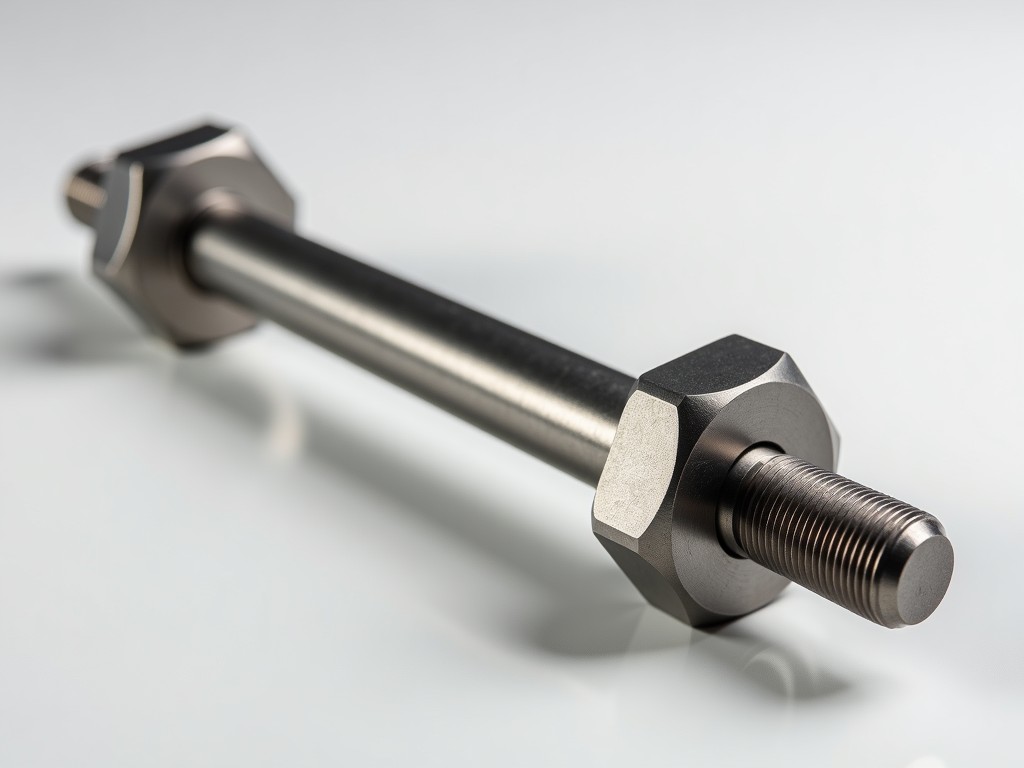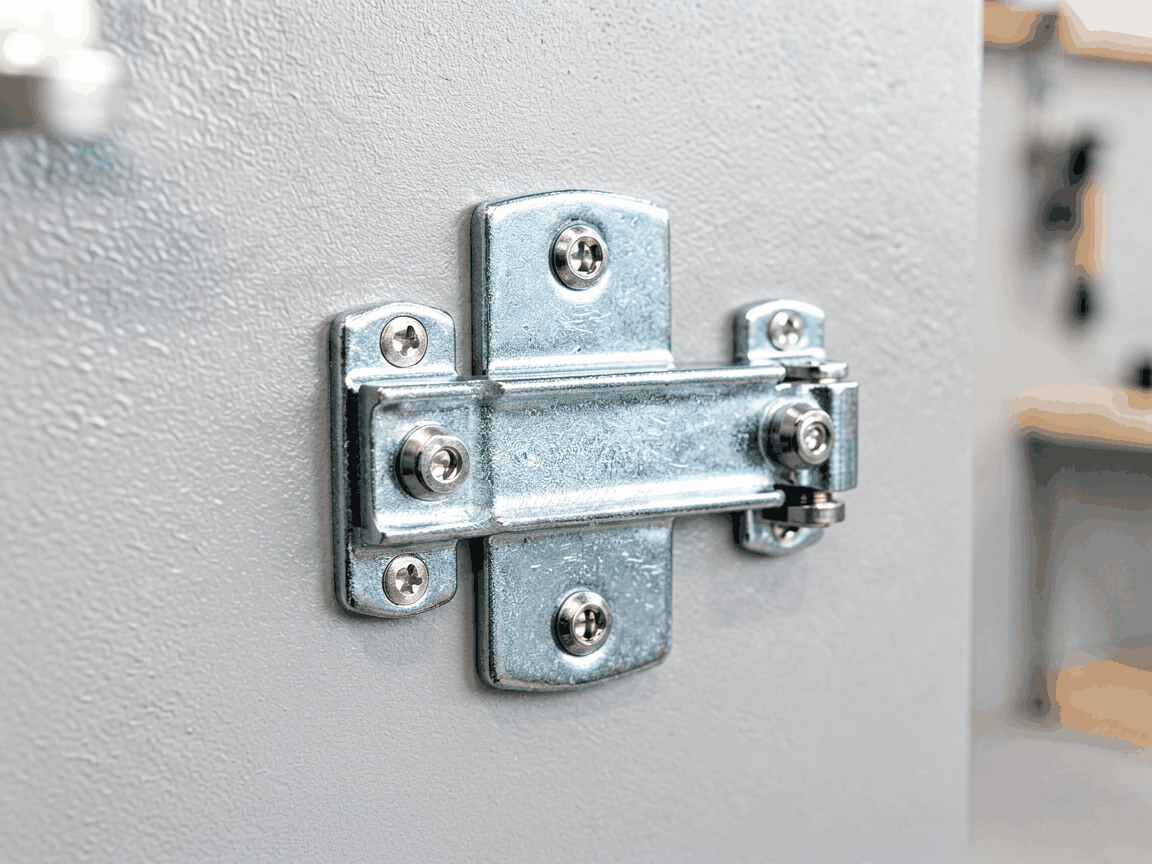
Toggle bolts are mechanical fasteners designed to secure fixtures to hollow-core doors and similar panel constructions where traditional screws lack sufficient holding strength. They consist of a threaded bolt and a spring-loaded wing mechanism that collapses during insertion and expands behind the door surface to distribute load across a larger area. This design allows them to support significant shear and tensile loads in materials with limited substrate thickness, such as 1-3/8-inch hollow-core wood doors or metal-faced composite panels.
The holding capacity of a toggle bolt depends primarily on the wing span, bolt diameter, and the compressive strength of the surrounding door material. Typical ultimate tensile loads range from 50 to 150 pounds for standard 1/8-inch and 3/16-inch diameter toggles in hollow wood doors, though actual working loads should be limited to 25% of these values for safety. Factors such as door skin thickness, core density, and installation precision significantly influence real-world performance.
The wing mechanism is typically formed from cold-rolled steel, stamped into a symmetrical butterfly shape with tapered edges to reduce insertion resistance. Wings open to a span of approximately 1 to 1-1/2 inches behind the door surface, creating a bearing area that resists pull-through. The bolt shaft is threaded along its length to accommodate varying door thicknesses and fixture depths, with common thread sizes including 6-32, 8-32, and 10-24 UNC.
Installation requires a pre-drilled hole sized to accommodate the collapsed wings—usually 1/2 inch for 1/8-inch toggles and 5/8 inch for 3/16-inch sizes. The bolt is inserted through the fixture and door, then pulled outward to engage the wings against the inner door surface. Torque is applied to the bolt head to clamp the fixture securely, with recommended installation torque values ranging from 5 to 15 inch-pounds depending on bolt size and material.
Standard toggle bolts are manufactured from low-carbon steel (C1010 or equivalent) with a zinc electroplated finish to resist indoor humidity and incidental moisture. This coating typically provides 8 to 12 hours of salt spray resistance per ASTM B117, suitable for interior door applications in commercial and residential environments. For higher-moisture areas such as bathrooms or exterior-facing doors, stainless steel (AISI 304) variants are available, offering superior corrosion resistance with no protective coating required.
Alternative finishes include yellow zinc chromate for enhanced indoor durability and nickel plating for decorative applications where fastener heads are exposed. Material selection should align with the door’s environmental exposure, expected service life, and any regulatory requirements for fire-rated or smoke-sealed assemblies. Custom material grades or coatings can be quoted based on project-specific corrosion exposure data.
Toggle bolts are commonly used to mount door-mounted accessories such as overhead stops, surface-mounted closers, kick plates, and decorative trim on hollow-metal or hollow-core wood doors. They are particularly valuable in retrofit scenarios where reinforcing the door from behind is impractical or where welding or through-bolting would compromise door integrity or fire ratings. Their ability to anchor without accessing the door cavity makes them ideal for finished installations.
In commercial buildings, they facilitate the installation of access control hardware, signage, and protective edge guards on doors where substrate thickness is insufficient for direct screw fastening. Unlike adhesive-backed solutions, toggle bolts provide mechanical longevity and resist creep under sustained load. They are also used in temporary installations such as trade show displays or modular partitions where reusability and clean removal are desired.
| Bolt Size | Wing Span (Open) | Typical Hole Size | Recommended Working Load (lbs) |
|---|---|---|---|
| 6-32 | 1.0 in | 1/2 in | 12 |
| 8-32 | 1.1 in | 1/2 in | 18 |
| 10-24 | 1.3 in | 5/8 in | 25 |
| 1/4-20 | 1.5 in | 3/4 in | 35 |
Working load values in the table assume installation in 1-3/8-inch hollow-core wood doors with a minimum face skin thickness of 1/16 inch. Actual capacity varies with door construction, core material (e.g., honeycomb, stave, or solid chipboard), and installation accuracy. For metal-faced or fire-rated doors, consult the door manufacturer’s fastening guidelines, as some assemblies prohibit certain anchor types that may compromise performance ratings.
Proper hole sizing is critical: undersized holes prevent wing expansion, while oversized holes reduce bearing surface and increase pull-out risk. A sharp brad-point or Forstner bit is recommended for clean entry in wood-faced doors to minimize tear-out. The bolt should be tightened until the fixture is snug against the door surface—over-torquing can strip threads or deform the wing mechanism, particularly in softer core materials.
Reuse of toggle bolts is not recommended after initial installation, as the wings may deform during removal and fail to expand reliably in subsequent use. For applications requiring future disassembly, consider using a machine screw with a separate wing nut or a purpose-designed removable anchor. Always verify that the selected toggle bolt length allows full thread engagement behind the door while accommodating the fixture thickness and any washers or spacers.
Manufacturing consistency ensures that wing symmetry, spring tension, and thread dimensions remain within tight tolerances to guarantee repeatable performance. Wings are inspected for uniform opening angle and absence of burrs that could impede expansion. Threads are gauged to prevent galling during installation, and finishes are tested for adhesion and coating thickness to meet specified corrosion resistance standards.
Each batch undergoes dimensional verification and functional testing to confirm that wings deploy correctly and maintain position under load. While toggle bolts are not typically assigned formal load ratings like structural fasteners, producers apply statistical process control to monitor key characteristics such as insertion force, wing span, and removal torque. Documentation of material origin and process controls is available upon request for OEM and specification-driven projects.