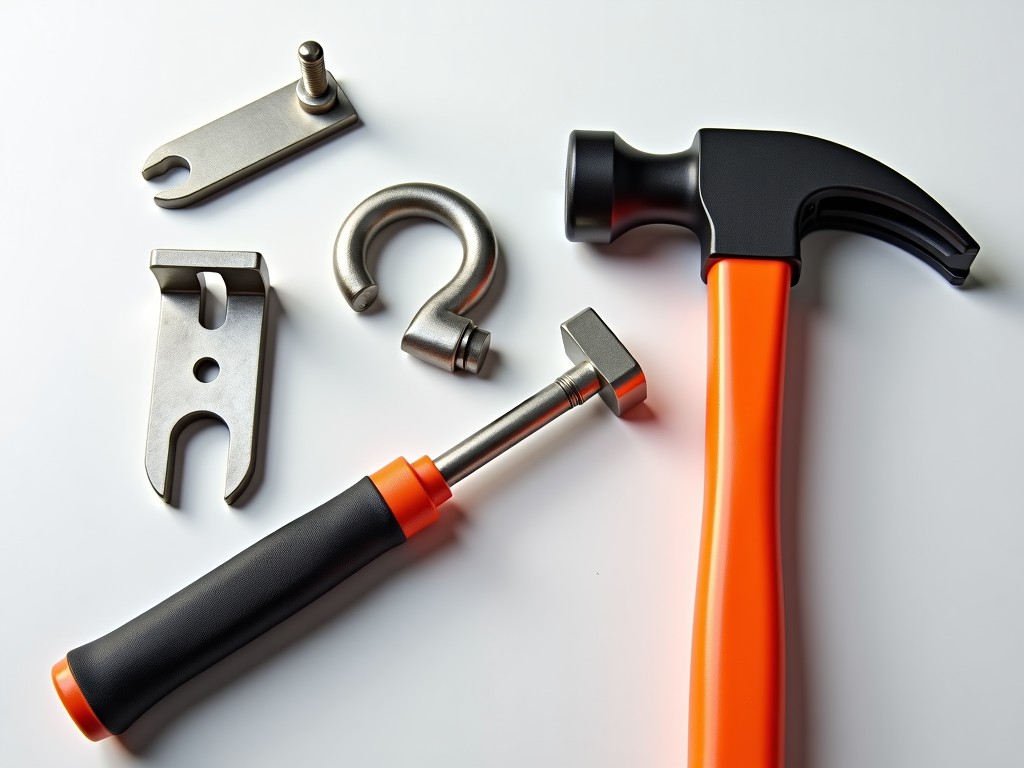
System scaffold hammer tools are specialized impact devices designed for the efficient assembly and disassembly of modular scaffolding systems. Unlike general-purpose hammers, they are engineered to interface precisely with scaffold couplers, pins, and locking mechanisms, reducing the risk of component damage during installation. Their design prioritizes force transmission efficiency, ergonomic handling, and durability under repetitive use in demanding construction environments.
The effectiveness of a system scaffold hammer depends on its mass distribution, striking face geometry, and handle vibration damping. Optimal models feature a forged steel head with a controlled hardness range (typically 45-55 HRC) to balance impact resistance with surface protection on galvanized or painted scaffold components. The striking face is often slightly crowned or textured to prevent slippage on coupler pins, while the handle incorporates damping materials or geometric tapering to minimize operator fatigue during prolonged use.
Weight classification is critical: hammers under 800g may lack sufficient momentum for tight couplers, while those exceeding 1,200g increase user strain without proportional gains in driving efficiency. Most industrial applications favor heads between 900g and 1,100g, paired with handles measuring 300-350mm in length for optimal leverage and control in confined scaffold bays.
Head material is typically selected from medium-carbon steels such as C45 or equivalent, chosen for their hardenability and toughness after forging and heat treatment. The forging process aligns grain flow with impact stress directions, enhancing fatigue resistance compared to machined or cast alternatives. Surface treatments may include phosphate coating for corrosion resistance during storage, though painted finishes are common for visual identification and additional protection against site-borne moisture.
Handles are frequently constructed from fiberglass-reinforced polymer or premium-grade hickory, selected for their vibration-dampening properties and resistance to splitting. Fiberglass handles offer consistent performance across temperature variations and are non-conductive, while hickory provides a traditional feel with high tensile strength along the grain. Connection between head and handle relies on epoxy bonding combined with mechanical wedging or steel retaining rings to prevent separation under impact loads.
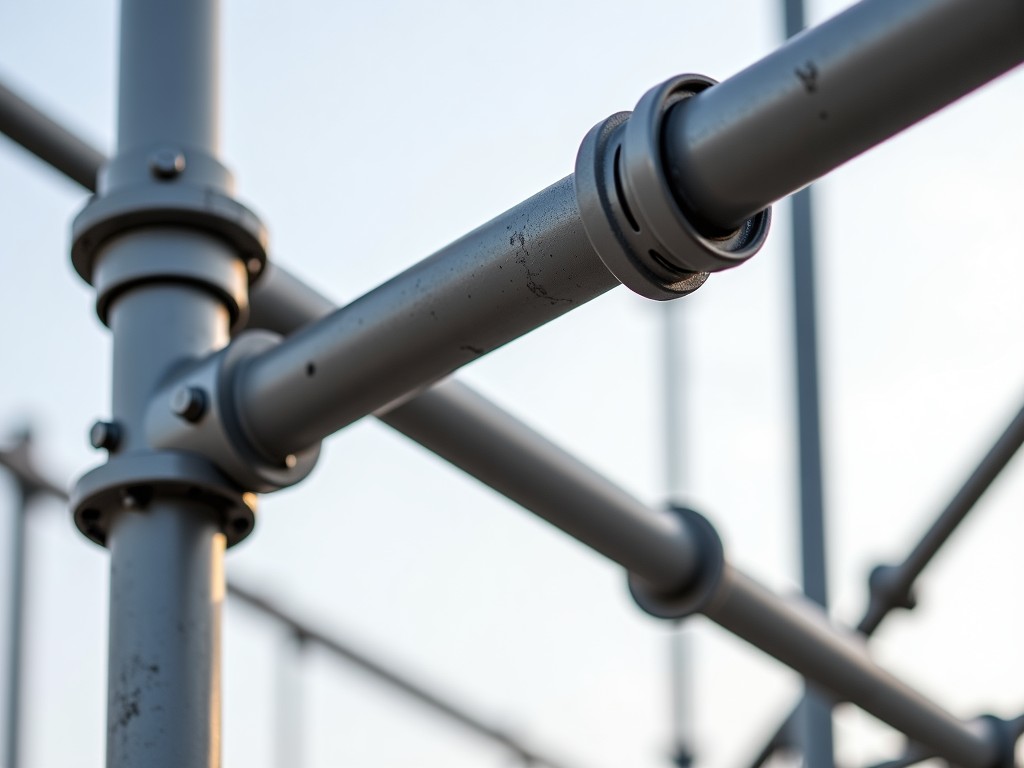
System scaffold hammers are optimized for interaction with specific coupler types, such as wedge-lock, pin-and-clip, or threaded collar systems common in ringlock, cuplock, or frame scaffolding. The striking face diameter and profile are matched to the target fastener geometry to maximize contact area and minimize edge loading that could deform couplers. Some models incorporate a tapered or chisel-shaped secondary face for accessing recessed pins or adjusting alignment without switching tools.
In high-volume applications, such as facade maintenance or industrial plant turnarounds, hammers may feature replaceable striking faces made of polymer or bronze to extend service life when working on softer alloy components. Magnetic variants exist for retrieving dropped pins in confined spaces, though these are less common due to potential interference with ferromagnetic scaffold components.
Reliability in scaffold hammer performance stems from strict control over heat treatment cycles, ensuring uniform hardness throughout the head volume to prevent brittle fracture or excessive deformation. Dimensional inspection focuses on handle alignment, face flatness, and overall weight tolerance—typically held within ±2% of target mass to maintain predictable swing dynamics. Batch testing may include impact endurance cycles against standardized coupler simulators to validate resistance to mushrooming or cracking.
Traceability is maintained through lot markings on the handle or head, enabling correlation of performance data to specific production runs. Suppliers often provide material certification upon request, particularly for projects requiring adherence to regional construction safety standards or contractor-specific quality programs.
| Feature | Standard Steel Handle | Fiberglass Handle | Replaceable Face Model |
|---|---|---|---|
| Handle Material | Hickory or ash | Fiberglass-reinforced polymer | Fiberglass or steel |
| Vibration Dampening | Moderate | High | High |
| Face Longevity | Fixed; wears with use | Fixed; wears with use | Extendable via swap |
| Typical Weight Range | 900–1,100g | 900–1,100g | 950–1,150g |
| Electrical Conductivity | Low (wood) | None | None (if fiberglass) |
When specifying system scaffold hammers, buyers should define the target scaffold system type, expected usage frequency, and environmental conditions (e.g., marine exposure, temperature extremes). Requesting samples for field trial allows evaluation of handle comfort, balance, and effectiveness on actual components before volume commitment. Documentation requirements may include material test certificates, heat treatment records, and conformance to relevant tool safety standards such as those referenced in ISO 11148-8 or regional equivalents.
Order volumes influence pricing and lead times; standard configurations often ship from stock, while customized handles, face materials, or branding require 4–6 weeks for production. Packaging is typically individualized in cardboard sleeves or bulk-packed in corrugated cases with internal dividers to prevent face damage during transit.