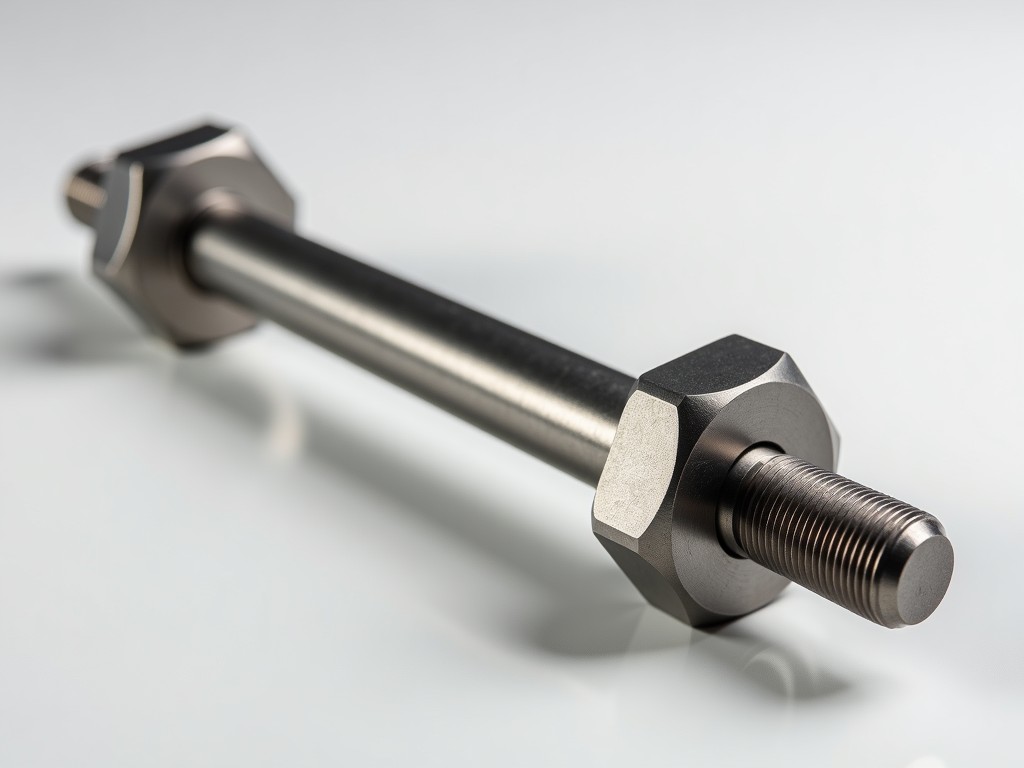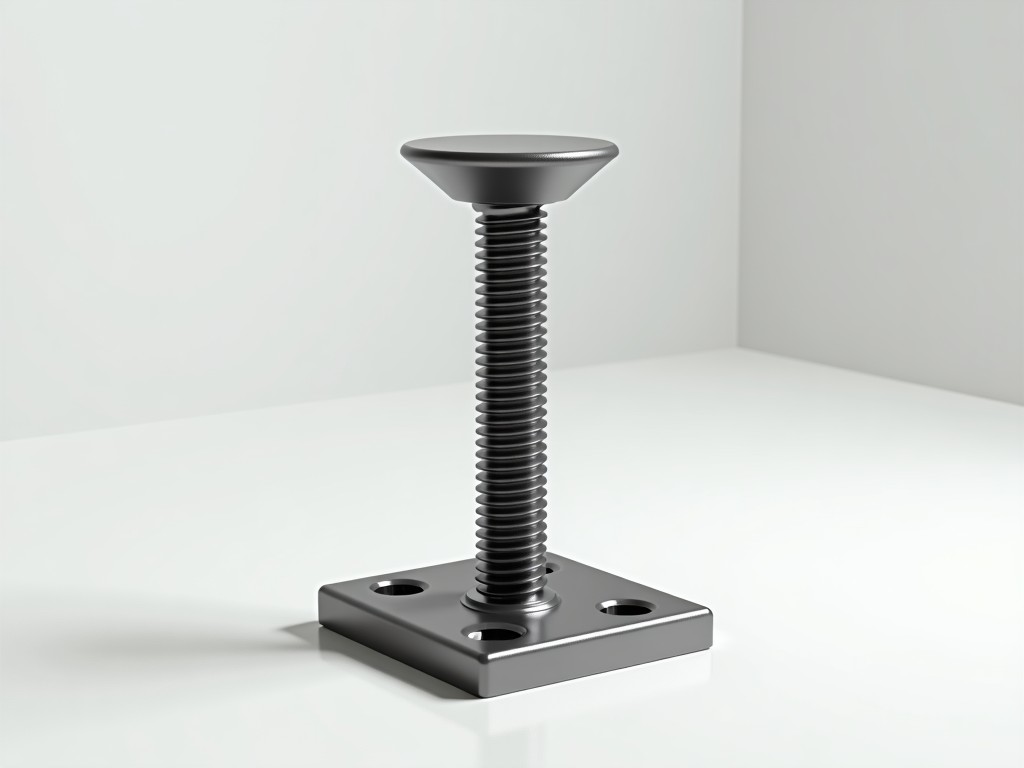
Swivel head screw jacks combine linear lifting capability with angular adjustment, enabling precise positioning in applications where load alignment must adapt to changing geometry or misaligned mounting surfaces. Unlike fixed-orientation jacks, the swivel head accommodates up to ±5° of angular deviation while maintaining full load capacity, reducing the need for precision machining of mating components.
This guide outlines the technical parameters, material considerations, and application-specific selection criteria that procurement engineers should evaluate when specifying swivel head screw jacks for industrial use. Understanding these factors ensures compatibility with dynamic load paths, minimizes installation complexity, and supports long-term reliability under cyclic operation.
The swivel head mechanism typically employs a spherical bearing or tapered roller interface between the lifting screw and the mounting flange, allowing rotational freedom while transmitting axial and radial loads. This design isolates the screw from bending moments caused by angular misalignment, preserving screw integrity and thread life.
Key load paths include: axial force along the screw axis, radial load from off-center loading, and moment load generated by the swivel angle under load. The head assembly must resist these combined stresses without yielding or excessive deformation. Manufacturers specify maximum allowable moment (Nm) based on head diameter, bearing type, and material strength.
Backlash in the swivel joint is minimized through preloaded bearings or interference fits, typically maintaining angular repeatability within 0.1° under load. This precision is critical in applications such as optical table alignment or robotic welding fixtures where positional stability directly affects process quality.
Load-bearing components—including the screw, nut, and swivel head housing—are commonly manufactured from alloy steels such as 4140 or 4340, heat-treated to HRC 28–32 for optimal strength-to-toughness balance. Stainless steel variants (e.g., 17-4 PH or 316L) are specified for corrosive environments, though they exhibit lower tensile strength and require larger cross-sections to achieve equivalent load ratings.
Bearing surfaces within the swivel joint often use bronze or polymer liners (e.g., PTFE-filled nylon) to reduce friction and prevent galling under oscillatory motion. In high-temperature applications (>150°C), molybdenum disulfide coatings or ceramic hybrids may replace conventional lubricants to maintain performance.
For washdown or sanitary industries, electropolished stainless steel heads with sealed joints and IP66-rated protection prevent contaminant ingress. Suppliers should provide material test reports (MTRs) and surface finish documentation (Ra ≤ 0.8 µm) upon request for regulated sectors such as food processing or pharmaceutical manufacturing.
Swivel head screw jacks are rated for static and dynamic load capacities, with dynamic ratings typically 60–70% of static values due to fatigue considerations under cyclic operation. The swivel mechanism introduces additional stress concentrations, so dynamic ratings are often derated further—by 10–20%—compared to fixed-head equivalents of the same screw size.
Critical speed limits apply to the rotating screw, especially in tall configurations where slenderness ratio (L/r) increases vibration risk. Manufacturers provide critical speed charts based on screw diameter, lead, and end support conditions. Operating below 80% of critical speed is standard practice to avoid resonance.
Efficiency ranges from 20–40% for acme screws and 60–85% for ball screws, directly affecting motor torque requirements and self-locking capability. Ball screw variants with swivel heads are preferred in high-duty-cycle applications despite higher initial cost, as they reduce energy consumption and heat generation over time.
| Parameter | Acme Screw Swivel Jack | Ball Screw Swivel Jack |
|---|---|---|
| Typical Efficiency | 25–35% | 70–85% |
| Self-Locking | Yes (static) | No (requires brake) |
| Max Dynamic Load (kN) | Up to 200 | Up to 350 |
| Maintenance Interval | Every 500 hrs (lubrication) | Every 2000 hrs (grease) |
| Initial Cost | Lower | Higher |
| Best For | Low-duty, positional holding | High-cycle, precision positioning |
In automotive assembly lines, swivel head screw jacks support body-in-white fixtures where panel alignment must compensate for fixture wear or thermal expansion. The angular adjustment allows real-time correction without reprogramming robotic weld cells, reducing downtime during changeovers.
For aerospace tooling, such as wing jig alignment, the swivel head enables non-contact load transfer between segmented tooling plates. Here, manufacturers specify low-friction coatings and vacuum-compatible lubricants to prevent outgassing in cleanroom environments.
In renewable energy—specifically solar tracker foundations—swivel jacks adjust mirror or panel tilt angles while resisting wind-induced overturning moments. Corrosion-resistant materials and sealed joints are essential for 25-year outdoor service life, with suppliers often providing salt spray test data (ASTM B117) upon request.
Beyond standard catalog offerings, suppliers commonly offer modifications such as:
When requesting quotations, engineers should provide: required load (static/dynamic), travel length, operating speed, duty cycle (cycles/hour), ambient temperature, exposure to contaminants, and preferred motor type. Suppliers use this data to calculate buckling resistance, thermal rise, and lubrication intervals accurately.
Reputable suppliers maintain full traceability from raw material lot to final inspection, documenting heat treatment logs, hardness tests, and dimensional reports for critical dimensions (e.g., screw pitch diameter, head concentricity). Each unit receives a unique serial number linked to a digital build record.
Functional testing includes: load-to-capacity verification (typically 110% of rated load for 5 minutes), swivel angle validation under load, and backlash measurement using dial indicators or laser interferometry. For high-precision applications, suppliers may offer optional calibration certificates traceable to NIST or equivalent standards.
Packaging for industrial shipment involves vibration-dampened crates with desiccant packs and humidity indicators. Export packaging complies with ISPM 15 for wood pallets and includes corrosion inhibitors (VCI) for sea freight. Customers should confirm packaging specifications early to avoid delays or damage during transit.
For technical consultation, customization requests, or quotation on swivel head screw jacks tailored to your application’s load path, environmental conditions, and integration requirements, contact our engineering team.