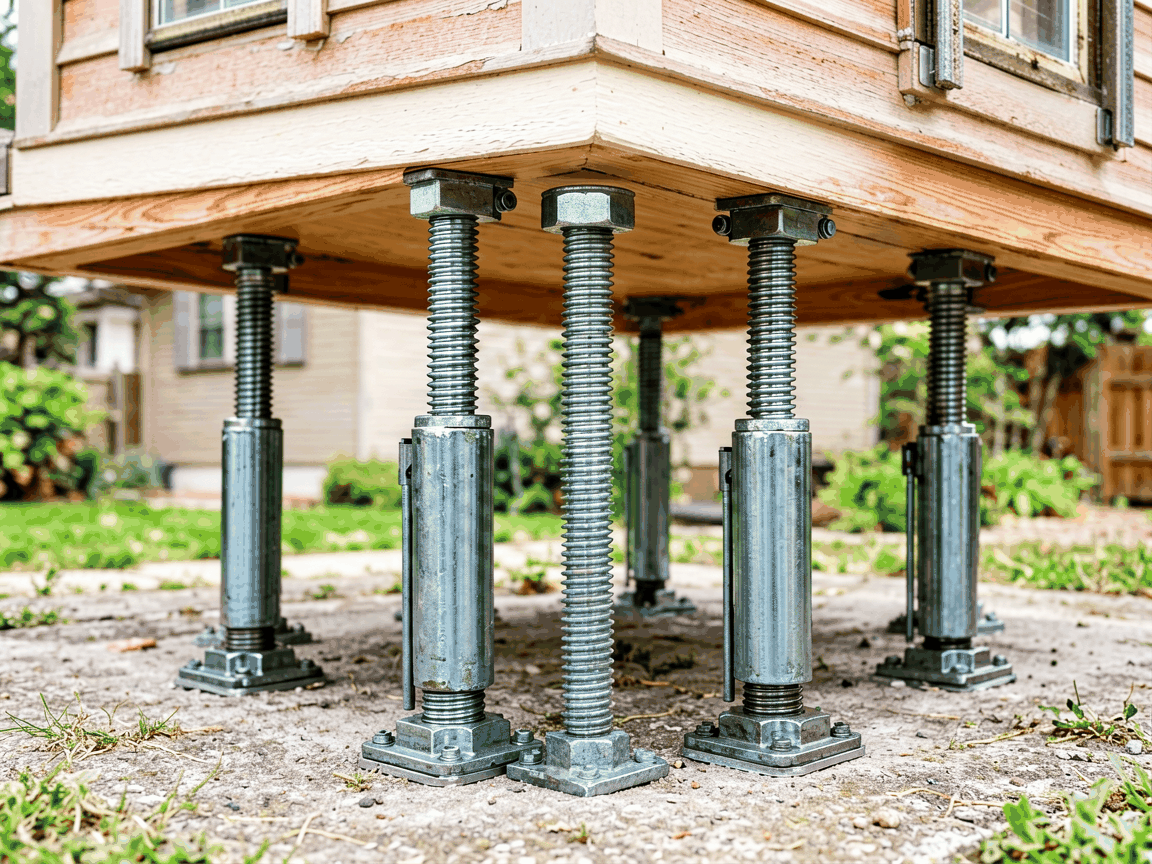
Screw jacks are mechanical lifting devices that convert rotational motion into linear displacement through a threaded screw and nut assembly. In residential construction, they provide adjustable vertical support for foundations, floor systems, and structural repairs where precise load control and long-term stability are required. Unlike hydraulic or pneumatic systems, screw jacks offer self-locking capability, meaning they maintain position without continuous power input, which is essential for permanent or semi-permanent house support applications.
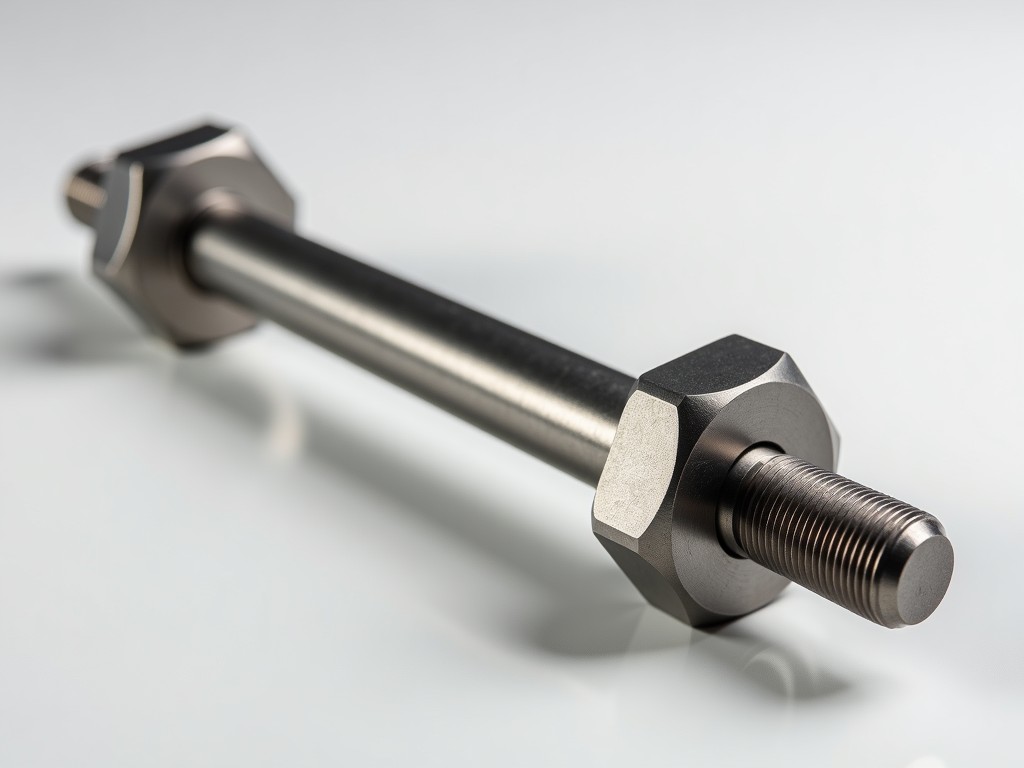
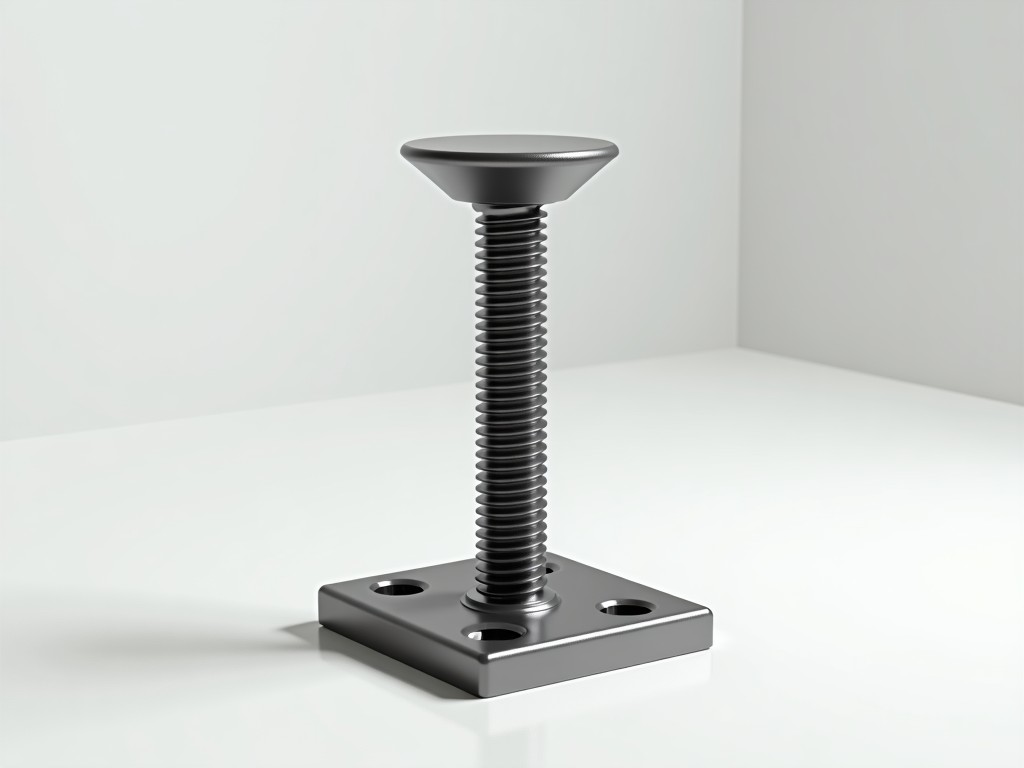
The core components of a screw jack include a hardened steel worm gear, a load-bearing screw (typically acme or trapezoidal thread), a lifting nut, and a protective housing. When the worm gear is rotated via a hand crank or motor, it drives the screw to extend or retract, raising or lowering the attached load. The thread geometry is designed to prevent back-driving under static load, ensuring the jack remains stationary once positioned—a critical safety feature when supporting structural elements of a building.
| Parameter | Typical Range | Notes |
|---|---|---|
| Static Load Capacity | 2–50 tons per jack | Depends on screw diameter, material, and thread pitch |
| Lift Speed | 2–10 mm per crank turn | Manual operation; motorized options increase speed |
| Screw Material | C45 steel, 42CrMo4, or stainless steel (304/316) | Selected based on load, environment, and corrosion resistance needs |
| Housing Material | Cast iron (GG25) or ductile iron (GGG40) | Provides rigidity and protection for internal components |
| Operating Temperature | -20°C to +80°C | Standard range; special lubricants extend limits |
Load capacity is determined by the screw’s cross-sectional area, material yield strength, and thread engagement length. For house support, jacks are typically selected with a safety factor of 3:1 to 5:1 against static load, accounting for dynamic effects during installation and long-term creep in timber or masonry substrates. The acme thread profile is preferred over square threads in this application due to its ease of manufacturing, better wear resistance, and inherent self-locking angle under typical residential loads.
Screw jacks are commonly used to lift and level settled foundations, particularly in pier-and-beam or crawlspace configurations where uneven soil compaction causes differential settlement. By placing jacks under weakened or sunken piers, contractors can gradually raise the structure to restore level alignment without inducing sudden stress fractures in walls or finishes. The incremental adjustment capability—often as fine as 0.1 mm per turn—allows for precise correction over days or weeks, minimizing the risk of secondary damage.
In floor joist reinforcement, screw jacks provide temporary or permanent support when sistering new lumber alongside degraded or undersized members. They enable workers to relieve load on the existing joist during repair, then transfer load back once reinforcement is complete. Compared to hydraulic props, screw jacks do not require monitoring for pressure loss and are immune to seal failure, making them preferable for long-term installations in inaccessible crawlspaces.
For historic building preservation, screw jacks allow non-invasive lifting of sagging floors or roofs where traditional shimming methods would require removal of original fabric. The slow, controllable lift reduces the chance of cracking plaster, damaging masonry, or distorting window and door frames. Their compact footprint also enables installation in tight spaces between joists or under low-clearance beams where larger lifting equipment cannot fit.
Screw jacks for house support are frequently adapted to site-specific constraints through modular design. The lifting height can be adjusted by selecting different screw lengths, while the top and bottom mounting interfaces are customized to match the substrate—whether concrete piers, steel plates, or timber bearing plates. For corrosive environments such as coastal crawlspaces, stainless steel screws and zinc-plated or epoxy-coated housings are available to extend service life.
Motorization options include AC gear motors or DC actuators with limit switches, enabling remote or automated operation in hard-to-reach areas. Hand crank versions remain preferred for most residential applications due to their simplicity, zero power requirement, and tactile feedback during lifting—allowing the operator to feel resistance changes that may indicate uneven settling or obstructions. Dual-lead screws are available for faster lift speeds when positioning time is critical, though they reduce mechanical advantage and require higher input torque.
Accessories such as swivel tops, spherical washers, or load-distributing plates are commonly added to accommodate minor misalignments between the jack and the structural element. These components prevent edge loading on the screw nut and ensure uniform force distribution, which is especially important when supporting uneven or degraded wooden beams. Protective boots or bellows can be fitted to shield the screw from dust, moisture, and debris in damp crawlspace environments.
Proper installation begins with assessing the load path: the jack must be positioned vertically under a structural element capable of transferring the load to the foundation without bending or buckling. The base should rest on a level, compacted surface—often a concrete pad or treated timber pad—to prevent sinking or tilting under load. Shimming between the jack base and substrate is discouraged; instead, the mounting surface should be prepared to full contact to avoid point loading.
When lifting a structure, jacks should be used in multiples—typically three or more—to ensure load distribution and prevent torsional twisting. The lift sequence must be carefully planned: corners are raised first, followed by mid-span points, with adjustments made in small increments (e.g., 3–5 mm per cycle) across all points to avoid creating new stress points. Monitoring with a laser level or string line is essential to detect differential movement that could indicate soil shift or component slippage.
After reaching the desired elevation, the jack should remain under load for at least 24–48 hours to allow for material relaxation in timber or masonry before final fastening. In permanent installations, the jack is often left in place as a long-term support, with periodic inspection recommended every 12–24 months to check for corrosion, thread wear, or loosening of fasteners. Unlike temporary props, screw jacks do not require regular re-torquing due to their self-locking thread design.
Maintenance requirements for screw jacks in house support are minimal due to their enclosed design and lack of consumable parts. The primary task is periodic lubrication of the worm gear and screw threads—typically every 6–12 months in dry environments, more frequently in humid or dusty conditions. A high-viscosity, water-resistant grease (such as lithium complex or molybdenum disulfide-based) is recommended to prevent washout and reduce wear. The housing should be inspected for cracks or corrosion, especially at weld points or fastener holes.
Thread wear is the most common failure mode over extended service life. Wear can be assessed by measuring backlash—the axial play between screw and nut when the load is reversed. Excessive backlash (typically >0.5 mm) indicates nut wear and may require replacement. The screw itself is highly durable; surface pitting or galling is rare unless contaminated with abrasive particles or operated beyond rated load. In corrosive environments, regular cleaning and reapplication of protective coatings extend service life beyond 20 years.
Unlike hydraulic jacks, screw jacks do not suffer from fluid leakage, seal degradation, or pressure loss over time. Their mechanical simplicity means fewer failure points and predictable long-term behavior. For OEMs or contractors specifying jacks for residential support, this translates to lower lifecycle cost and reduced liability risk compared to active systems requiring ongoing monitoring or maintenance contracts.