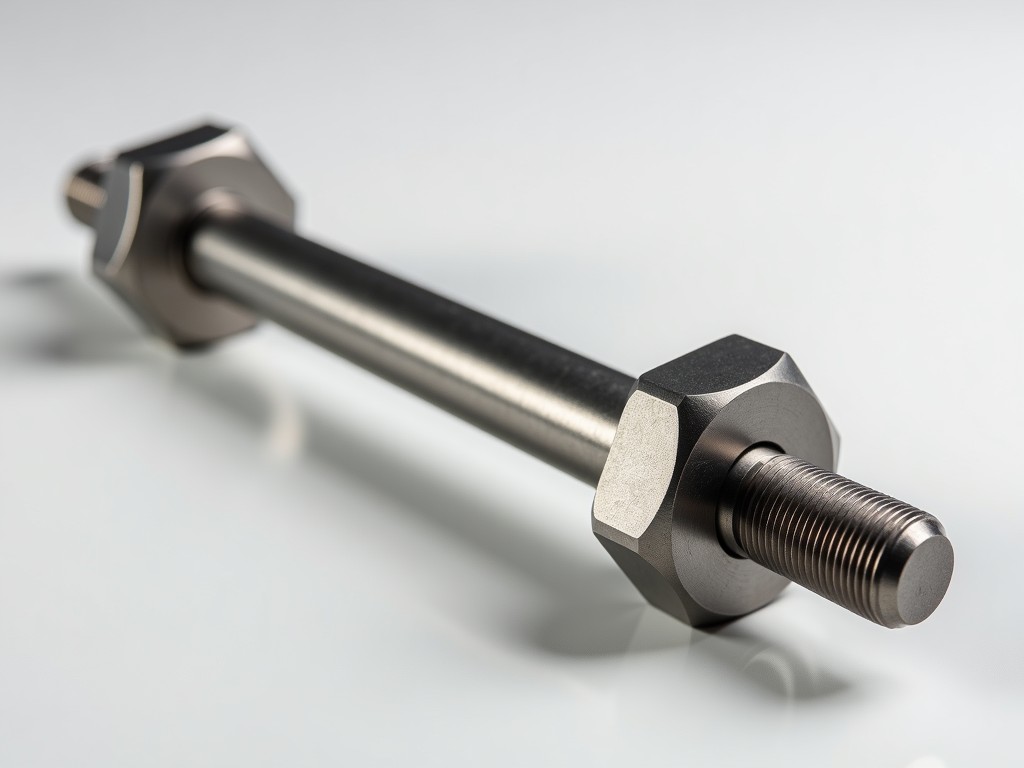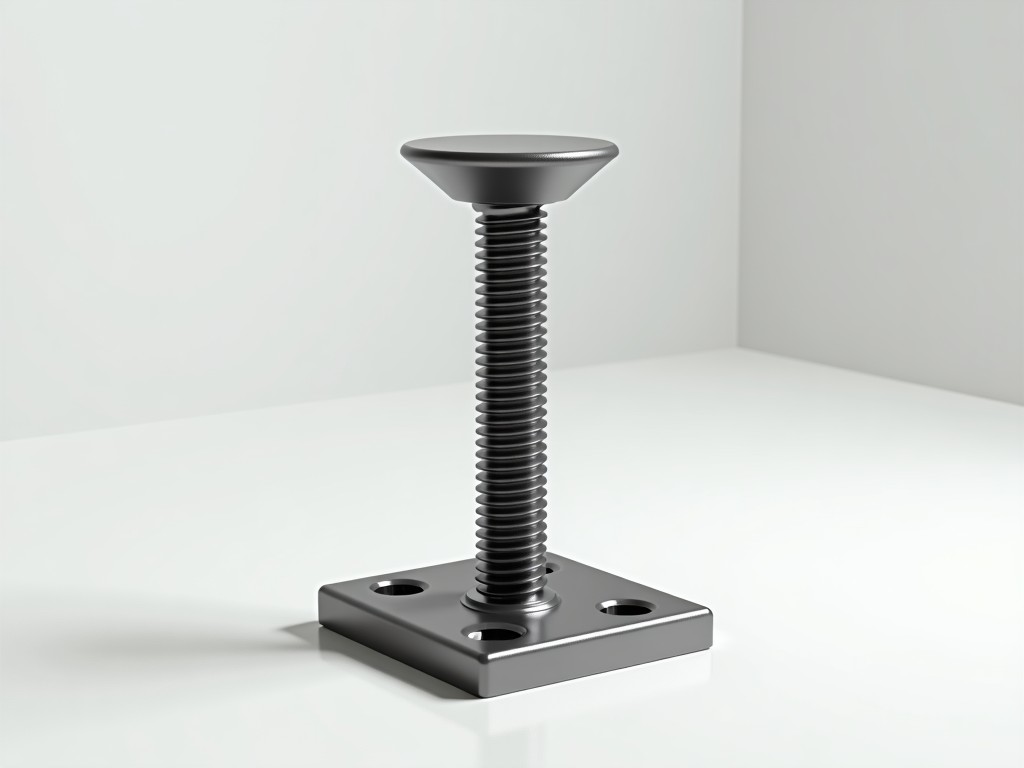
Screw jacks are mechanical lifting devices that convert rotational motion into linear force through a threaded screw and nut assembly. In residential construction and renovation, they are commonly used to support and adjust the elevation of settling foundations, sagging floors, or weakened structural members during repair or reinforcement work. Unlike hydraulic systems, screw jacks offer precise, incremental control without the risk of fluid leakage or pressure loss, making them suitable for long-term shoring applications where sustained load retention is critical.
The core advantage of screw jacks in house leveling lies in their self-locking capability. Due to the friction angle of the thread, most screw jack designs prevent back-driving under load, meaning the jack maintains its position once the input torque is removed. This inherent safety feature reduces the need for continuous mechanical locking or monitoring during extended shoring periods. Load capacity is determined by screw diameter, thread pitch, material strength, and the effectiveness of the thrust bearing assembly, all of which must be evaluated based on the specific structural demands of the building being repaired.
When selecting screw jacks for house leveling, engineers must assess not only the maximum load but also the duration of load application, environmental exposure, and accessibility for adjustment. Residential foundations often experience uneven settling, requiring jacks with sufficient stroke length to accommodate differential movement. Additionally, the jack’s base and top plates must distribute load effectively across wooden beams, concrete pads, or steel shims to prevent localized crushing or puncturing of support surfaces.
Corrosion resistance is particularly important in crawl spaces or basements where moisture levels fluctuate. While carbon steel is common for its strength and cost-effectiveness, zinc plating, hot-dip galvanizing, or stainless steel construction may be specified in humid or chemically aggressive environments. The choice of lubricant also affects long-term performance; dry-film lubricants or grease fittings are often preferred in confined spaces where regular maintenance is difficult.
Screw jacks for residential shoring are typically available in two primary configurations: top-mounted handwheel or socket-driven designs. Handwheel-equipped jacks allow manual adjustment from above, which is advantageous in confined crawl spaces where side access is limited. Socket-driven models, often adjusted with a wrench or impact tool, provide higher mechanical advantage and are suitable for applications requiring greater force or frequent repositioning under load.
Stroke lengths commonly range from 6 inches to 24 inches, though custom travel is available for unique foundation geometries. The closed height—critical when working under low clearance—must be carefully matched to the available space between the foundation and the support point. Some designs incorporate a removable handle or folding mechanism to reduce the overall profile during installation or removal.
| Parameter | Typical Range | Notes |
|---|---|---|
| Load Capacity (per jack) | 2,000 – 20,000 lbs | Depends on screw size, material, and bearing design |
| Stroke Length | 6 – 24 in | Custom lengths available upon request |
| Screw Diameter | 3/4 – 2 in | Larger diameters increase capacity and stiffness |
| Thread Type | Acme, Trapezoidal, or Square | Acme common for balance of strength and efficiency |
| Material Options | Carbon steel, Stainless steel (304/316) | Coatings available for corrosion protection |
| Adjustment Method | Handwheel, Socket, Power drive | Socket drive preferred for high-torque applications |
Proper installation requires placing the screw jack on a stable, level base capable of resisting both compressive and lateral forces. In many cases, a steel base plate or concrete pad is used to spread the load and prevent sinking into soft soil or deteriorated masonry. The top plate must make full, flat contact with the structural member being lifted—often a floor joist, girder, or sill plate—to avoid bending or localized stress. Shims or load-distributing beams may be necessary when the support surface is uneven or irregular.
Adjustment should be performed gradually and monitored continuously, especially when lifting historic or fragile structures. A common practice is to lift no more than 1/8 inch per day to allow the structure to acclimate and minimize the risk of cracking in finishes, drywall, or plaster. Laser levels or dial indicators are frequently used to track elevation changes across multiple points, ensuring uniform lift and preventing torsional stress on the building frame.
Although screw jacks are often considered permanent shoring solutions in temporary repair scenarios, periodic inspection is recommended to verify continued performance. Key inspection points include thread wear, lubricant degradation, corrosion on exposed surfaces, and deformation of the housing or end fittings. In environments with high humidity or chemical exposure, protective coatings should be checked for integrity, and reapplication may be necessary to prevent rust-induced seizing.
The efficiency of a screw jack—defined as the ratio of useful work output to input energy—is influenced by thread friction and bearing losses. While self-locking threads reduce efficiency (typically 20–40%), this trade-off is acceptable in shoring applications where holding position without power is essential. For applications requiring frequent cycling, ball screw alternatives may be considered, though they lack inherent self-locking and require external braking mechanisms.
Overloading beyond the rated capacity can lead to thread yielding, nut deformation, or catastrophic failure. It is essential to account for dynamic loads, impact forces, and load distribution when calculating the required safety factor. In residential shoring, a minimum safety factor of 3:1 is commonly applied to account for uncertainties in load estimation, material variability, and long-term creep in support materials.
Note: Actual performance depends on installation quality, load characteristics, and environmental conditions. Consult a structural engineer before initiating any foundation lifting or shoring operation.
While this document focuses on residential foundation support, the same screw jack principles apply to other shoring and lifting tasks in light construction. These include supporting temporary formwork during concrete pouring, stabilizing mobile homes during relocation, and providing adjustable support for porch reconstructions or deck repairs. The adaptability of screw jacks makes them a valuable tool in both professional contracting and DIY renovation scenarios where controlled, maintainable lift is required.
Their simplicity, lack of external power requirements, and predictable behavior under load continue to make screw jacks a preferred choice for applications where precision, reliability, and long-term load retention are prioritized over speed or automation. When selected and installed correctly, they provide a durable, low-maintenance solution for addressing structural settlement in residential buildings.