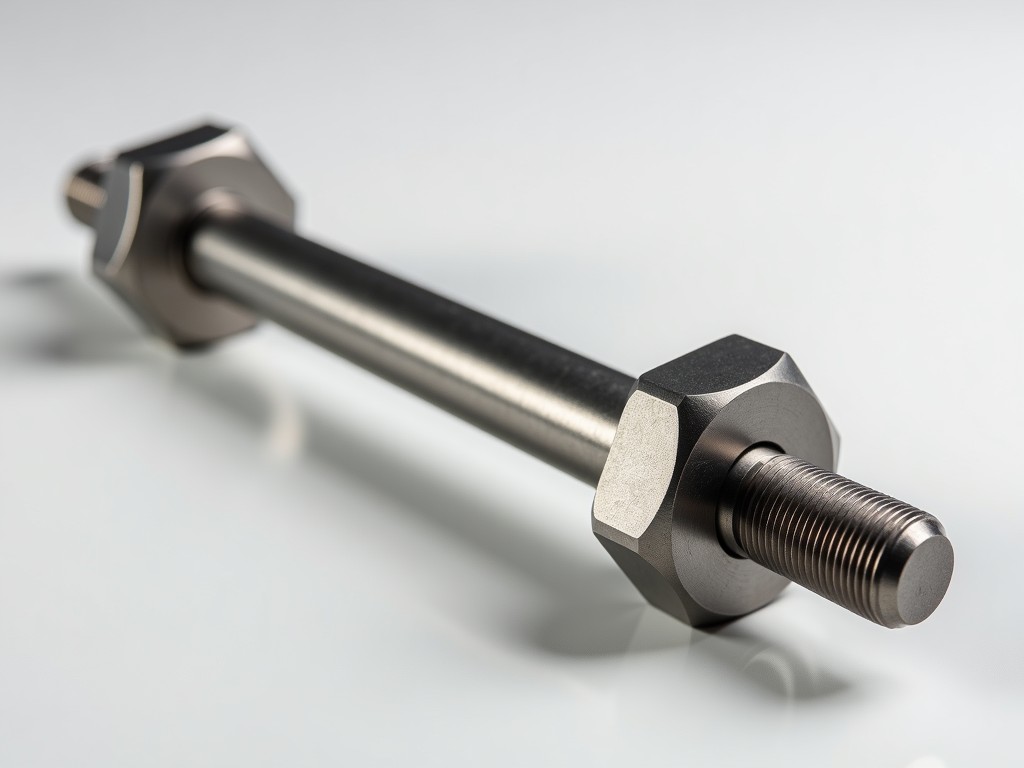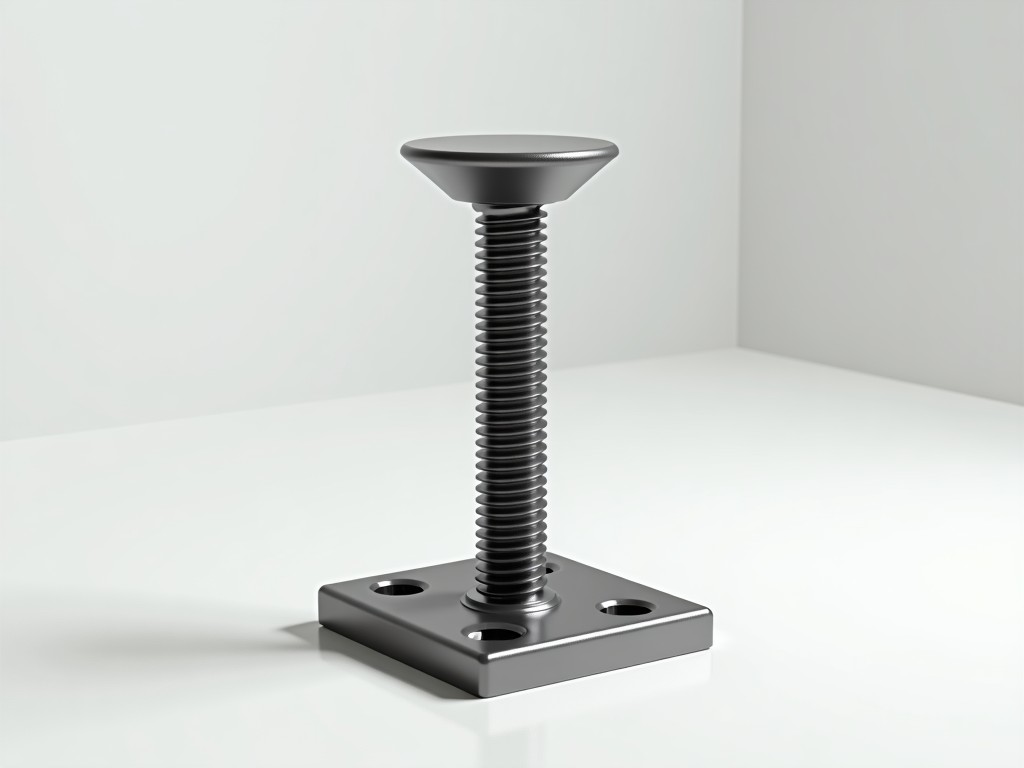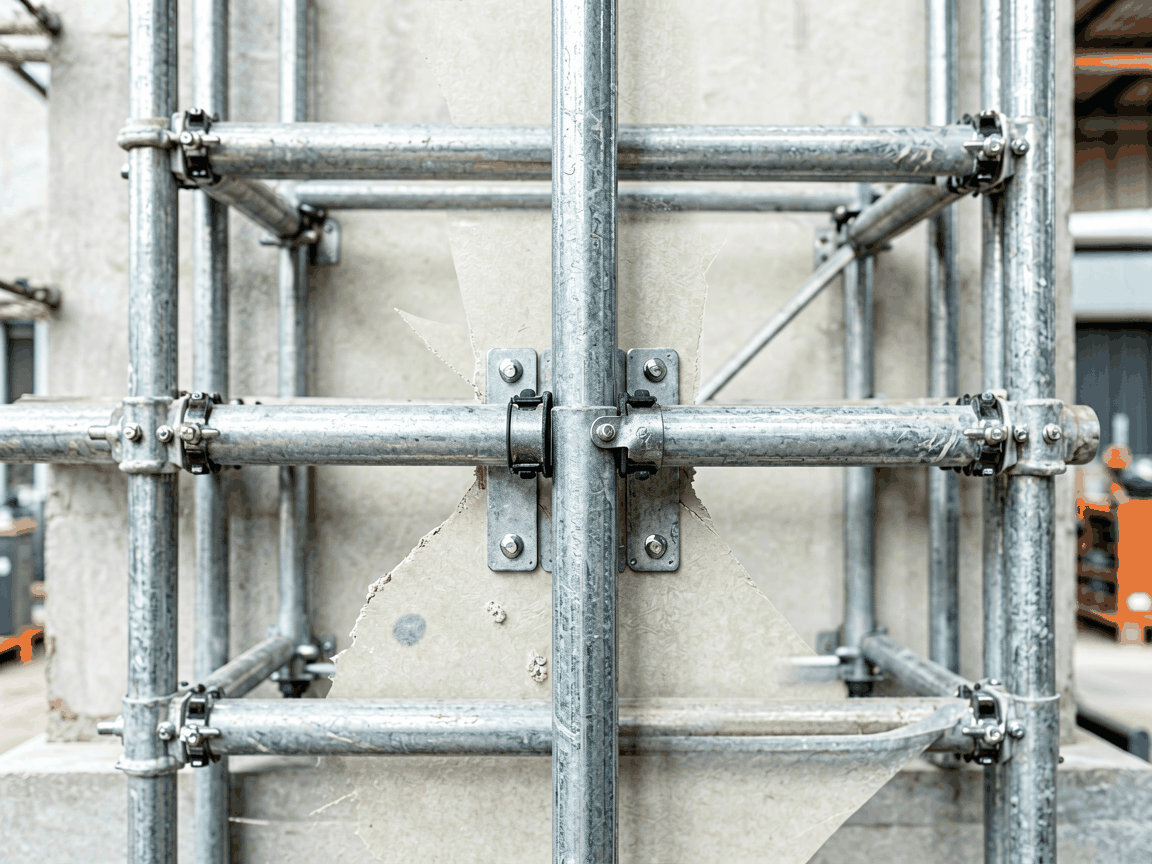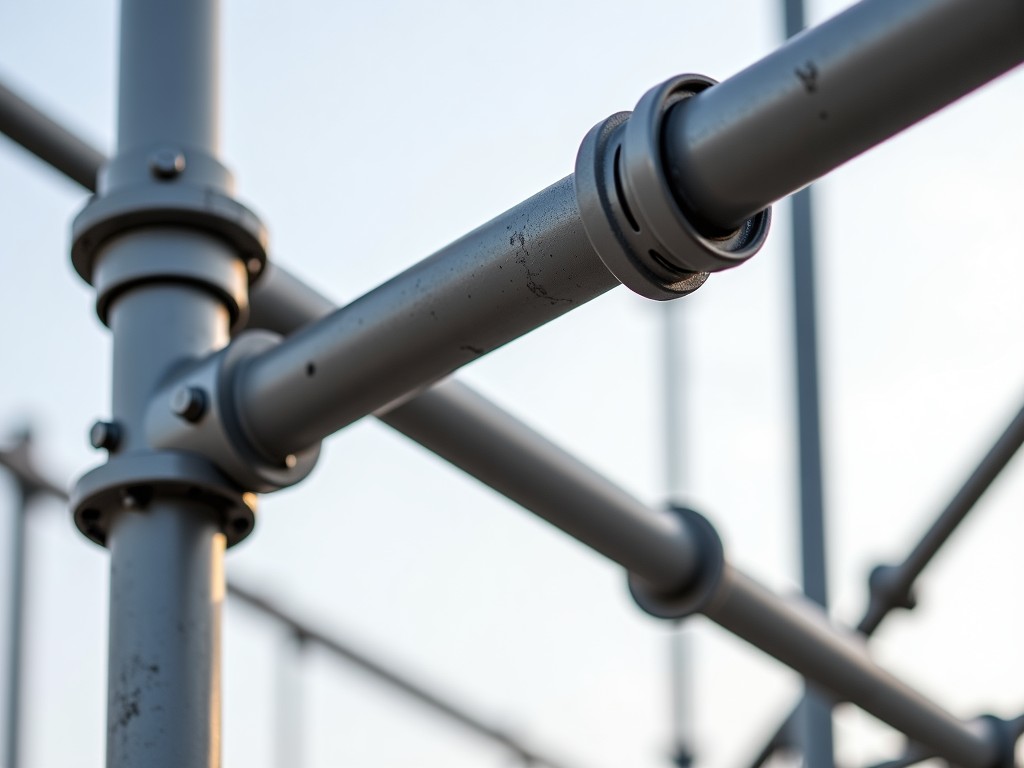
Scaffolding steel prop shoring jacks are adjustable vertical support systems designed to transfer structural loads safely during construction, renovation, or formwork operations. These components consist of a threaded inner tube that slides within a fixed outer tube, allowing precise height adjustment through a mechanical screw mechanism. The primary function is to provide temporary but reliable load-bearing capacity where permanent structural elements are not yet in place or have been removed for maintenance.
Unlike fixed-length props, adjustable shoring jacks accommodate varying floor-to-ceiling heights and accommodate settlement or deflection during curing of concrete. The adjustment range typically spans from a minimum retracted length to a maximum extended length, enabling use across multiple floor levels or uneven substrates. Load capacity is determined by the tube diameter, wall thickness, material grade, and thread design, with capacity decreasing as extension increases due to reduced column stability.
The threaded mechanism uses acme or trapezoidal threads to convert rotational force into linear movement, allowing a single worker to adjust height under load using a standard bar or ratchet. This self-locking feature prevents unintended descent when properly torqued. The base and top plates distribute concentrated loads over a larger area, reducing point loading on formwork, slabs, or structural members. Proper installation requires vertical alignment and full contact between plates and bearing surfaces to avoid eccentric loading.
Standard scaffolding steel prop shoring jacks are manufactured from cold-formed or hot-rolled structural steel, commonly grades S235JR or S355JR per EN 10025, selected for yield strength and ductility under cyclic loading. The outer tube typically ranges from 48mm to 60mm in diameter with wall thicknesses between 2.5mm and 3.5mm, while the inner tube is slightly smaller to allow smooth telescoping. The acme thread pitch is usually 6mm or 8mm, enabling approximately 1mm of linear adjustment per half-turn of the handle.
Load capacity is rated in kilonewtons (kN) and varies significantly with extension length. At minimum extension (closest to retracted), capacity may reach 20–25 kN for heavier-duty models, decreasing to 8–12 kN at full extension due to increased slenderness ratio and buckling risk. These values are derived from Euler buckling formulas modified for imperfect columns and include safety factors per EN 1065 or ANSI/SSFI SC-100. Capacity ratings assume axial loading; any lateral force or misalignment substantially reduces safe working load.
Adjustment range typically spans 600mm to 1000mm depending on model, with common sizes including 0.6–1.0m, 1.0–1.8m, and 1.8–3.0m retracted to extended lengths. The screw mechanism allows infinite positioning within this range, unlike pinned alternatives. Weight per unit ranges from 8kg to 18kg, influencing handling logistics on site. Surface treatment is usually hot-dip galvanizing per EN ISO 1461, providing 55µm average zinc coating for corrosion resistance in humid or alkaline environments typical of concrete construction.
Scaffolding steel prop shoring jacks are primarily used to support horizontal formwork systems during concrete pouring for slabs, beams, and flat plates. They replace timber posts or fixed steel shores where adjustability and reusability are critical. In slab formwork, props are arranged in a grid pattern beneath plywood or metal decking, spaced according to slab thickness, concrete weight, and deflection limits—typically 1.0m to 1.5m spacing for 150–250mm thick slabs.
Beyond formwork, these jacks serve in structural shoring during renovation, where load-bearing walls or columns are temporarily removed for modification. They support beams during wall opening creation or column replacement, transferring loads to adjacent stable structure. In falsework for bridge construction or underground works, they provide temporary support for precast segments or soffit formwork until permanent elements gain sufficient strength. Their adjustability accommodates uneven soffits or camber requirements in curved soffits.
In masonry and facade work, shoring jacks support overhead scaffolding or protective canopies above public walkways. They stabilize temporary retaining walls during excavation and support underpinning operations where existing foundations are strengthened. The ability to fine-tune height allows precise load transfer without inducing stress in existing structures—a advantage over fixed-length systems that may require shimming or risk overloading.
| Feature | Threaded Screw Jack | Pinned Prop (Clip System) | Hydraulic Shore |
|---|---|---|---|
| Adjustment Range | Continuous within tube length (e.g., 600–1000mm) | Discrete steps (typically 50–100mm increments) | Continuous via pump (limited by stroke) |
| Load Capacity at Min Extension | 15–25 kN (depends on diameter/wall) | Similar to screw jack at same size | 20–40 kN (higher pressure capability) |
| Load Capacity at Max Extension | 8–12 kN (reduced by slenderness) | Similar reduction as screw jack | 15–25 kN (less extension loss) |
| Adjustment Under Load | Yes (self-locking thread) | No (requires unloading) | Yes (with valve control) |
| Maintenance Needs | Lubricate thread, inspect for bend/damage | Inspect pins, clips, tubes | Seal replacement, fluid checks, pump service |
| Typical Use Case | General formwork, slab support, renovation shoring | Repetitive grids where height varies little | Precast erection, heavy shoring, tunnel formwork |
The outer and inner tubes are produced from slit coil or tube mill stock, formed via cold rolling or electric resistance welding (ERW) to achieve dimensional consistency. Tube straightness is critical—any bow or twist increases eccentric loading and reduces buckling resistance. Manufacturers typically use tube tolerances per EN 10305-3 for inner tube ovality and straightness to ensure smooth telescoping without binding.
The acme thread is rolled rather than cut to improve strength and fatigue resistance. Rolled threads follow the grain flow of the material, increasing tensile strength by up to 30% compared to cut threads and improving surface hardness. Thread pitch and diameter are selected to balance adjustment speed with mechanical advantage—finer pitches allow finer control but require more turns, while coarser pitches enable faster adjustment but may resist movement under high load.
Base and top plates are stamped from steel sheet, typically 4–6mm thick, with diameters ranging from 100mm to 150mm to distribute load over formwork walers or screw jacks. These plates are welded to the tube ends using automated jigs to ensure perpendicularity—any angle deviation introduces bending moments. Weld penetration and fusion are inspected via visual or magnetic particle methods to prevent failure under cyclic load.
Hot-dip galvanizing is applied post-fabrication to cover all surfaces, including threads and welds. The zinc coating provides sacrificial protection; in alkaline concrete environments (pH >12), zinc corrodes slowly, extending service life. Alternative coatings like powder paint are used in dry indoor applications but offer less abrasion resistance. Regular inspection for coating damage, bends, or thread wear is required per site safety protocols.
While standard scaffolding steel prop shoring jacks serve most formwork and shoring applications, certain projects require modifications beyond catalog lengths or load ratings. Customization is feasible for inner tube length, outer tube diameter, wall thickness, thread type, and end fittings—subject to manufacturing constraints and validation testing. Adjustment range can be tailored by changing the tube overlap length, though this affects both minimum and maximum extension limits proportionally.
For high-load applications such as heavy formwork or precast support, tubes with larger diameters (up to 76mm) and thicker walls (4.0mm or more) increase Euler buckling capacity. Conversely, for low-headroom situations, shortened tubes with reduced adjustment range maintain capacity while minimizing weight and storage space. Special end fittings—such as U-heads for beam support, fork heads for walers, or spherical tops for angled surfaces—can be welded or pinned to adapt to specific connection details.
Thread modifications include changing pitch for faster adjustment (e.g., 10mm pitch) or using square threads for higher efficiency in dirty environments, though self-locking capability may require additional nuts. Material upgrades to weathering steel or stainless steel grades are available for corrosive or aesthetic environments, though cost increases significantly. All custom variants undergo prototype testing to verify load capacity, adjustment function, and durability before batch production.
For technical inquiries, custom specifications, or project-specific load calculations, contact our engineering team to discuss your scaffolding steel prop shoring jack requirements.
Request Technical Consultation