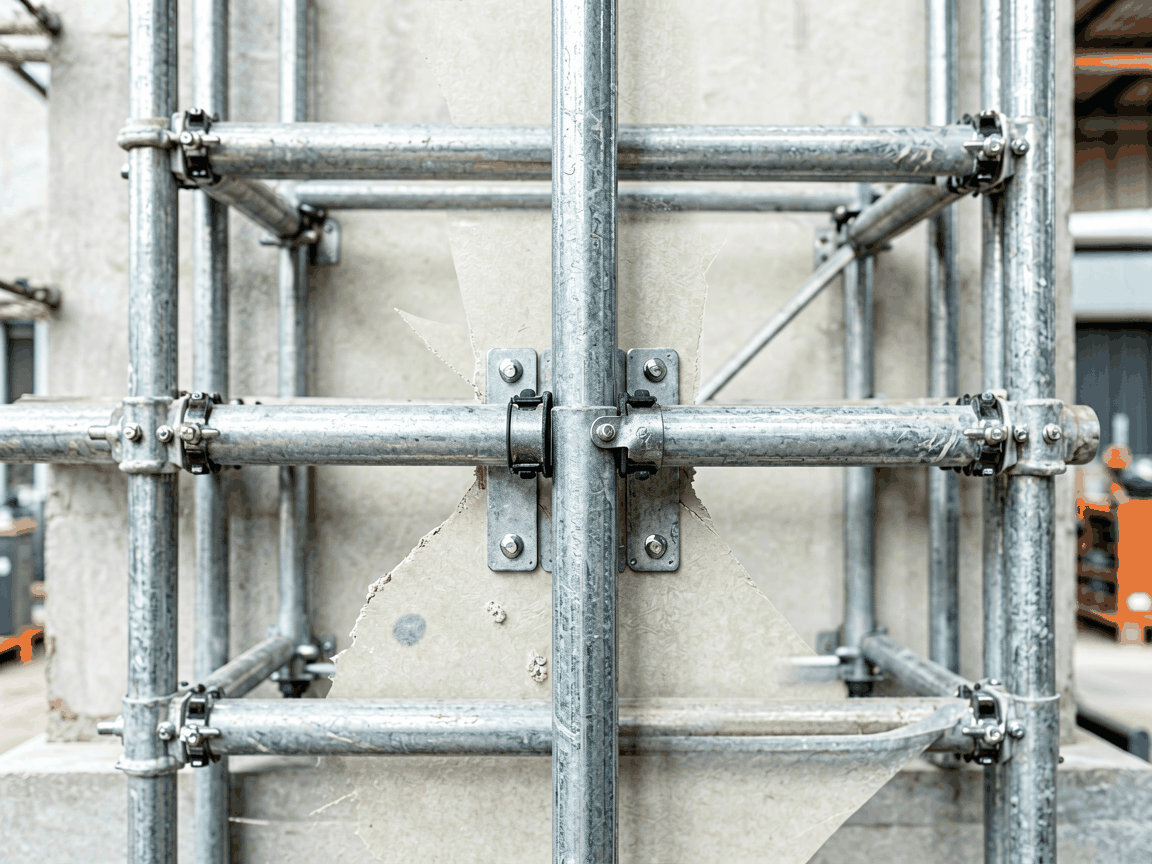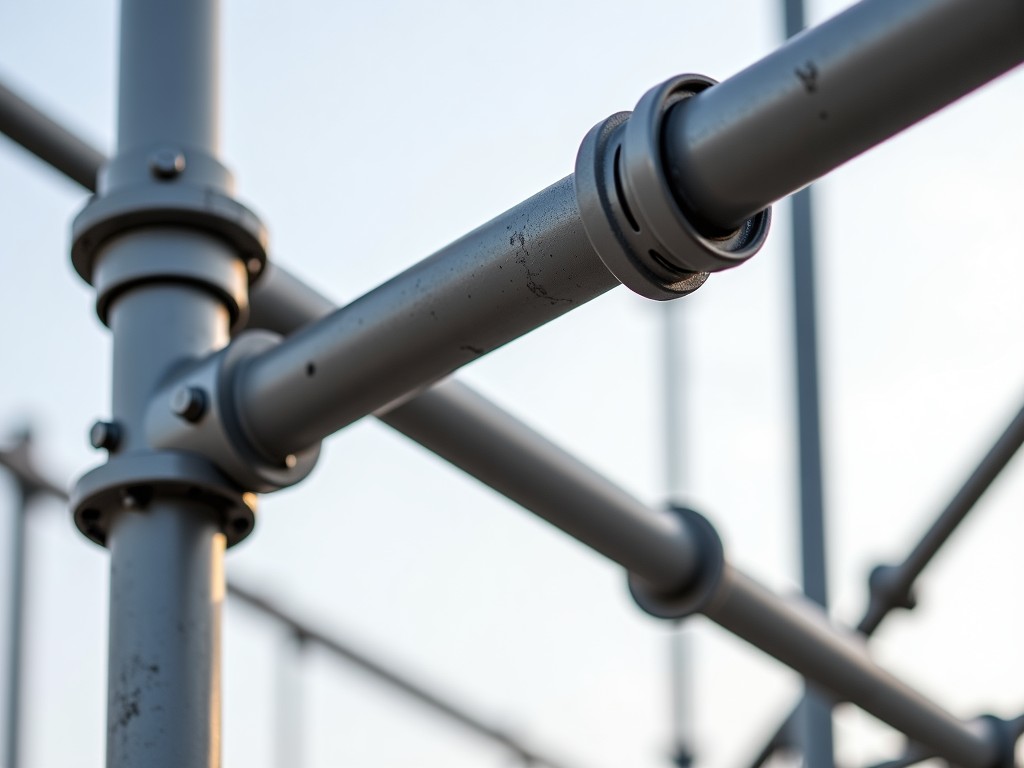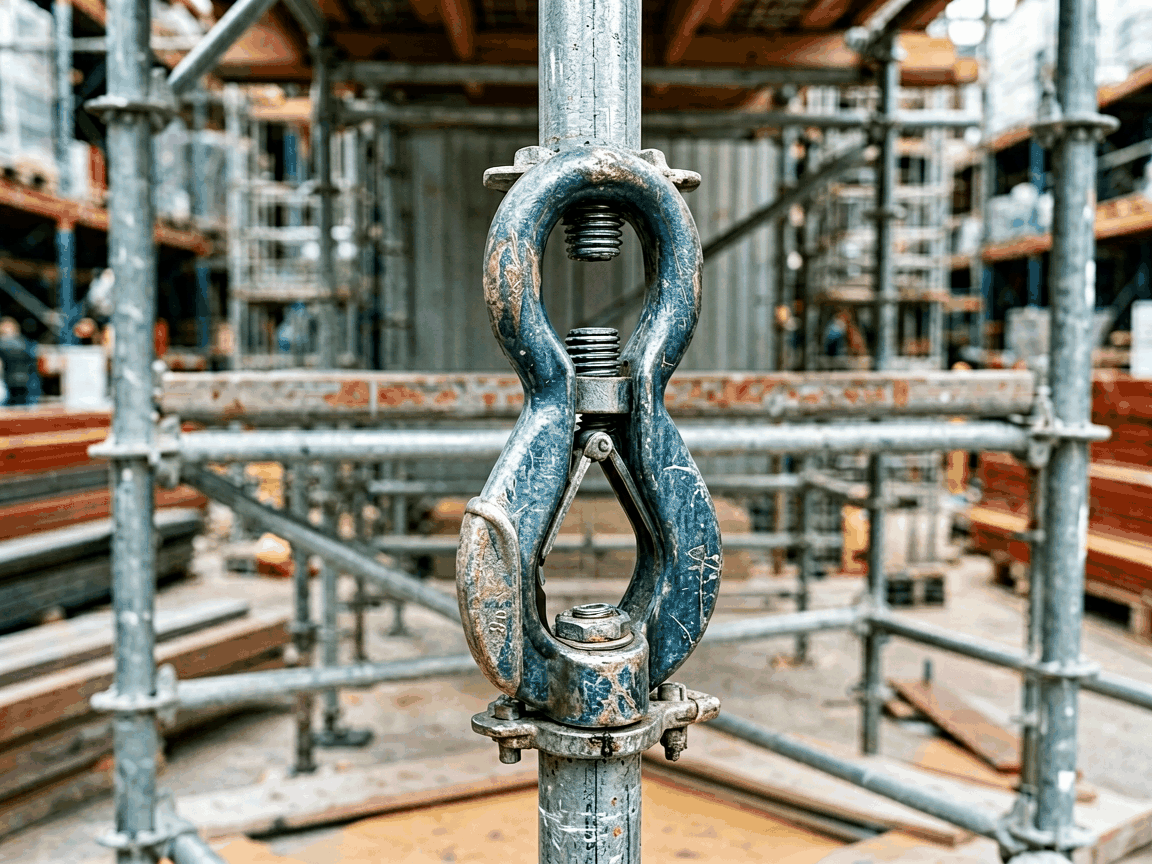
A swivel type fixed scaffolding clamp is a critical connection component used to join two scaffold tubes at variable angles while maintaining a secure, load-bearing joint. Unlike rigid or swivel-only clamps, this hybrid design allows angular adjustment during assembly but locks into position once tightened, providing both flexibility and structural stability. It is commonly used in complex scaffolding geometries where tubes must intersect at non-standard angles, such as in curved façades, stairwell enclosures, or irregular building profiles.
The clamp consists of two hinged jaws with internal serrations that grip the scaffold tubes when bolted tight. One jaw rotates relative to the other via a pivot pin, enabling angle setting from 0° to 180°. After positioning, torque applied to the T-bolt or hex bolt deforms the serrations into the tube surface, preventing slip under load. This mechanism ensures the joint maintains its set angle even under dynamic loads from wind, worker movement, or material storage.
The performance of a swivel type fixed clamp depends on material selection, surface treatment, and mechanical design of the gripping system. These factors determine its load capacity, corrosion resistance, and service life in demanding construction environments.
Typical specifications include:
The serrated inner jaws are designed to penetrate the zinc coating and slightly deform the tube surface under torque, creating mechanical interlock. This prevents rotational slip even when the clamp is subjected to shear forces parallel to the tube axis. The pivot pin is typically hardened and locked with a cotter pin or spring washer to prevent disengagement during use.
Engineers evaluate swivel type fixed clamps based on their slip resistance and ultimate load capacity under various force directions. These values are determined through laboratory testing per EN 74-2 or equivalent standards, simulating real-world loading conditions.
| Load Direction | Typical Slip Load (kN) | Ultimate Load (kN) | Safety Factor (Typical) |
|---|---|---|---|
| Axial (along tube) | <8.0 | 24.0 | 3.0 |
| Transverse (perpendicular) | 6.5 | 19.5 | 3.0 |
| Rotational (torque) | 120 Nm | 360 Nm | 3.0 |
Note: Values are typical for hot-dip galvanized steel clamps on Ø48.3 mm steel tubes with M12 grade 8.8 bolts tightened to 50 Nm. Actual performance depends on installation torque, tube condition, and environmental exposure. Regular inspection for jaw wear, bolt elongation, or corrosion is required per local safety regulations.
The primary advantage of a swivel type fixed clamp lies in its ability to accommodate angular deviations that cannot be addressed with standard right-angle or swivel-only couplers. This makes it indispensable in scenarios where scaffold geometry must conform to architectural complexity.
Common applications include:
In each case, the clamp allows the installer to preset the desired angle during assembly, then lock it securely. This eliminates the need for custom-fabricated nodes or excessive tube cutting, reducing both labor time and material waste. The fixed position after tightening ensures the joint does not creep under sustained load, maintaining the designed scaffold geometry throughout the project duration.
The longevity of a swivel type fixed clamp in outdoor construction environments depends heavily on material quality and corrosion protection. While carbon steel provides the necessary strength, it is susceptible to rust without proper coating.
Hot-dip galvanization is the standard protective method, applying a metallurgically bonded zinc layer that sacrifices itself to protect the underlying steel. The coating thickness directly influences service life:
Alternative materials such as stainless steel (AISI 304 or 316) are available upon request for applications requiring minimal maintenance or where contamination from zinc runoff must be avoided (e.g., food processing or pharmaceutical facilities). However, the higher cost limits widespread use. The pivot pin and bolt are typically made from the same base material as the jaws to avoid galvanic corrosion, with stainless steel fasteners used only when the entire assembly is specified as such.
Proper installation is critical to achieving the rated load capacity of a swivel type fixed clamp. Under-torquing can lead to slip under load, while over-torquing may damage the threads, deform the jaws, or cause stress cracking in the tube.
Recommended installation procedure:
Typical torque values:
After initial load application (e.g., first platform installation), re-torque inspection is advised due to potential settling of the joint. Components should be inspected before each use for bent jaws, worn serrations, damaged threads, or missing cotter pins on the pivot. Any clamp showing signs of deformation, corrosion pitting exceeding 25% of surface area, or bolt elongation must be removed from service.
Understanding how a swivel type fixed clamp differs from other common scaffolding couplers helps engineers select the right component for specific joint requirements. Each type serves a distinct functional role based on degrees of freedom and locking behavior.
| Clamp Type | Degrees of Freedom | Locking Mechanism | Typical Use Case |
|---|---|---|---|
| Right-angle (fixed) | 0° | Rigid 90° lock | Standard ledger-to-standard connections |
| Swivel | 1 rotational (360°) | Friction lock (no fixed angle) | Bracing, temporary guides, adjustable supports |
| Swivel type fixed | 1 rotational (adjustable to fixed) | Adjustable angle, then mechanical lock | Complex geometries, variable angle joints |
| Putlog / single | 0° | One-sided grip on tube | Putlog transoms, board supports |
The swivel type fixed clamp uniquely combines the adaptability of a swivel coupler with the load-bearing certainty of a fixed coupler. It is not a substitute for right-angle clamps in standard grid scaffolding, where simplicity and speed favor rigid 90° nodes. Nor does it replace a pure swivel coupler when continuous adjustment is needed during use. Instead, it fills a specific niche: joints that require precise angular positioning during erection but must remain immobile under load thereafter.
For technical inquiries, customization requests, or quotation requests regarding scaffolding clamp swivel type fixed units, please contact our engineering team.
Request Information