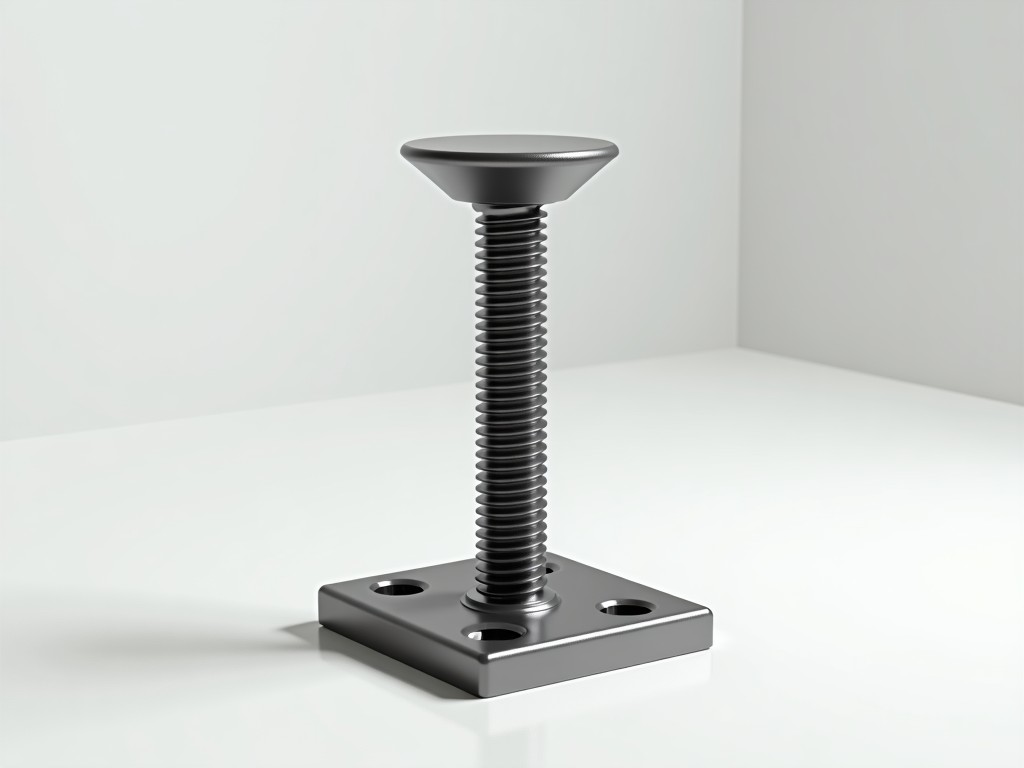
The Acrow steel prop jack is a height-adjustable vertical support system commonly used in formwork, falsework, and temporary structural shoring applications. It consists of an outer steel tube, an inner threaded rod with a welded base plate, and a top plate designed to transfer loads securely to structural elements such as beams, slabs, or formwork panels.
Unlike fixed-length props, the threaded mechanism allows precise height adjustment within a defined range, enabling workers to accommodate site-specific tolerances, uneven substrates, or multi-level pours without replacing the entire unit. This adjustability reduces material handling and minimizes the need for custom fabrication on-site.
Acrow props are engineered to resist axial compression loads while maintaining lateral stability through guided movement of the inner tube. The design prevents sudden disengagement under load and ensures consistent load paths from the top plate, through the threaded mechanism, to the base plate and into the ground or soffit.
Load capacity is determined by the tube diameter, wall thickness, material grade, and effective length at full extension. Standard Acrow props typically use cold-formed steel tubes with minimum yield strength of 340 MPa, though higher grades are available for increased load ratings. The outer tube resists buckling, while the inner rod must withstand tensile stresses during adjustment and compressive loads during service.
Adjustment range varies by model, commonly spanning 0.5m to 1.0m of usable travel, with overall lengths ranging from 1.5m to 4.0m when fully extended. The threaded section uses a coarse-pitch acme or trapezoidal thread to allow rapid adjustment with minimal rotation, while resisting back-drive under vibratory loads commonly found on construction sites.
Top and base plates are typically forged or pressed steel with pre-drilled holes for nailing or bolting to formwork or sole plates. Plate thickness ranges from 6mm to 10mm depending on load class, ensuring rigidity under eccentric loading. Some models include swivel tops to accommodate non-perpendicular contact surfaces without inducing bending moments in the prop.
The outer and inner tubes are manufactured from hot-rolled or cold-rolled steel strip, formed into cylindrical shapes and welded longitudinally. Seam integrity is critical to prevent buckling under compressive loads; therefore, welds are typically inspected via non-destructive methods such as ultrasonic or magnetic particle testing, especially for higher load classes.
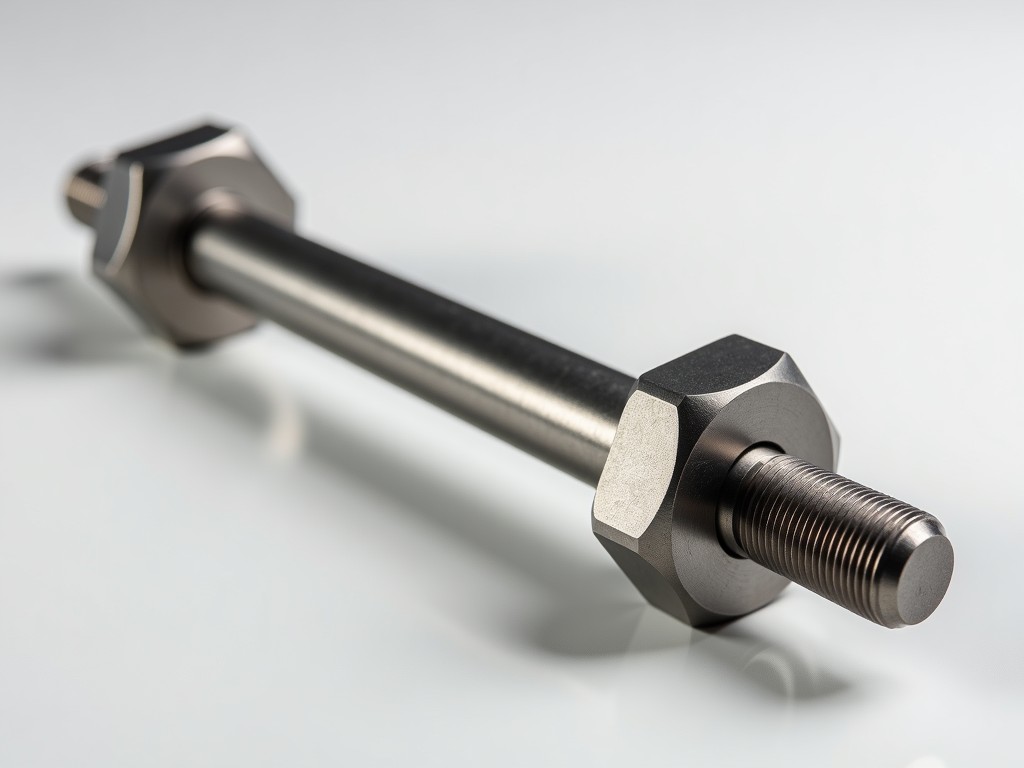
Threaded rods are usually made from medium-carbon steel (e.g., C45 or equivalent) and undergo thread rolling rather than cutting to improve fatigue resistance and surface hardness. Rolled threads maintain grain flow, enhancing tensile strength and reducing susceptibility to stress corrosion cracking in humid or alkaline environments common on concrete pours.
Surface treatment options include hot-dip galvanizing (minimum 55 microns zinc coating per EN ISO 1461) or powder coating for corrosion resistance in humid or marine-exposed environments. Galvanizing provides sacrificial protection, while powder coating offers uniform thickness and aesthetic consistency. Some manufacturers offer duplex systems (galvanized + powder) for extended service life in aggressive conditions.
| Prop Size (Min-Max Extension) | Typical Safe Working Load (kN) | Outer Tube OD (mm) | Wall Thickness (mm) |
|---|---|---|---|
| 1.5m - 2.5m | 20 - 25 | 48.3 | 3.2 |
| 2.0m - 3.5m | 15 - 20 | 48.3 | 2.9 |
| 2.5m - 4.0m | 10 - 15 | 48.3 | 2.5 |
| 3.0m - 5.0m | 8 - 12 | 60.3 | 3.6 |
*Values are typical for Grade S355 steel with hot-dip galvanizing. Actual capacity depends on end conditions, eccentricity, and duration of load. Always refer to manufacturer’s certified load charts for specific configurations.
Acrow props are widely used in slab and beam formwork systems where adjustable vertical support is required to maintain correct elevation and transfer wet concrete loads to the ground or permanent structure. Their adjustability allows fine-tuning of soffit height to compensate for deflection in primary beams or settlement in shoring towers, ensuring flat soffits and consistent cover.
In falsework for bridge construction or building refurbishment, Acrow props support temporary girders, trusses, or falsework decks during staged construction. The ability to incrementally load and adjust props enables controlled load transfer during jacking operations or when removing permanent supports in sequence, reducing risk of sudden load shifts.
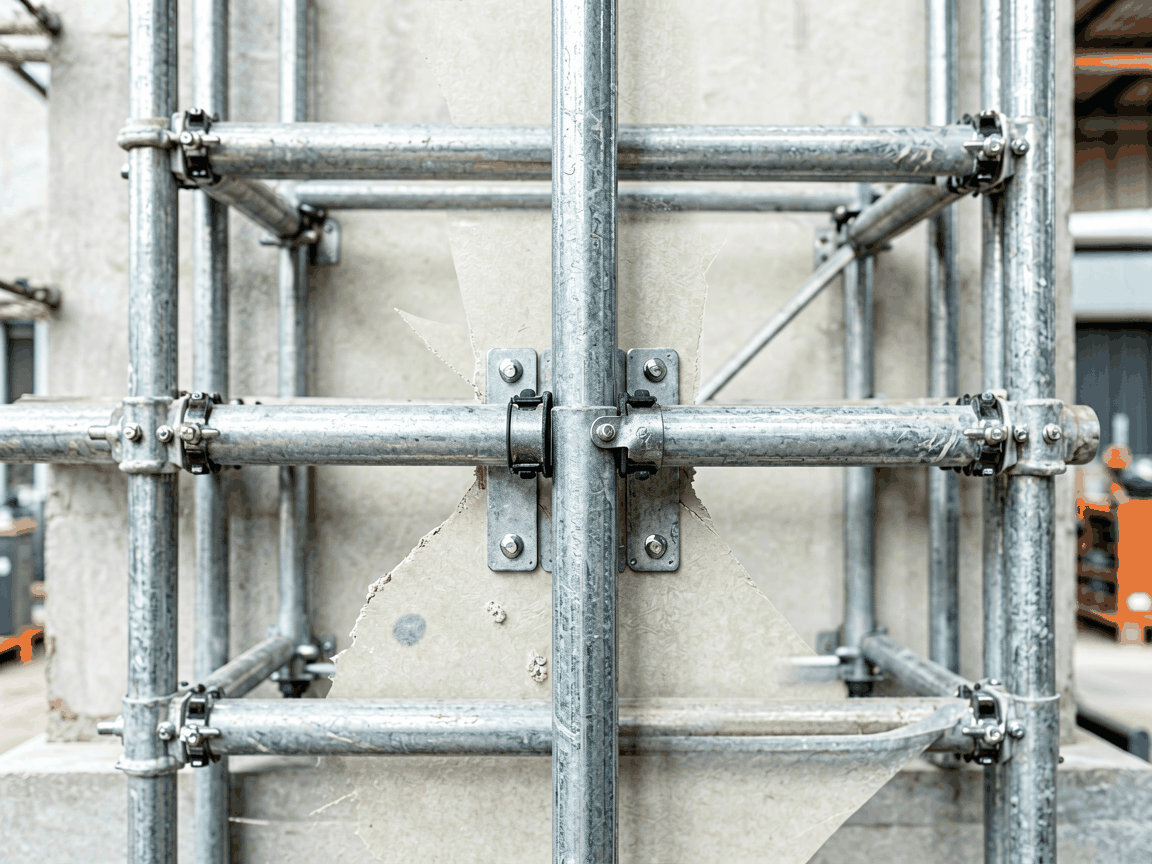
During masonry wall construction or reinforcement, props provide lateral support to prevent buckling of tall walls under wind or construction loads. They are often used in conjunction with strongbacks or walers to distribute loads along the wall length, minimizing point concentrations that could cause cracking or instability.
Proper installation requires placing the base plate on a firm, level sole plate or grillage to distribute loads and prevent punching into soft ground or weak soffits. The top plate must make full, flat contact with the supported element; shimming should only be used to correct minor unevenness, not to compensate for significant misalignment that could induce bending.
Props should be installed plumb within ±1.5° of vertical to avoid eccentric loading that reduces effective capacity. Lateral bracing is required for freestanding heights exceeding 3 times the minimum base dimension or when subjected to lateral loads from wind, impact, or inclined formwork. Braces should connect to rigid points and be tensioned to prevent sway.
Regular inspection during use is essential: check for bent tubes, damaged threads, deformed plates, or corroded sections that compromise strength. Any prop showing signs of overstress, such as permanent deformation at the tube ends or stripped threads, must be removed from service immediately and not repaired without manufacturer approval.
While standard sizes cover most general construction needs, custom lengths, threaded sections, or plate configurations are available for specialized applications such as tunneling, shipbuilding, or industrial maintenance. Customization may include non-standard thread pitches for finer adjustment, extended plates for larger bearing areas, or welded lugs for bracing attachments.
Material substitutions such as stainless steel (e.g., 304 or 316) are possible for environments with high chloride exposure or strict hygiene requirements, though cost and availability may affect lead times. Similarly, powder-coated finishes in specific RAL colors can be provided for identification systems or corporate branding on rental fleets.
Procurement decisions should consider not only unit price but also lifecycle costs: galvanizing thickness, thread durability, plate replacement availability, and compatibility with existing inventory. Standardizing on a limited range of prop sizes simplifies storage, inspection, and training across large projects or rental inventories.
For technical specifications, load charts, or to discuss project-specific requirements for scaffolding Acrow steel prop jacks, please contact our engineering team.
Request Technical Details