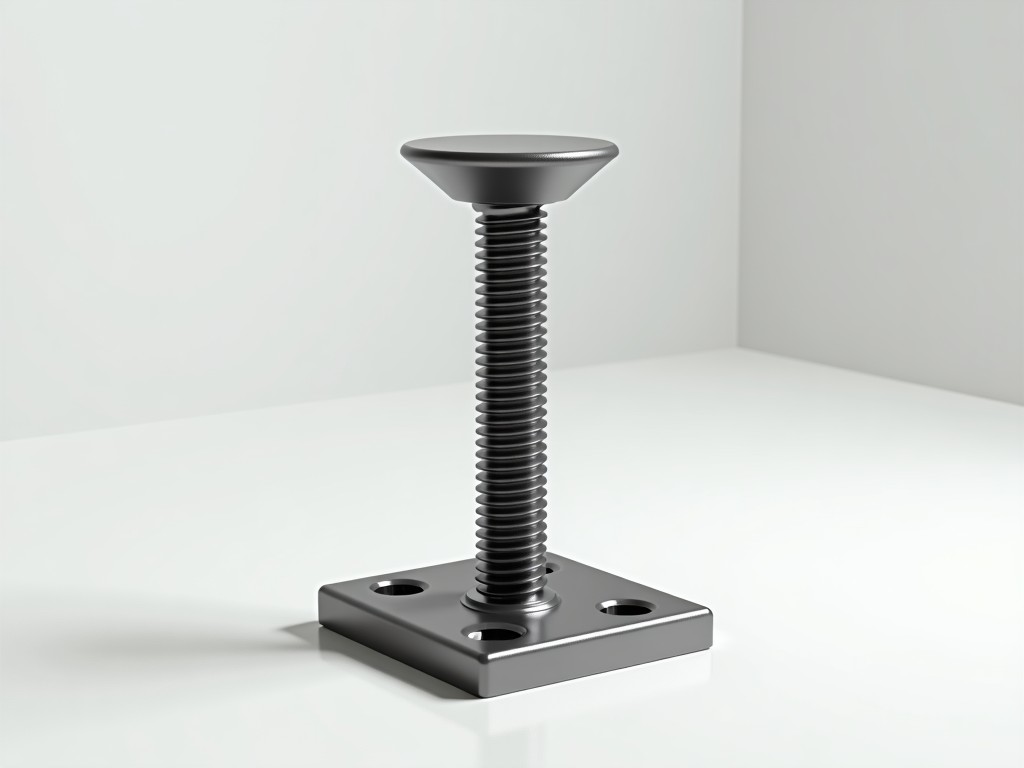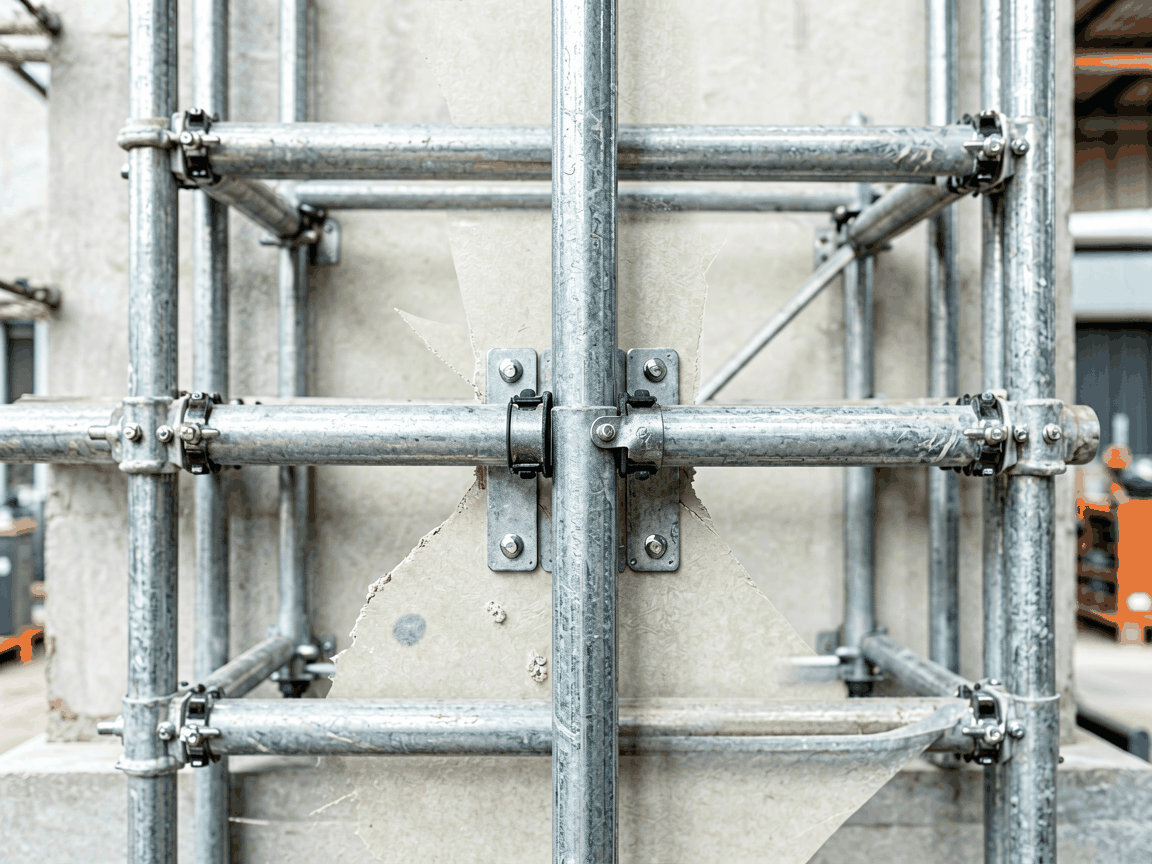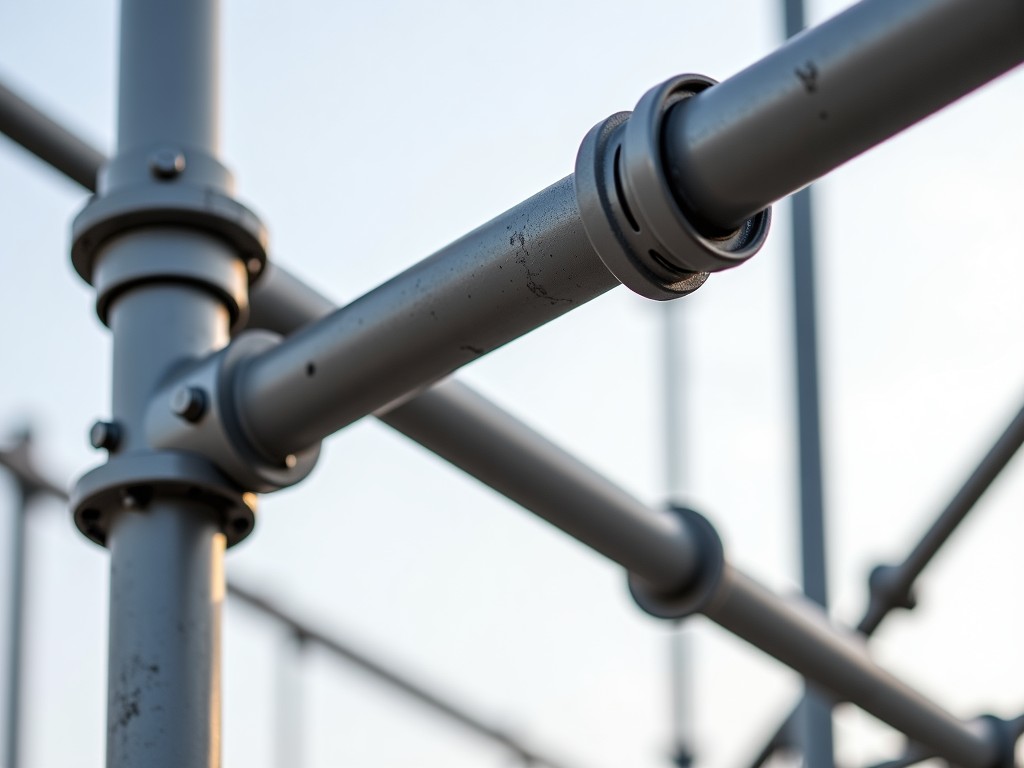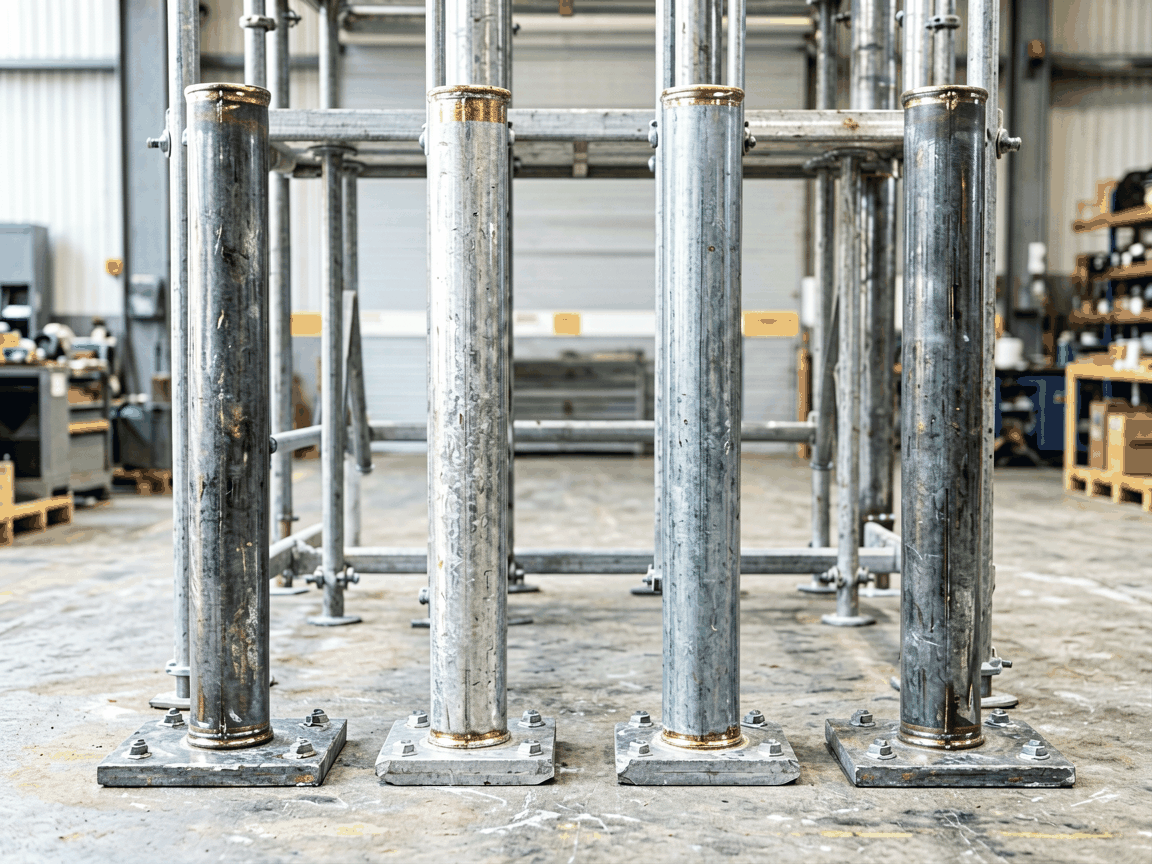
Scaffold tube base plates are critical interface components that distribute load from vertical scaffolding tubes to supporting surfaces, preventing point loading that could damage substrates or compromise structural stability. Their primary function is to spread concentrated forces over a larger area, reducing bearing pressure on concrete, steel, timber, or masonry foundations to within allowable limits. Proper selection depends on tube diameter, expected load conditions, substrate bearing capacity, and environmental exposure—factors that directly influence plate thickness, diameter, and material grade. Engineers specify base plates not as commodity items but as load-transfer elements requiring precise dimensional compatibility with scaffolding systems and adherence to regional safety standards such as EN 12810/12811 or OSHA 1926.451.
Base plates are typically manufactured from structural carbon steel grades such as S235JR or S355JR, chosen for their yield strength (≥235 MPa or ≥355 MPa), ductility, and weldability when attachment to base collars or adapters is required. The material’s chemical composition—particularly carbon equivalent (CEV ≤0.45 for S355)—affects weld integrity in fabricated assemblies, while surface condition influences corrosion resistance in outdoor environments. Thickness selection (commonly 6mm to 12mm) is governed by flexural stress calculations under eccentric loading, where plate deflection must remain within limits to maintain tube verticality and prevent premature joint loosening. For corrosive environments, hot-dip galvanizing (zinc coating ≥55 μm per EN ISO 1461) is standard, providing sacrificial protection that extends service life without compromising dimensional tolerances.
The effective load-spreading area of a base plate is determined by its diameter and the stiffness of the underlying substrate; thin plates on soft surfaces may exhibit bending that reduces effective contact area, increasing local pressure. Design calculations consider both axial load from the scaffold tube and moment loads caused by wind, eccentric equipment placement, or uneven ground settlement, requiring sufficient plate rigidity to resist tilting. Standard diameters range from 150mm to 250mm, selected to match tube outer diameters (e.g., 48.3mm tube typically uses 200mm plate) while providing adequate edge clearance for washer and nut installation. Stiffness is optimized through uniform thickness and flatness tolerances (<0.5mm deviation across face), ensuring consistent load transfer without rocking or gap formation under load.
Dimensional accuracy is critical: outer diameter tolerance is typically ±2mm to ensure proper fit with tube couplers and base jacks, while thickness variation must stay within ±0.3mm to prevent uneven load distribution. Flatness is verified using precision straight feeler gauges or coordinate measuring machines (CMM), with concave/convex deviation limited to 0.5mm over any 100mm span to avoid rocking under load. Hole placement (for tube location pins or lugs) follows positional tolerances of ±1.5mm to maintain alignment with scaffolding standards, and burr removal is specified to <0.1mm height to prevent injury and ensure flat seating. Each batch undergoes visual inspection for surface defects, magnetic particle testing for weld-adjacent zones (if applicable), and coating thickness verification via magnetic induction probes.
| Parameter | Typical Range | Tolerance / Specification |
|---|---|---|
| Outer Diameter | 150mm – 250mm | ±2mm |
| Thickness | 6mm – 12mm | ±0.3mm |
| Flatness Deviation | <0.5mm over 100mm | EN 1090-2 Class C |
| Hole Position (if applicable) | ±1.5mm from datum | ISO 2768-m |
| Galvanized Coating | ≥55 μm Zn | EN ISO 1461 |
Base plates are essential in falsework systems supporting wet concrete loads during slab and beam construction, where sustained loads over days or weeks require long-term creep resistance and zero settlement at the tube-to-foundation interface. In facade access scaffolding, they prevent localized damage to cladding panels, insulation boards, or waterproofing membranes by limiting bearing pressure to typically <0.5 N/mm² on delicate substrates. For suspended scaffolding or swing stages, base plates anchor outrigger beams to rooftops or podiums, where load distribution must account for both static dead loads and dynamic forces from wind-induced oscillation. In shoring applications for trench walls or excavation support, they spread jack loads over timber sleepers or steel beams, preventing punching shear failure in weak soils or degraded concrete.
Non-standard diameters are available to match proprietary tube sizes or accommodate oversized base collars, with tooling adjustments possible for volumes exceeding 500 units. Thickness can be increased beyond 12mm for high-load scenarios such as heavy equipment scaffolding or temporary bridge supports, where finite element analysis (FEA) may be used to validate deflection limits under eccentric loading. Custom hole patterns—such as slotted holes for adjustability or multiple lug patterns for multi-tube connectors—are machined or punched to customer drawings, with first-article inspection reports provided upon request. For projects requiring traceability, material test certificates (EN 10204 3.1) and coating compliance documents can be supplied per batch, and packaging options include stackable pallets with corner protection or individual corrugated sleeves to prevent surface damage during transit.