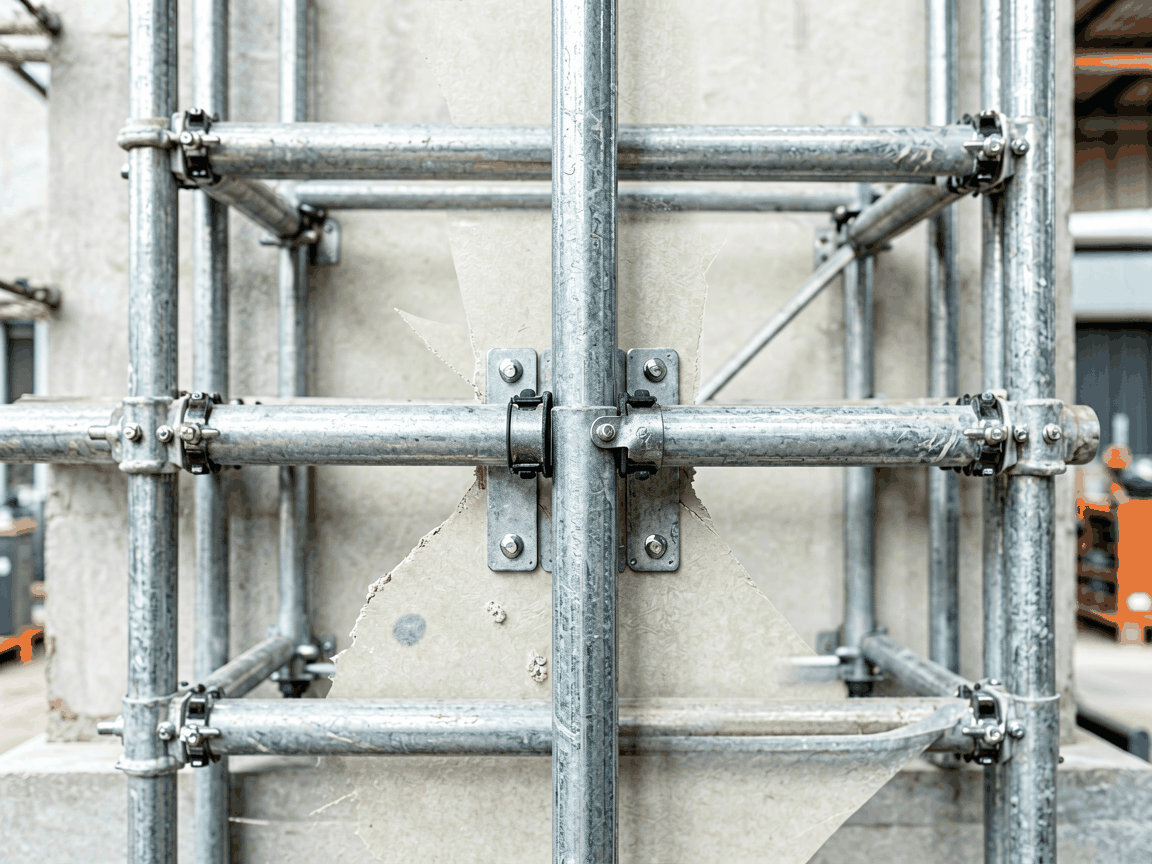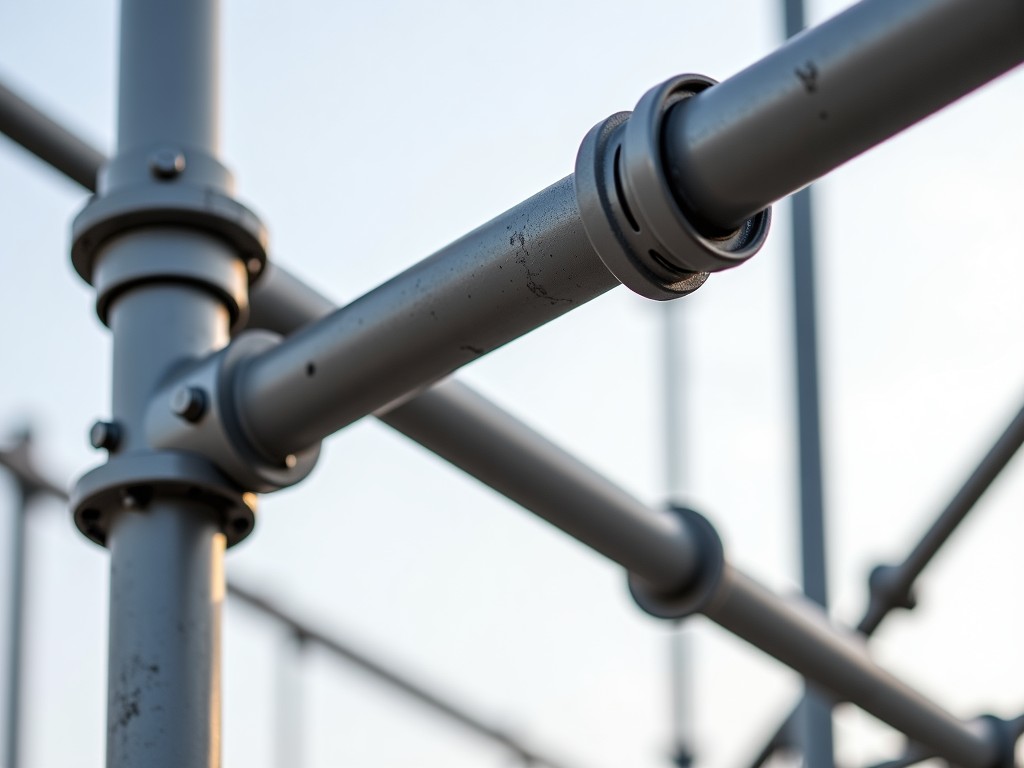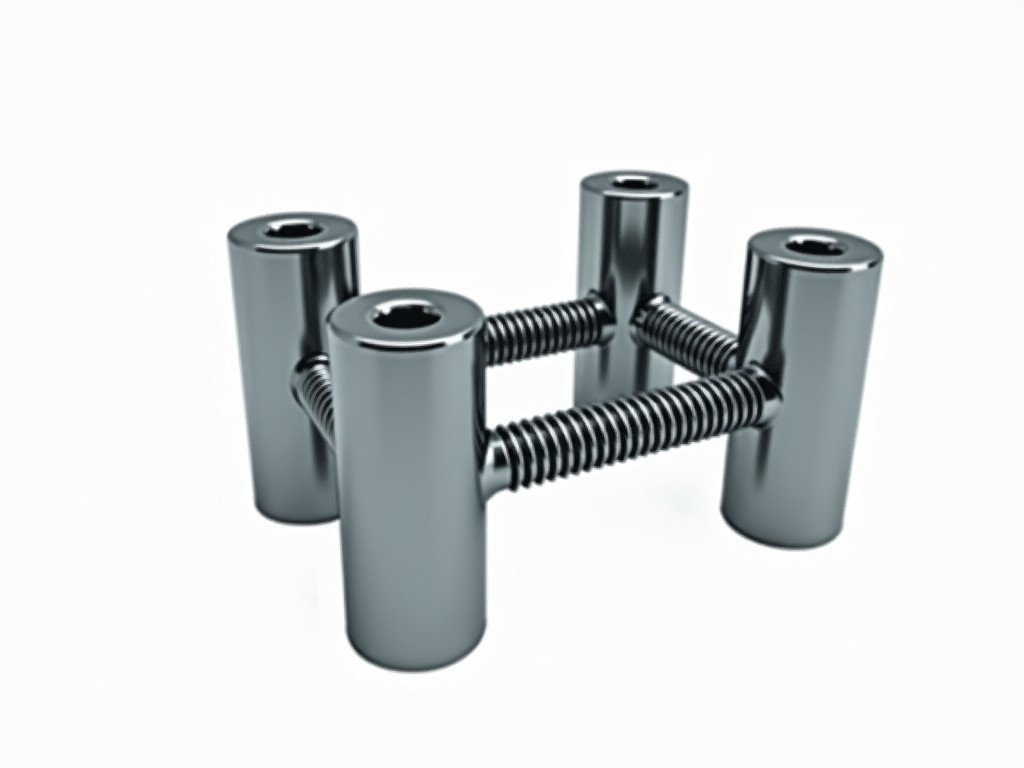
Scaffold double swivel clamp couplers are critical connection components in temporary steel scaffolding systems, designed to join two tubes at variable angles while maintaining rotational freedom in both planes. Unlike fixed-angle couplers, they allow independent 360-degree rotation around each tube axis, enabling precise alignment in complex geometries where standard right-angle or swivel couplers lack sufficient flexibility. This dual-axis articulation is essential for erecting scaffolds on uneven terrain, around curved structures, or when connecting diagonal bracing at non-standard angles.
The core mechanism consists of two semicircular clamping jaws, each hinged to a central pivot pin that allows independent rotation. Each jaw set tightens around a scaffold tube via toggle bolts or threaded spindles, generating radial compressive force to resist slip under load. The central pivot connects the two jaw assemblies through a load-bearing pin or bushing system, permitting angular adjustment in the second plane. High-strength steel grades such as S355JR or equivalent are typically used for the main body, with hardened pivot pins (often 42CrMo4) to withstand cyclic shear and bearing stresses without deformation.
Load capacity is governed by the clamp’s resistance to radial slippage and pivot shear strength. Typical safe working loads (SWL) for double swivel couplers range from 2.2 kN to 3.5 kN per tube, depending on tube diameter (usually 48.3 mm OD), wall thickness, and bolt torque. Testing standards such as EN 74 or BS 1139 define performance criteria, including slip resistance under combined tension and shear. Proper installation requires torqueing toggle bolts to manufacturer-specified values—commonly 50–70 Nm—to ensure consistent clamping force without overstressing the tube or fastener threads.
Double swivel clamps are indispensable in scaffolding configurations where geometric complexity prevents the use of standard couplers. Their primary value lies in enabling load-transfer connections at arbitrary angles without inducing bending moments in the tubes due to misalignment.
Common applications include:
In each case, the coupler eliminates the need for costly tube cutting, bending, or fabrication of custom nodes, reducing both labor time and material waste while maintaining structural integrity.
| Component | Standard Material | Optional Upgrade | Finish |
|---|---|---|---|
| Clamp Body | S355JR hot-rolled steel | S355J2 (impact-tested) | Hot-dip galvanized (min 55 µm) |
| Pivot Pin | 42CrMo4 quenched and tempered | Stainless steel 1.4401 (AISI 316) | Galvanized or passivated |
| Toggle Bolts | 8.8 grade steel | 10.9 grade or A2-70 stainless | Galvanized or black oxide |
| Bushings (if used) | Bronze or PTFE-lined steel | Nylon or PEEK | Self-lubricating |
Material selection depends on environmental exposure, load cycles, and maintenance accessibility. For offshore or chemical plant environments, stainless steel pivot pins and bushings are recommended to prevent corrosion-induced seizure. In high-cycle applications, hardened bushings reduce fretting wear at the pivot interface.
Each batch undergoes dimensional verification of jaw gap, pivot pin diameter, and bolt thread pitch to ensure interchangeability and consistent clamping performance. Mechanical testing includes:
Traceability is maintained via batch marking on the coupler body, linking each unit to raw material certificates and test records. Visual inspection checks for casting defects, flash, or deformation in the jaw geometry that could compromise clamping symmetry.
Correct installation begins with verifying tube cleanliness and diameter tolerance. Tubes should be free of paint, rust, or debris at the clamping zone to ensure full contact between jaw and surface. Bolts must be tightened incrementally in a crisscross pattern to prevent jaw binding.
Over-torquing can deform the scaffold tube or strip bolt threads, while under-torquing risks slip under load. Recommended torque values are typically marked on the coupler or provided in the technical datasheet. Periodic inspection during use should focus on:
Lubrication of the pivot point is generally unnecessary due to the dry-film lubricants inherent in galvanized surfaces or bushings, but may be applied in high-frequency environments using dry PTFE-based sprays to avoid attracting particulates.
| Coupler Type | Rotational Freedom | Typical Use Case | Limitation |
|---|---|---|---|
| Right-Angle Coupler | Fixed 90° | Standard grid scaffolding | No angle adjustment |
| Swivel Coupler | Single-axis 360° | Adjustable braces, diagonal ties | Cannot adjust angle between tubes |
| Double Swivel Coupler | Dual-axis 360° | Complex geometries, curved facades | Slightly higher cost, more parts |
| Putlog Coupler | Fixed 90° (one end) | Putlog transoms to standards | Limited to specific tube roles |
The double swivel coupler’s advantage is not in increased strength, but in geometric adaptability. It eliminates the need for tube bending or custom fabrication in scenarios where angular precision is required, reducing both lead time and on-site labor.
For project-specific requirements—including custom tube sizes, material grades, or certification documentation—technical support is available to review load paths, connection details, and compliance with local scaffolding regulations such as OSHA 1926 Subpart L or EN 12810-1.
To request a quotation, technical drawing, or sample evaluation, please provide: