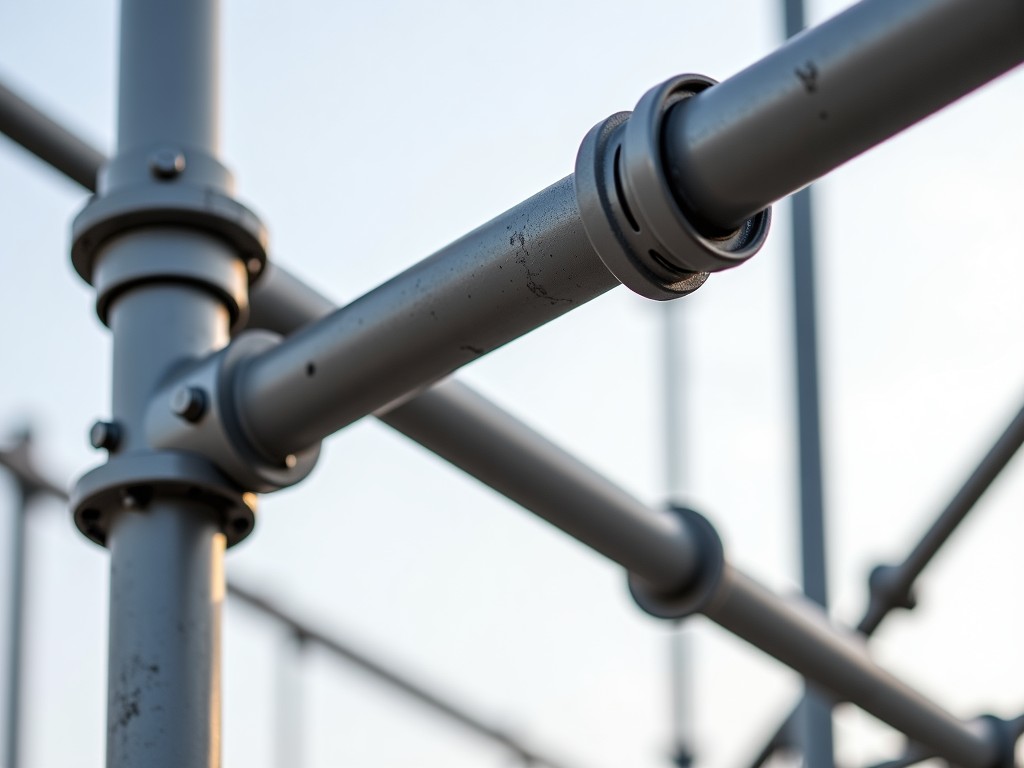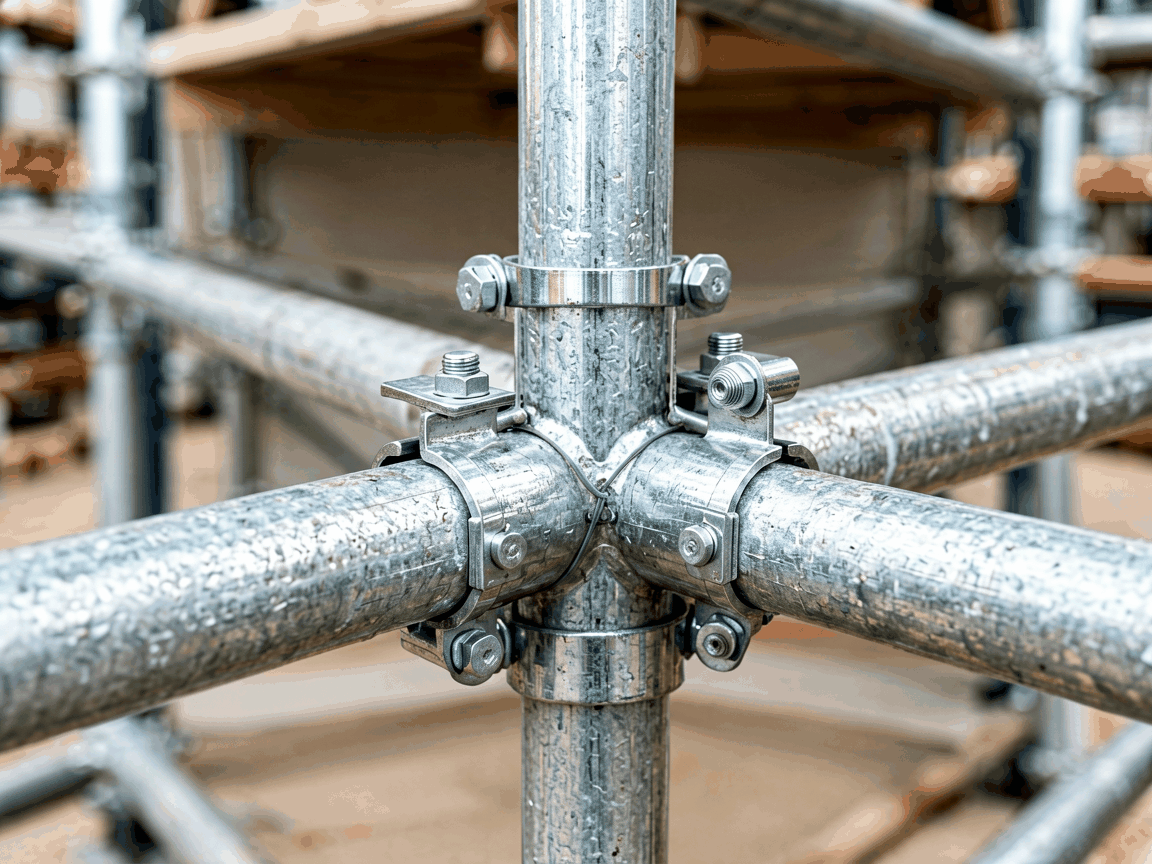
Right angle scaffold coupler clamps are mechanical fasteners designed to join two scaffold tubes at a 90-degree angle. They provide a secure, load-bearing connection essential for the structural integrity of temporary access and support systems. Unlike swivel couplers that allow rotational adjustment, right angle couplers fix the tubes in a permanent orthogonal orientation, making them ideal for bracing, ledger connections, and transom assemblies where angular stability is critical.
These couplers operate by clamping the scaffold tubes between two hardened steel jaws, tightened via bolts or nuts to generate sufficient frictional resistance against slip and deformation. The design ensures that axial, shear, and moment loads transferred through the joint are distributed evenly across the contact surfaces. Proper installation requires precise tube alignment and adequate torque application to achieve the rated safe working load without damaging the tube surface or compromising the clamp’s gripping capability.
The performance of right angle scaffold coupler clamps depends on material selection, geometric tolerances, and fastening mechanism. Most couplers are manufactured from drop-forged or pressed steel grades such as S355JR or equivalent, chosen for their yield strength, ductility, and resistance to fatigue under cyclic loading. The internal jaw surfaces are often machined or formed to match the outer diameter of standard scaffold tubes (typically 48.3 mm OD), ensuring full circumferential contact and minimizing stress concentrations.
Torque requirements for the locking bolts typically range from 50 to 70 Nm, depending on the bolt size (commonly M12 or M14) and thread pitch. This torque range is calibrated to produce a clamping force sufficient to resist slip under design loads while avoiding over-tightening that could deform the tube or strip the threads. The coupler’s safety factor is generally designed to meet or exceed EN 74 or ANSI/ASSE A10.8 standards, with a typical safe working load (SWL) of 6.25 kN per tube in shear and 3.6 kN in tension when tested according to prescribed procedures.
While carbon steel is the standard material for general construction applications, alternative materials are available for specific environmental or regulatory demands. Hot-dip galvanizing is the most common surface treatment, providing a zinc coating thickness of approximately 55 µm to enhance corrosion resistance in outdoor environments. For use in highly corrosive settings such as marine or chemical processing areas, stainless steel grades like 304 or 316 may be specified, though they come at a higher cost and require verification of load capacity equivalence.
Some manufacturers offer couplers with reinforced gussets or thicker cross-sections for heavy-duty applications, such as shoring or formwork support, where higher bending moments are expected. These variants may feature increased material thickness in the body or additional stiffening ribs to improve rigidity without significantly increasing weight. The choice between standard and reinforced models should be based on a structural analysis of the expected loads, not solely on cost considerations.
| Parameter | Typical Value | Notes |
|---|---|---|
| Tube Compatibility | 48.3 mm OD | Standard scaffold tube size; other diameters available upon request |
| Material | S355JR equivalent carbon steel | Hot-dip galvanized to ≥55 µm coating thickness |
| Safe Working Load (Shear) | 6.25 kN | Per tube, EN 74 compliant |
| Safe Working Load (Tension) | 3.6 kN | Depends on correct installation and torque |
| Bolt Torque | 50–70 Nm | M12 or M14 galvanized bolts; use calibrated torque wrench |
| Surface Treatment | Hot-dip galvanized | Alternative: stainless steel (304/316) or powder coating |
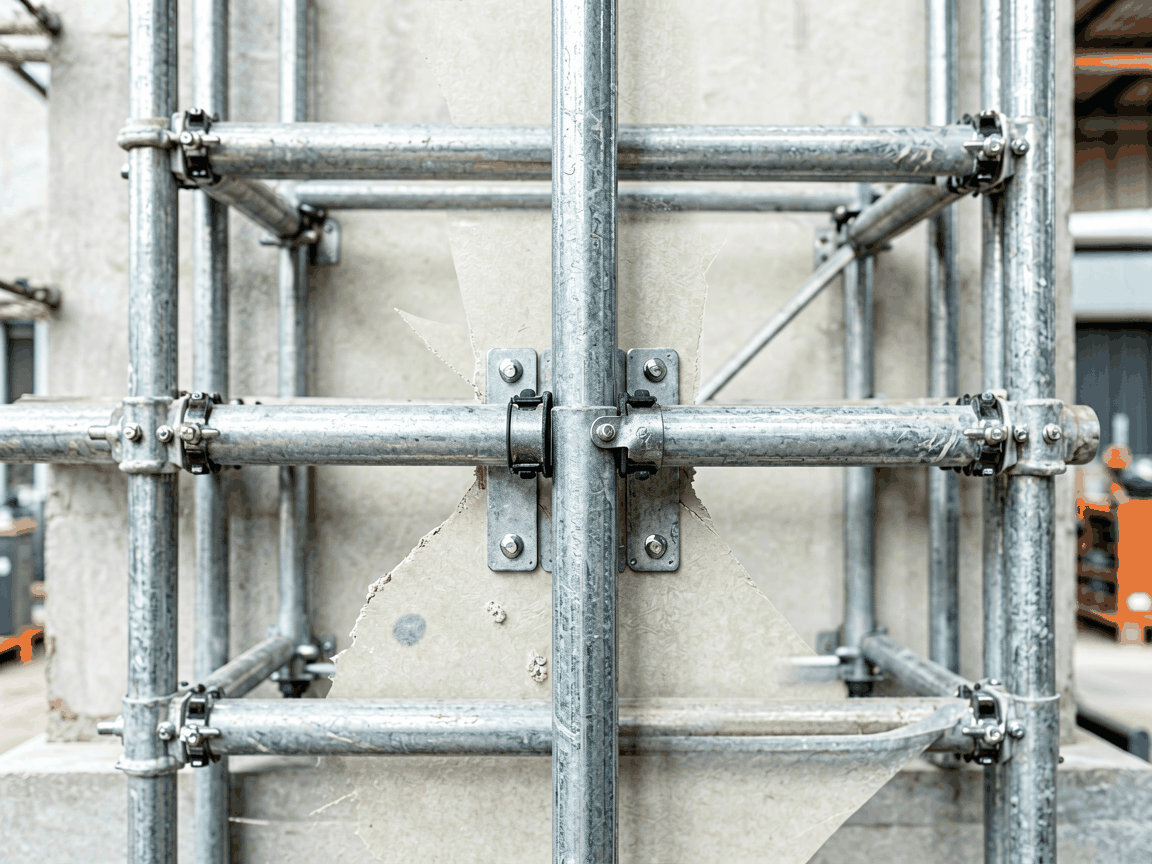
Right angle scaffold coupler clamps are primarily used to connect horizontal members (ledgers or transoms) to vertical standards in modular scaffolding systems. This configuration forms the basic grid that supports working platforms, guardrails, and toe boards. By fixing the joint at 90 degrees, these couplers prevent lateral sway and maintain the geometric accuracy required for safe load distribution across the scaffold bay.
In shoring and formwork applications, right angle couplers secure diagonal braces to vertical posts, creating triangulated systems that resist buckling under axial compression. The rigidity of the joint is critical here, as any rotational movement could compromise the load path and lead to sudden failure. Similarly, in suspended scaffolding or cantilever systems, these couplers anchor tie-back tubes to the main structure, where resistance to withdrawal and shear forces is paramount.
Beyond traditional construction, right angle couplers are employed in event staging, exhibition stands, and temporary roofing systems where rapid assembly and disassembly are required. Their reliability under repeated loading cycles makes them suitable for temporary structures that undergo frequent reconfiguration. However, users must inspect couplers before each use for signs of wear, deformation, or thread damage, as compromised components can fail catastrophically under load.
Manufacturing quality begins with raw material verification, including mill test certificates for chemical composition and mechanical properties. Forging or pressing dies are maintained to tight tolerances to ensure consistent jaw geometry and bolt hole alignment. After forming, each coupler undergoes visual inspection for cracks, laps, or incomplete filling—defects that could initiate failure under stress. Dimensional checks confirm internal dimensions match tube OD within allowable tolerances, typically ±0.5 mm, to ensure proper fit and clamping efficiency.
Load testing is conducted on sample batches to verify compliance with EN 74 or equivalent standards. This involves applying incremental forces to the joint in shear and tension modes while monitoring for slip or deformation. Proof loads are typically set at 2 times the SWL, with ultimate load capacity expected to exceed 4 times SWL before macroscopic deformation occurs. Torque-tension relationships are also validated to ensure that the specified bolt torque produces the intended clamping force without over-stressing the fastener.
For end users, correct installation is as critical as manufacturing quality. Tubes must be clean, straight, and free of burrs or scale before insertion into the coupler. The bolts should be tightened incrementally in a crisscross pattern to evenly distribute clamping force. Using a calibrated torque wrench is strongly recommended, as guesswork can lead to under-torquing (risk of slip) or over-torquing (risk of thread stripping or tube ovalization). After assembly, the joint should be inspected to confirm that the tubes are fully seated and the coupler body shows no signs of distortion.
When specifying right angle scaffold coupler clamps, procurement teams should prioritize compliance with recognized standards over price alone. Request documentation including material certifications, galvanization thickness reports, and test results from independent laboratories. Verify that the manufacturer follows a documented quality management system, such as ISO 9001, and that their products are traceable from raw material to finished batch. Avoid couplers with unclear markings or missing manufacturer identification, as these hinder accountability and recall effectiveness.
Consider the total cost of ownership, not just the unit price. A coupler that resists corrosion better or maintains its clamping force over more reuse cycles reduces replacement frequency and downtime. For projects in aggressive environments, investing in stainless steel or specialized coatings may be justified by lower lifecycle costs. Always confirm that the supplier can provide replacement parts and technical support throughout the project duration, especially for long-term or multi-phase installations.
For technical inquiries, customization requests, or quotation details, please contact our engineering team to discuss your specific project requirements.