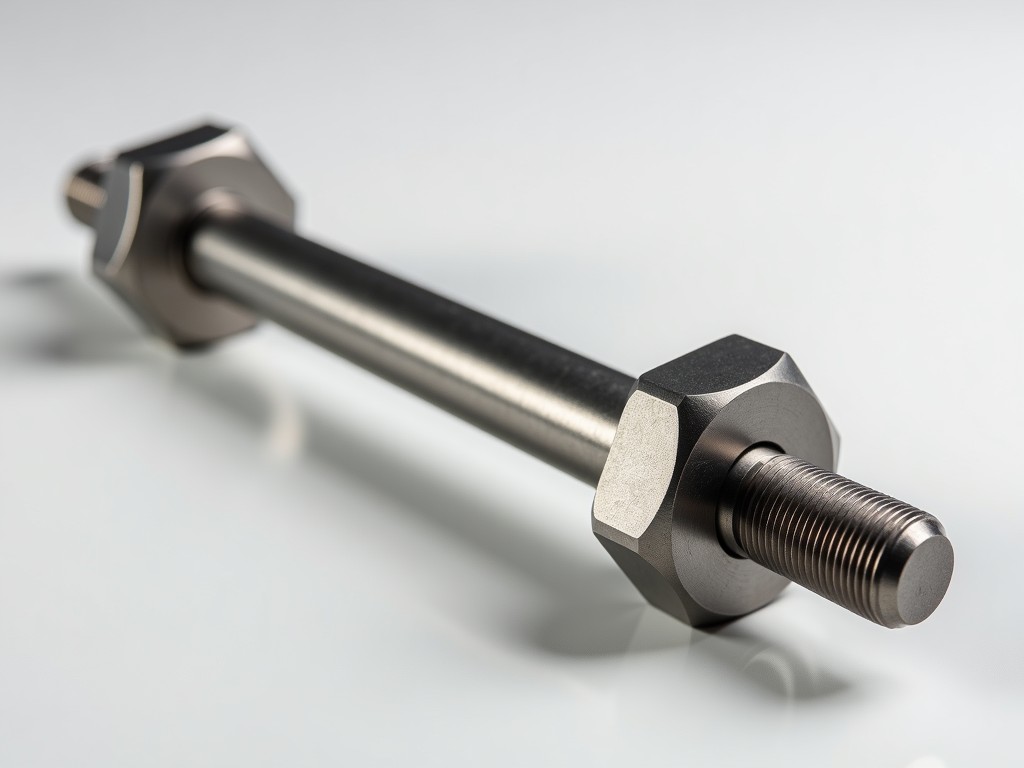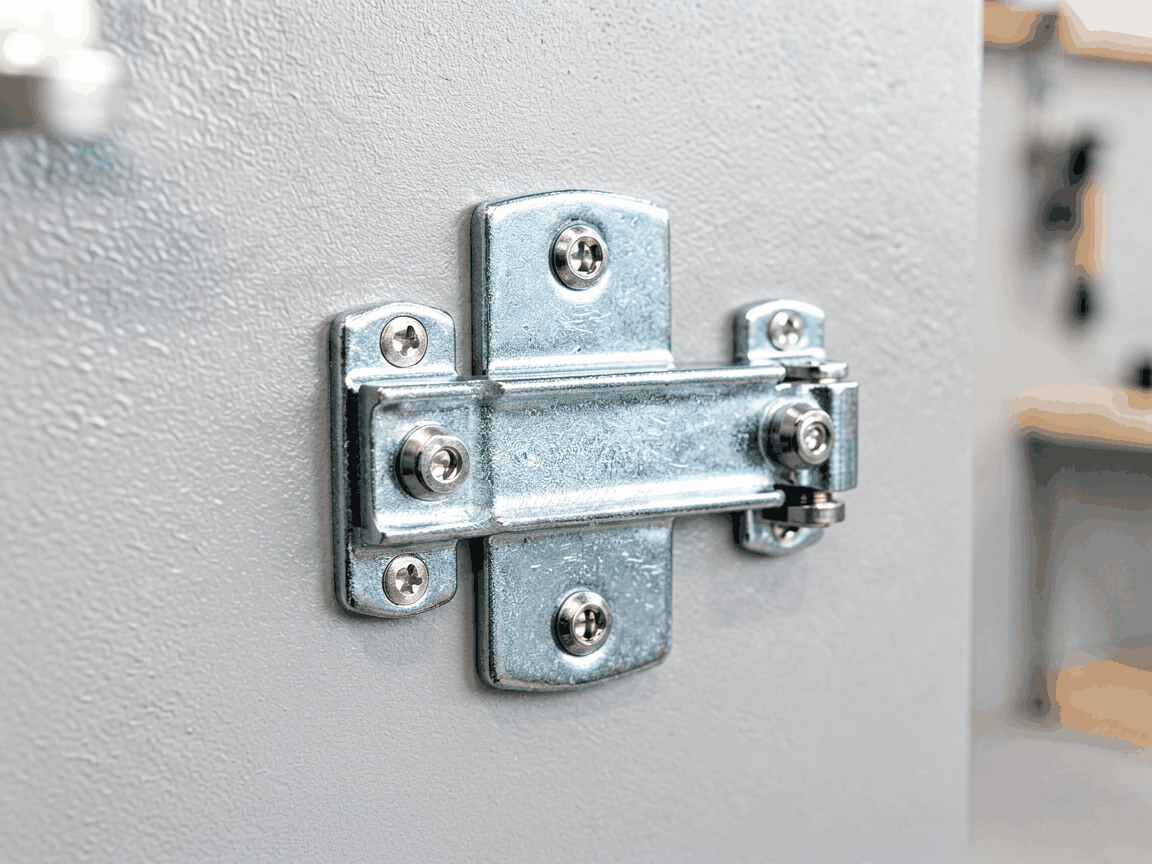
Rapid clamps for shuttering are mechanical fastening devices designed to secure formwork panels during concrete placement. They provide temporary, adjustable attachment between shuttering components such as plywood, steel, or aluminum formwork, enabling quick assembly and disassembly without specialized tools. These clamps are engineered to withstand lateral pressure from fresh concrete while maintaining alignment and preventing movement that could compromise surface finish or dimensional accuracy.
The effectiveness of a rapid clamp depends on its ability to deliver consistent clamping force with minimal operator effort. Most designs incorporate a toggle or cam mechanism that converts linear handle movement into high mechanical advantage, allowing a single worker to apply forces exceeding 5 kN with less than 200 N of input force. The clamping jaw geometry is typically contoured to match common formwork profiles, distributing load across a broad contact area to prevent localized deformation of thin materials like plywood or galvanized steel.
Material selection balances strength, weight, and corrosion resistance. High-tensile steel grades such as S355 or equivalent are commonly used for load-bearing components, often treated with hot-dip galvanizing or zinc plating to resist alkaline concrete splash and moisture exposure. Pivot pins and wear surfaces may use hardened steel or bronze bushings to reduce galling under repeated cycling. Some lightweight variants use extruded aluminum alloys for the handle and linkage, though these are generally limited to lower-pressure applications due to lower yield strength.
Clamping force is not arbitrary; it must exceed the expected lateral pressure from wet concrete to prevent formwork bulging. For typical wall heights up to 3 meters, lateral pressure ranges from 20 to 40 kN/m² depending on pour rate and concrete slump. A properly sized rapid clamp should provide a minimum clamping force of 4–6 kN per unit, with spacing determined by formwork stiffness and panel thickness. Adjustment range accommodates variations in formwork thickness—commonly 18 mm plywood, 20–25 mm steel facing, or composite systems—typically allowing 0–50 mm of jaw opening.
| Parameter | Typical Range |
|---|---|
| Clamping Force | 4–6 kN per clamp |
| Adjustment Range | 0–50 mm jaw opening |
| Material (Load-Bearing) | S355 steel, hot-dip galvanized |
| Handle Force Required | < 200 N for full clamping |
| Cycle Life (Typical) | >5,000 operations |
In wall formwork, rapid clamps are typically installed at vertical intervals of 600–800 mm to resist bowing of the sheathing. For column formwork, where pressure is circumferential and more uniform, spacing may increase to 1,000 mm, but clamps must resist torsional twist. In slab edge systems, clamps often connect perimeter beams to dropheads or shore heads, requiring resistance to both vertical uplift and lateral drift. The choice between fixed-throat and wide-throat designs depends on whether the clamp must bridge gaps caused by formwork ties, stiffeners, or embedded items.
Surface preparation affects performance. Rust, concrete buildup, or paint on clamping surfaces reduces friction and can lead to slippage under load. Manufacturers recommend periodic cleaning of jaw faces and lubrication of pivot points with dry-film lubricants to avoid attracting debris. In reuse cycles, inspection should focus on jaw wear, pin elongation, and crack initiation at stress concentrators like handle roots or toggle joints—areas prone to fatigue under cyclic loading.
Standard rapid clamps suit most modular formwork systems, but project-specific constraints may require adaptation. Custom throat depths accommodate oversized formwork or insulated panels. Extended handles improve leverage in confined spaces where operator access is limited. Some designs integrate with formwork alignment tools such as clamps with built-in wedges or adjustable spreaders to maintain panel gap consistency. For automated or high-repetition sites, pneumatic or hydraulic actuators can replace manual handles, though this increases cost and maintenance complexity.
Compatibility with accessories is often overlooked. Clamps must interface reliably with formwork accessories like tie holders, wing nuts, or spreader rods without inducing misalignment. Manufacturers may offer adapter plates or specialized jaws to ensure force is transmitted axially through the formwork system. Documentation should include recommended tightening sequences and maximum allowable misalignment angles to prevent eccentric loading that reduces effective capacity.
Consistency in performance relies on controlled manufacturing processes. Critical dimensions such as jaw parallelism, pivot hole alignment, and handle travel are inspected using gauges or CMMs to ensure interchangeability and predictable force delivery. Hardness testing of wear surfaces verifies resistance to abrasion and indentation. Batch testing of clamping force via calibrated load cells confirms that heat treatment and assembly processes meet design specifications. Traceability through batch numbers supports recall or investigation if field issues arise.
End-of-life considerations influence total cost of ownership. Galvanized coatings can be re-applied after surface preparation, extending service life beyond the initial zinc layer. Steel components are fully recyclable at end of use. Designs that avoid press-fit or welded assemblies in favor of bolted or pinned connections simplify disassembly for repair or material recovery. Lubricant selection should avoid silicones or petroleum-based products that could contaminate concrete surfaces or interfere with finish adhesion.
For technical inquiries, customization requests, or quotation details, contact our engineering team to discuss your specific formwork requirements and project constraints.
Contact Us