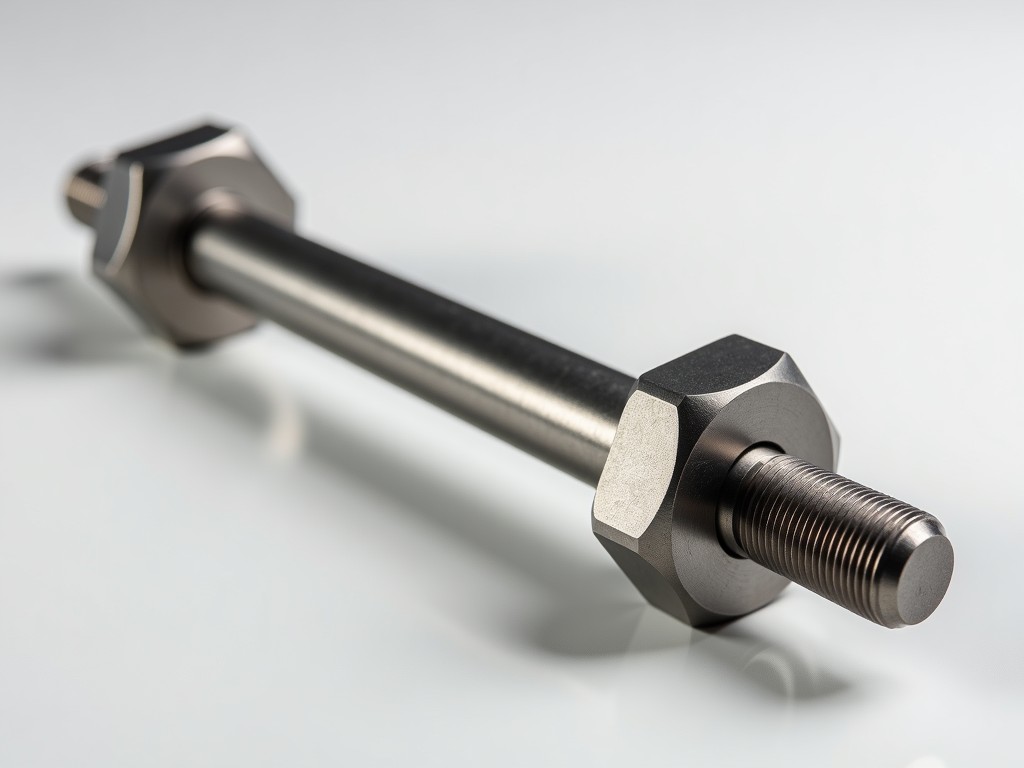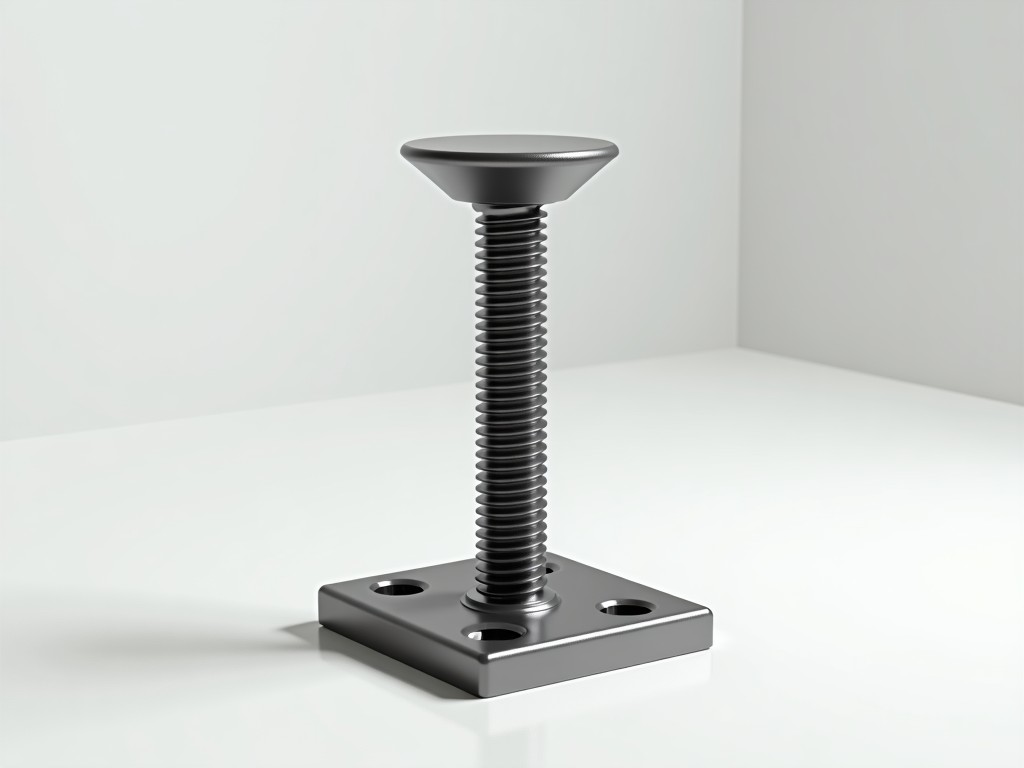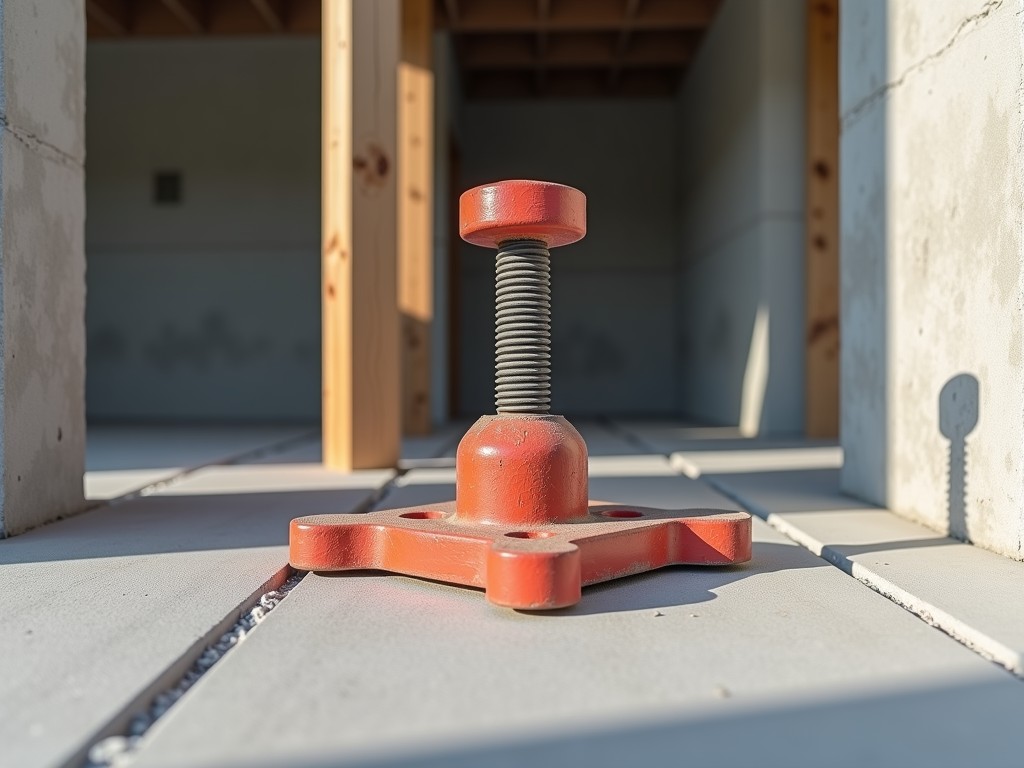
A prop jack for shuttering concrete is a height-adjustable steel support system designed to transfer vertical loads from formwork to the ground or structural slab during concrete pouring and curing. It replaces traditional timber props with a mechanically adjustable alternative that maintains consistent pressure and alignment under varying load conditions. The system consists of a threaded inner tube, outer sleeve, base plate, top plate, and a handle or pin mechanism for precise height control. Load is transferred through direct steel-to-steel contact, minimizing creep and settlement compared to wood-based solutions.
Prop jacks are engineered to support axial loads ranging from 20 kN to 60 kN depending on tube diameter, wall thickness, and thread pitch. The inner tube typically features Acme or trapezoidal threading to resist back-driving under load while allowing smooth manual adjustment via a tommy bar or ratchet handle. Outer tubes are commonly made from S235JR or Q235B steel with a minimum yield strength of 235 MPa, providing elastic deformation under overload before permanent failure. Wall thickness varies from 2.5 mm to 4.0 mm, directly influencing buckling resistance per Euler’s formula for slender columns under eccentric loading.
Base and top plates are forged or pressed from 6 mm to 8 mm steel to distribute load over a larger area, reducing ground pressure on soft soils or preventing punch-through on formwork plywood. Plate diameters range from 120 mm to 180 mm, selected based on expected soil bearing capacity or formwork stiffness. The threaded mechanism includes a locking pin or spring-loaded catch to prevent unintended descent during vibration or impact loads from concrete placement. Adjustment range typically spans 300 mm to 600 mm, enabling use across varying slab thicknesses and site gradients.
Primary structural components are manufactured from hot-rolled or cold-formed carbon steel due to its high strength-to-cost ratio and predictable plastic behavior under overload. Surface treatment is critical for durability in alkaline concrete environments and repeated wet-dry cycles. Common finishes include hot-dip galvanizing (minimum 55 μm zinc coating per EN ISO 1461) or electro-galvanizing with chromate sealing for reduced white rust. In high-moisture or marine-adjacent sites, powder-coated or stainless steel (AISI 304) variants are available upon request, though at increased cost.
Threaded interfaces are often lubricated with molybdenum disulfide-based grease to prevent galling and ensure consistent torque-to-load relationship over hundreds of cycles. Weld joints between tubes and plates are inspected for penetration and lack of porosity, as these are primary failure points under cyclic loading. Manufacturers may specify normalized or stress-relieved heat treatment for tubes exceeding 3.5 mm wall thickness to reduce residual stresses from forming operations. Material test certificates (MTCs) are available for batch traceability upon customer request.
Height adjustment is achieved by rotating the inner tube via a tommy bar inserted into holes in the top plate or using a detachable ratchet handle. One full thread revolution typically raises or lowers the jack by 3 mm to 5 mm, depending on thread pitch (e.g., T8 or T10). This fine adjustment allows precise alignment of formwork to within ±5 mm, critical for achieving specified concrete cover and surface finish. The mechanical advantage of the thread system enables a single operator to support loads exceeding 40 kN with less than 150 N of applied force at the handle.
Safety features include a mechanical stop to prevent over-extension beyond the safe working length and a secondary locking pin that engages through aligned holes in the inner and outer tubes. This dual-lock system prevents collapse if the primary thread nut loosens due to vibration. Some designs incorporate a spherical or tilting top plate (up to 5°) to accommodate minor formwork misalignment without inducing bending moments in the jack. All moving parts are designed to remain accessible for lubrication and inspection without disassembly.
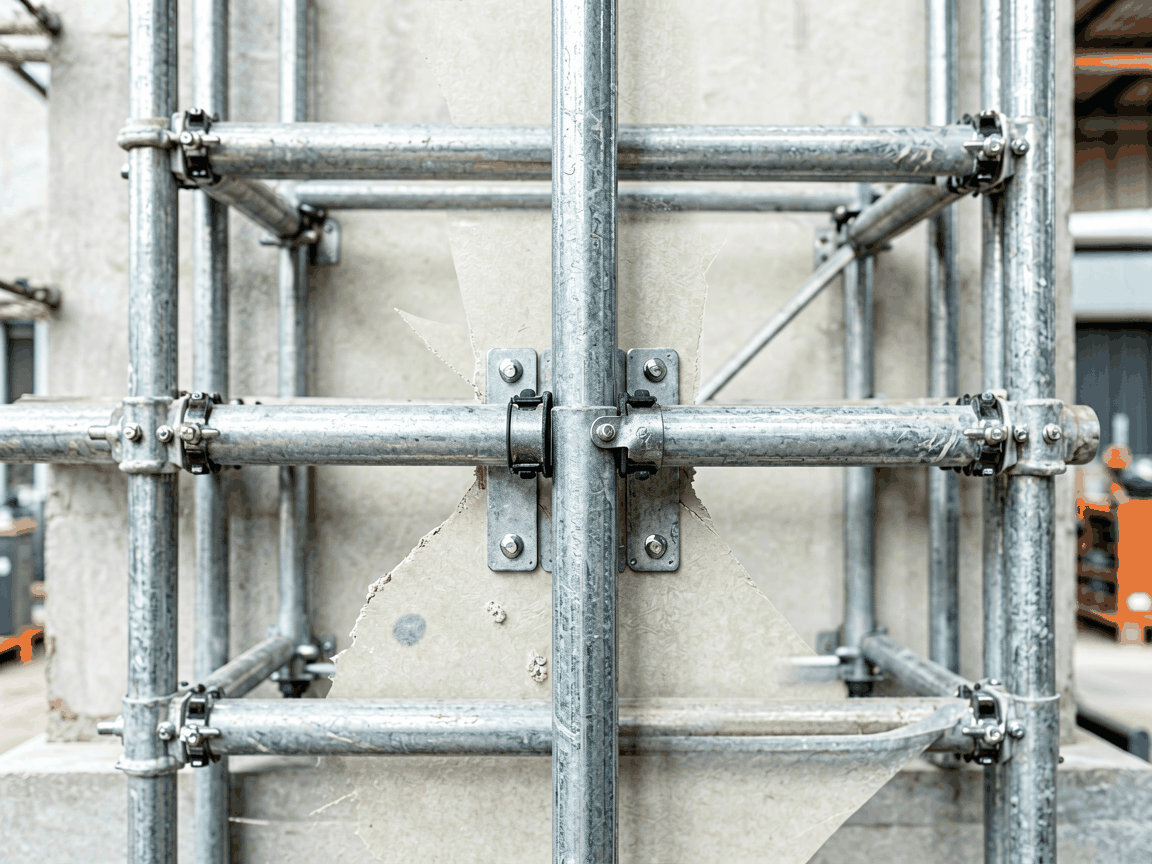
Prop jacks are primarily used in horizontal slab formwork where they support beams, joists, or decking that carry the weight of wet concrete, reinforcement, and live loads during pouring. Unlike fixed shoring, their adjustability accommodates site gradients, varying slab thicknesses (e.g., 150 mm to 500 mm), and camber requirements in suspended slabs. They are essential in high-rise construction where floor-to-floor heights differ and reusable formwork systems require rapid reconfiguration between pours.
In wall and column formwork, prop jacks resist lateral pressure from fresh concrete by supporting walers or strongbacks tied to the form panels. Their vertical load capacity must exceed the horizontal force converted through the waler angle, typically requiring a safety factor of 1.5 to 2.0 against overturning. For curved or complex geometries, adjustable props allow fine-tuning of support points to maintain uniform pressure and prevent bulging. They are also used in underpinning and repair work to temporarily support existing structures during modification.
| Parameter | Prop Jack (Steel) | Timber Prop | Adjustable Steel Shore |
|---|---|---|---|
| Load Capacity (kN) | 20–60 | 10–25 (variable) | 25–50 |
| Height Adjustment Range | 300–600 mm | Fixed (requires cutting) | 250–500 mm |
| Reusability | >50 cycles | 5–10 cycles | >30 cycles |
| Corrosion Resistance | Galvanized available | None | Galvanized available |
| Adjustment Precision | ±5 mm | ±20 mm | ±8 mm |
| Weight per Unit | 4–7 kg | 2–4 kg | 5–8 kg |
Compared to timber props, steel prop jacks offer superior load predictability, resistance to moisture-induced swelling or rotting, and consistent performance across multiple reuse cycles. Timber exhibits significant creep under sustained load and requires frequent replacement due to surface damage, increasing labor and material costs over time. Adjustable steel shores (e.g., frame shores) provide higher load capacity but are bulkier, heavier, and less suited for tight spaces or slab-edge applications where prop jacks excel due to their compact footprint and vertical load path.
The modular nature of prop jacks allows dense grid placement under formwork, enabling uniform load distribution and minimizing differential settlement. Their lightweight design facilitates manual handling and rapid repositioning, reducing crane dependency during formwork stripping and re-erection. Maintenance involves simple visual inspection for bends, thread damage, or coating degradation, with lubrication of the threaded interface recommended every 10–15 uses to maintain operational efficiency.
Standard prop jacks are available in nominal heights of 1.0 m, 1.5 m, and 2.0 m (fully retracted), with extension ranges tailored to common slab thicknesses. Custom lengths can be manufactured for deep beams, transfer slabs, or basement retrofits where standard sizes do not provide sufficient adjustment. Thread diameter, pitch, and tube wall thickness are adjusted based on calculated load requirements and slenderness ratio to prevent buckling under eccentric loading from formwork misalignment or uneven concrete placement.
Top and base plates can be modified for specific formwork systems—such as hole patterns for clip-in connections to aluminum beams or enlarged diameters for use on weak subgrades. Surface treatments are selected based on environmental exposure: standard galvanizing for temporary indoor use, thicker coatings for outdoor storage, or stainless steel for food-grade or pharmaceutical facilities requiring corrosion-free materials. Packaging options include bulk palletizing, banded bundles, or reusable steel stillages for site logistics and loss prevention.
Manufacturers provide load tables and deflection charts based on ISO 12811-1 or EN 1065 standards, allowing engineers to verify suitability for specific pour rates, concrete pressures, and dynamic loads from vibrators. Customization is driven by structural calculations rather than catalog selection, ensuring the prop jack system meets safety factors and serviceability limits defined in local formwork codes. Technical support includes assistance with layout planning, load distribution analysis, and inspection checklists for rental or resale applications.