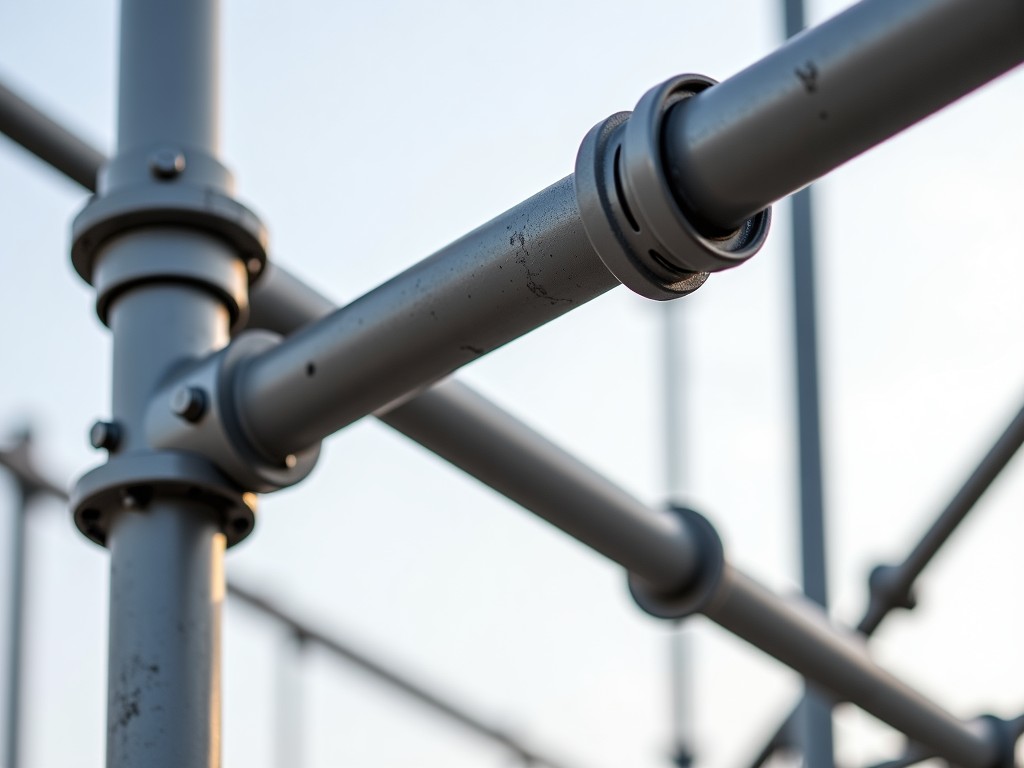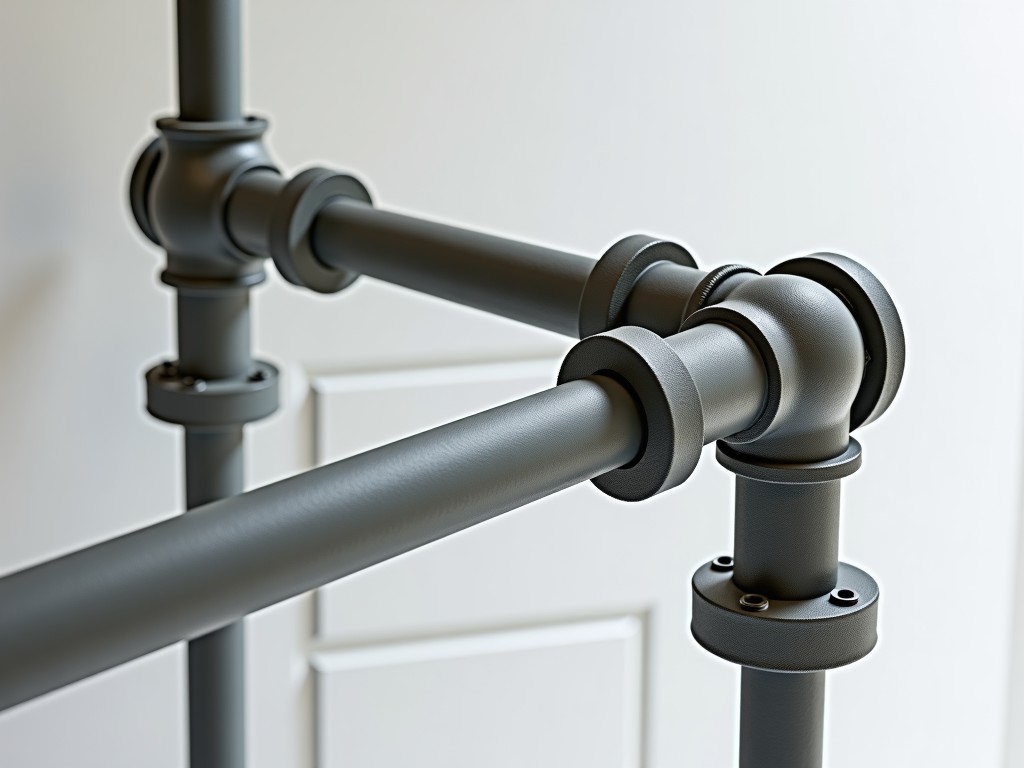
An oyster scaffold coupler is a mechanical fitting designed to join two scaffold tubes at a fixed 90-degree angle, forming a rigid connection critical for temporary support structures. Unlike swivel couplers that allow rotational adjustment, oyster couplers lock tubes in a perpendicular orientation, providing predictable load paths in vertical and horizontal bracing systems. The name derives from the coupler’s two-shell design, which encircles the tubes like an oyster clamping shut, distributing clamping force evenly around the circumference. This geometry minimizes stress concentrations on the tube wall compared to single-bolt designs, reducing the risk of localized deformation under sustained load.
Industrial applications typically involve steel tubes with outer diameters of 48.3 mm, the standard size for scaffolding systems compliant with EN 74 or AS/NZS 1576. The coupler’s internal bore is precision-machined to accept this diameter with a controlled interference fit, ensuring slip resistance under design loads. Material selection favors hot-rolled structural steel grades such as S275JR or equivalent, chosen for their yield strength (>275 MPa) and ductility, which allows the coupler to deform plastically before catastrophic failure—a key safety feature in overload scenarios. Surface treatment usually involves hot-dip galvanizing to a minimum coating thickness of 55 µm, providing corrosion protection in outdoor environments for 15–25 years depending on atmospheric conditions.
The mechanical performance of an oyster coupler is governed by three primary factors: clamping force, bearing area, and fastener integrity. Clamping force is generated by tightening high-tensile steel bolts (typically M12 or M16, property class 8.8) that draw the two coupler halves together. This force creates frictional resistance between the coupler’s inner surface and the scaffold tube, preventing axial or rotational slip. The bearing area—the contact surface between coupler and tube—is maximized by the coupler’s semi-circular geometry, which wraps approximately 180 degrees around each tube. This distribution reduces peak contact pressure, minimizing the likelihood of tube ovalization or coupler galling under cyclic loading.
Fastener integrity is equally critical. The bolts used must maintain preload under vibration and thermal cycling; therefore, they are often accompanied by lock washers or nylon-insert nuts to resist loosening. The coupler’s bolt holes are drilled and reamed to tight tolerances (±0.1 mm) to ensure proper bolt shear capacity and prevent elongation of the hole over time. Under ultimate load conditions, failure typically occurs either through bolt shear or tube crushing, not coupler fracture, which indicates that the coupler body is appropriately oversized relative to the tube. Design standards such as BS 1139 specify minimum safe working loads for couplers, often derived from 5:1 safety factors applied to ultimate test results.
Thermal expansion considerations also influence long-term performance. Steel scaffolding systems experience temperature-induced length changes; for example, a 6-meter tube exposed to a 30°C temperature rise will elongate by approximately 1.2 mm. While the oyster coupler itself does not accommodate axial movement, its rigid perpendicular joint helps maintain structural stability in braced frames where longitudinal expansion is managed through slip joints or expansion bays elsewhere in the system. This makes oyster couplers ideal for fixed-angle nodes in towers, façades, and suspended platforms where angular stability is paramount.
While hot-dip galvanized structural steel is the most common configuration, alternative materials and finishes are available to suit specific environmental or regulatory demands. In environments with high chloride exposure—such as coastal structures or chemical processing plants—hot-dip galvanizing may be insufficient over extended periods. In such cases, duplex systems (galvanizing followed by epoxy or polyurethane topcoats) can extend service life by providing both cathodic protection and a barrier layer. Stainless steel grades like 304 or 316L are also used where corrosion resistance is non-negotiable, though their higher cost and lower yield strength (~205 MPa for 304) require careful validation of load capacity.
For non-sparking applications in explosive atmospheres (e.g., oil refineries, grain silos), couplers may be manufactured from copper-beryllium alloys or aluminum bronzes, which eliminate ignition risk from impact or friction. These materials have lower strength than steel, so coupler dimensions are often increased to compensate, resulting in heavier but functionally equivalent parts. Interior dry environments—such as indoor construction or warehouse shelving—may utilize electro-galvanized or powder-coated finishes, which offer adequate corrosion resistance at lower cost while maintaining aesthetic uniformity. All material choices are subject to mill test certificates and traceability to ensure compliance with project specifications.
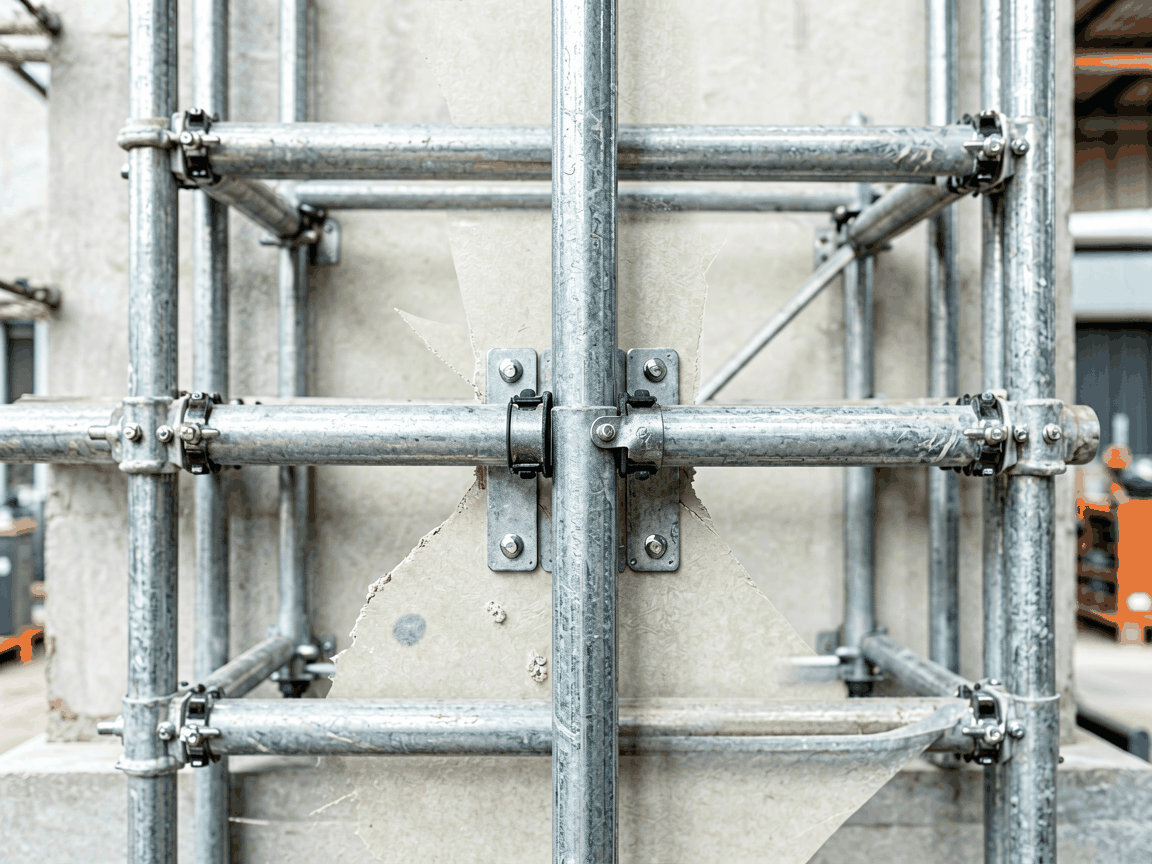
Oyster scaffold couplers are fundamental to the stability of frame scaffolding systems, where they connect vertical standards to horizontal ledgers at each lift level. This perpendicular joint creates a rigid rectangular grid that resists racking forces from wind, equipment loads, or worker movement. In façade scaffolding, oyster couplers secure tie tubes to the building structure at prescribed intervals, transferring lateral loads from the scaffold back to the building’s primary structure. Without reliable perpendicular connections at these nodes, the scaffold could sway or disengage under dynamic loads.
In suspended scaffolding systems, oyster couplers are used to construct the outrigger beams and counterweight frames that support the suspension mechanism. Here, the coupler’s ability to maintain a precise 90-degree angle under fluctuating loads is critical to preventing beam rotation or tipping. Similarly, in shoring and formwork systems for concrete construction, oyster couplers join vertical posts to horizontal walers, forming the load-bearing framework that supports wet concrete until it gains sufficient strength. The coupler’s resistance to slip under sustained static load ensures that formwork remains dimensionally accurate during pouring and curing.
Beyond construction, oyster couplers find use in temporary staging for events, access platforms in shipyards, and maintenance gantries in power plants. In each case, the coupler’s simplicity—requiring only two basic tools (a wrench for the bolts and a hammer for tube insertion)—combined with its predictable mechanical behavior, makes it a preferred choice for rapid assembly and disassembly. The standardized tube diameter ensures interchangeability across manufacturers, reducing logistical complexity on large-scale projects where multiple suppliers may be involved.
Manufacturing consistency is achieved through controlled forging or casting processes followed by CNC machining of critical surfaces. The coupler halves are typically produced via hot forging of steel billets, which aligns the grain structure with the direction of principal stresses, enhancing toughness and fatigue resistance. After forging, the parts undergo flash trimming, hole drilling, and surface preparation before galvanizing. Dimensional inspections verify bore diameter, bolt hole alignment, and angularity between the two coupler arms—each must maintain a 90-degree orientation within ±0.5 degrees to ensure proper tube engagement.
Mechanical validation includes proof load testing, where assembled couplers are subjected to incremental forces simulating real-world conditions. A typical test applies a 5 kN load perpendicular to the tube axis at the coupler’s mid-point, measuring slip resistance and permanent deformation. Ultimate load testing continues until failure, recording the mode (bolt shear, tube crushing, or coupler deformation) and force at rupture. These results inform the safe working load rating, which is usually marked on the coupler body. Non-destructive testing such as magnetic particle inspection may be applied to detect surface cracks in high-stress areas, particularly after welding or repair.
Traceability is maintained through batch numbering linked to material certificates, inspection records, and test reports. This allows users to verify compliance with standards such as EN 74-2, ANSI/ASSE A10.8, or CSA Z797. Suppliers typically provide documentation upon request, including mill test reports for raw material, galvanizing thickness certificates, and batch test results. Regular audits of manufacturing processes ensure that variations in raw material hardness, forging temperature, or coating adhesion do not accumulate to compromise product reliability over time.
| Characteristic | Oyster Coupler | Swivel Coupler |
|---|---|---|
| Function | Fixed 90-degree connection | Adjustable angle (0–360°) |
| Primary Use | Ledger-to-standard, facade ties, bracing | Diagonal bracing, irregular angles, temporary adaptations |
| Adjustability | None (fixed angle) | Full rotational adjustment |
| Slip Resistance | Higher (symmetrical clamping) | Lower (asymmetrical load on swivel pin) |
| Bolt Count | Typically 4 bolts (2 per tube) | Typically 4 bolts (2 per tube) |
| Failure Mode (Overload) | Bolt shear or tube crushing | Swivel pin shear or tube crushing |
| Maintenance Needs | Low (check bolt tightness) | Higher (lubricate swivel pin, check wear) |
Choosing the appropriate oyster coupler begins with confirming the scaffold tube diameter and wall thickness. Most systems use 48.3 mm OD tubes with wall thicknesses ranging from 3.2 mm to 4.0 mm; couplers are machined to accommodate this range with sufficient internal clearance for insertion while maintaining adequate wall contact. Using a coupler designed for a different tube size—such as 42.4 mm or 60.3 mm—will result in either loose fit (risk of slip) or excessive interference (difficult assembly, potential tube damage). Always verify compatibility with the specific tubing standard in use (e.g., EN 39, ASTM A53).
Next, evaluate the environmental conditions to determine coating requirements. For general outdoor use in urban or inland environments, standard hot-dip galvanizing provides sufficient protection. In marine, industrial, or high-humidity settings, consider duplex coatings or stainless steel. If the project specifies fire resistance ratings, note that while the coupler itself does not contribute to fire performance, its material must not degrade prematurely under heat exposure—galvanized steel retains strength up to approximately 200°C, beyond which zinc coating may volatilize.
Finally, consider logistical and ergonomic factors. Couplers with captive bolts or integrated washers reduce the risk of lost parts during assembly. Hex bolt heads (rather than square or proprietary drives) allow use of standard tools, improving efficiency on-site. For high-volume projects, suppliers may offer pre-assembled coupler-tube kits or custom packaging (e.g., palletized boxes with dividers) to streamline distribution. Always request samples for trial assembly before large-volume procurement to validate fit, ease of use, and compatibility with existing inventory.
For technical specifications, material certifications, or to discuss custom configurations for your project, contact our engineering team.
Request Information