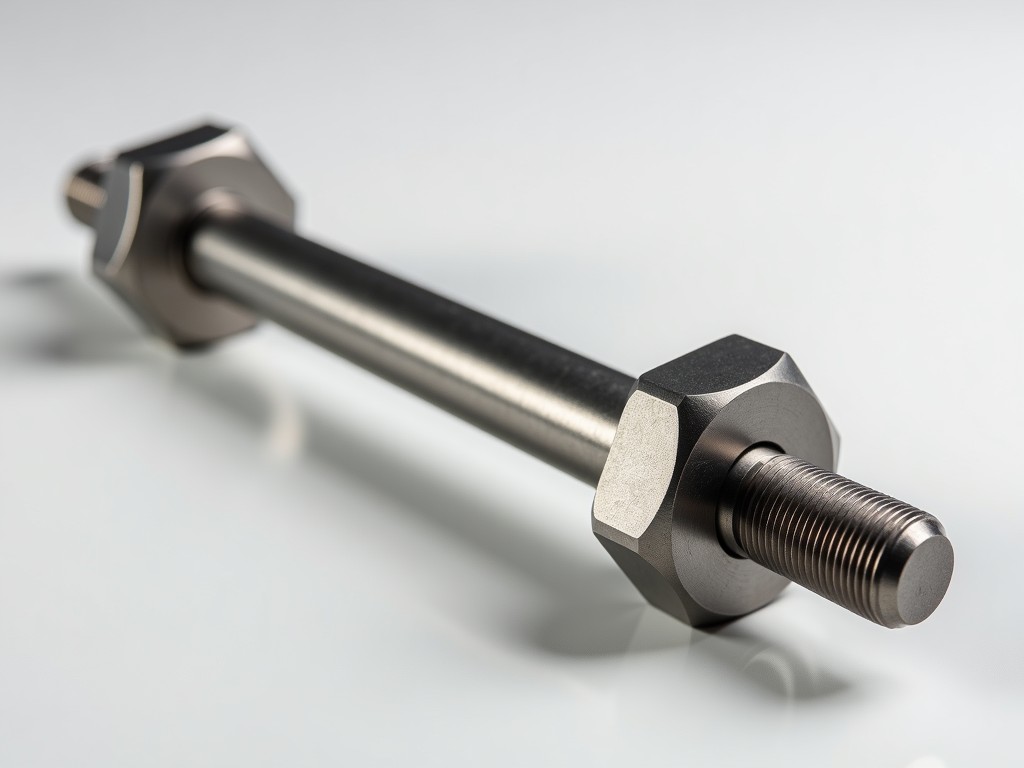
Wall shuttering systems rely on precise mechanical connections to maintain formwork integrity under lateral concrete pressure. The tie rod functions as the primary tensile member, transferring loads from the formwork panel to the walers or strongback while resisting bowing or deflection. Selecting the correct tie rod specification directly impacts safety, alignment accuracy, and reusable cycle life in high-rise, basement, and civil concrete applications.
The tie rod operates under pure tensile loading during concrete pour, with forces calculated based on pour height, concrete density, and spacing of walers. Standard design assumes a safety factor of 1.5 to 2.0 against yield, depending on regional codes and formwork class. The rod’s threaded ends must maintain full engagement with nuts or couplers to prevent stripping under cyclic loading, while the shank diameter resists buckling if subjected to accidental lateral impacts during handling or placement.
Elongation under load is a critical serviceability factor; excessive stretch leads to formwork bulging and concrete surface defects. To limit deflection, the rod’s stiffness (AE/L) must be sufficient to keep deformation under 1–2 mm per meter of height under full load. This requires balancing cross-sectional area with material modulus, particularly in tall pours where cumulative elongation affects vertical tolerances.
Common materials include C45 carbon steel for standard applications and 42CrMo4 alloy steel for higher strength or corrosive environments. C45 offers a tensile strength of 600–800 MPa and yield strength of 350–450 MPa after normalizing, suitable for most reusable systems. 42CrMo4, when quenched and tempered, achieves 900–1100 MPa tensile and 650–850 MPa yield, allowing smaller diameters for equivalent load capacity or extended service life in high-cycle usage.
Surface treatments are applied based on exposure conditions. Hot-dip galvanizing (min 60 µm zinc) provides barrier and sacrificial protection for general use, while epoxy coating or Dacromet®-type finishes are selected for alkaline concrete environments or reuse in aggressive climates. Threads are typically rolled post-heat treatment to improve fatigue resistance by inducing compressive residual stresses, critical for components subjected to repeated tension-compression cycles during stripping and reassembly.
Tie rods are manufactured to meet common formwork system interfaces, with M24, M27, and M30 thread diameters being most prevalent in wall applications. Lengths are typically offered in 50 mm increments from 500 mm to 3000 mm to accommodate standard waler spacing and panel heights. Custom lengths, thread types (e.g., trapezoidal or fine pitch), and end configurations (welded plates, forged eyes, or swivel couplers) are available upon request to match proprietary systems or special geometry requirements.
| Parameter | Typical Range | Notes |
|---|---|---|
| Thread Diameter | M20 – M36 | M24 and M27 most common for wall shuttering |
| Shank Diameter | 18–32 mm | Based on thread root and strength requirements |
| Standard Lengths | 500–3000 mm | 50 mm increments; custom lengths available |
| Tensile Strength (Min) | 600 MPa (C45) | 900 MPa available for 42CrMo4 QT |
| Surface Finish | Hot-dip galvanized | Epoxy, Dacromet, or bare upon request |
Each production lot undergoes material verification via mill test certificates (EN 10204 3.1) confirming chemical composition and mechanical properties. Dimensional inspections include thread pitch diameter, major/minor diameter, and length tolerance (±2 mm for lengths under 1500 mm, ±3 mm above). Thread go/no-go gauges verify functional fit with mating nuts or couplers before shipment. Visual inspection checks for surface defects, coating continuity, and straightness (<0.2% deviation over length).
For high-volume OEM suppliers, batch traceability is maintained from raw material receipt through final packaging. Laser marking or stamping on the rod shank provides permanent identification for quality tracking and recall readiness. Optional third-party testing (e.g., tensile proof load, hardness, or hydrogen embrittlement assessment) can be arranged based on project specifications or end-user requirements.
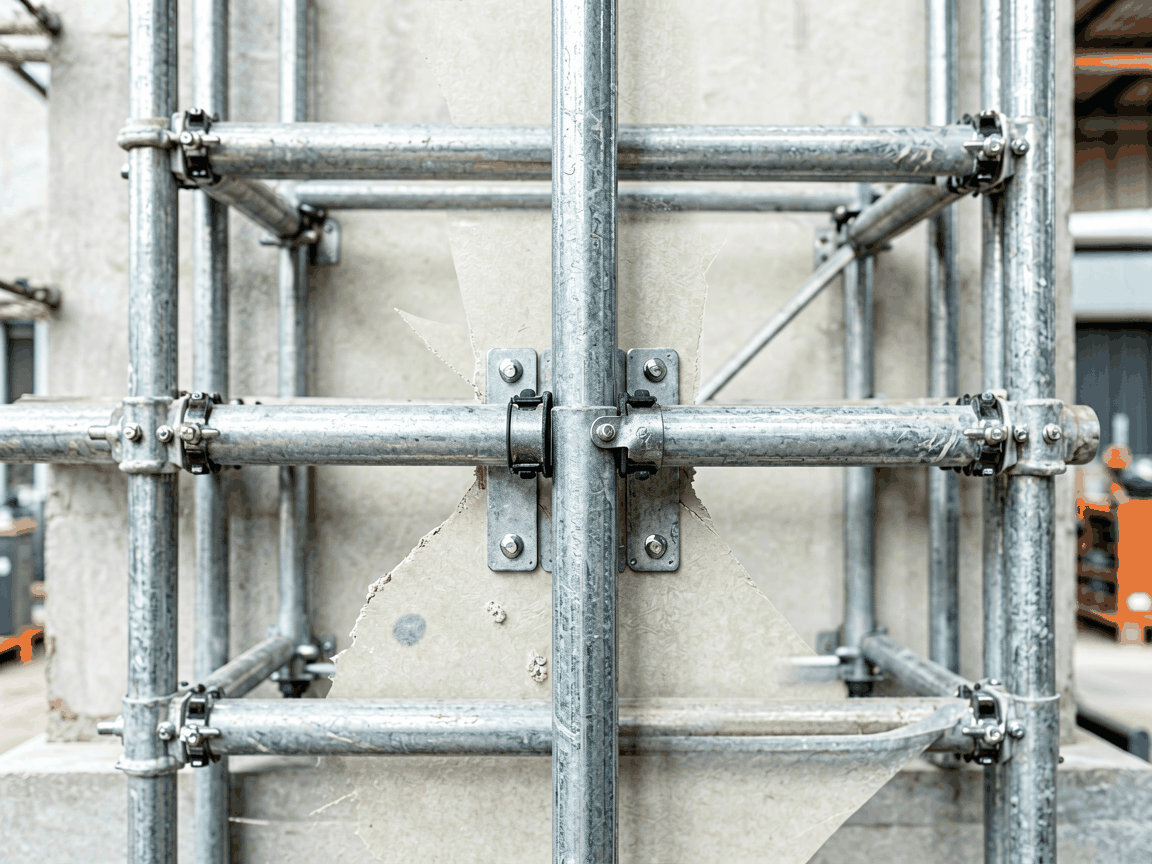
In wall formwork, tie rods connect opposing walers or strongbacks across the concrete cavity, transferring lateral pressure from the fresh concrete to the structural frame. The rod’s length determines the wall thickness, while its tensile capacity must exceed the calculated pressure per square meter multiplied by the tributary area. Proper installation requires flat, perpendicular nut bearing surfaces and correct torque to prevent loosening during vibration or setting.
Reusability depends on maintaining straightness, thread integrity, and coating adhesion. Bent rods induce eccentric loading and should be retired. Thread galling or nut spin-off indicates over-torque or material incompatibility and warrants investigation. Systems designed for high-cycle use often incorporate lubricated threads or thread protectors to minimize wear during repeated assembly and stripping.