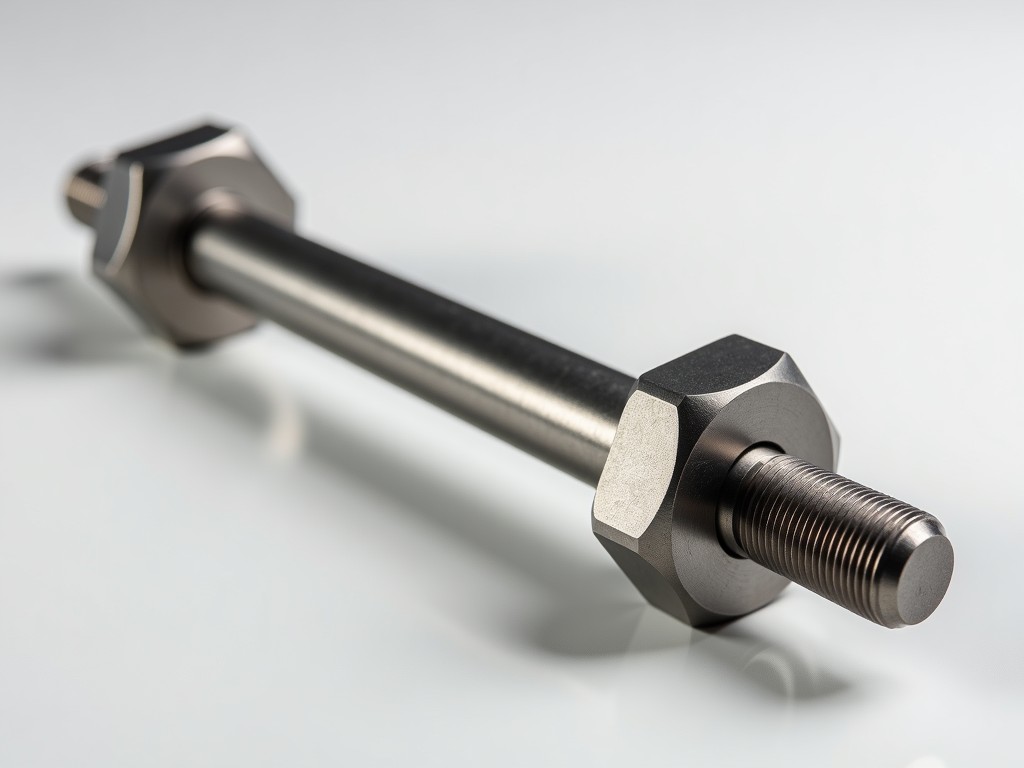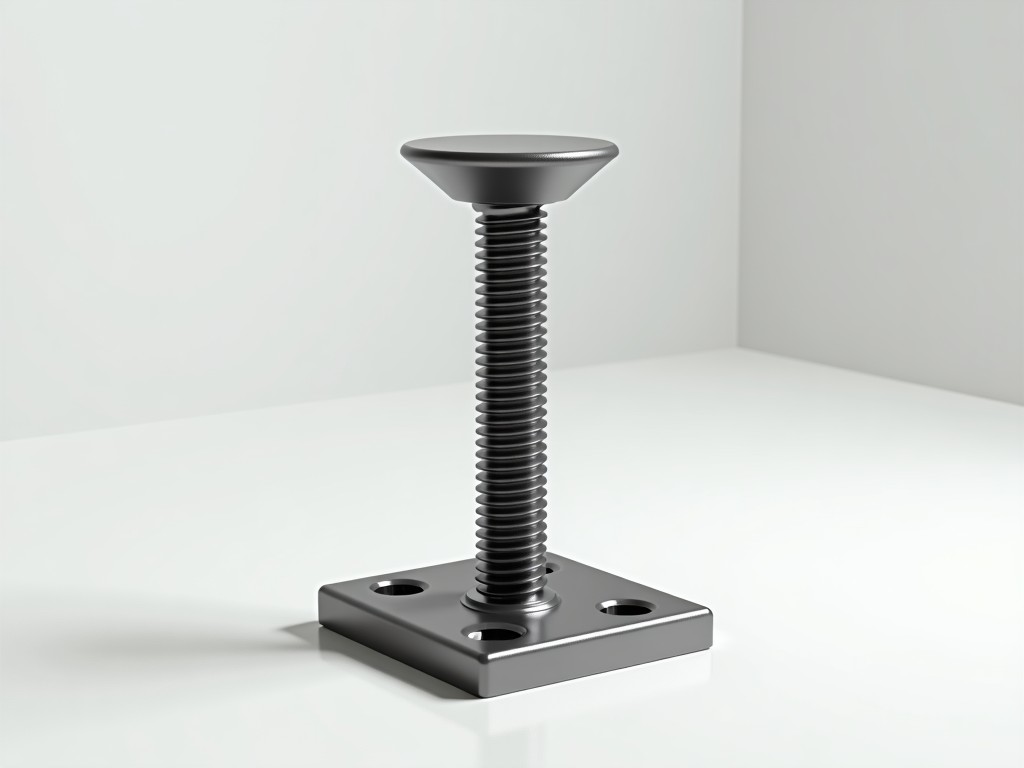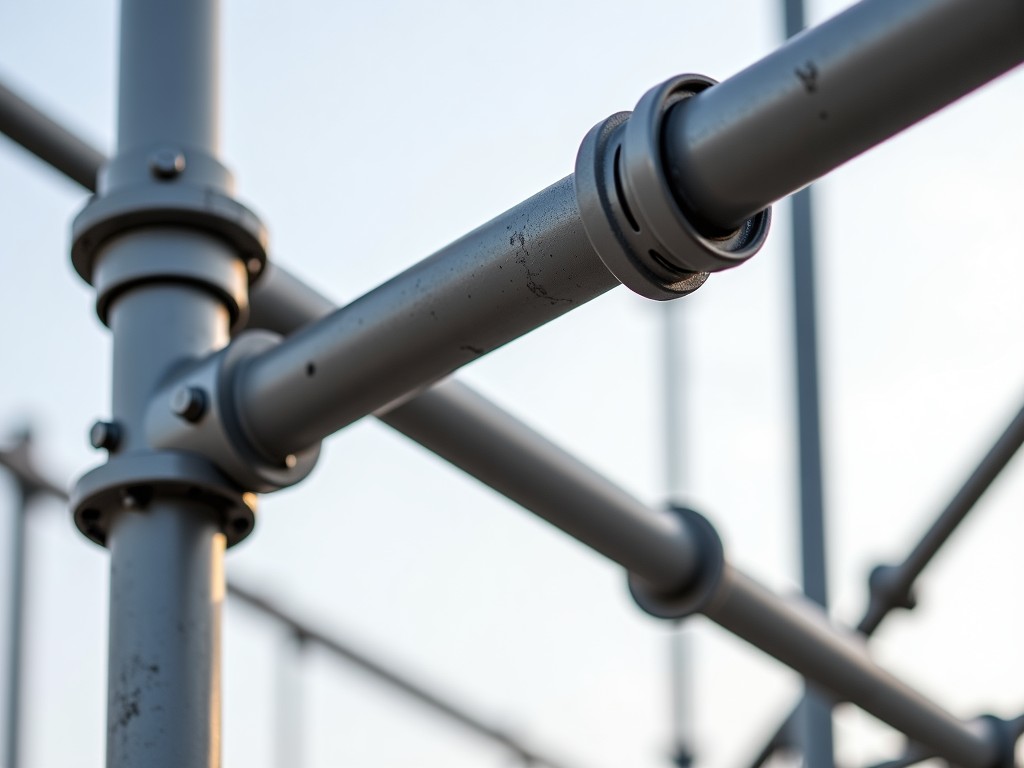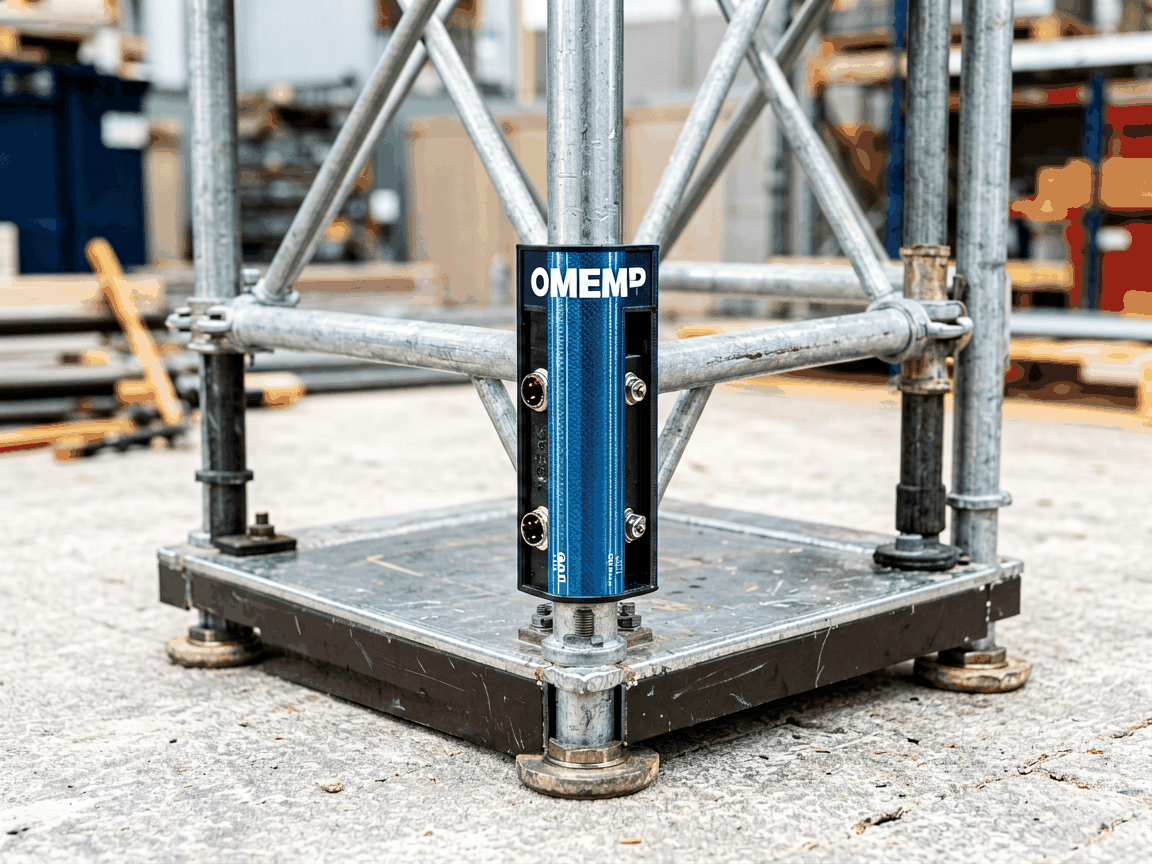
The OEM pro jack scaffolding base is a foundational component engineered to transfer vertical and lateral loads from scaffolding systems to the supporting surface with minimal settlement. It is designed for use in temporary access structures where ground conditions vary and load distribution must be controlled to prevent instability. Unlike standard bases, this model integrates a threaded adjustment mechanism within a load-distributing plate to accommodate uneven terrain while maintaining vertical alignment of the supported standard.
Manufactured from hot-rolled structural steel, the base plate typically measures 150 mm x 150 mm with a thickness of 6 mm, providing sufficient bearing area to limit ground pressure under typical scaffolding loads. The integrated pro jack features a 32 mm diameter Acme-threaded spindle with a 6 mm pitch, allowing precise height adjustment of up to 300 mm under load. The spindle is fitted with a forged steel handle socket designed to accept a standard 19 mm scaffolding spanner for manual operation.
Load transfer occurs through direct contact between the spindle head and the scaffolding standard’s base collar, with the threaded interface designed to resist loosening under vibrational loads. The base plate includes four 14 mm diameter drainage holes to prevent water accumulation and reduce corrosion risk in outdoor applications. All load-bearing surfaces are machined to ensure flatness within 0.5 mm tolerance, promoting even load distribution and reducing point loading on the spindle threads.
The base plate is produced from S355JR hot-rolled steel, selected for its yield strength of 355 MPa and adequate ductility for forming and welding processes. This grade provides a favorable strength-to-weight ratio while maintaining resistance to brittle fracture in temperate climates. The spindle is manufactured from C45E medium carbon steel, normalized to achieve a hardness range of 180–220 HB, balancing wear resistance with machinability for the Acme thread form.
Under axial compressive load, the base plate experiences bending stress proportional to the cantilever effect of the spindle offset from the plate edge. Finite analysis indicates that the 6 mm thickness limits plate deflection to less than 1.2 mm under a 25 kN load, well within elastic limits for S355JR. The threaded interface employs a 30-degree flank angle Acme thread, which provides self-locking characteristics under static load while allowing efficient torque transmission during adjustment.
Corrosion protection is achieved through hot-dip galvanization to a minimum coating thickness of 85 µm, conforming to EN ISO 1461. This provides sacrificial protection to cut edges and drill holes, extending service life in environments with moderate chloride exposure. The galvanized layer also resists mechanical damage during handling and installation better than painted alternatives, reducing maintenance needs over multiple reuse cycles.
| Parameter | Value | Tolerance / Notes |
|---|---|---|
| Base Plate Dimensions | 150 mm × 150 mm | ±2 mm |
| Base Plate Thickness | 6 mm | ±0.5 mm |
| Spindle Diameter | 32 mm | Nominal |
| Thread Type | Acme, 6 mm pitch | 30° flank angle |
| Adjustment Range | 0–300 mm | Under full load |
| Spindle Handle Socket | 19 mm A/F | Forged steel |
| Drainage Holes | 4 × Ø14 mm | Corner locations |
| Galvanized Coating | ≥85 µm | EN ISO 1461 |
The 300 mm adjustment range accommodates typical site gradients found in redevelopment zones and uneven terrain without requiring shimming or cribbing. The Acme thread form was selected over square or metric threads due to its superior wear resistance under repeated adjustment cycles and its ability to transmit high axial loads with minimal thread deformation. The 19 mm handle socket ensures compatibility with standard scaffolding tools, eliminating the need for specialized equipment on site.
The OEM pro jack scaffolding base is rated for a maximum permissible load of 25 kN (approximately 2.5 tonnes) when used with a compliant scaffolding standard and installed on a suitably prepared surface. This rating is derived from the buckling resistance of the spindle in compression, the bearing capacity of the base plate on compacted gravel or hardcore, and the thread shear strength of the Acme interface. The load rating assumes a maximum eccentricity of 25 mm between the spindle axis and the plate centroid.
At full extension (300 mm), the effective slenderness ratio of the spindle increases, reducing its Euler buckling capacity. However, the Acme thread engagement length maintains sufficient core diameter to prevent thread stripping before spindle buckling occurs. Testing shows that the first point of yield under axial load occurs in the spindle web at approximately 28 kN, providing a margin of safety against sudden failure. The base plate remains flat under load, with measured deflection not exceeding 0.8 mm at 25 kN.
Lateral stability is enhanced by the wide base plate, which resists overturning moments caused by wind loads or inadvertent impact. The drainage holes prevent hydrostatic uplift in saturated soil conditions by allowing water to escape, reducing the risk of base detachment. In repeated use cycles, the galvanized coating shows minimal wear at contact points, and the thread interfaces retain smooth operation after 50+ adjustment cycles when cleaned and lightly lubricated.
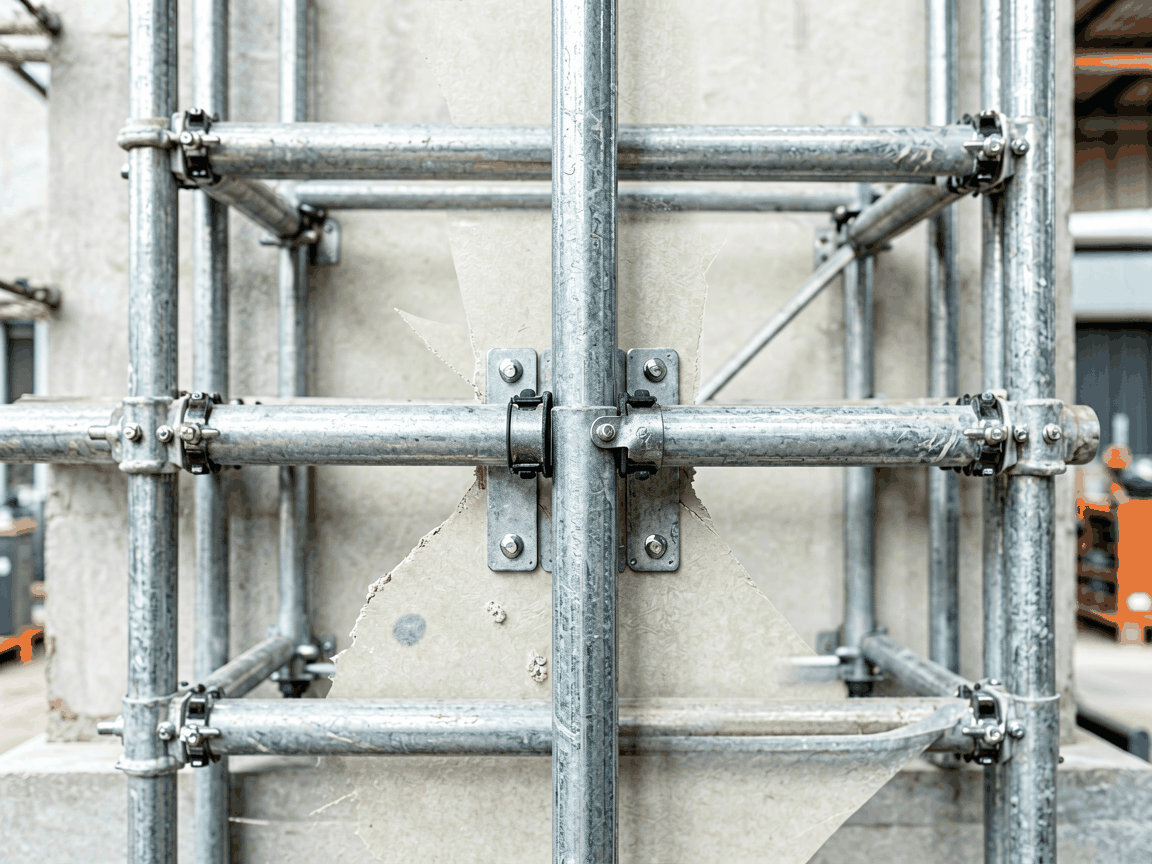
This scaffolding base is commonly employed in facade retention systems where adjustable height is required to accommodate differential settlement between the existing structure and the temporary works. The precise thread adjustment allows installers to maintain a uniform gap for monitoring beams or to achieve exact alignment with needle beams supporting floors during demolition. In shoring applications for basement construction, the base enables fine-tuning of vertical props to counteract soil rebound during excavation.
In suspended access platforms, the pro jack base provides a stable, level foundation for vertical standards that support tie-back systems or overhead beams. The ability to adjust for slope ensures that the platform remains horizontal, which is critical for worker safety and equipment positioning. During event structure erection, such as staging or temporary roofing, the base allows rapid compensation for uneven ground without compromising the integrity of the load path.
The base is also used in formwork support systems for concrete pours where soffit elevation must be controlled within tight tolerances. The threaded adjustment enables compensating for beam deflection or column shortening during curing. Its reusability across multiple projects makes it cost-effective for contractors who require consistent performance over long-term asset cycles, particularly when compared to timber or adjustable steel plates lacking threaded precision.
Installation begins with preparing a level and compacted substrate, typically 100 mm of MOT type 1 hardcore or equivalent, to ensure uniform bearing and prevent localized settling. The base plate is positioned so that the spindle axis aligns vertically with the intended load path. The scaffolding standard is then lowered onto the spindle head, and the handle is inserted into the socket to apply downward pressure while rotating to engage the thread.
Adjustment is performed by inserting a 19 mm spanner into the handle socket and turning clockwise to raise the standard or counterclockwise to lower it. One full rotation corresponds to a 6 mm vertical change due to the 6 mm pitch. For loads exceeding 15 kN, it is recommended to apply anti-seize compound to the thread to prevent galling and ensure consistent torque response. The handle socket is designed to withstand repeated torque applications without cracking or deformation.
Maintenance involves periodic inspection of the thread for wear, galling, or debris accumulation. The galvanized coating should be checked for mechanical damage, particularly around the drainage holes and plate edges. If the coating is compromised, touch-up with zinc-rich primer is advised to maintain corrosion resistance. Spindles should be cleaned and lightly lubricated after each use cycle to preserve thread function and extend service life. Storage in a dry environment prevents premature corrosion of uncoated contact surfaces.
| Feature | OEM Pro Jack Base | Standard Fixed Base | Adjustable Plate Base (No Thread) |
|---|---|---|---|
| Height Adjustment | 0–300 mm, threaded | None | 0–100 mm, pin-hole |
| Adjustment Precision | 6 mm per revolution | N/A | 25 mm increments |
| Load Capacity | 25 kN | 25 kN | 20 kN |
| Ground Adaptability | High (continuous) | None | Low (stepped) |
| Thread Wear Resistance | Acme form, hardened spindle | N/A | N/A |
| Reusability Cycles | >100 (with maintenance) | >150 | >80 |
| Typical Use Case | Variable terrain, precision shoring | Flat, prepared surfaces | Moderate slope, infrequent adjustment |
Compared to fixed bases, the pro jack system eliminates the need for site-specific shimming, reducing labor time and material waste on uneven ground. Unlike pin-hole adjustable plates, which offer only discrete height settings and are prone to hole elongation under repeated use, the threaded system provides continuous, repeatable adjustment without deformation of the adjustment mechanism. The Acme thread form also resists loosening under vibration better than coarse-threaded alternatives, maintaining set height over extended periods.
For technical specifications, customization options, or to request a quotation for your project, please contact our engineering team.
Request Quotation