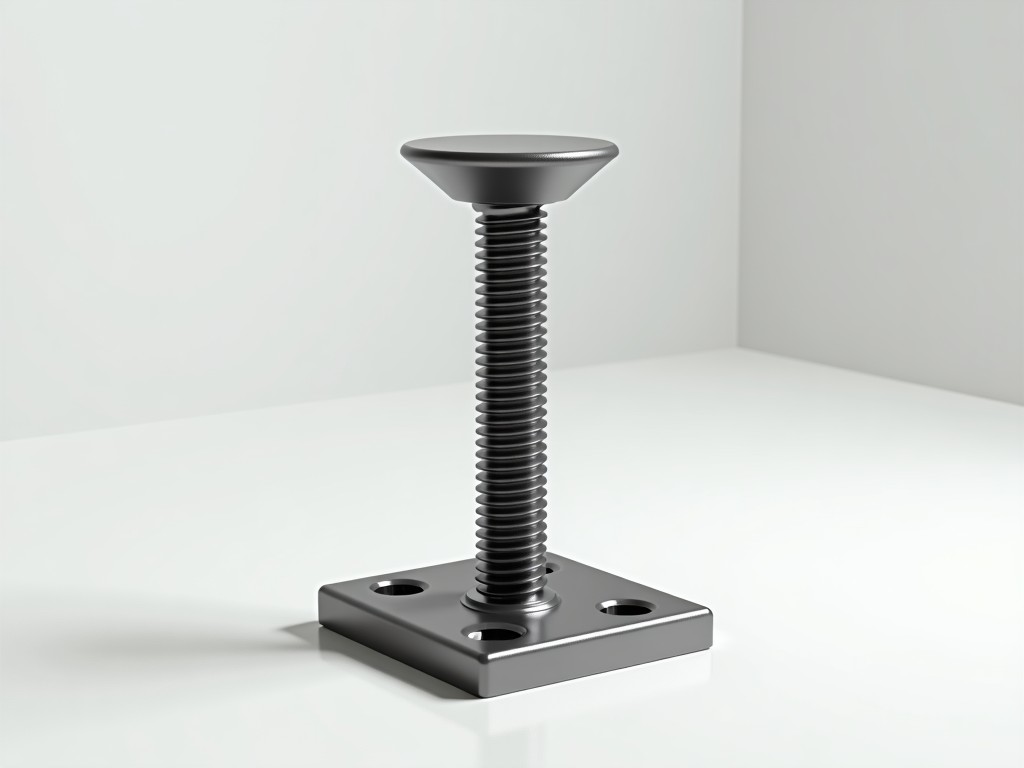
An adjustable U head jack is a temporary support device used in formwork, scaffolding, and concrete construction to provide variable-height load-bearing capacity. It consists of a threaded outer tube, an inner adjustment screw, and a U-shaped steel head designed to cradle wooden beams, steel sections, or formwork panels. The adjustment mechanism allows precise height control through manual rotation of the threaded screw, typically via a handle or wrench applied to the top collar.
Load is transferred vertically from the supported element through the U head, down the inner screw, and into the base plate or socket that interfaces with the ground or scaffold structure. The U head geometry resists lateral slip-off of the supported member while allowing quick installation and removal. These jacks are commonly deployed in slab formwork, wall systems, beam soffits, and temporary shoring where elevation must be adjusted during pour sequencing or stripping operations.
Unlike fixed-height props, adjustable U head jacks accommodate site tolerances, uneven substrates, and multi-stage construction sequences. Their reusability across multiple projects reduces long-term formwork costs compared to single-use alternatives. Industrial buyers select them based on load rating, adjustment range, material durability, and compatibility with existing formwork accessories such as beam clamps, timber sleeves, or steel walers.
| Parameter | Typical Value | Notes |
|---|---|---|
| Adjustment Range | 300 - 600 mm | Custom lengths available per project |
| Safe Working Load (SWL) | 20 kN | Axial load, concentric application |
| Outer Tube Diameter | 48.3 mm | Matches standard scaffold tube |
| Inner Screw Diameter | 26 mm | Trapezoidal thread, Acme profile |
| U Head Width | 100 mm | Clear opening for beam insertion |
| Material - Main Tube | Q235B Steel | Hot-dip galvanized finish |
| Material - U Head | Q345B Steel | Forged, higher yield strength |
| Surface Treatment | Hot-dip Galvanizing (610 g/m²) | ISO 1461 compliant |
| Weight (approx.) | 4.8 kg | Per unit, unpackaged |
The outer tube uses Q235B carbon steel for its balance of tensile strength, weldability, and cost-effectiveness in high-volume production. This grade provides sufficient yield strength (~235 MPa) to resist buckling under rated loads while maintaining ductility for impact resistance during handling. The U head is forged from Q345B steel (~345 MPa yield) to withstand localized stress concentrations at the beam contact points and threaded interface where bending and shear forces are highest.
Hot-dip galvanizing applies a zinc-iron alloy coating averaging 610 g/m², providing sacrificial protection against corrosion in wet concrete environments and outdoor storage. The coating thickness exceeds ISO 1461 minimums for structural steel, ensuring a service life of 5+ years in typical construction site conditions. Threaded components are lubricated during assembly to prevent galling and maintain consistent torque adjustment over repeated cycles.
Alternative materials such as stainless steel (304/316) or epoxy-coated finishes are available upon request for specialized applications involving chemical exposure, marine environments, or architectural concrete where staining must be avoided. These options affect lead time and cost but may be justified in projects with stringent durability or aesthetic requirements.
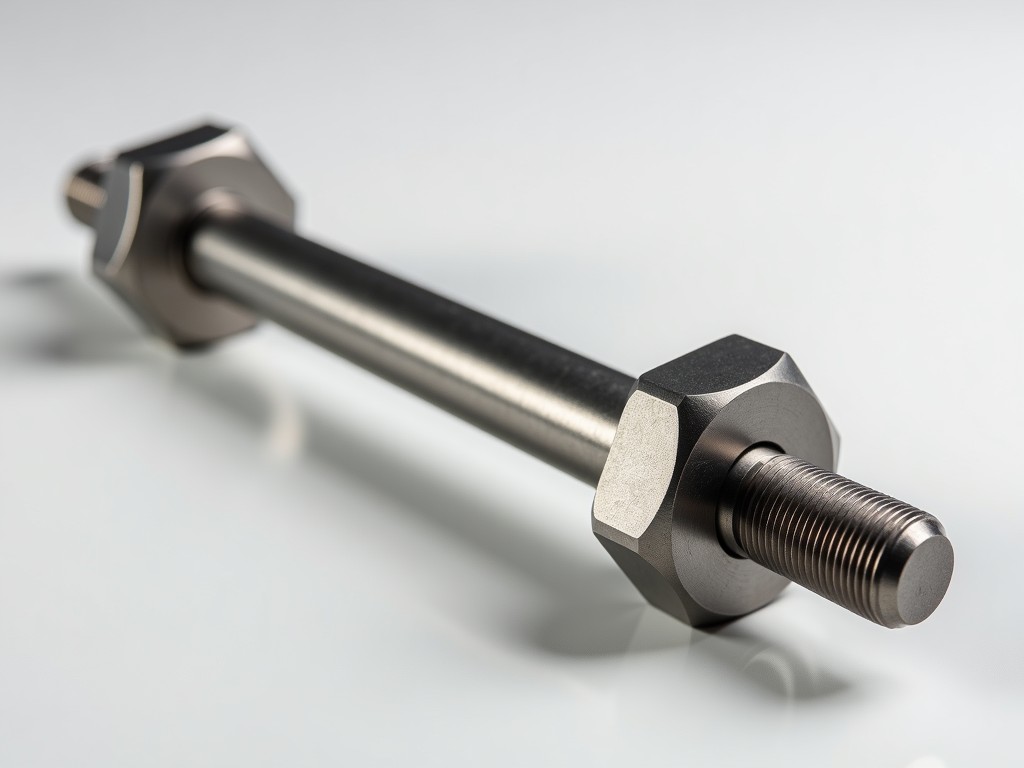
Height adjustment is achieved via a single-start trapezoidal (Acme) thread on the inner screw, which converts rotational motion into linear displacement with high mechanical efficiency and self-locking properties. The thread pitch is typically 6 mm, meaning one full rotation changes the jack height by 6 mm — allowing fine positional control without requiring precision tools. A forged steel handle or socket wrench fits the top collar to apply turning force.
The self-locking nature of the Acme thread prevents unintended descent under load, eliminating the need for separate locking pins or dogs in most applications. However, for critical shoring or dynamic load scenarios, secondary mechanical locks (such as clip-on pins or bolt-through brackets) can be added as optional accessories. Clear scale markings on the outer tube assist in setting approximate heights before fine adjustment.
Wear surfaces between the screw and tube are minimized through controlled tolerances and surface hardening of the threaded section. Regular maintenance involves cleaning debris from the thread and applying light grease — procedures that can be performed on-site without disassembly. The design avoids trapped moisture points, reducing internal corrosion risk compared to designs with enclosed adjustment mechanisms.
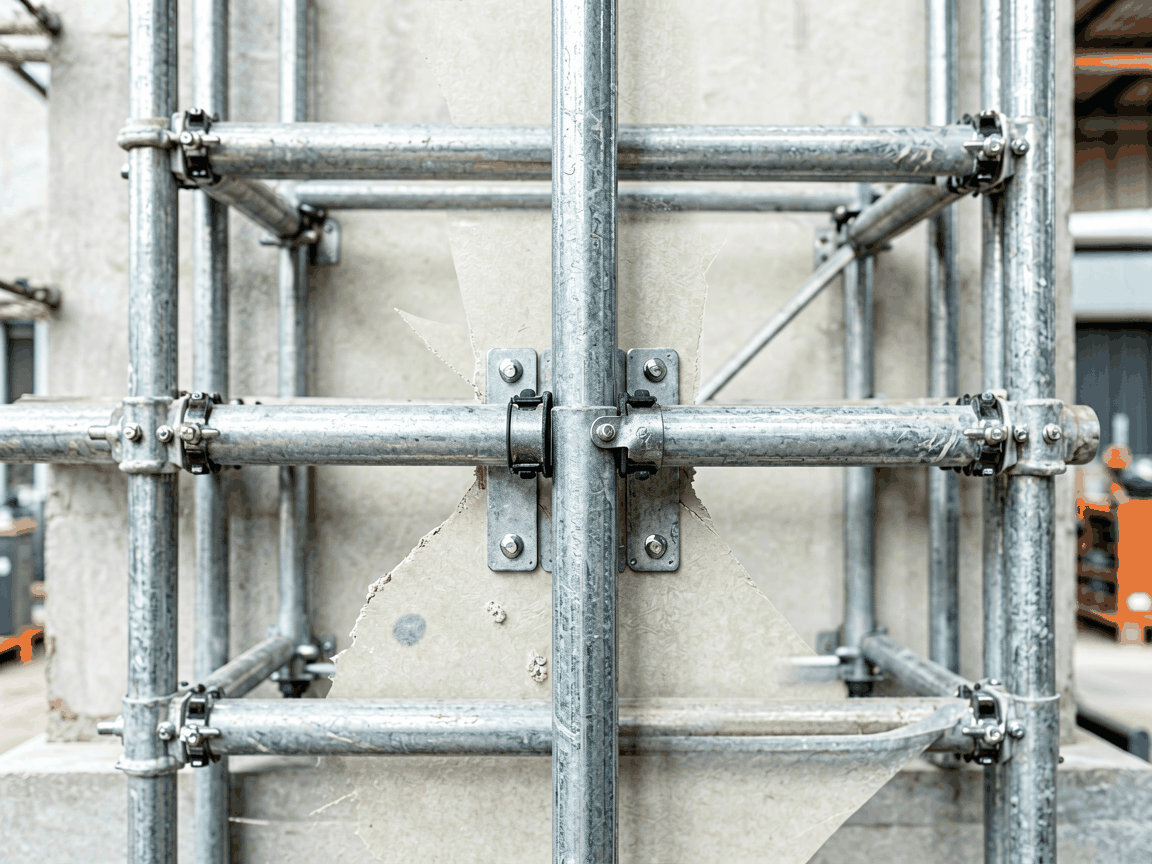
In slab formwork systems, adjustable U head jacks support timber or steel beams that span between vertical props, creating a grid to hold plywood or metal decking at the correct elevation. The U head cradles the beam securely while allowing longitudinal movement for beam replacement or adjustment during strip-down. This is especially important in elevated slabs where beam deflection or settlement must be compensated during concrete placement.
For wall formwork, these jacks are used at the top of vertical timbers or strongbacks to support walers and maintain alignment against lateral concrete pressure. The adjustability accommodates variations in floor height or beam depth, ensuring the form face remains plumb and true. In tunneling or culvert work, they provide temporary support for lagging sets or steel arches where ground conditions require frequent re-profiling of the support line.
Adjustable U head jacks are also employed in falsework for bridge soffits, where precast segments or in-situ pours require precise camber control. The ability to incrementally raise or lower support points allows engineers to counteract dead load deflection and achieve the designed profile after stripping. Their reusability across multiple pours makes them economical for multi-span structures compared to custom-cut timber posts.
While standard configurations suit most general construction, OEM buyers often require modifications to integrate with proprietary formwork systems or meet project-specific constraints. Common customizations include alternative adjustment ranges (e.g., 200–400 mm for low-clearance applications or 600–900 mm for tall shoring), different U head widths to accommodate larger beams or specialized connectors, and modified base plates for attachment to concrete inserts, steel rails, or timber sleepers.
Thread types can be changed to metric trapezoidal, ACME stub, or even hydraulic actuation for remote or synchronized adjustment in large-scale projects. Surface treatments may include powder coating for color-coding by load rating, or duplex systems (galvanized + paint) for extended life in aggressive environments. Packaging can be optimized for bulk handling — such as palletized stacks with protective corner guards or reusable metal stillages.
OEMs frequently request laser marking or stamping for part numbers, load ratings, or customer logos directly on the tube or collar. This aids in inventory management, safety inspections, and brand visibility on rental fleets. All customizations are subject to minimum order quantities and engineering review to ensure structural integrity and compatibility with adjustment mechanics.
Each batch undergoes dimensional verification of critical features: tube straightness (<1.5 mm/m), thread pitch accuracy (±0.1 mm), U head opening width, and perpendicularity of the head to the tube axis. These checks are performed using calibrated gauges and coordinate measuring machines (CMM) on a sampling basis per ISO 2859-1. Material traceability is maintained from mill certificate to final product via heat number tracking.
Load testing is conducted on representative samples using hydraulic presses to confirm ultimate and yield strengths. Swivel or eccentric load tests may be performed upon request to assess performance under non-ideal conditions. Galvanizing coating thickness is verified via magnetic induction probes on every lot, with adhesion tested per ASTM D3359. Thread function is checked for smooth operation and torque consistency across the full adjustment range.
Visual inspection includes weld quality (where applicable), surface finish uniformity, and absence of cracks, laps, or inclusions. Non-destructive methods such as magnetic particle testing may be applied to high-stress areas like the U head fillet or thread run-out. Final packaging includes a corrosion inhibitor and desiccant in humid climates to prevent white rust during storage or transit.
Standard packaging bundles 25 or 50 units per bundle using steel or plastic straps, with corner protectors to prevent deformation of the U heads during handling. Bundles are then stacked on wooden pallets (typically 1.1m x 1.1m) and secured with stretch film or additional strapping for forklift handling. Each pallet is clearly labeled with part number, quantity, SWL, and galvanizing standard for easy identification at the warehouse or job site.
For export shipments, especially to regions with high humidity or salt air, vacuum-sealed plastic liners or moisture-barrier bags are used inside the bundling to inhibit corrosion during transit. Container loading is optimized to maximize cube utilization while ensuring stability — vertical orientation is preferred to prevent bending stress on the tubes. Gross weight per pallet averages 250–300 kg depending on configuration.
Alternative packaging options include reusable metal stillages for closed-loop rental systems, individual cardboard sleeves for retail distribution, or custom crate designs for high-value OEM kits. All packaging materials comply with ISPM 15 for international shipments where required. Lead time from order confirmation to ex-factory readiness typically ranges from 15–30 days, depending on customization and current production load.
For technical inquiries, customization requests, or quotation details, please contact our engineering team.
Request Technical Specification Sheet