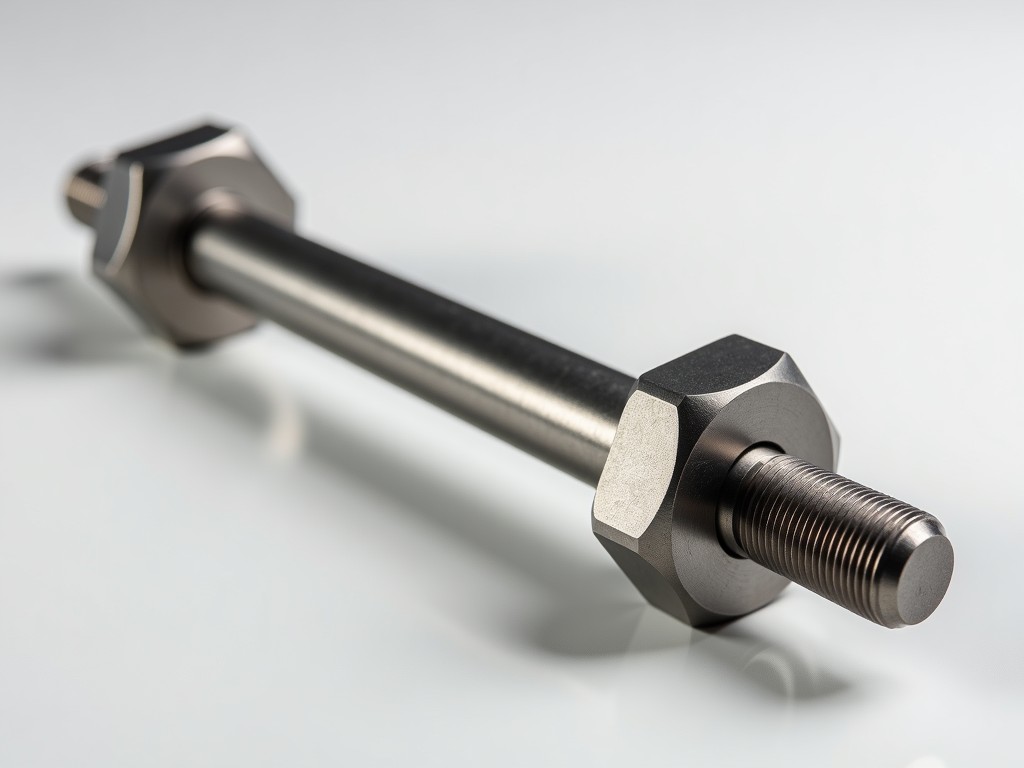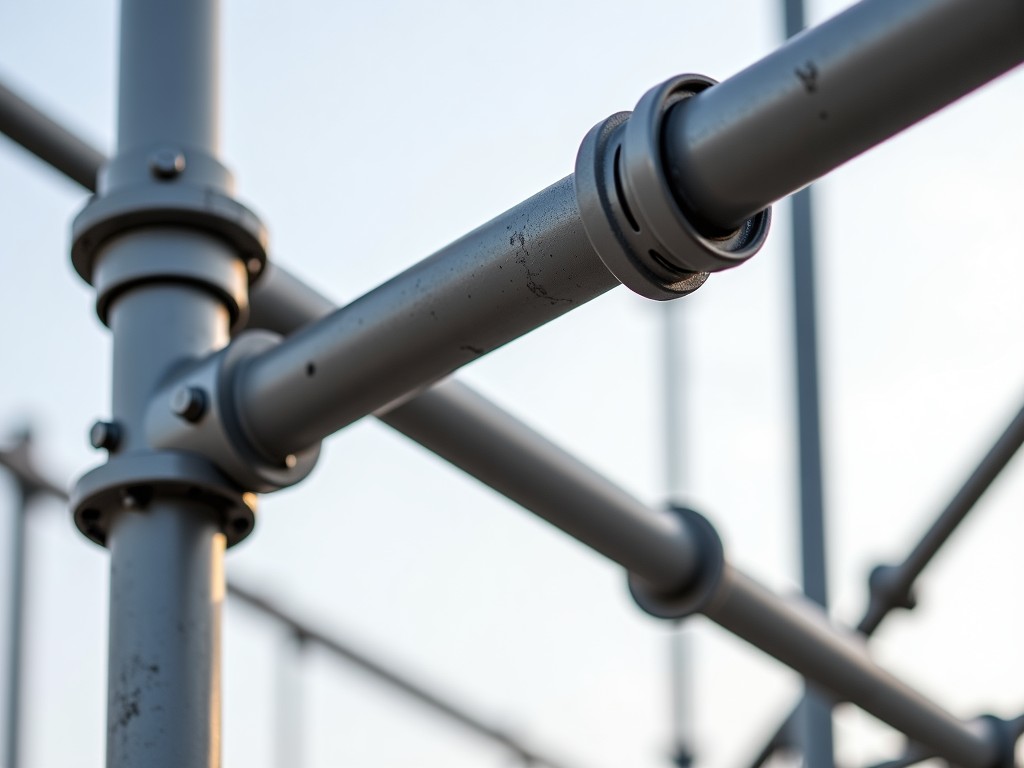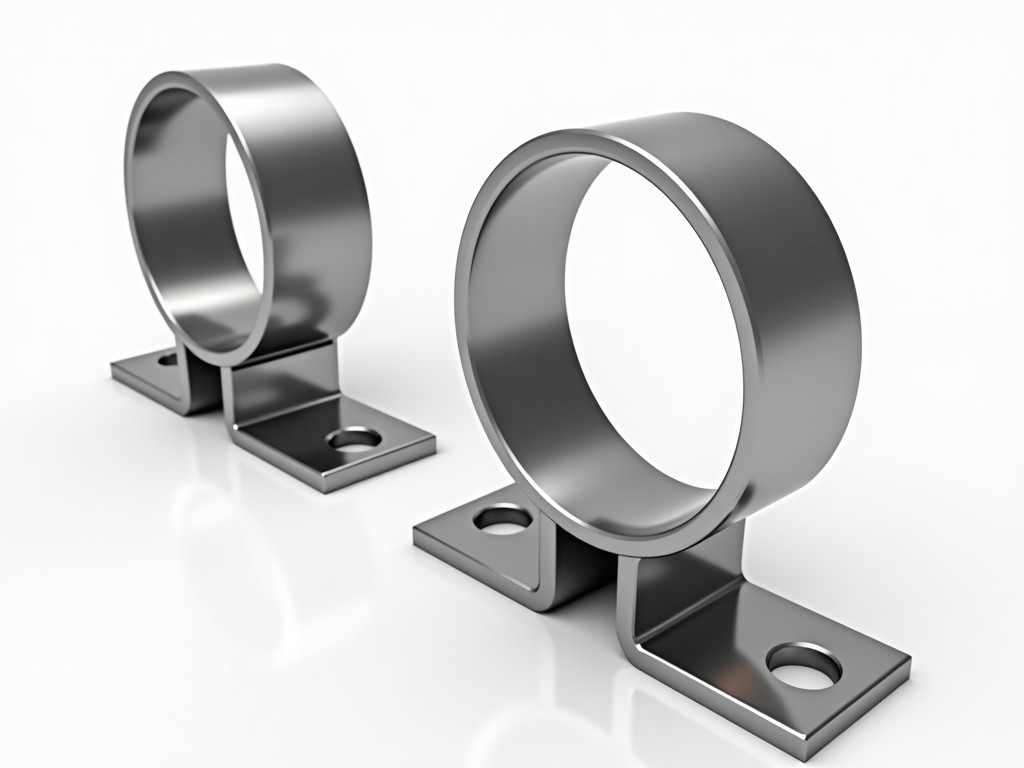
Column clamps are mechanical fastening devices designed to securely connect vertical structural columns to foundations, base plates, or adjacent members in steel and composite construction. They transmit axial, shear, and moment loads while allowing for controlled adjustment during erection. Unlike welded connections, bolted column clamps provide disassemblability, field-tolerancing, and inspection access—critical for modular construction, seismic zones, and projects requiring future modifications.
OEM column clamps are manufactured to original equipment manufacturer specifications, ensuring dimensional compatibility with proprietary column profiles, base plate geometries, and connection hardware. These clamps are not generic catalog items; they are engineered to match specific load paths, bolt patterns, and stiffness requirements defined by the structural designer or fabricator. Procurement of true OEM clamps reduces risk of misalignment, premature fatigue, or connection slippage under cyclic loading.
Load capacity is determined by bolt grade, plate thickness, and contact area—not by clamp weight or appearance. Typical OEM column clamps for structural steel columns (e.g., W14x90 to W36x300) are designed for factored shear loads of 150–600 kN and axial loads up to 1200 kN, depending on configuration. Stiffness is governed by the moment of inertia of the clamp plates and the effective length of the load path; excessive flexibility can induce secondary bending in the column flange.
Material selection follows ASTM or EN standards: clamp bodies are commonly forged or rolled from ASTM A572 Grade 50 (345 MPa yield) or S355JR, with high-strength bolts per ASTM A325 or A490. Surface treatments include hot-dip galvanizing (minimum 610 g/m² zinc coating) for corrosion protection in exterior environments or zinc-rich primer for interior dry conditions. Weldability is assessed via carbon equivalent (CEV ≤ 0.45) to prevent hydrogen cracking during fabrication.
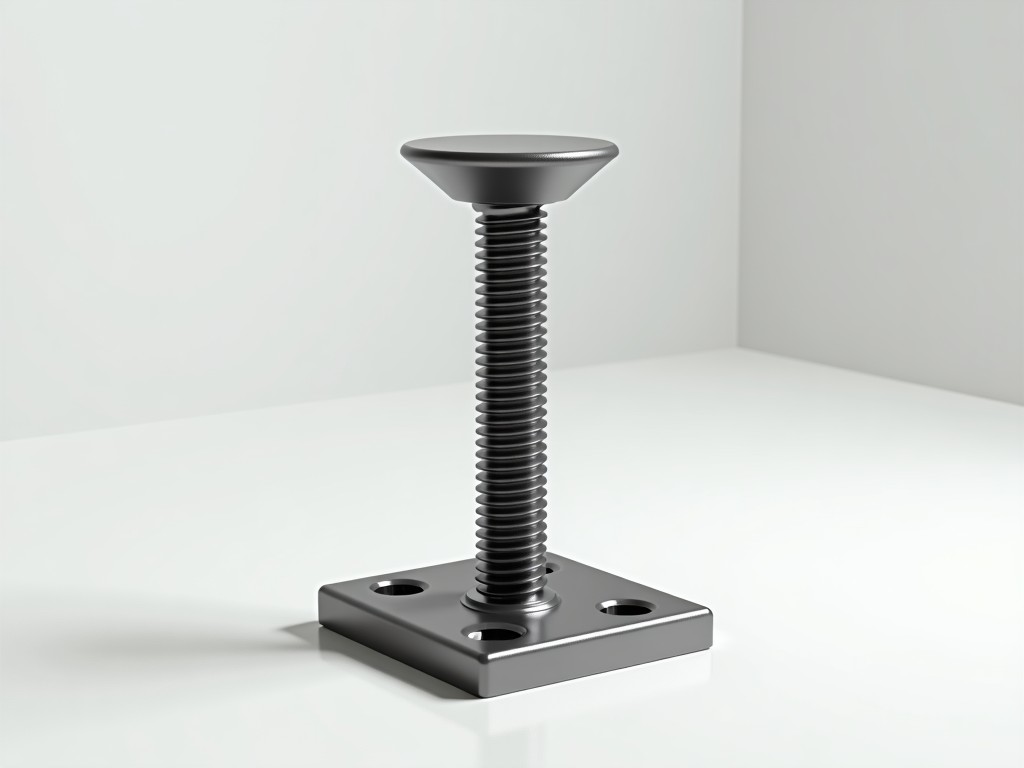
Adjustment range is a critical design parameter. OEM clamps typically provide ±10–25 mm vertical adjustment and ±5–15 mm lateral tolerance to accommodate foundation irregularities and rollout errors. This is achieved through slotted holes, adjustable shims, or eccentric bolt holes—features that must be precisely matched to the column’s base plate geometry. Excessive adjustment range without adequate stiffening can compromise connection rigidity under lateral loads.
In pre-engineered metal buildings (PEMBs), column clamps connect tapered or constant-depth columns to reinforced concrete pier foundations. The clamp must resist uplift from wind loads and transfer moment from crane-induced sway. OEM designs here often incorporate stiffening ribs to prevent local buckling of the clamp flange under high prying forces.
For multi-story steel frames in seismic regions (e.g., California, Japan, Turkey), column clamps are part of the moment-resisting frame system. They must maintain ductility and energy dissipation capacity. OEM versions are often designed with controlled slip elements or sacrificial fuses to protect the column base, with detailed finite element analysis validating performance under cyclic drift ratios of 2–4%.
In modular construction and offshore platforms, column clamps enable rapid erection of prefabricated units. Here, corrosion resistance and repeatability are paramount. OEM clamps may use duplex stainless steel (e.g., 2205) for chloride-exposed environments or feature threaded adjustment collars for subsea tolerance compensation, with torque-controlled bolt installation verified via ultrasonic extensometers.
True OEM column clamps cannot be ordered from a generic catalog. Procurement requires submission of the column’s base plate drawing, including bolt hole pattern, plate thickness, overhang dimensions, and any stiffener or gusset details. The clamp manufacturer uses this to design mating surfaces that ensure full contact and avoid point loading. Missing or incomplete base plate data is the most common cause of field rejection.
Load specifications must be provided as factored forces (LRFD or LSD format), not service loads. This includes maximum shear, axial compression/tension, and moment at the base. Environmental exposure (e.g., C3–C5 per ISO 12944, immersion zone, temperature extremes) dictates material and coating selection. Seismic design category or wind speed (e.g., ASCE 7-22) influences required ductility and connection classification.
Tolerance requirements are often overlooked. Specify whether the clamp must accommodate mill tolerances on the column (±1.5 mm for rolled sections), foundation levelness (±3 mm), or erection-induced rotation. Some OEM designs incorporate spherical washers or polyamide pads to accommodate angular misalignment without inducing prying forces.
OEM column clamps are subject to material traceability per EN 10204 3.1 or ASTM A6/A6M. Each heat number is recorded, and mill test reports (MTRs) are retained for the body material, bolts, and any weld filler. Dimensional inspection includes CMM verification of bolt hole patterns, flange flatness (<0.1 mm over 150 mm), and perpendicularity of load-bearing surfaces. Visual inspection follows ASTM E165 for surface defects, with magnetic particle testing (MT) used on high-stress areas per AWS D1.1.
Bolt preload verification is critical. Torque-turn or bolt elongation methods are used to ensure clamps develop the required pretension (≥70% of bolt proof load). Load testing is performed on prototype clamps per AISC 360 Chapter J or Eurocode 3, simulating factored loads until deformation or slip occurs. Results validate the design’s stiffness, strength, and slip resistance—data that should be available upon request for project-specific designs.
Packaging prevents damage during transit. Clamps are separated by corrosion-inhibiting VCI paper, placed in custom-cut foam inserts within plywood crates, and secured with steel strapping. Each crate includes a packing list with heat numbers, drawing revision, and QC signatures. For export, ISPM 15-compliant wood packaging is used, and desiccant bags control humidity inside sealed crates.
| Parameter | Typical Range / Specification | Notes |
|---|---|---|
| Clamp Body Material | ASTM A572 Gr 50, S355JR, or equivalent | CEV ≤ 0.45 for weldability; higher grades available upon request |
| Bolt Grade | ASTM A325, A490, or ISO 898-1 8.8/10.9 | Hot-dip galvanized or mechanically plated; lubrication required for consistent K-factor |
| Coating System | Hot-dip galvanizing (min 610 g/m²) or zinc-rich primer + polyurethane | Duplex systems (HDG + paint) for C4–C5 environments; stainless steel for immersion zones |
| Vertical Adjustment | ±10 to ±25 mm | Achieved via slotted holes, shims, or eccentric bolts; stiffness must be verified |
| Factored Shear Capacity | 150–600 kN (typical for W14–W36 columns) | Depends on bolt diameter, grade, and number; confirm with manufacturer |
| Lead Time (Ex Works) | 4–6 weeks after drawing approval | Shorter for stocked profiles; longer for exotic materials or full load testing |
Procurement engineers should verify that the supplier maintains a documented quality management system (e.g., ISO 9001) and has experience producing clamps for similar column sizes and load conditions. Request to see recent MTRs, inspection reports, and reference projects. Avoid suppliers who offer “standard” column clamps without requiring base plate drawings—this indicates a generic product not suited for OEM applications.
For quotation, provide: column base plate drawing (DWG or PDF), factored load reactions, environmental exposure class, required delivery date, and any special testing requirements (e.g., proof load, NDT). The manufacturer will return a detailed submission package including clamp assembly drawing, bolt installation procedure, and quality plan.
To initiate a technical inquiry or request a quotation for OEM column clamps tailored to your project’s specifications, please contact our engineering team.
Request Technical Quote