Modular scaffold systems consist of standardized components designed for rapid assembly, disassembly, and reuse across construction, maintenance, and industrial access applications. Metal boards serve as primary working platforms, transferring loads from personnel and equipment to the scaffold structure. Together, they form a load-bearing system where dimensional accuracy, material consistency, and connection integrity directly impact safety and efficiency.
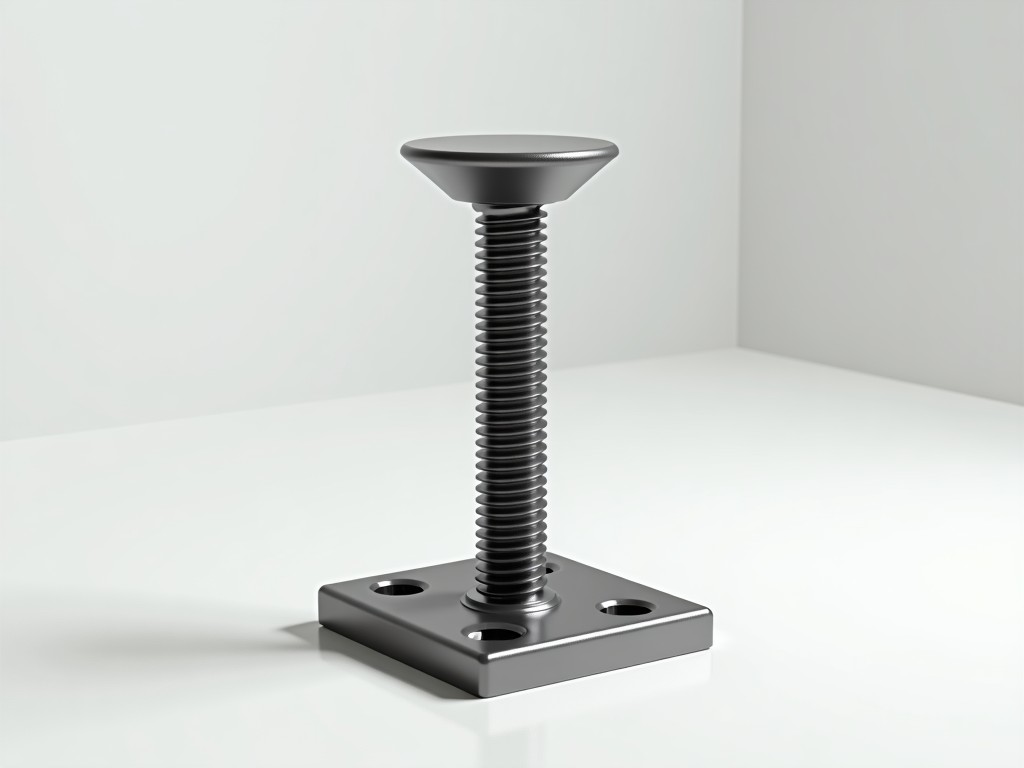
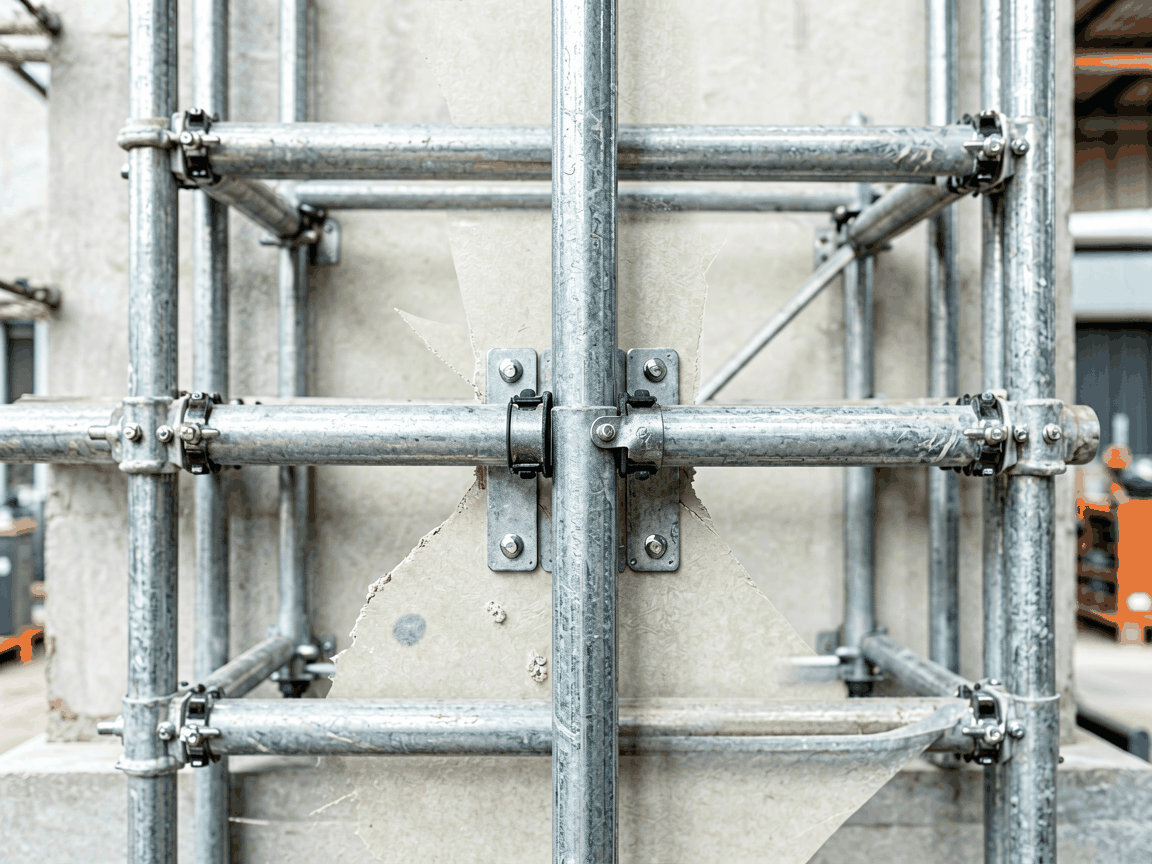
Vertical standards (uprights) transfer axial loads to base plates or screw jacks, which distribute point loads over a larger area to prevent ground settlement. Horizontal ledgers connect to standards via wedge or pin joints, creating bays that resist lateral forces. Transoms sit atop ledgers to support metal boards, forming a grid where load paths are predictable and verifiable through engineering calculations.
Metal boards are typically fabricated from cold-rolled steel or aluminum alloys, with profiles engineered to maximize bending stiffness while minimizing weight. Common cross-sections include box beams or I-beams with flange widths ranging from 200mm to 300mm and depths between 40mm and 60mm. Deflection under uniform load is limited to L/200 per international standards, ensuring minimal bounce during use.
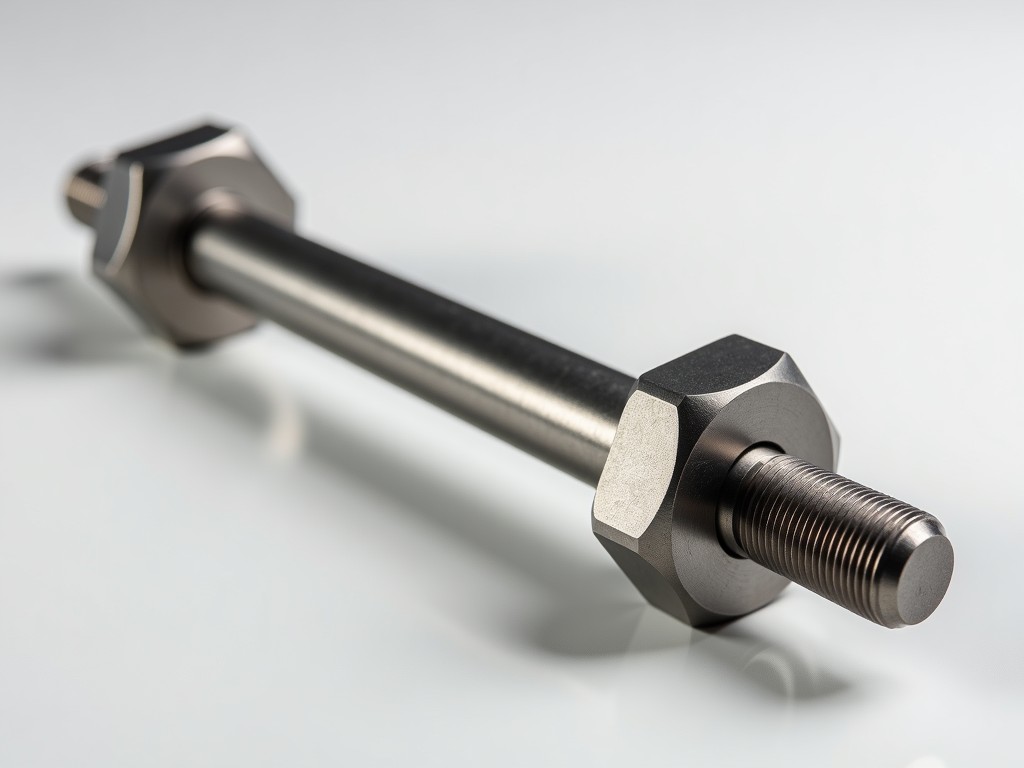
Scaffold tubes are predominantly made from hot-dip galvanized steel (minimum zinc coating 55μm per EN ISO 1461) to withstand outdoor exposure and repeated handling. For high-moisture or chemical environments, stainless steel grades 304 or 316 are available upon request, offering superior resistance to chlorides and acids. Aluminum components use alloys like 6061-T6, providing a strength-to-weight ratio approximately one-third that of steel with inherent corrosion resistance.
Metal board surfaces often feature perforated or punched patterns to reduce weight and facilitate self-draining. Anti-slip coatings—such as epoxy-bound aggregate or hot-applied bituminous treatments—are applied to the walking surface, achieving a minimum pendulum test value (PTV) of 36 under wet conditions as per BS 7976-2. Edge protection is typically formed by upward-turned flanges or welded stop ends to prevent board displacement.
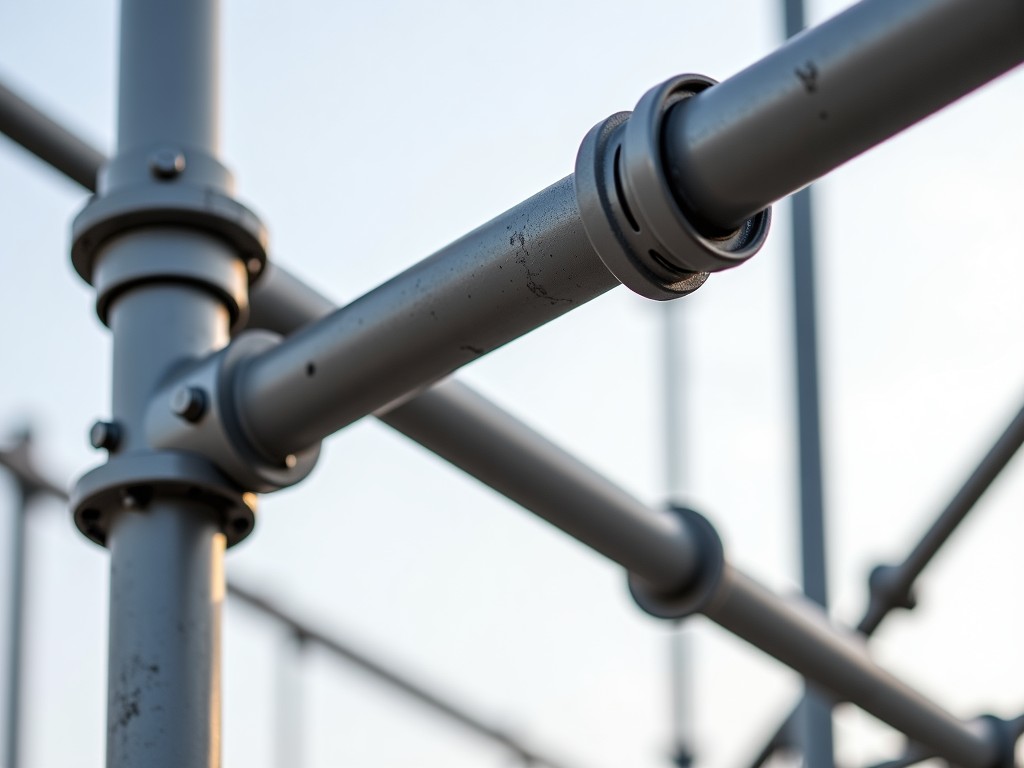
Wedge locks use a tapered pin hammered into a hollow socket on the standard, creating interference fit that resists both tensile and shear forces. The self-tightening action occurs under load, eliminating the need for bolts or pins in most configurations. Pin and clip systems rely on a shear pin through aligned holes in standard and ledger, secured by a spring clip—preferred in applications requiring frequent reconfiguration where tool-free assembly is valued.
Metal boards connect to transoms via overhead hooks or side brackets that engage the board’s flange. Some designs incorporate gravity locks that engage automatically when weight is applied, reducing the chance of accidental disengagement. Connection points are spaced at 300mm or 600mm intervals to match standard bay dimensions, ensuring compatibility across manufacturers adhering to EN 12810 or EN 12811.
Vertical spacing between ledger levels is typically 2000mm for general construction, reduced to 1000mm or 1500mm for heavy-load or inspection scaffolding. Bay lengths (distance between standards) commonly follow 1800mm, 2400mm, or 3000mm modules, aligning with standard metal board lengths. This modularity allows for flexible configuration—such as combining 2400mm and 3000mm bays to accommodate irregular structures—while maintaining load table validity.
Metal board widths are standardized at 300mm (single plank), 600mm (double plank), or 900mm (triple plank) to provide adequate walkway width while minimizing material overlap. Custom lengths up to 6000mm are feasible for specialized applications like bridge access or shipbuilding, though longer spans require intermediate supports or increased board depth to limit deflection. Tolerances on tube diameter (±0.5mm) and board straightness (3mm per meter) ensure consistent fit.
Scaffold load classes define maximum permissible loads: Class 3 (200 kg/m²) for light duty (e.g., painting), Class 4 (300 kg/m²) for general use (e.g., masonry), and Class 5 (450 kg/m²) for heavy duty (e.g., concrete work). Metal boards are rated based on span and material—typically 2.4m span, 600mm wide steel board supports 300 kg/m² with a safety factor of 1.6 against yield. Aluminum equivalents offer similar capacity at ~40% lower weight.
Validation involves finite element analysis (FEA) to model stress concentrations at joints and under eccentric loads, supplemented by physical testing per EN 12811-1. Tests include simulated use (cyclic loading), impact resistance, and torsional stiffness. Manufacturers provide load tables specifying maximum board span based on width, material, and load class—critical data for planners to avoid overestimation of capacity.
Raw material inspection includes mill test certificates for steel grade and zinc coating thickness, verified via magnetic gauges or XRF spectroscopy. Dimensional checks occur at multiple stages: tube straightness, socket alignment, and board flange symmetry. Welds on brackets or hooks undergo 100% visual inspection (VT) per EN ISO 17637, with random dye penetrant (PT) or magnetic particle (MT) testing for critical joints.
Final assembly validation includes torque testing on adjustable components (e.g., screw jacks) and drop testing of board connections to simulate mishandling. Each batch receives a unique identifier linked to material certificates, test records, and production date—enabling traceability in case of field incidents. Documentation accompanies shipments, including conformity declarations and user manuals detailing inspection procedures before each use.
In petrochemical plants, modular scaffolds provide access to elevated piping and vessels during turnarounds, where corrosion-resistant aluminum reduces spark risk in hazardous zones. The ability to quickly reconfigure around complex geometries—such as spherical tanks or flare stacks—minimizes critical path delays. Metal boards with perforated decks prevent accumulation of hydrocarbons or rainwater, maintaining slip resistance.
Shipyards utilize scaffolds for hull inspection and blasting operations, where saltwater resistance is paramount. Hot-dip galvanized steel or marine-grade aluminum withstands prolonged exposure, while narrow bay configurations (e.g., 600mm width) fit between hull frames. Metal boards with raised edges prevent tools from falling into dry docks, and their lightweight nature allows manual handling by crews without cranes.
Power generation facilities employ scaffolds for boiler maintenance and turbine hall access, where fire resistance and electrical insulation are considered. Steel components retain structural integrity at elevated temperatures (short-term exposure up to 300°C), and aluminum avoids ferrous contamination in sensitive environments. Custom board lengths match turbine casing dimensions, enabling continuous work platforms without transverse joints that could trap debris.
| Parameter | Steel System | Aluminum System |
|---|---|---|
| Tube Diameter | 48.3 mm OD | 48.3 mm OD |
| Wall Thickness | 3.2 mm (min) | 3.2 mm (min) |
| Metal Board Depth | 45 mm | 50 mm |
| Board Width Options | 300, 600, 900 mm | 300, 600, 900 mm |
| Max Span (Class 4 Load) | 2.4 m | 2.0 m |
| Surface Treatment | Hot-dip Galvanized | Mill Finish / Anodized |
| Connection Type | Wedge Lock / Pin & Clip | Wedge Lock / Pin & Clip |
*Values represent typical configurations; actual capacities depend on specific design, material grade, and project requirements. Consult manufacturer load tables for precise application data.
Non-standard bay lengths are achieved through adjustable ledgers with telescoping sections or sleeve couplers, allowing fine-tuning in 50mm increments to match structural grids. For curved façades or tank exteriors, flexible ledgers with segmented joints accommodate radii down to 2m without inducing premature stress. Custom metal board profiles—such as those with integrated toe boards or cable trays—are manufactured via press braking or extrusion to meet specific workflow needs.
Surface modifications include powder coating in client-specified colors for identification zones or aesthetic integration with facility painting schemes. In food processing or cleanroom environments, electropolished stainless steel boards provide a non-porous, easy-to-clean surface that meets ISO 14644-1 cleanliness standards. Specialized end fittings—such as ladder brackets, beam clamps, or roof adapters—are designed to interface with existing structures, reducing the need for invasive modifications.
Components are bundled using steel straps or plastic banding, with tube bundles typically containing 50–100 units depending on diameter and length. Metal boards are stacked flat on pallets with protective corner boards and stretch wrap to prevent edge damage during transit. Each bundle is labeled with part number, quantity, heat number (for traceability), and handling instructions—critical for inventory management on large-scale projects.
Export shipments include moisture barriers (VCI paper) and desiccant packs inside sealed crates to prevent corrosion during ocean transit. Forklift access points are designed into pallet bases, and stack height is limited to 1.5m to ensure stability. Clear labeling of weight and center of gravity aids in safe loading—particularly important when aluminum components, despite lower density, may have awkward dimensions affecting manual handling.
Pre-use inspection focuses on identifying bent tubes, cracked welds, missing components, or excessive corrosion (e.g., rust exceeding 10% surface area). Locking mechanisms must engage fully without hammering, and board hooks should show no deformation. Any component failing visual or functional checks is quarantined for repair or scrapping—never reused without documented revalidation.
Periodic maintenance includes cleaning debris from sockets, lubricating adjustable threads with anti-seize compound, and recoating damaged galvanized areas with zinc-rich paint. Aluminum components require only cleaning, as the oxide layer self-repairs. Records of inspections and maintenance are retained for the lifespan of the equipment, supporting audit trails for regulatory compliance (e.g., OSHA 1926.451, EN 1298).