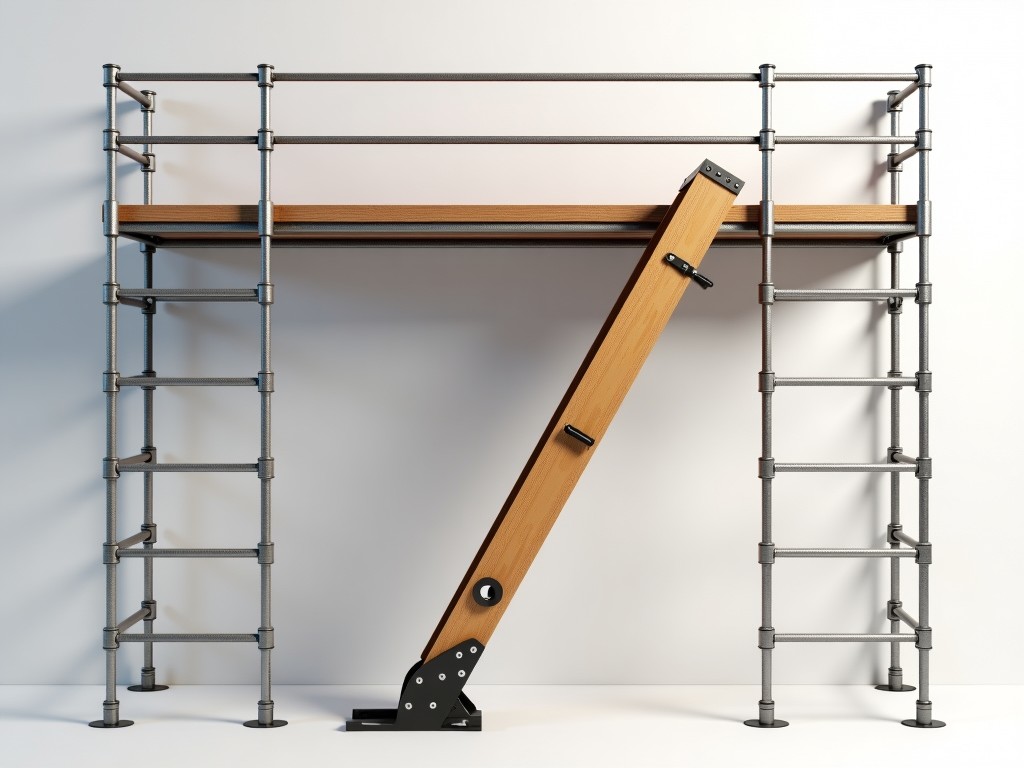
Fall protection for ladder jack scaffolds addresses a critical safety gap in elevated work environments where traditional guardrails are impractical. These systems integrate personal fall arrest components with scaffold-compatible anchoring to mitigate swing falls and arrest forces within OSHA and ANSI limits. Selection depends on scaffold configuration, working height, and substrate integrity, requiring engineering review before deployment.
A compliant ladder jack scaffold fall protection system consists of three interdependent elements: a certified anchor point rated for 5,000 lbs tensile strength, a shock-absorbing lanyard or self-retracting lifeline (SRL) limiting arrest force to 900 lbs or less, and a full-body harness with dorsal D-ring positioned between shoulder blades. The anchor must attach directly to the scaffold’s structural members—never to ladder jacks or planking—to ensure load transfer through the scaffold’s designed load path. Improper anchoring creates pendulum hazards that increase injury risk during a fall.
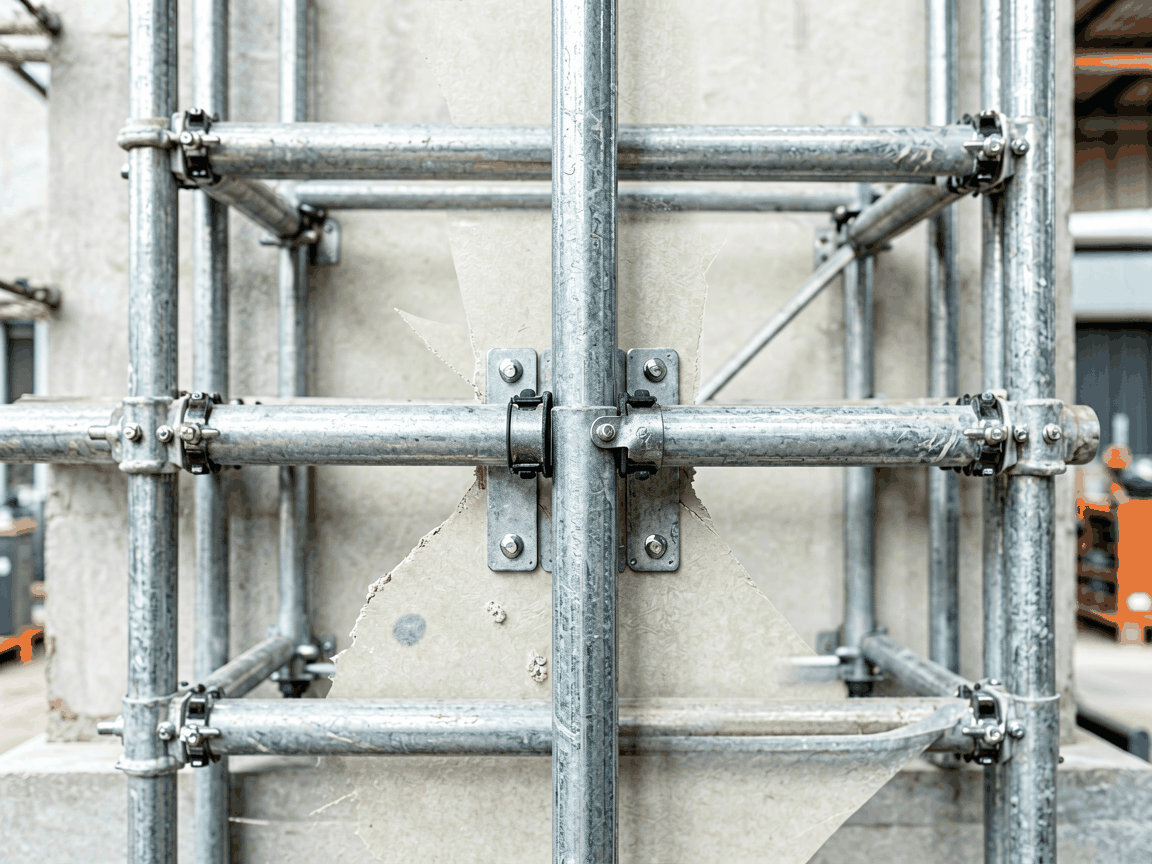
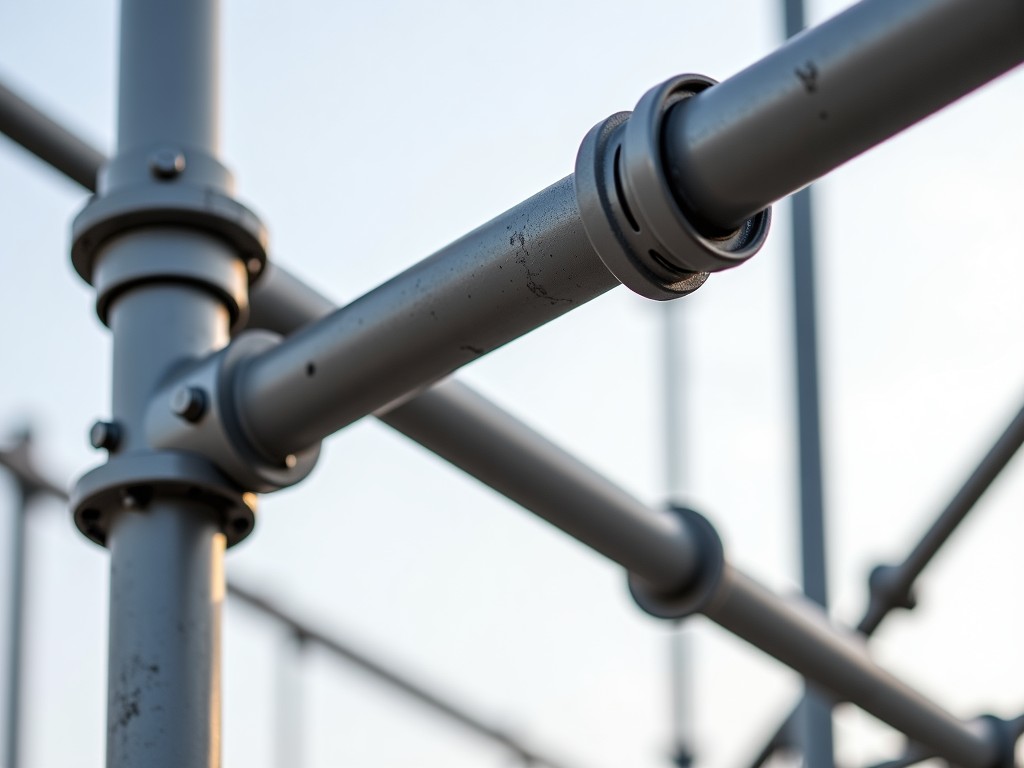
Anchor points must be engineered to resist both vertical and lateral loads induced during a fall arrest event. For ladder jack scaffolds, compatible anchors include beam clamps designed for 2x4 or 2x6 scaffold uprights, strap anchors wrapped around load-bearing tubes, or bolt-on plates welded to scaffold frames. Each anchor type requires verification of scaffold material grade (typically ASTM A36 or equivalent) and condition—corrosion, deformation, or prior damage compromises rated capacity. Installation must follow manufacturer torque specifications and include periodic retightening checks due to vibration-induced loosening.
Shock-absorbing lanyards deploy internal tear-web packs to decelerate the falling worker, limiting peak force to 900 lbs as required by ANSI Z359.13. Typical deployment adds 3.5 feet to fall distance; SRLs reduce this to under 2 feet but require sufficient clearance below the working surface. Total fall distance calculation must include: worker height (6 ft), lanyard length (6 ft), shock absorber deployment (3.5 ft), harness stretch (1 ft), and a 3 ft safety margin. On low-height scaffolds, this often necessitates SRL use or repositioning work to higher elevations where clearance permits.
Swing falls occur when the anchor point is located horizontally away from the worker’s vertical fall path, causing pendulum motion that increases impact velocity and collision risk with nearby structures. To minimize swing fall hazards on ladder jack scaffolds, the anchor should be positioned directly above the work area or within a 30-degree cone from vertical. When this is impractical due to scaffold geometry, a secondary tag line or controlled access zone must be established to prevent workers from reaching swing fall zones. Horizontal lifelines are generally unsuitable for ladder jack scaffolds due to limited anchor strength and deflection concerns.
All components require visual inspection before each shift: harnesses for frayed webbing, broken stitching, or distorted D-rings; lanyards/SRLs for damaged casings, improper retraction, or activated shock indicators; anchors for cracks, corrosion, or loose fasteners. Any evidence of impact loading, regardless of visible damage, mandates immediate removal from service. Manufacturers typically recommend SRL factory recertification every 1–2 years and harness retirement after 5 years of service, though actual lifespan depends on UV exposure, chemical contact, and usage frequency. Maintenance logs must be retained for compliance audits.
Harness webbing is typically polyester for UV and abrasion resistance, with tensile strength exceeding 5,000 lbs. Metal components—D-rings, adjusters, buckles—use forged steel or aluminum alloys with corrosion-resistant coatings (zinc plating, anodizing) suited to the work environment. SRL housings may be thermoplastic for lightweight portability or aluminum for harsh conditions. Anchor points match scaffold material compatibility to avoid galvanic corrosion; stainless steel anchors are recommended in marine or chemically aggressive settings. All materials must comply with ANSI/ISEA 121-2018 for dropped object prevention when used over areas with personnel below.
| Parameter | Shock-Absorbing Lanyard | Self-Retracting Lifeline (SRL) | Rail-Mounted System |
|---|---|---|---|
| Arrest Force Limit | ≤ 900 lbs | ≤ 900 lbs | ≤ 900 lbs |
| Typical Deployment Distance | 3.5 ft | < 2 ft | Minimal (rail engagement) |
| Required Clearance Below | ≥ 10.5 ft | ≥ 7.5 ft | Dependent on rail height |
| Swing Fall Susceptibility | High (if anchor offset) | Moderate (reduces with SRL) | Low (constrained to rail) |
| Anchor Compatibility | Beam clamps, straps | Beam clamps, straps | Requires dedicated rail |
| Typical Use Case | Short-duration tasks | Recurring work at height | Long-term facade work |
The table above compares common fall protection approaches for ladder jack scaffolds, highlighting trade-offs in arrest dynamics, clearance requirements, and hazard mitigation. Shock-absorbing lanyards offer simplicity but demand greater fall clearance; SRLs reduce arrest distance and swing fall risk but require more complex inspection; rail-mounted systems eliminate swing falls entirely but are rarely practical on ladder jack scaffolds due to lack of integrated rail infrastructure. Selection must align with site-specific scaffold geometry, task duration, and rescue planning capabilities.
Fall arrest is only the first phase of fall protection; timely rescue is critical to prevent suspension trauma, which can cause unconsciousness within 5–30 minutes. Rescue plans for ladder jack scaffold incidents must account for limited access, potential obstructions, and the need for mechanical advantage systems (e.g., pulleys, winches) to lift or lower the worker. Rescuers must be trained in harness-induced pathology and have immediate access to rescue kits containing straps, carabiners, and mechanical descenders. Local emergency services should be notified in advance of high-risk scaffold work to confirm response capabilities and equipment compatibility.
Ladder jack scaffold fall protection systems must comply with OSHA 1926.502(d) for personal fall arrest systems and ANSI Z359.1-2020 for system components. Anchor points must meet the 5,000 lb tensile strength requirement per OSHA 1926.502(d)(15), verified through manufacturer certification or professional engineer approval. Harnesses, lanyards, and SRLs must bear ANSI Z359.11, Z359.12, and Z359.14 markings respectively. Scaffold itself must meet OSHA 1926.452(l) for ladder jack scaffolds, but fall protection is addressed separately under subpart M. Documentation of component compatibility, inspection records, and worker training must be maintained on-site for audit readiness.