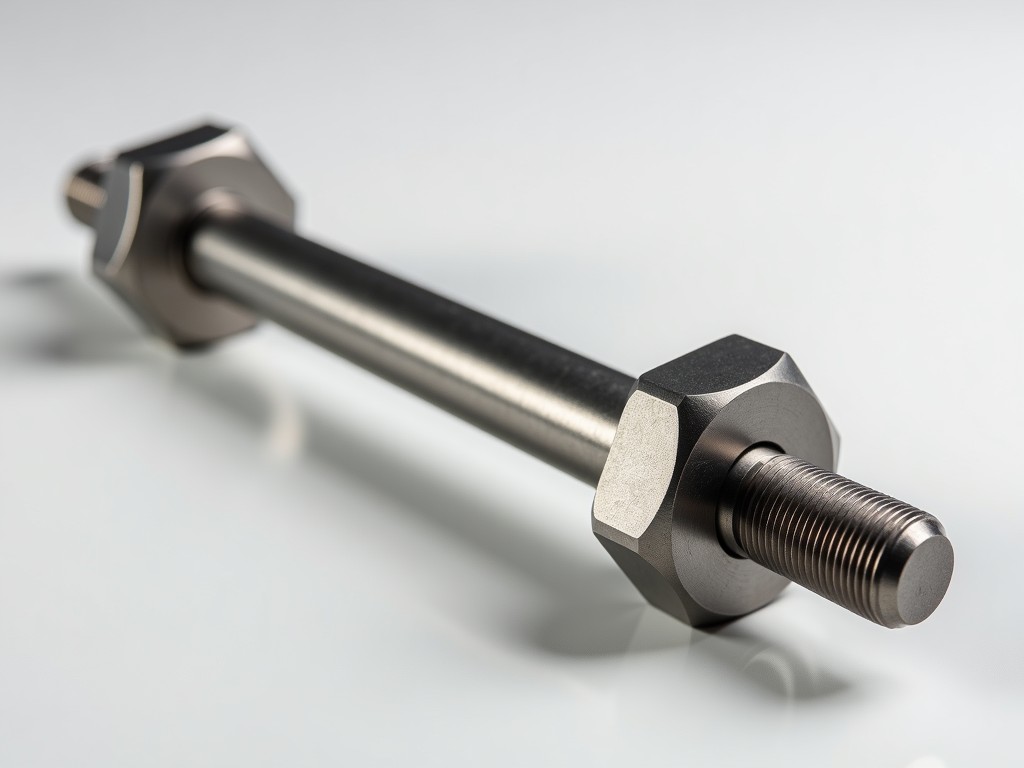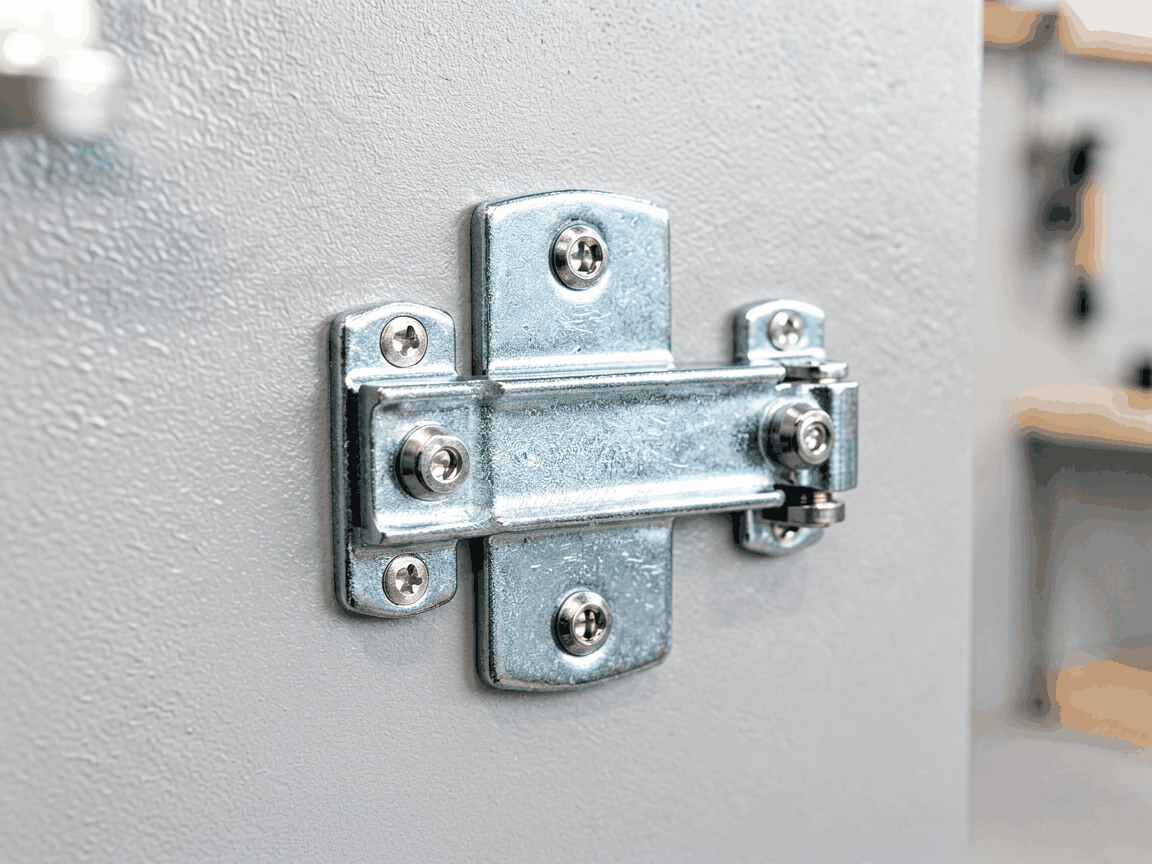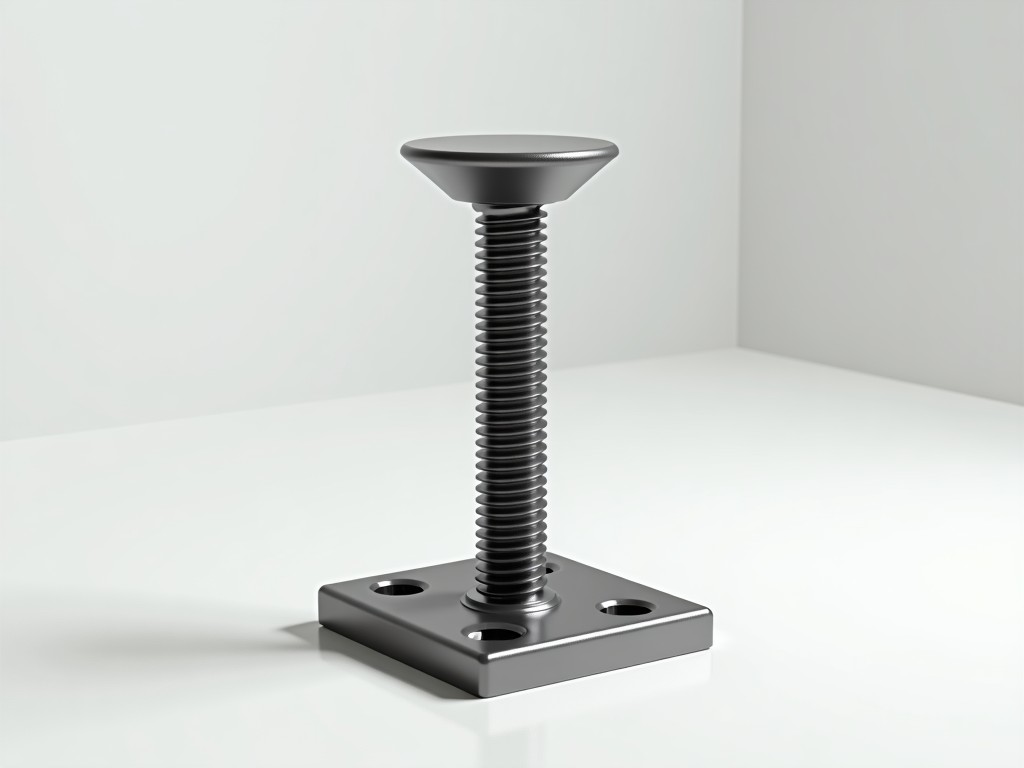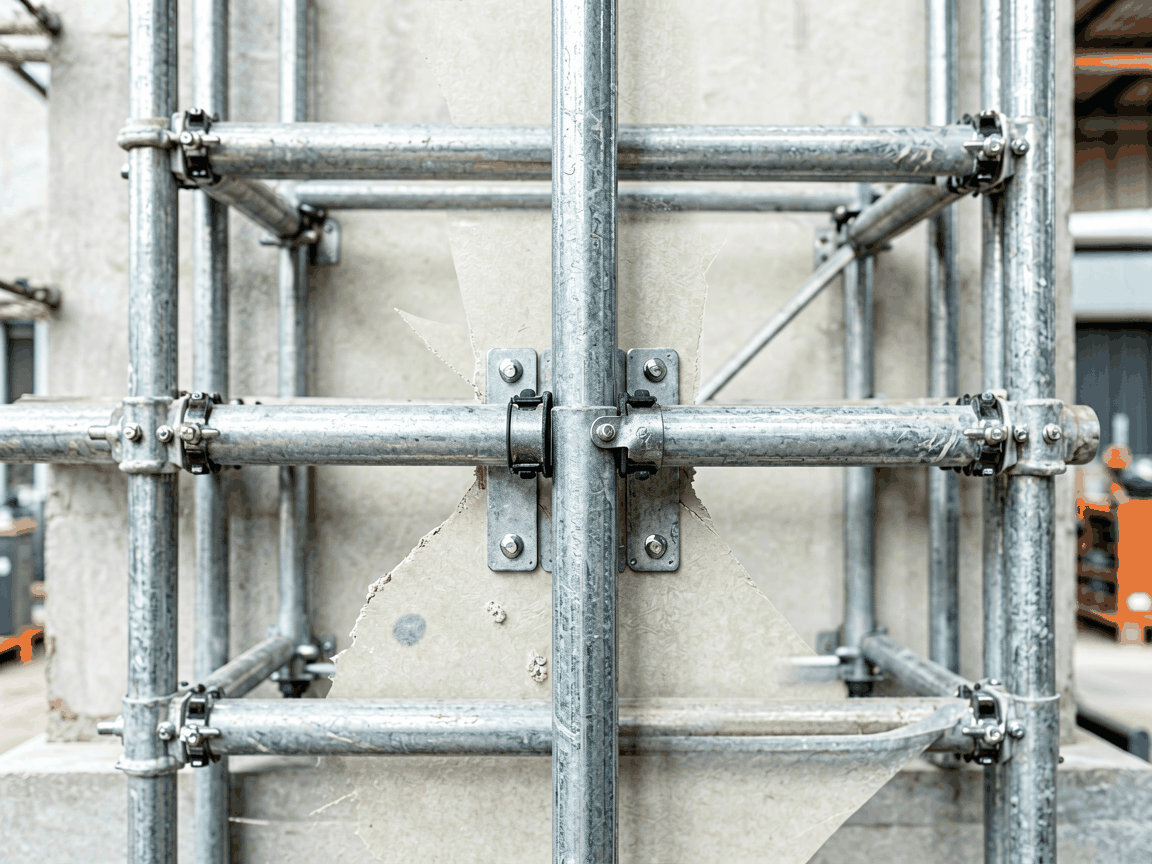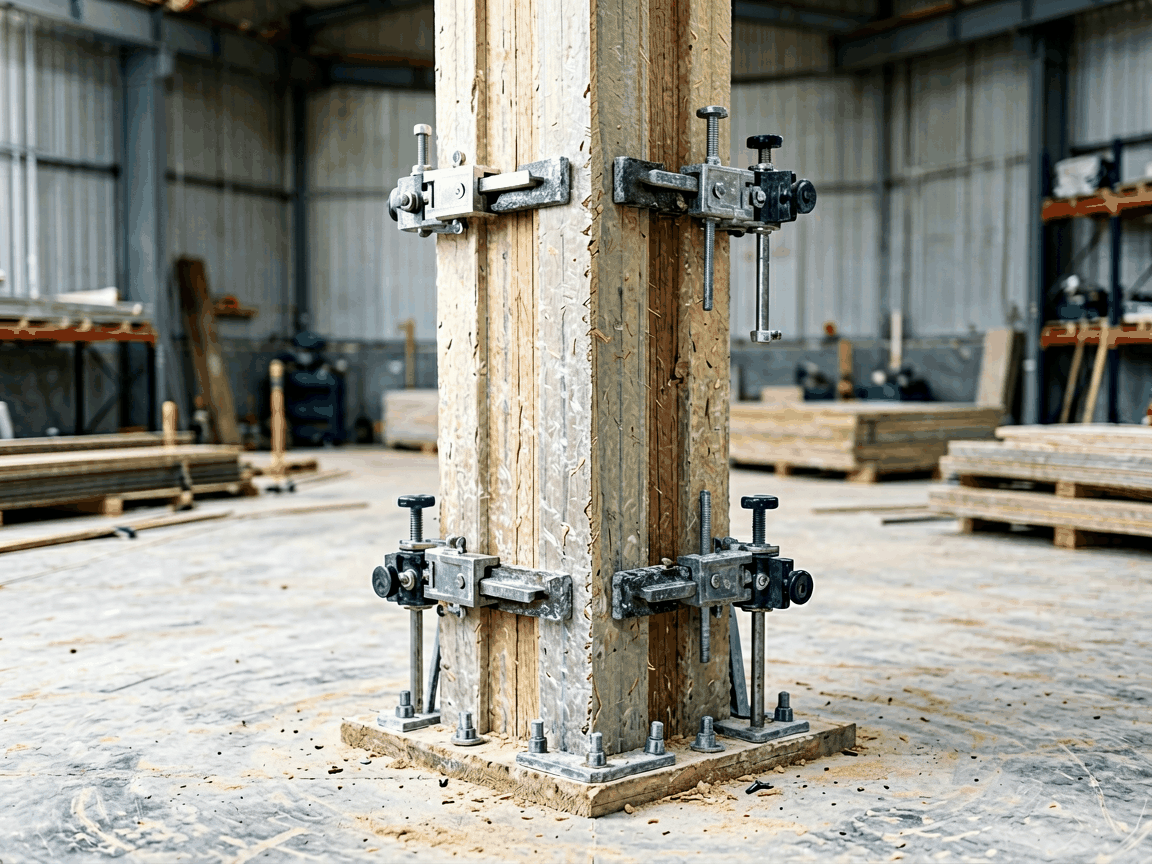
Mason clamps for gates column formwork are mechanical fastening devices designed to secure vertical formwork panels to structural columns during concrete placement. They transmit lateral pressure from fresh concrete to the column reinforcement or embedded anchors, preventing panel movement and maintaining dimensional accuracy. These clamps are engineered for repeated use in high-cycle construction environments where formwork integrity directly impacts surface finish and structural tolerance.
Unlike temporary ties or wire systems, mason clamps provide positive locking action with adjustable clamping force, allowing precise control over formwork tightness without overstressing the form facing or damaging the column surface. Their design accommodates variations in column size and formwork thickness through adjustable jaws or screw mechanisms, enabling quick adaptation between pours.
The clamping mechanism typically employs a threaded spindle or cam lever system that converts manual input into high axial load, distributing force evenly across the formwork face and column interface. This ensures uniform pressure distribution, minimizing the risk of formwork bulging, joint misalignment, or concrete leakage at the form-column interface.
The load-bearing capacity of mason clamps is determined by the cross-sectional area and tensile strength of the clamping element, typically forged steel or ductile iron. Standard models are rated for safe working loads between 15 kN and 35 kN per clamp, sufficient to resist lateral pressures from concrete pours up to 6 meters in height, assuming typical formwork spacing and concrete density.
Clamping range defines the minimum and maximum thickness of formwork and column dimensions the device can accommodate. Adjustable mason clamps commonly offer a range from 180 mm to 300 mm, allowing use with various formwork systems (steel, aluminum, plywood-backed) and column sizes from 200 mm to 800 mm square or diameter.
The clamping force is applied via a mechanical advantage system—either a trapezoidal thread spindle (providing self-locking under vibration) or a cam-action lever (enabling rapid engagement). Spindle-based systems offer finer control and higher repeatability, while cam levers reduce installation time by up to 40% in high-repetition scenarios.
The main body and clamping jaws are typically manufactured from SG iron (ductile cast iron, GJS-500-7) or forged carbon steel (C45 or equivalent), selected for high yield strength, impact resistance, and wear durability under cyclic loading. These materials maintain structural integrity after hundreds of use cycles, resisting deformation at the clamping points even under maximum rated load.
Surface treatment is critical for longevity in wet, alkaline concrete environments. Standard finishes include hot-dip galvanization (minimum 80 µm zinc coating) or electro-galvanization with chromate sealing, providing corrosion resistance equivalent to ISO 12944 C3–C4 environments. For marine or high-chloride applications, optional thermal diffusion galvanizing or stainless steel (AISI 304/316) variants are available upon request.
Wear points—such as spindle threads, cam surfaces, and jaw contact areas—are often hardened via induction heating or fitted with replaceable bronze bushings to extend service life. This reduces galling and maintains consistent clamping torque over time, which is essential for maintaining formwork alignment across multiple pours.
In gang-form column systems, mason clamps are installed at vertical intervals—typically every 600 mm to 900 mm—to tie the inner and outer formwork panels together across the column core. Their placement aligns with formwork tie locations or walers, ensuring that lateral concrete pressure is transferred directly to the formwork structure rather than relying on friction or adhesion at the panel joints.
For circular columns using curved formwork, adjustable mason clamps with swivel jaws or articulated arms accommodate the changing radius while maintaining perpendicular clamping force. This prevents panel twisting or lifting during pour, which could otherwise cause elliptical deformation or surface defects in the finished column.
In jump-form or climbing formwork systems, mason clamps are designed for quick release and re-engagement, allowing the formwork to be lifted as a unit after concrete curing. Features such as retractable pins, quick-release levers, or latch mechanisms enable detachment without damaging the form facing or requiring re-drilling of anchor points.
| Feature | Spindle-Type Clamp | Cam-Lever Clamp |
|---|---|---|
| Clamping Force Control | Precise, adjustable via thread pitch | Fixed force per lever position |
| Installation Speed | Moderate (requires threading) | Fast (snap-action) |
| Vibration Resistance | High (self-locking thread) | Moderate (may require re-check) |
| Typical Use Case | High-precision columns, repeat pours | High-volume, rapid-cycle projects |
| Maintenance Needs | Lubricate spindle, check wear | Inspect cam pivot, spring tension |
Proper installation begins with aligning the clamp jaws perpendicular to the formwork face to ensure even load distribution. Misalignment can cause eccentric loading, leading to jaw slippage, formwork distortion, or localized overstress. The clamp should be positioned so that the force vector passes through the centroid of the formwork panel and column core.
Clamping torque should be applied gradually and symmetrically when using multiple clamps per tier. Over-tightening can damage the form facing (especially plywood or thin steel) or induce compressive stresses in the column reinforcement. Recommended torque values for spindle-type clamps range from 80 Nm to 150 Nm, depending on size and material—consult manufacturer data for specific models.
After concrete pouring and before initial set, clamps should be inspected for signs of movement, loosening, or deformation. Any clamp showing visible jaw gap increase, spindle bending, or lever disengagement must be replaced immediately. Reuse is permissible only after thorough cleaning, visual inspection, and functional testing of the clamping mechanism.
Each clamp undergoes dimensional verification of critical features—jaw opening, spindle pitch, lever pivot alignment—using calibrated gauges to ensure interchangeability and proper fit. Material hardness is checked at load-bearing points (HRC 35–45 for forged steel, HB 180–220 for ductile iron) to confirm resistance to wear and deformation under repeated loading.
Proof load testing is conducted at 1.5 times the rated working load (e.g., 22.5 kN for a 15 kN clamp) with no permanent deformation allowed. Fatigue testing simulates 500+ load cycles at 75% of maximum load to verify resistance to loosening or crack initiation under vibratory conditions typical of concrete pouring and consolidation.
Surface coating integrity is validated via salt spray testing (ASTM B117) for minimum 240 hours for hot-dip galvanized units, with acceptance criteria of less than 5% red rust adhesion. For stainless steel variants, passivation verification and surface roughness (Ra < 0.8 µm) are checked to ensure corrosion resistance in alkaline environments.
Clamp dimensions can be adjusted to match non-standard formwork thicknesses or column geometries. Jaw depth, spindle length, and overall height are modified based on project-specific formwork panel thickness (e.g., 50 mm vs. 100 mm plywood-backed steel) and column size (e.g., rectangular 300x500 mm vs. circular 1000 mm diameter).
Alternative materials are available for specialized environments: stainless steel (AISI 316L) for chloride-rich or humid climates, or hardened tool steel inserts for high-abrasion applications involving rough-sawn timber formwork. Surface treatments can be upgraded to epoxy coating or duplex systems for extended service life in aggressive conditions.
Accessories such as protective caps for spindle ends, locking washers to prevent loosening under vibration, or quick-release pins for jump-form systems can be integrated. For rental fleets or high-turnover use, clamps can be supplied with serialized tags and corrosion-resistant identification plates for traceability and maintenance tracking.
For technical inquiries, customization requests, or quotation details regarding gates column formwork mason clamps, please contact our engineering team. Provide project specifics including column dimensions, formwork system type, concrete pour height, and expected reuse cycles to receive accurate specifications and lead times.
Contact us at: /contactus