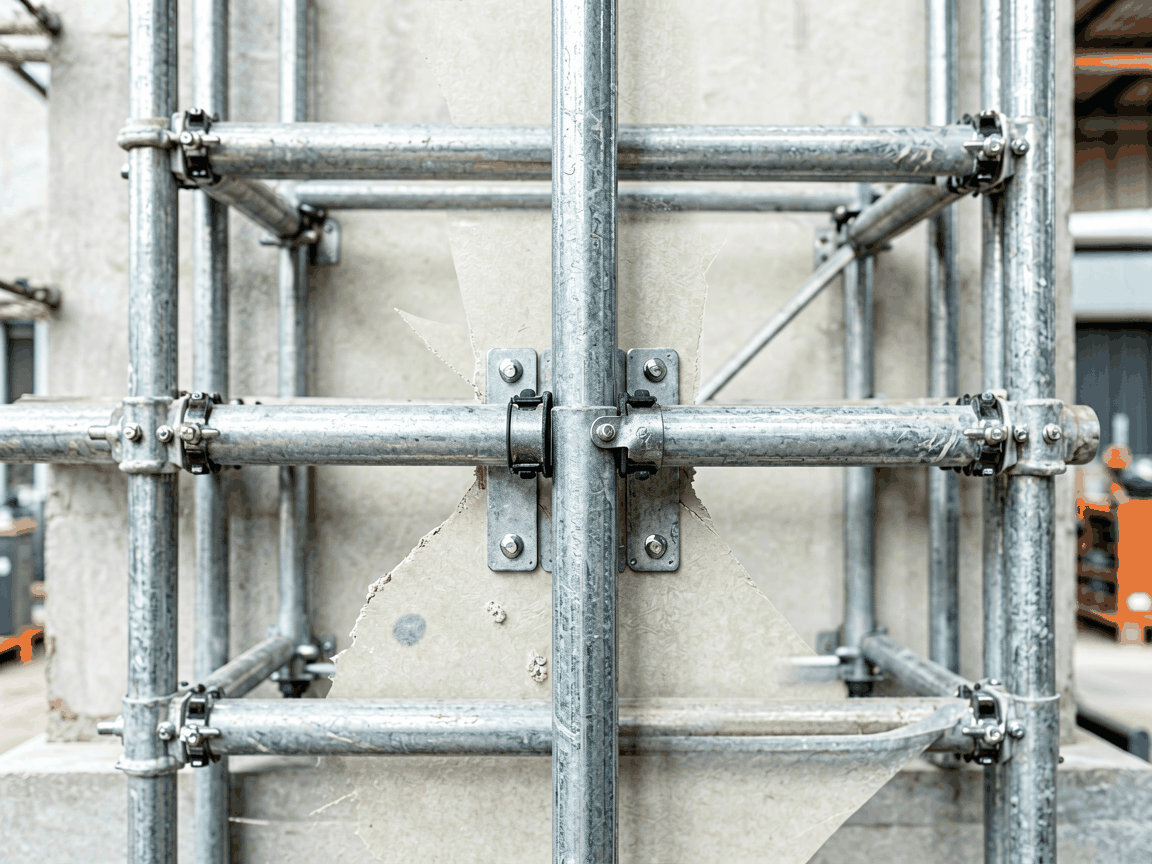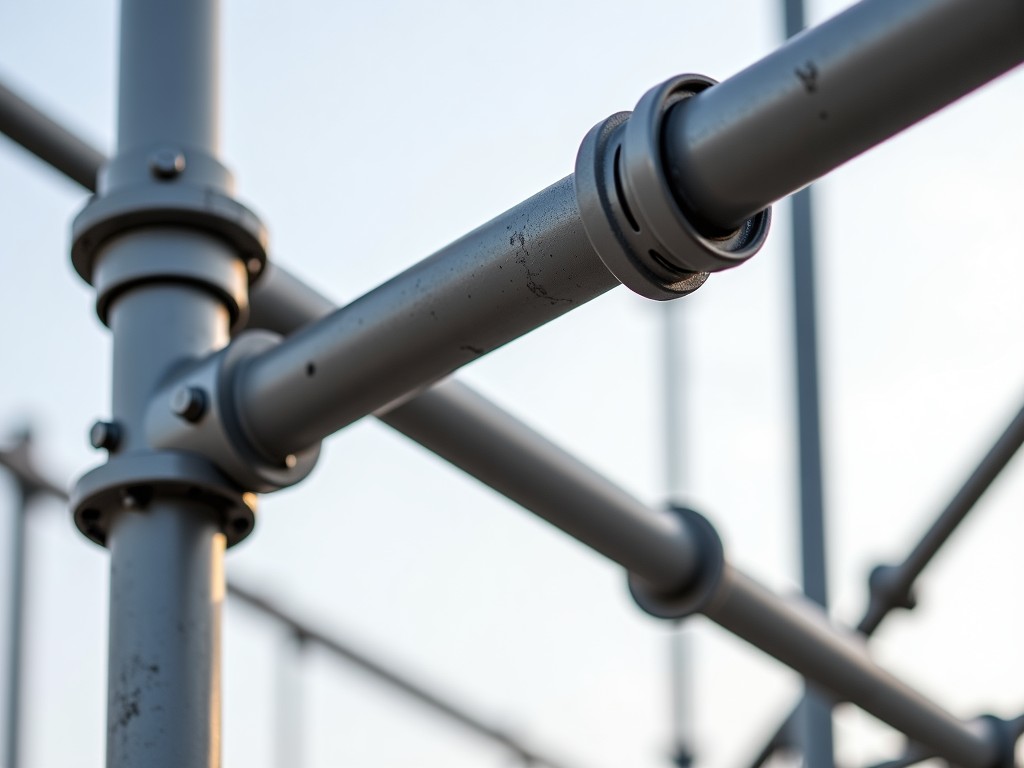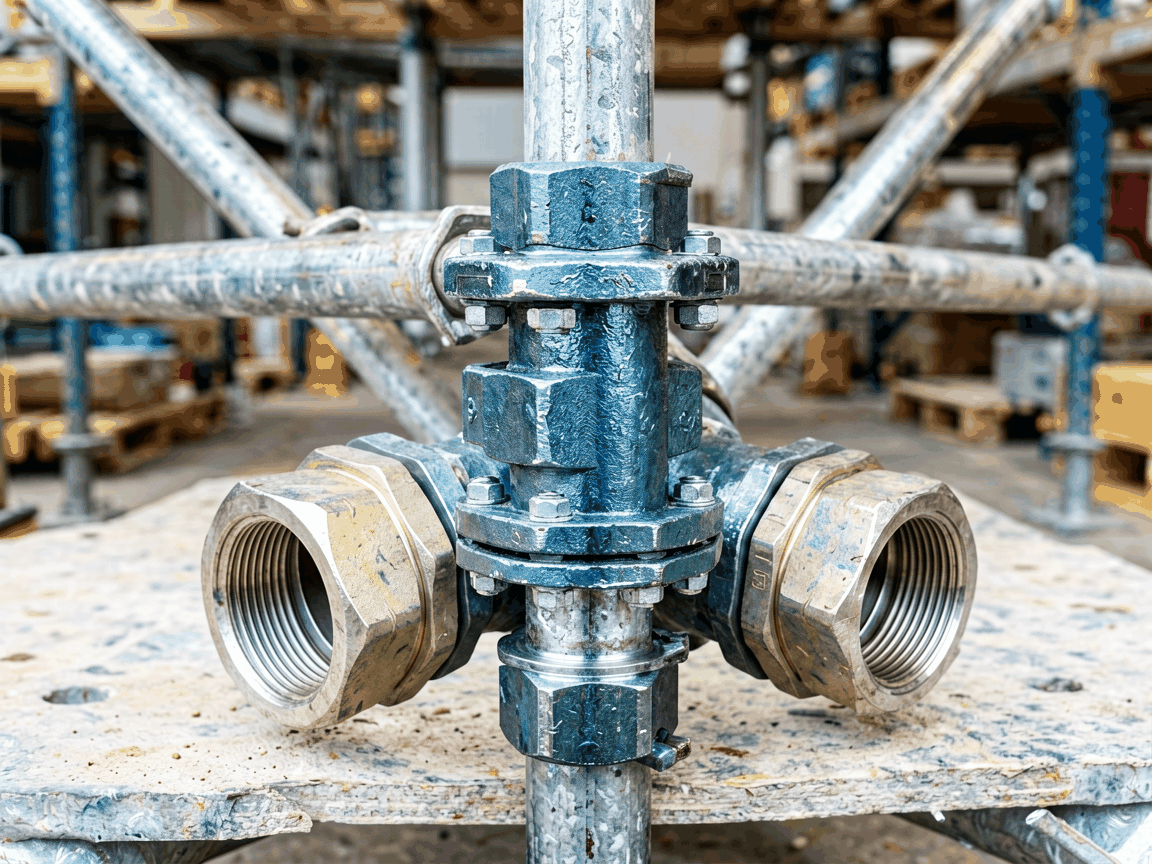
Fixed swivel scaffolding couplers are critical connection components used to join tubular scaffolding members at variable angles while maintaining structural rigidity under load. Unlike rigid couplers that restrict movement to 90-degree joints, swivel couplers allow rotational adjustment between connected tubes, enabling the construction of complex geometries such as curved facades, stair towers, and irregular building envelopes. The "fixed" designation refers to the mechanical locking mechanism that secures the swivel joint after adjustment, preventing unintentional movement during erection or under service loads. This dual functionality—adjustability during assembly and fixed rigidity in service—makes them indispensable in applications where precision alignment and load transfer must coexist with geometric flexibility.
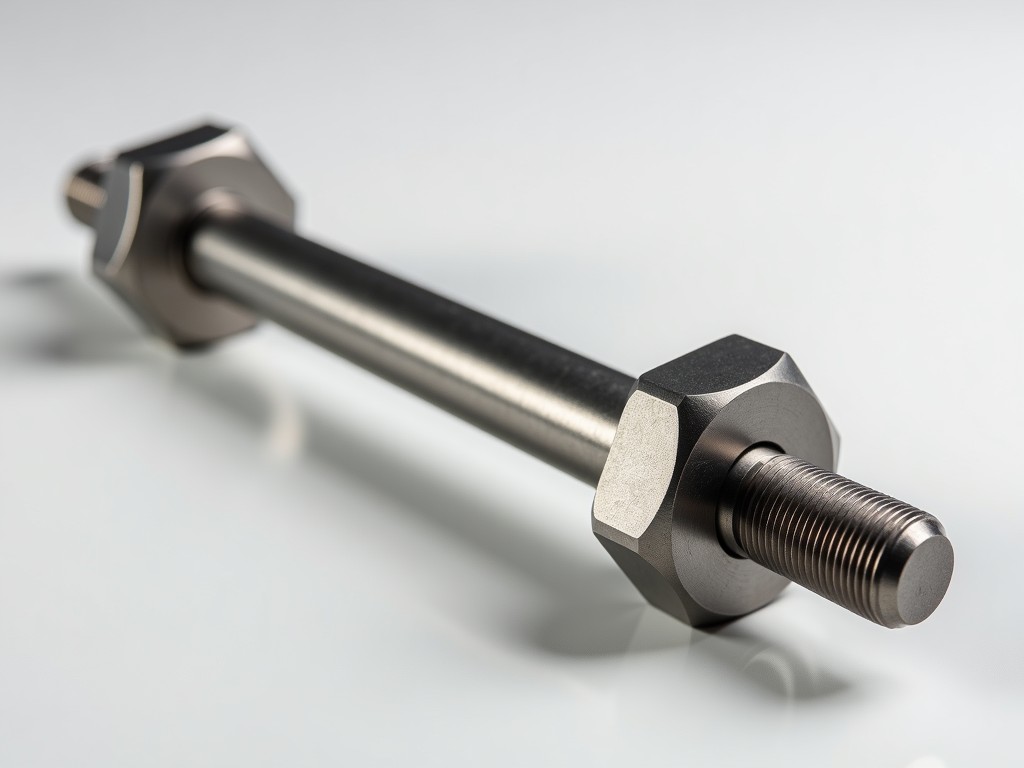
These couplers are typically manufactured from hot-rolled structural steel grades such as S235JR or S275JR, selected for their balance of yield strength, ductility, and weldability. The main body and swivel housing are forged or cast as a single unit to eliminate potential failure points at weld joints under cyclic loading. The locking mechanism—often a wedge, bolt, or cam system—is made from hardened steel (typically 42CrMo4 or equivalent) to resist deformation and wear during repeated tightening cycles. Surface treatment usually involves hot-dip galvanizing per ISO 1461, providing a minimum zinc coating thickness of 55 μm to ensure corrosion resistance in outdoor construction environments for 5–10 years without maintenance. The resulting assembly typically achieves a minimum ultimate tensile strength of 400 MPa and a yield strength of 250 MPa, sufficient to safely transfer axial, shear, and moment loads imposed by scaffolding loads and wind forces.
The load-bearing capacity of a fixed swivel coupler is not a fixed value but depends on the tube diameter, wall thickness, coupling geometry, and the angle between connected members. For standard 48.3 mm outer diameter tubes with 3.2 mm wall thickness, typical safe working loads (SWL) range from 15 kN in axial tension to 25 kN in shear, depending on the coupler design and installation torque. Moment resistance is particularly critical—when tubes are connected at angles other than 90°, bending moments develop in the coupler body, which must be resisted by the cross-sectional modulus of the swivel housing. Manufacturers provide load charts derived from finite element analysis and physical testing per EN 74 or ANSI/SSFI SC-100-5/2004 standards, showing capacity reductions at acute or obtuse angles due to eccentric loading. Proper installation requires torque control on the locking mechanism—typically 50–70 Nm for bolted systems—to ensure the swivel joint does not slip under load while avoiding over-torque that could thread or deform the locking element.
| Coupler Type | Adjustability | Load Path Efficiency | Typical Applications |
|---|---|---|---|
| Fixed Swivel | Full 360° rotation, lockable | Moderate—depends on angle; moment capacity reduced at non-90° | Curved structures, stair towers, complex facades, temporary roofs |
| Rigid (Right-Angle) | Fixed 90° only | High—axial and shear loads aligned with member axes | Standard facade scaffolding, vertical frames, horizontal ledgers |
| Semi-Rigid (Swivel + Friction) | Limited adjustment; relies on friction to hold position | Low to moderate—prone to slip under dynamic or vibratory loads | Non-load-bearing bracing, temporary guards, lightweight formwork |
The table above illustrates the functional trade-offs inherent in coupler selection. Fixed swivel couplers sacrifice some load-path efficiency at non-orthogonal angles compared to rigid couplers but provide essential geometric flexibility that rigid types cannot offer. Semi-rigid swivel couplers, while adjustable, lack a positive locking mechanism and are unsuitable for primary load transfer in scaffolding systems subject to wind, vibration, or dynamic loads—where even minor slip can accumulate into significant deformation or instability. Therefore, fixed swivel couplers are the only viable option when both angular adjustability and certified load-bearing performance are required simultaneously.
Proper installation begins with verifying tube compatibility—couplers are designed for specific outer diameters (most commonly 48.3 mm or 50.8 mm) and wall thickness ranges. The swivel joint must rotate freely before tightening; any binding indicates contamination, deformation, or incorrect sizing. After aligning the tubes to the desired angle, the locking mechanism is tightened to the manufacturer-specified torque using a calibrated wrench. Over-torquing can stretch bolts, crack housings, or gall threads, while under-torquing allows joint slip under load. Quality control on the manufacturing side includes dimensional inspection of critical features (bore diameter, swivel axis alignment, locking feature geometry), material hardness testing of locking components, and proof-load testing of a sample batch to verify ultimate strength. Non-destructive testing such as magnetic particle inspection may be applied to high-stress areas to detect micro-cracks from forging or heat treatment. Traceability is maintained via batch numbers stamped on the coupler body, linking each unit to its material certification and test records.
Fixed swivel couplers enable scaffolding systems to adapt to architectural complexities that would otherwise require custom-fabricated nodes or extensive shoring. In renovation projects involving historic buildings with curved cornices or ornate façades, swivel couplers allow the scaffold to follow the building profile precisely, minimizing gaps that could compromise worker safety or debris containment. For temporary stair towers accessing upper floors during high-rise construction, swivel couplers at each landing allow the stair stringers to maintain consistent rise and run while accommodating minor deviations in vertical alignment. In bridge under-deck work, they enable the creation of suspended platforms that follow the soffit geometry of box girders or arched structures. Even in temporary roofing systems over open courtyards or atriums, swivel couplers facilitate the erection of radial or dome-shaped frames that would be impossible with only right-angle connectors. Each application relies on the coupler’s ability to transfer loads predictably after being locked at a specific angle—turning geometric flexibility into engineered reliability.