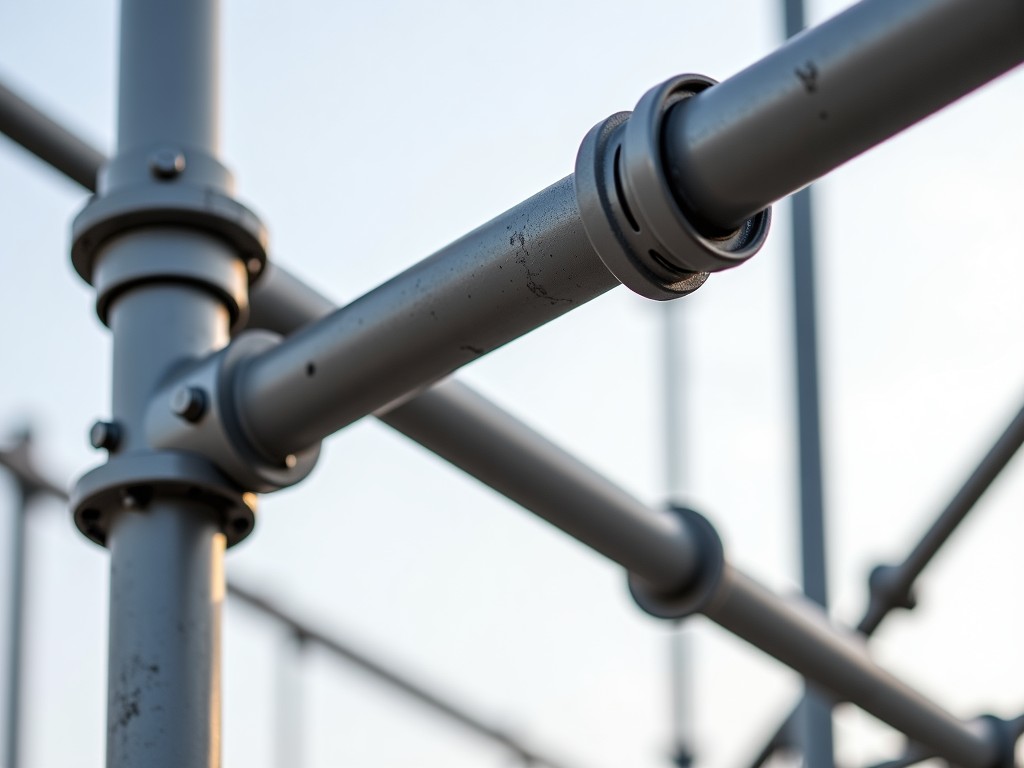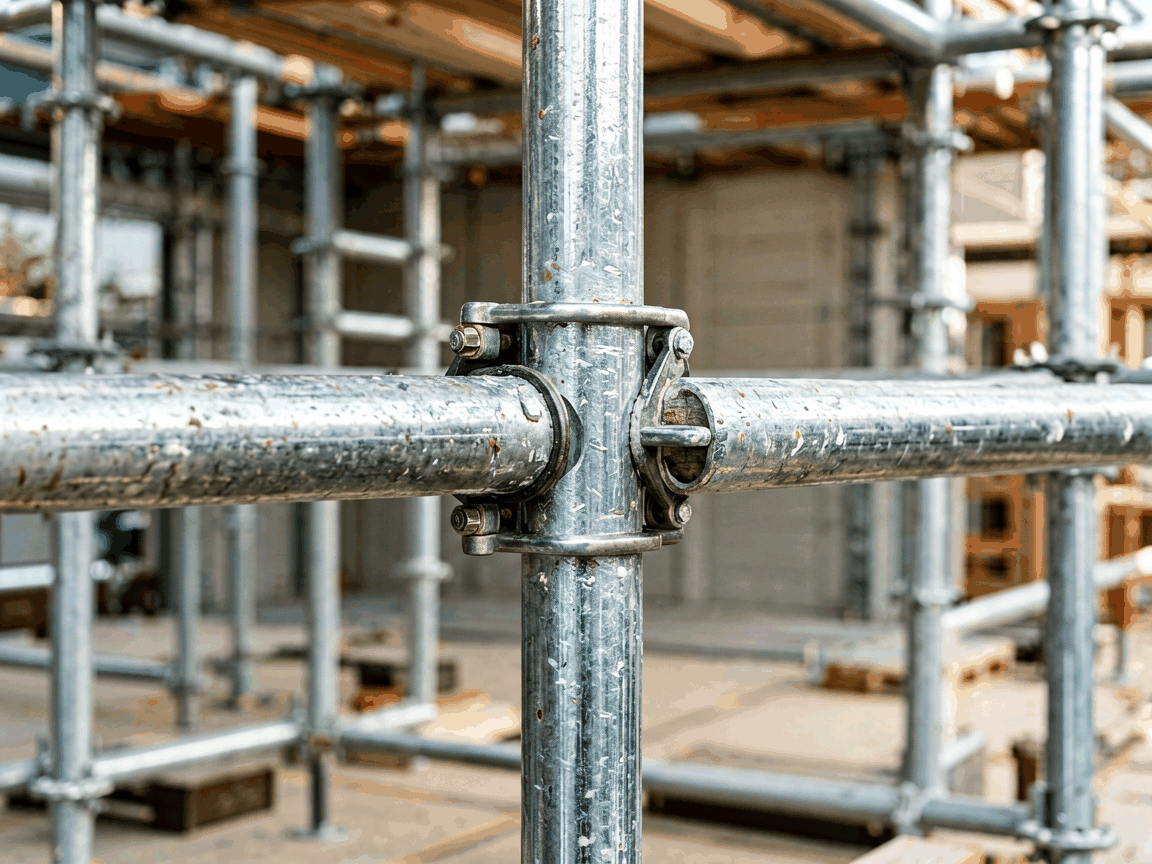
Fixed clamps are critical components in tubular scaffolding systems, providing rigid, non-slip connections between vertical and horizontal members. Unlike swivel clamps, fixed clamps maintain a 90-degree angle, ensuring structural stability in load-bearing applications where angular movement must be prevented. This page outlines the engineering factors influencing fixed clamp selection and typical pricing considerations for industrial buyers.
Procurement decisions should prioritize material compatibility, load capacity, and compliance with regional safety standards over unit cost alone. Understanding these technical parameters reduces installation risk and long-term maintenance expenses.
Fixed clamps are typically manufactured from either pressed steel or malleable iron, each offering distinct mechanical properties. Pressed steel clamps are formed from cold-rolled strip, providing consistent grain structure and high tensile strength, often exceeding 400 MPa. Malleable iron clamps undergo heat treatment to achieve ductility, allowing deformation under overload before fracture, which can serve as a visual warning sign.
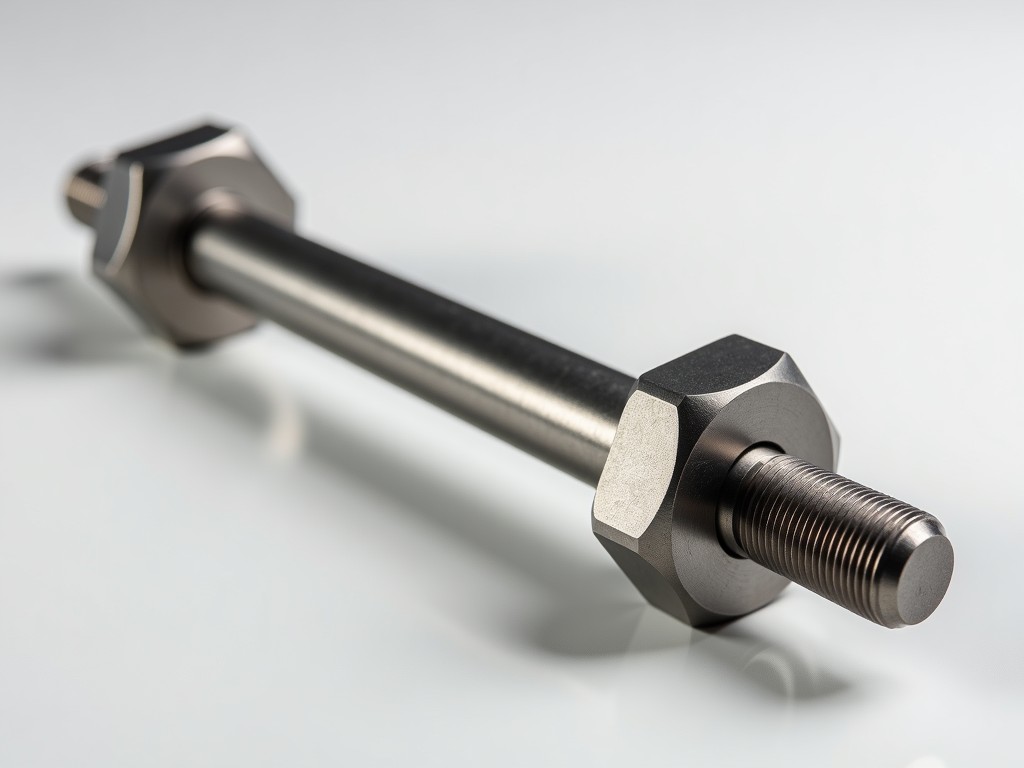
The clamping mechanism relies on forged or cast T-bolts and nuts, usually rated to property class 8.8 or higher. Thread engagement length and nut type (e.g., lock nuts or nylon inserts) directly affect slip resistance under cyclic loading. Surface treatments such as hot-dip galvanizing (minimum 55 μm zinc coating) or electroplating are applied to mitigate corrosion in outdoor environments.
Internal jaw surfaces may feature serrations or grooves to increase friction against the scaffold tube, reducing reliance on bolt torque alone. Jaw depth and tube contact area are critical—standard clamps accommodate 48.3 mm outer diameter tubes, with tolerances maintained within ±0.5 mm to ensure even load distribution.
The safe working load (SWL) of a fixed clamp depends on tube size, material grade, bolt torque, and contact conditions. For a standard 48.3 mm clamp made from S275JR steel and tightened to 50 Nm, typical SWL values range from 1,500 to 2,500 kgf under static vertical load, depending on jaw design and surface condition.
Manufacturers may provide test reports based on EN 74 or BS 1139 standards, specifying slip load, crush resistance, and deformation limits. Buyers should verify that test methods align with regional regulatory requirements, as performance can vary between clamp designs even with similar materials.
Unit price for fixed clamps is influenced by material choice, production volume, surface finish, and dimensional tolerances. Pressed steel clamps generally have lower material costs but require higher tooling investment, making them economical at volumes above 5,000 units. Malleable iron offers flexibility for lower-volume runs but involves higher energy consumption during annealing.
Surface treatment adds measurable cost: hot-dip galvanizing increases price by approximately 15–25% compared to self-colored finishes due to processing time and zinc consumption. Electroplating is less expensive but offers thinner coatings, suitable only for dry or mildly corrosive environments.
Order size directly affects unit pricing—breaks commonly occur at 500, 2,000, and 5,000 units. Custom markings, special packaging (e.g., corrosion-inhibiting paper or sealed bags), or compliance documentation (e.g., mill certificates, EN 10204 3.1) may incur additional charges but support traceability and audit readiness.
| Characteristic | Pressed Steel | Malleable Iron |
|---|---|---|
| Typical Tensile Strength | 400–550 MPa | 300–450 MPa |
| Elongation at Break | 10–20% | 15–25% |
| Impact Resistance (Cold) | Moderate | Higher |
| Tooling Cost | High | Low |
| Economical Volume | >5,000 units | <5,000 units |
| Surface Finish Options | Galvanized, painted, self-colored | Galvanized, painted, self-colored |
| Common Applications | High-volume projects, rental fleets | Low-volume, replacement, specialized builds |
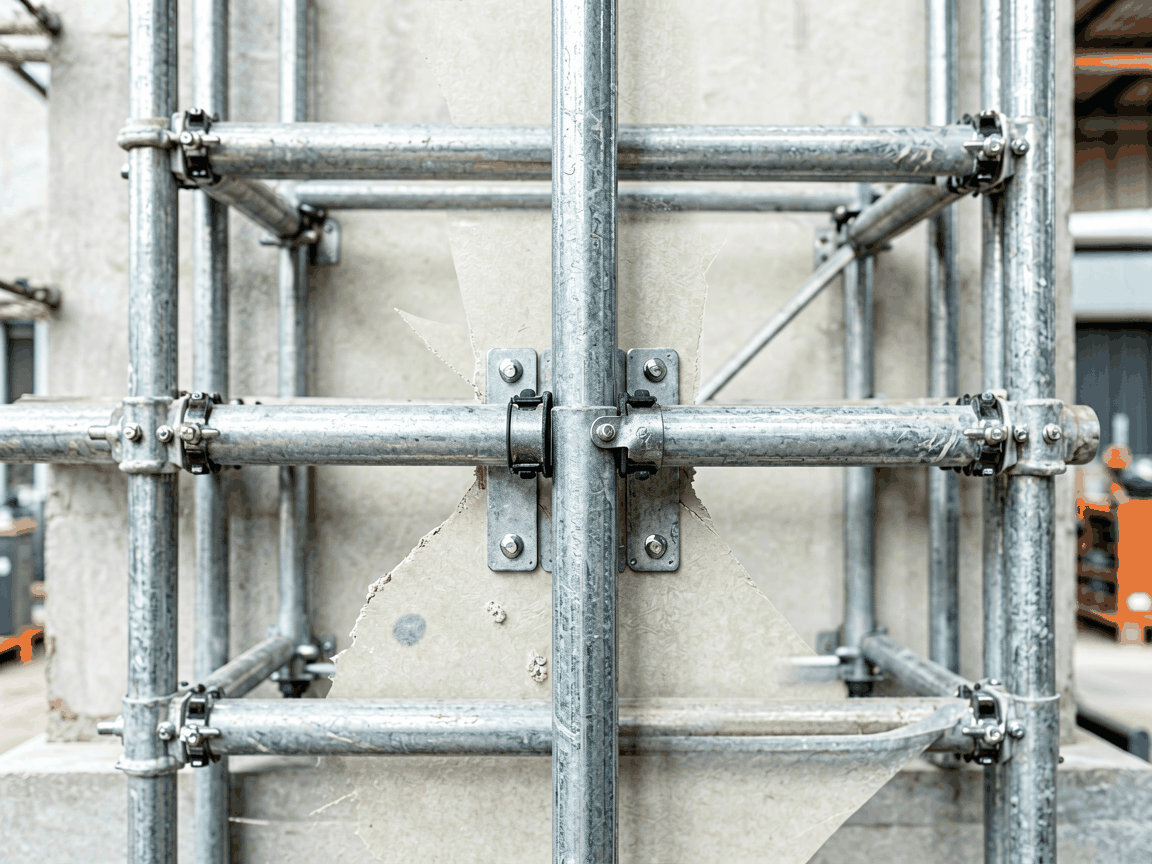
Fixed clamps are primarily used in facade scaffolding, birdcage structures, and shoring systems where right-angle connections are permanent and load paths are predictable. In facade systems, they connect ledgers to standards, transferring wind and dead loads vertically to the base. Their rigidity prevents racking under lateral forces, which is essential for tall, narrow structures.
In birdcage scaffolds supporting formwork or falsework, fixed clamps secure transoms to standards, creating a grid that resists both vertical and lateral movement. Here, slip resistance under cyclic loading—such as from concrete pouring vibrations—is critical. Clamps must maintain position over hours or days without retightening.
They are less suitable for applications requiring frequent angle adjustments, such as stair towers or loading bays, where swivel clamps offer necessary flexibility. Misapplying fixed clamps in dynamic angle scenarios can lead to over-torquing, thread stripping, or sudden failure under unexpected load shifts.
Dimensional inspection focuses on jaw width, bolt hole alignment, and thread integrity. Go/no-go gauges verify that the clamp opens sufficiently to accept the tube without binding and closes to achieve proper bite. Thread gauges check pitch diameter and flank angle to ensure nut engagement meets ISO 965/1 standards.
Surface treatment thickness is measured via magnetic induction or coulometric methods. For hot-dip galvanizing, adherence to EN ISO 1461 requires minimum local coating thickness of 55 μm. Visual inspection checks for bare spots, drips, or lumpiness that may indicate poor bath chemistry or withdrawal speed.
Mechanical testing may include proof load tests (applying 1.5× SWL for 10 seconds) and slip load validation. Non-conforming units are segregated based on defect type—dimensional, material, or finish—and traced back to production lot. Documentation of these checks supports compliance with ISO 9001 or similar quality management systems.
To receive an accurate quotation, provide the following: required quantity, preferred material (pressed steel or malleable iron), surface treatment (self-colored, electroplated, hot-dip galvanized), tube diameter (typically 48.3 mm, but confirm if using 42 mm or 60.3 mm), and any required certifications (e.g., EN 10204 2.2, 3.1, or regional scaffolding standards).
Specify delivery terms (e.g., EXW, FOB, CIF) and packaging preferences—bulk in palletized cartons, smaller quantities in sealed bags with desiccant, or custom labeling for inventory management. Lead times typically range from 2 to 6 weeks depending on volume and finish, with galvanized layers adding 3–5 days to processing.
For projects with strict traceability needs, request mill certificates for raw material and batch test results for mechanical properties. Suppliers should be able to provide these upon request without delaying quotation.