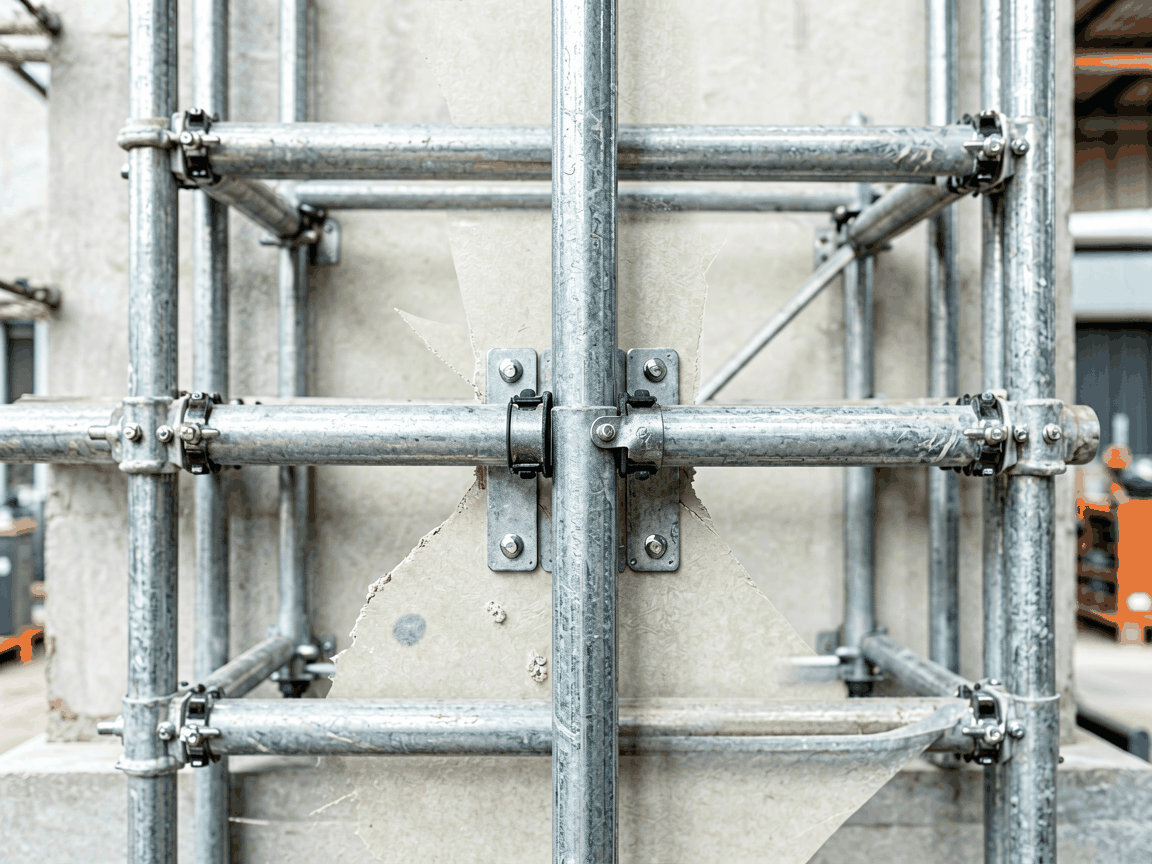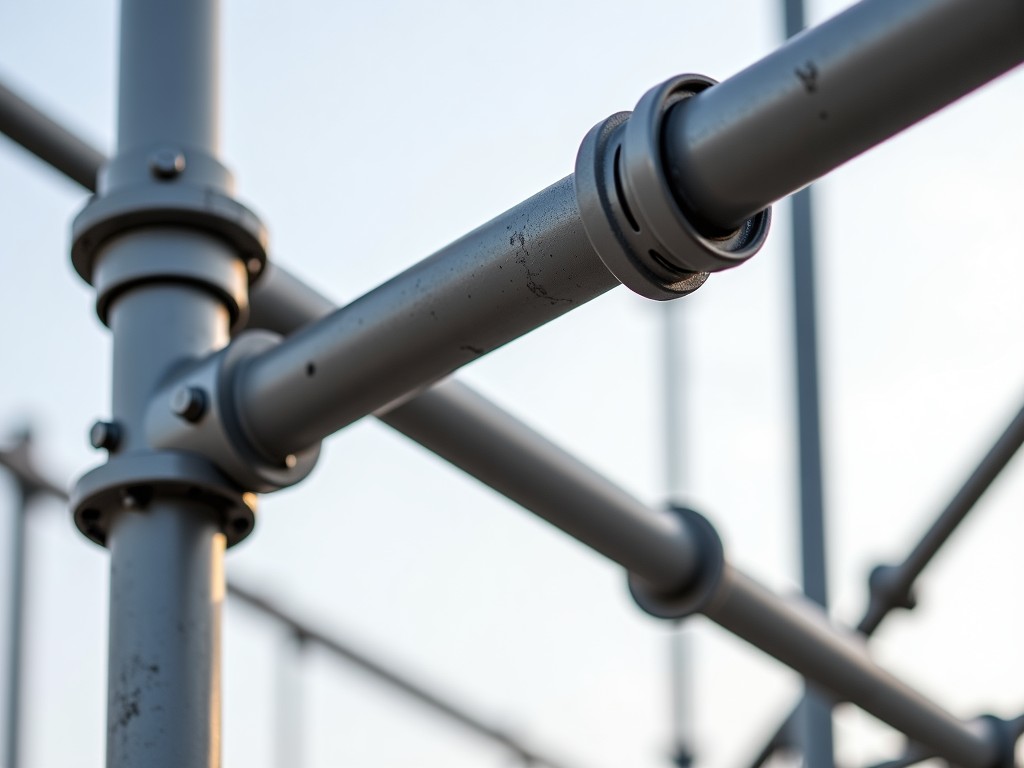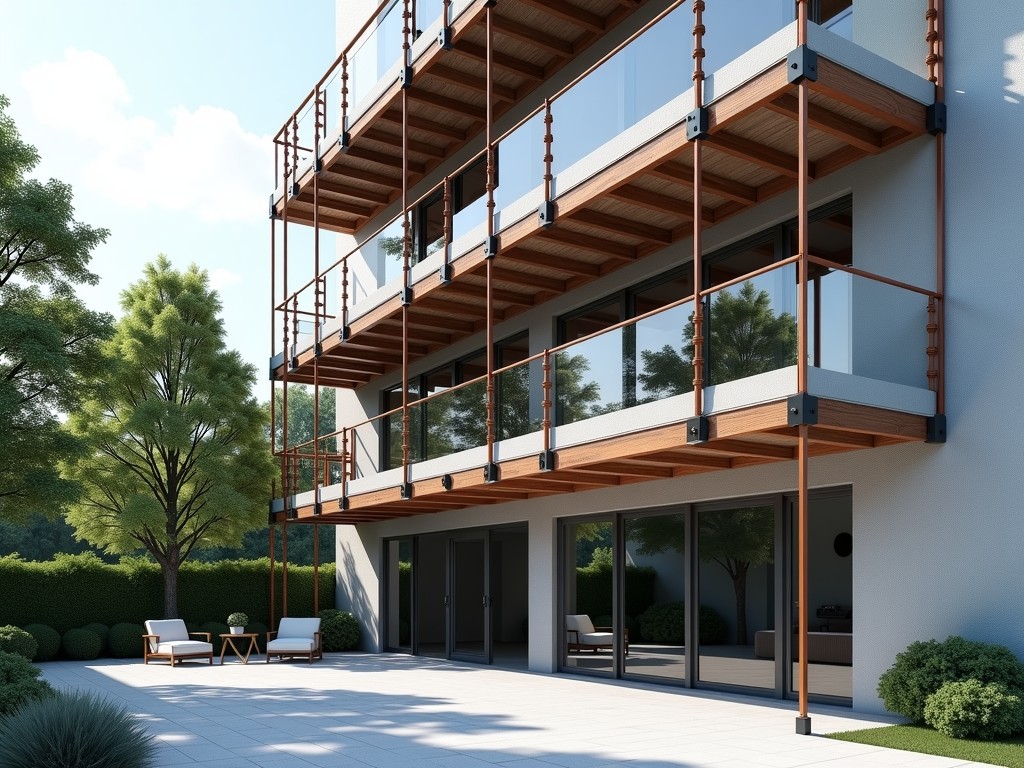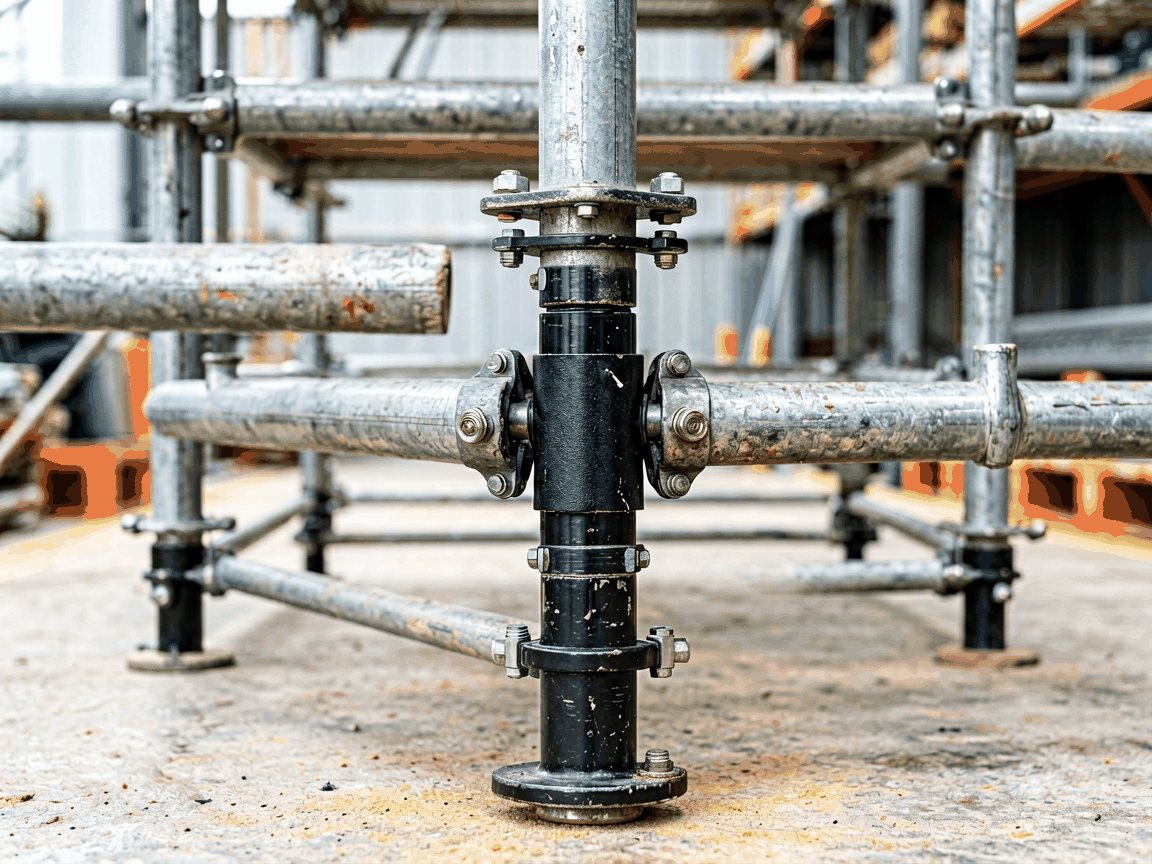
Scaffolding clamps are critical connection components that join tubular members to form stable, load-bearing structures. Fixed clamps create rigid 90-degree joints, while swivel clamps allow adjustable angles between tubes, enabling complex geometries required in temporary works, formwork support, and access systems. The performance of these clamps directly influences structural integrity, erection speed, and long-term reusability across multiple project cycles.
Clamp design must efficiently transfer axial, shear, and moment loads from the ledger or brace tube into the vertical standard. Fixed clamps achieve this through interlocking jaws that grip the tube via friction and mechanical stop, resisting rotation and slip under design loads. Swivel clamps incorporate a pivoting mechanism with a locking bolt that, when torqued to specification, creates sufficient friction to prevent unintended movement while allowing preset angle adjustment. Both types rely on precise jaw geometry, bolt preload, and friction surfaces to maintain joint stiffness under cyclic loading.
Material selection impacts both strength and durability. Clamp bodies are typically forged from Grade 45 carbon steel or equivalent, providing a balance of tensile strength (≥600 MPa) and toughness for repeated assembly cycles. Jaws are case-hardened to HRC 45-55 to resist abrasion from tube contact. Hot-dip galvanizing per ISO 1461 applies a zinc coating (minimum 55 μm average thickness) to protect against corrosion in humid or alkaline environments, extending service life in repeated-use applications.
| Parameter | Typical Value | Test Reference |
|---|---|---|
| Slip Load (Fixed Clamp, 48.3mm OD Tube) | ≥15 kN | EN 74-1:2005+A1:2009 |
| Slip Load (Swivel Clamp, 48.3mm OD Tube) | ≥10 kN | EN 74-1:2005+A1:2009 |
| Maximum Tube OD Compatibility | 51.0 mm | Manufacturer specification |
| Minimum Tube OD Compatibility | 48.0 mm | Manufacturer specification |
| Galvanized Coating Thickness | ≥55 μm (avg) | ISO 1461 |
| Jaw Hardness (Case) | HRC 45-55 | Rockwell C scale |
Slip load values represent the force at which relative movement occurs between tube and clamp under test conditions. Fixed clamps generally exhibit higher slip resistance due to the geometric constraint of the 90-degree joint, which converts axial force into compressive clamping action. Swivel clamps rely primarily on bolt preload and friction, resulting in lower but still code-compliant slip capacity. These values are determined under static test conditions; dynamic or cyclic loading may reduce effective capacity, necessitating appropriate design factors in accordance with local scaffolding standards such as EN 12811-1 or AS/NZS 1576.
Fixed clamps are essential for creating primary grid structures where ledgers, transoms, and braces connect to standards at right angles. Their rigidity prevents joint rotation under lateral loads, making them ideal for facade scaffolding, birdcage structures, and shoring towers where dimensional stability is critical. In contrast, swivel clamps enable the construction of inclined bracing, curved façades, stair tower access, and complex geometries where tubes must meet at non-perpendicular angles. Their adjustability accommodates site-specific variations in structural alignment without requiring custom-fabricated components.
In formwork support systems, fixed clamps secure horizontal bearers to vertical props at 90 degrees, ensuring uniform load distribution. Swivel clamps connect diagonal braces to both bearers and props, stabilizing the system against sway and twisting motions. For suspended access platforms, fixed clamps attach stirrup tubes to suspension rigs, while swivel clamps allow precise angle adjustment of safety railings and access ladders to match the platform’s orientation. The ability to switch between clamp types on-site reduces the need for multiple specialized components, improving logistics and erection flexibility.
Consistent performance depends on tight control of forging tolerances, heat treatment uniformity, and thread quality on locking bolts. Forging dies are maintained to ±0.2 mm dimensional accuracy to ensure proper jaw engagement and bolt alignment. Post-forging normalizing relieves internal stresses, while controlled quenching and tempering achieves the target hardness profile. Thread rolling (rather than cutting) on M12 or M16 locking bolts improves fatigue resistance and prevents cross-threading during repeated assembly. Galvanizing bath parameters (zinc purity, immersion time, withdrawal rate) are monitored to achieve uniform coating thickness with minimal dross inclusions.
Each production batch undergoes dimensional verification of critical features: jaw gap, bolt hole alignment, and overall width. Random samples are tested for slip load using calibrated equipment per EN 74-1 procedures. Visual inspection checks for forging defects, cracks, or incomplete galvanizing. Traceability is maintained via batch codes stamped on non-functional surfaces, linking finished clamps to raw material certificates and process records. This systematic approach minimizes variability that could compromise joint reliability in high-rise or high-load applications.
Reusable scaffolding clamps require regular inspection to identify wear, deformation, or corrosion that could reduce clamping force. Jaws should be checked for wear exceeding 10% of original thickness or flattening that reduces grip effectiveness. Bolt threads must be free of galling, deformation, or corrosion that prevents proper torque application. The locking nut should rotate freely before tightening and seize firmly when torqued to specification (typically 50-70 Nm for M12 bolts). Any clamp showing cracks, permanent deformation, or excessive wear must be removed from service.
Galvanic coating damage should be assessed; localized rusting is acceptable if the underlying steel shows no pitting beyond surface staining. However, areas where zinc coating is completely lost and red rust is active require cleaning and potential re-galvanizing if reuse is intended. Stored clamps should be kept dry and separated to prevent moisture trapping. Lubrication of bolt threads with anti-seize compound (copper or nickel-based) facilitates consistent torque application and prevents seizing, particularly in marine or high-humidity environments. Following these procedures maintains clamp performance across multiple project cycles, reducing lifecycle cost.
Standard fixed and swivel clamps are manufactured to fit 48.3mm OD scaffolding tube, the most common diameter in global systems. Alternative sizes for 42.4mm, 50.8mm, or 60.3mm tube are available upon request, requiring corresponding adjustments to jaw geometry and bolt length. Locking bolts are typically supplied as M12 x 70mm or M16 x 80mm grade 8.8, with longer options for use with thicker tubes or additional components. Hot-dip galvanizing is standard; other coatings such as sherardizing or mechanical plating can be specified for specialized environments.
Order quantities influence production efficiency; minimum batch sizes typically start at 200 pieces per type for economical forging setup. Larger orders benefit from reduced per-unit costs due to optimized material usage and streamlined processing. Lead times depend on current capacity and raw material availability, generally ranging from 3-6 weeks for standard galvanized clamps. Custom sizes or coatings may extend this timeline. Technical drawings, material certificates, and test reports are available upon request to support procurement verification and quality assurance processes.