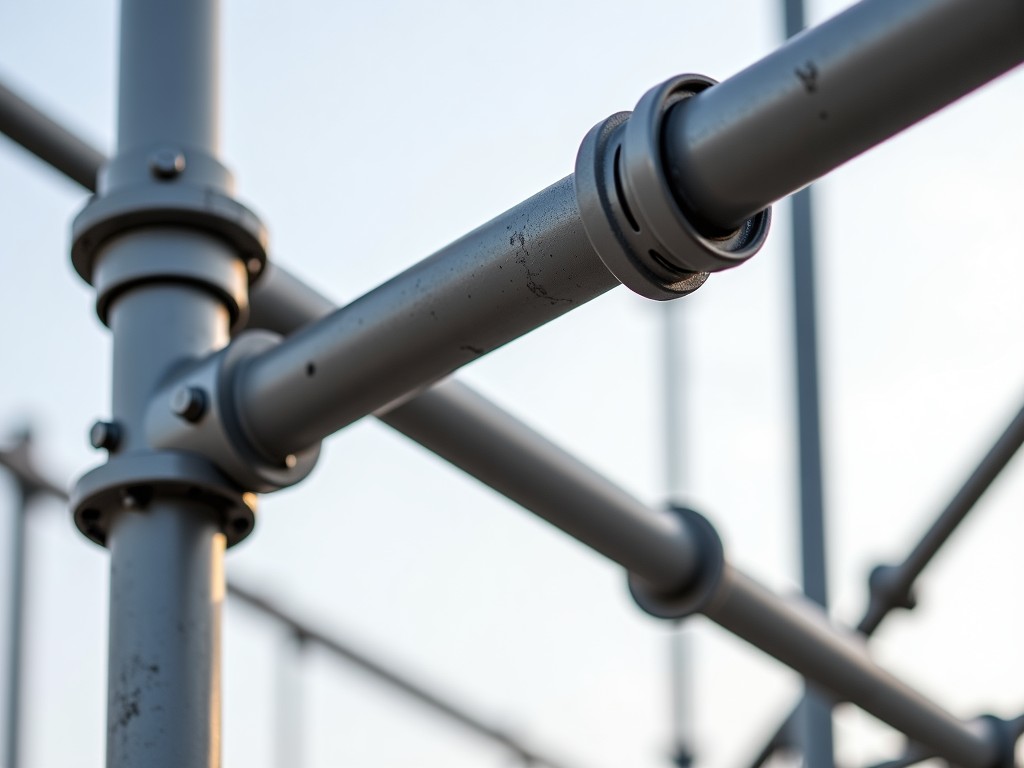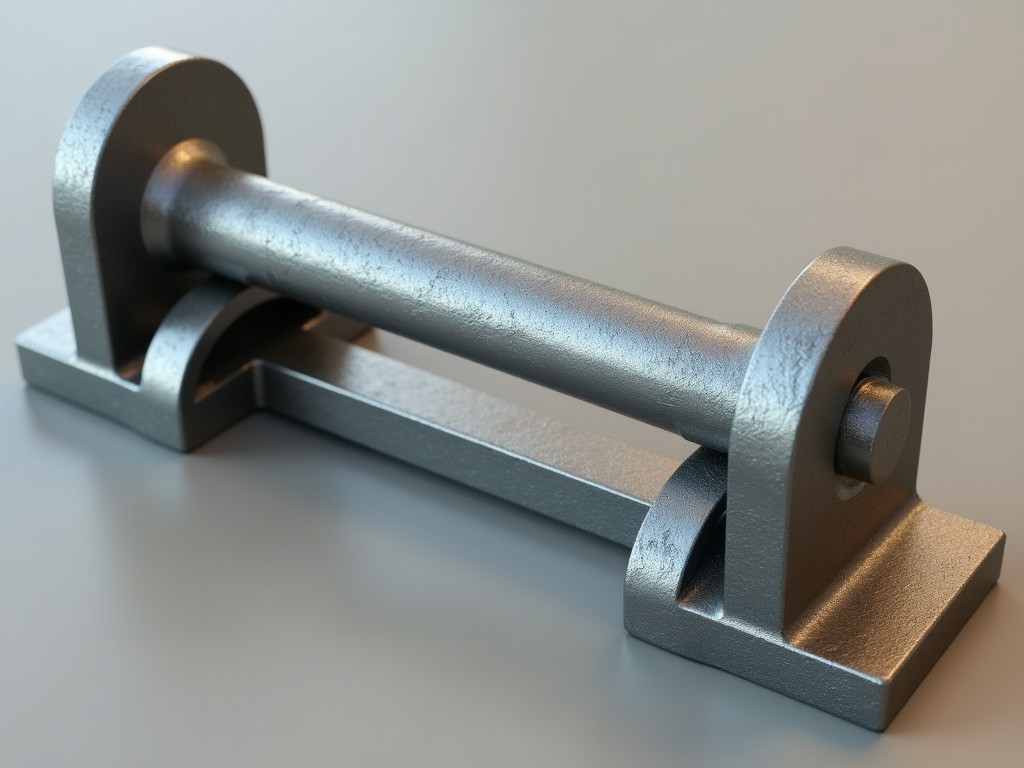
A drop forged double scaffold coupler is a critical structural component used to connect two scaffold tubes at a fixed 90-degree angle. Unlike cast or pressed alternatives, the drop forging process aligns the grain flow of the steel with the coupler's geometry, resulting in superior tensile and shear strength. This manufacturing method eliminates internal voids and reduces susceptibility to fatigue cracking under cyclic loading, which is common in temporary support structures subjected to wind, vibration, and dynamic loads.
The coupler consists of two semi-circular jaws that grip the scaffold tubes via hardened steel pins and nuts. When tightened, the jaws deform elastically to create a frictional lock that resists both slip and rotation. The double coupler design specifically enables right-angle connections between vertical standards (uprights) and horizontal ledgers or transoms, forming the foundational grid of modular scaffolding systems.
Material selection is typically governed by international standards such as EN 74, BS 1139, or ANSI/SSFI SC-100. Common grades include S355JR or equivalent structural carbon steel, chosen for its balance of yield strength (≥355 MPa), ductility, and weldability. Surface treatment—usually hot-dip galvanizing to a minimum thickness of 55 µm—provides corrosion resistance suitable for outdoor construction environments, extending service life in humid or coastal conditions.
The performance of a drop forged double scaffold coupler is defined by measurable mechanical properties rather than subjective claims. Critical parameters include:
These values are not arbitrary; they derive from the interplay of forging pressure (typically 800–1200 tons), die design, and post-forging heat treatment. The forging process refines the microstructure, increasing yield strength by 20–30% compared to machined or cast equivalents of the same grade. This allows for thinner cross-sections while maintaining safety margins, reducing material cost without compromising integrity.
Fatigue life is another critical factor. Drop forged couplers exhibit significantly higher endurance limits under repeated load cycles—essential for scaffolding subjected to daily erection/dismantling or environmental cycling. Laboratory testing shows forged units often exceed 100,000 cycles at 60% of ultimate load before crack initiation, whereas cast counterparts may fail under half that.
Producing a reliable drop forged double scaffold coupler requires precision at every stage. The process begins with cutting cylindrical billets of carbon steel to exact length, followed by heating to austenitizing temperature (approximately 900–950°C) before forging. The dies—machined from tool steel and heat-treated to 50–55 HRC—must maintain dimensional stability under high pressure to ensure consistent jaw geometry and pin hole alignment.
After forging, components undergo trimming to remove flash, then shot blasting to eliminate scale and prepare the surface for galvanizing. Heat treatment—typically normalizing or annealing—is applied to relieve forging stresses and refine grain structure. Quality control includes dimensional inspection (jaw opening, pin hole diameter, overall length), magnetic particle testing for surface cracks, and proof load testing on a statistical sample basis.
Thread quality on the tightening bolts and nuts is particularly critical. Rolled threads, rather than cut, are preferred for superior fatigue resistance and strength. Nut locking mechanisms—such as nylon inserts or prevailing torque designs—may be specified to prevent loosening under vibration, though standard designs rely on sufficient torque and friction.
Traceability is maintained through batch coding, linking each coupler to its raw material lot, forging die, heat treatment cycle, and inspection records. This supports recall management and audit compliance for large-scale infrastructure or industrial projects.
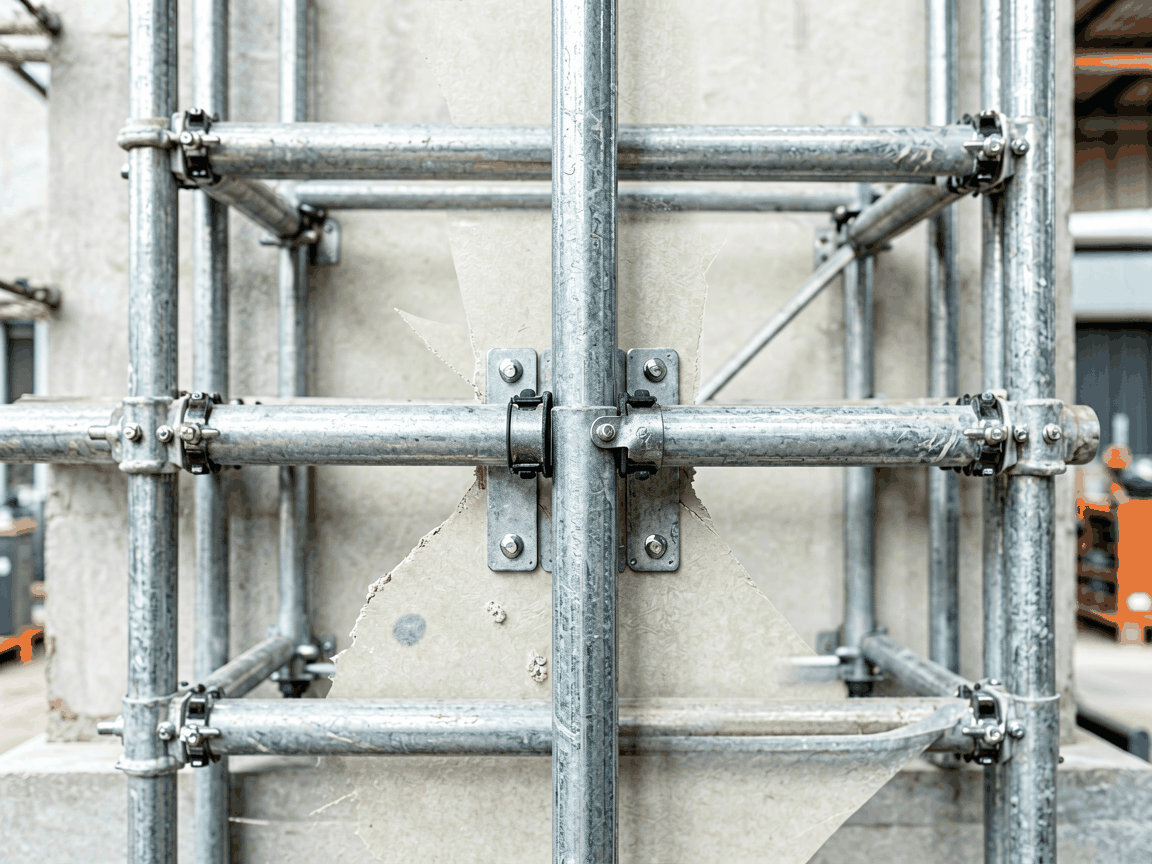
The drop forged double scaffold coupler is fundamental to the stability of independent tied scaffolds, birdcage scaffolds, and shoring systems used in building construction, facade renovation, and industrial maintenance. Its role is not merely to connect tubes but to ensure that lateral loads—such as wind pressure on sheeting or impact from equipment—are transferred efficiently through the scaffold grid to the ground or supporting structure.
In facade access systems, double couplers secure horizontal transoms that support working platforms. The rigidity of the connection prevents platform sway, which is critical for worker safety and precision tasks like masonry repair or cladding installation. In shoring applications, they connect vertical standards to horizontal bearers that carry formwork loads during concrete pouring, where any slip could lead to catastrophic failure.
They are also used in temporary grandstands, stage structures, and exhibition stands—applications where aesthetic cleanliness and rapid assembly are valued. Here, the coupler’s compact profile and consistent finish contribute to a professional appearance while maintaining the load path integrity required for public safety regulations.
Unlike swivel or putlog couplers, which accommodate angular or partial connections, the double coupler’s fixed 90-degree orientation makes it ideal for orthogonal grid systems. This predictability simplifies design calculations, as engineers can assume fixed joint behavior when modeling scaffold stability under Eurocode 1 or similar standards.
Understanding the distinctions between coupler types helps specify the right component for a given load path and assembly requirement. The table below compares key attributes of drop forged double scaffold couplers against pressed and cast alternatives, based on typical performance under EN 74.
| Characteristic | Drop Forged Double | Pressed Steel Double | Malleable Iron Cast Double |
|---|---|---|---|
| Manufacturing Process | Drop forging | Stamping & bending | Casting |
| Typical Ultimate Load (kN) | 22–25 | 16–18 | 18–20 |
| Fatigue Resistance | High | Medium | Low to Medium |
| Weight (kg) | 1.2–1.5 | 1.0–1.3 | 1.6–2.0 |
| Corrosion Protection Compatibility | Excellent (galvanizing) | Good | Fair (porosity risk) |
| Cost Relative to Forged | Baseline (1.0x) | Lower (0.7–0.8x) | Higher (1.2–1.4x) |
Note: Values are typical ranges; actual performance depends on material grade, dimensions, and manufacturing quality. Pressed couplers offer lower cost and weight but sacrifice strength and durability. Cast couplers, while stronger than pressed, are prone to internal defects and inconsistent mechanical properties due to the casting process. Drop forging provides the optimal balance for applications requiring repeated use, high reliability, and exposure to harsh environments.
Industrial buyers require confidence that each coupler meets specified performance criteria. Quality assurance extends beyond final inspection to encompass the entire production chain. Raw material is verified with mill test certificates confirming chemical composition and mechanical properties. During forging, die wear is monitored to prevent dimensional drift that could affect jaw grip or pin alignment.
Each batch undergoes mechanical testing: a sample of couplers is subjected to increasing tensile load until failure, with results compared against the minimum 22 kN ultimate load requirement. Slip testing is conducted under standardized conditions—applying lateral force to a tube inserted in the coupler while measuring displacement. Galvanizing thickness is verified via magnetic induction or gravimetric methods on samples from each batch.
Non-destructive methods are also employed. Magnetic particle inspection detects surface and near-surface cracks that could propagate under load. Ultrasonic testing may be used on critical sections to identify internal inclusions or laps, particularly in high-stress areas around the pin holes. Dimensional checks ensure jaw opening matches the nominal tube size (48.3 mm) with sufficient interference for secure grip without excessive deformation.
Documentation is provided with each shipment, including test reports, material certificates, and compliance declarations against relevant standards (e.g., EN 74:2006+A1:2010). This traceability supports procurement audits and site safety inspections, reducing the risk of non-conforming parts entering the supply chain.
While standard drop forged double scaffold couplers suit most modular scaffolding systems, certain projects demand adaptations. These may arise from non-standard tube diameters, special corrosion environments, or integration with proprietary scaffold brands. Customization is feasible but requires careful engineering evaluation to maintain safety and compatibility.
Tube diameter variations—such as 50.8 mm or 60.3 mm—require new forging dies to adjust jaw curvature and internal clearance. Wall thickness of the scaffold tube also influences the required grip strength; thinner tubes may necessitate increased jaw deformation to achieve adequate friction, which must be validated through testing.
For highly corrosive environments—such as offshore platforms, chemical plants, or de-icing salt exposure—alternative coatings may be specified. Options include zinc-rich primers with polyurethane topcoats, or duplex systems combining hot-dip galvanizing with epoxy. Stainless steel grades (e.g., 304 or 316L) are available upon request, though cost and lead time increase significantly due to material and forging constraints.
Thread standards can be adjusted to match regional fastener preferences (e.g., UNC vs. metric), though this affects spare part interchangeability. Nut designs may be modified for tool accessibility in confined spaces—such as low-profile or wing nuts—though locking reliability must be re-evaluated.
Any customization requires re-qualification: updated die design, validation testing, and revised quality control parameters. Lead times increase due to new tooling and process setup. Customers should provide detailed specifications early in the procurement cycle to allow for feasibility assessment and accurate quoting.
Sustainability considerations are increasingly relevant in temporary works. The long service life of drop forged scaffold couplers contributes to reduced environmental impact over time. A single coupler, properly maintained and stored, can endure 10–15 years or more of repeated use across multiple projects—far exceeding the lifespan of pressed or cast alternatives that may deform or corrode after fewer cycles.
At end-of-life, the steel is fully recyclable. The galvanizing layer does not impede recycling; in fact, zinc recovery is a standard component of steel scrap processing. This contrasts with coated or composite alternatives that may require separation before recycling. The high recycled content potential of structural steel further lowers the embodied energy of the product over its lifecycle.
Efficient packaging also plays a role. Couplers are typically packed in woven polypropylene sacks or stackable steel stillages, minimizing damage during transit and enabling reuse of packaging materials. Bulk handling reduces per-unit transportation emissions compared to individually boxed components.
Manufacturers increasingly provide environmental product declarations (EPDs) upon request, detailing carbon footprint, water use, and end-of-life scenarios based on PCR (Product Category Rules) for construction accessories. This data supports green building certifications and corporate sustainability reporting.
When sourcing drop forged double scaffold couplers, technical clarity reduces risk and accelerates decision-making. Buyers should provide the following information to enable accurate quotation and compliance verification:
Lead times vary based on order volume and customization. Standard galvanized couplers in common diameters typically ship within 2–4 weeks for orders under 5,000 units. Larger volumes or coated/stainless variants may require 6–8 weeks due to material sourcing and process scheduling. Express options are available for critical projects, subject to production capacity.
Technical support includes assistance with standard interpretation, load calculation guidance, and compatibility verification with existing scaffold inventory. Samples can be provided for destructive or non-destructive testing by the buyer’s quality team, though costs and logistics are typically the recipient’s responsibility. For large-scale projects, manufacturers may offer on-site training for correct assembly and torque application.
Clear communication of project-specific demands—such as access restrictions, storage conditions, or erection methodology—allows the supplier to recommend appropriate product variants and packaging. This collaborative approach minimizes the risk of mismatch between specification and delivery, ensuring that the couplers perform as intended in the field.
The drop forged double scaffold coupler represents a technically optimized solution for right-angle connections in modular scaffolding. Its value lies not in marketing claims but in verifiable engineering attributes: superior strength from aligned grain flow, predictable slip resistance, fatigue endurance under cyclic loading, and compatibility with international safety standards. These characteristics are the direct result of a controlled forging process, precise dimensional control, and appropriate surface protection.
For procurement managers and engineers, choosing this coupler reduces uncertainty in temporary works design. It eliminates concerns about inconsistent performance from casting defects or insufficient strength from pressing processes. The long service life and recyclability further support lifecycle cost efficiency and sustainability goals.
When specified correctly—with attention to tube compatibility, environmental conditions, and quality documentation—the drop forged double scaffold coupler delivers a reliable, repeatable connection that contributes to the overall safety and stability of the scaffold system. It is a component where technical rigor directly translates to field performance and risk reduction.
For technical inquiries, quotations, or to discuss project-specific requirements, please contact our engineering team.
Contact Us