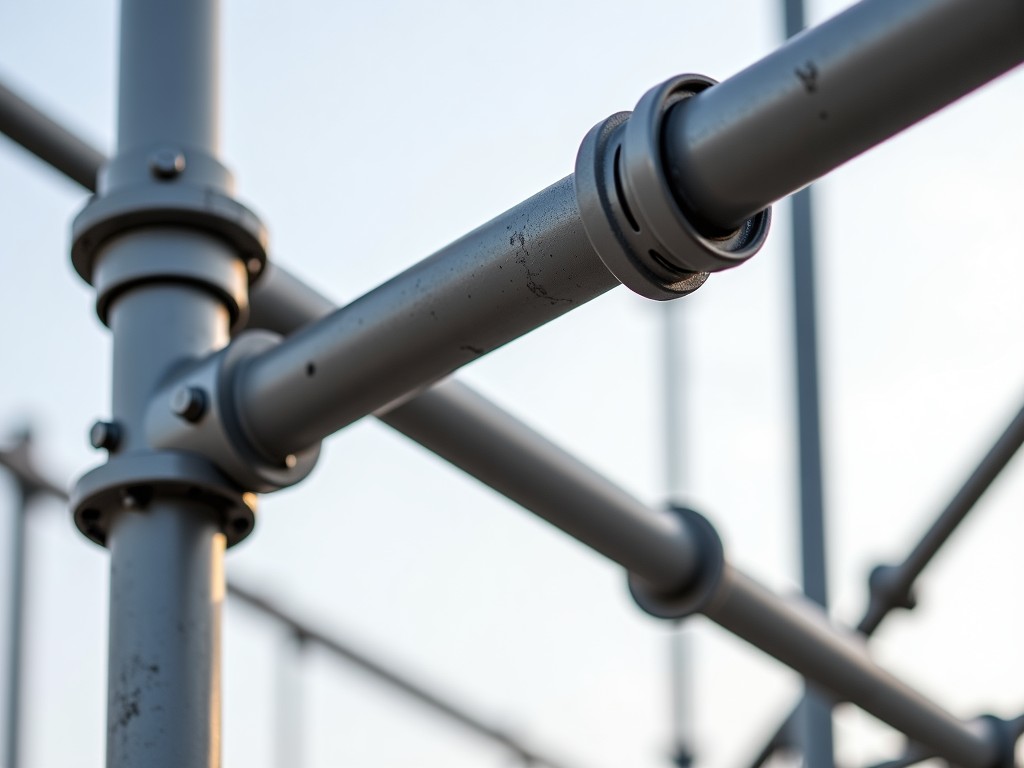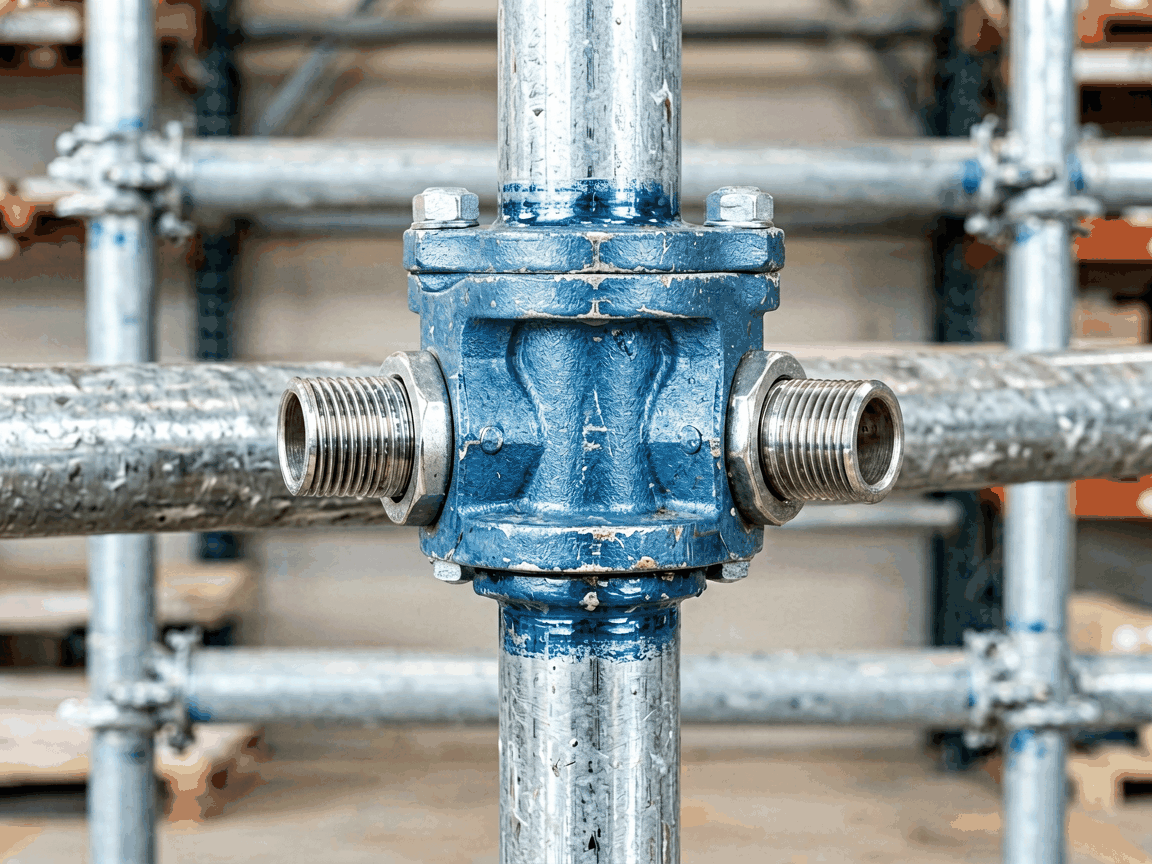
A double swivel scaffolding coupler clamp is a critical connection component in modular scaffolding systems, designed to join two scaffold tubes at any angle while allowing independent rotational movement in two planes. Unlike fixed or single-swivel couplers, this type enables both connected tubes to rotate freely relative to each other, providing essential flexibility when erecting scaffolds around complex geometries, uneven surfaces, or obstructions such as pipes, beams, or architectural features. The dual-swivel mechanism eliminates binding stresses during assembly and accommodates minor misalignments without compromising structural integrity, making it indispensable in temporary works where adaptability directly impacts safety and efficiency.
The coupler consists of two semi-circular jaws, each housing a swivel pin that allows 360° rotation about its axis. These pins are aligned perpendicular to each other, creating two independent rotational degrees of freedom: one enabling the clamp to swivel relative to the first tube, the other allowing the second tube to swivel relative to the clamp body. When tightened via high-strength bolts or wedge mechanisms, the jaws exert radial clamping force on the scaffold tubes, transferring shear and tensile loads through friction and mechanical interlock. The design ensures that load paths remain concentric with the tube axes under typical service conditions, minimizing eccentric loading that could lead to premature fatigue or slip.
Material selection focuses on structural steel grades with proven performance in cyclic loading environments. Hot-rolled S355JR or equivalent carbon steel is commonly used for the main body due to its yield strength (typically 355 MPa), ductility, and weldability if modifications are required. Swivel pins are often manufactured from hardened alloy steel (e.g., 42CrMo4) to resist wear and deformation under repeated torque cycles. Surface treatments such as hot-dip galvanizing (minimum 55 μm zinc coating per EN ISO 1461) or electroplating with chromate conversion coating provide corrosion resistance suitable for outdoor construction environments, extending service life in humid or marine-exposed conditions.
| Parameter | Typical Value | Notes |
|---|---|---|
| Compatible Tube Diameter | 48.3 mm OD | Standard for most tube-and-coupler scaffolding systems |
| Maximum Safe Working Load (SWL) | 2.2 kN (per bolt, shear) | Based on EN 74:2005 Class B; actual capacity depends on tightening torque and tube condition | Clamping Bolt Size | M12 x 55 mm (hex head, grade 8.8) | Torque range: 50–70 Nm for optimal clamping without tube deformation |
| Swivel Pin Diameter | 16 mm | Hardened to HRC 40–45 for wear resistance |
| Overall Dimensions (L x W x H) | 110 mm x 60 mm x 55 mm | Variations exist based on manufacturer design; affects clearance in tight spaces |
| Weight per Unit | 0.85–0.95 kg | Influences handling efficiency during high-volume erection |
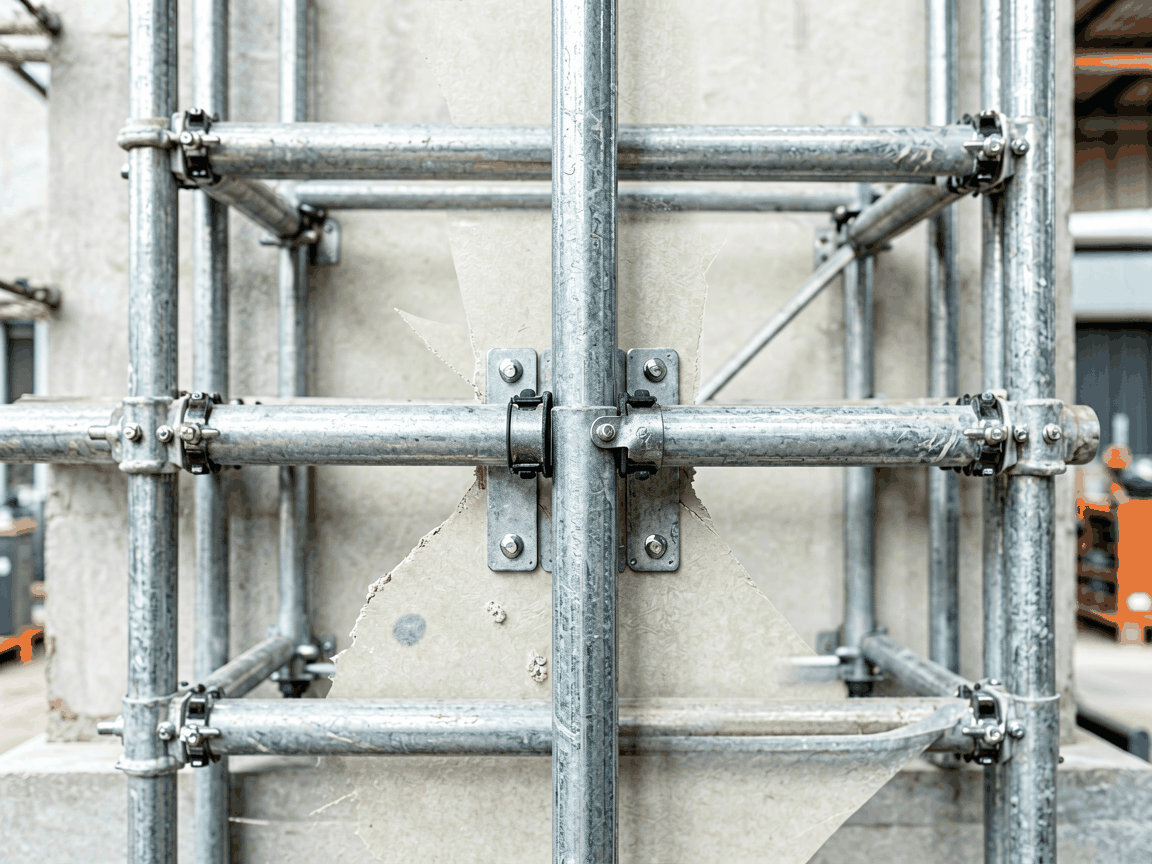
Double swivel couplers are essential in scenarios where scaffold tubes must connect at non-standard angles that cannot be anticipated during design. For example, when scaffolding must wrap around cylindrical storage tanks, curved building façades, or complex steel trusses, the ability to adjust both connected tubes independently allows erectors to maintain a stable, level working platform without forcing tubes into misaligned positions. This reduces the risk of tube slippage, joint overload, or damage to the scaffold structure during assembly and use.
In renovation projects involving existing structures—such as retrofitting insulation on historic buildings with ornate cornices or navigating around HVAC units on industrial rooftops—the coupler enables scaffolding to conform to irregular geometries while maintaining compliance with safety standards like EN 12810/EN 12811. It is also frequently used in shoring and falsework applications where formwork must be supported at varying angles to accommodate tapered concrete elements or skewed foundations.
Production begins with blanking and forming of steel plates or forgings into the jaw components, followed by precision machining of bolt holes and swivel pin bores. The swivel pins undergo induction hardening to achieve consistent surface hardness, then are press-fitted or retained with circlips to prevent axial movement. Each coupler is assembled with bolts, washers, and nuts (or wedge components), then subjected to a proof load test—typically 2.5 times the rated SWL—to verify clamping strength and resistance to slip under simulated service conditions.
Dimensional inspections verify tube socket diameter, jaw alignment, and swivel pin concentricity using calibrated gauges. Surface coating thickness is measured via magnetic induction or eddy current methods to ensure compliance with corrosion protection standards. Traceability is maintained through batch numbering, linking raw material certificates, heat treatment records, and test results to each production lot. These procedures support compliance with ISO 9001 quality management systems and facilitate recall or investigation if field performance issues arise.
Proper installation is critical to achieving the coupler’s rated performance. The scaffold tubes must be clean, free of paint, rust, or debris at the contact surfaces to ensure adequate friction. The coupler is placed over the tube ends, bolts inserted, and tightened alternately in a diagonal sequence to ensure even jaw closure. Using a calibrated torque wrench, bolts should be tightened to 55 Nm ±5 Nm for grade 8.8 M12 fasteners—this range maximizes clamping force without inducing tube ovalization or exceeding the yield point of the coupler jaws.
Over-tightening can deform the tubes, reducing contact area and potentially creating stress concentrations that lead to fatigue cracking. Under-tightening results in insufficient clamping force, allowing slip under load, which may cause sudden scaffold displacement. After initial loading, it is recommended to re-check torque after 24 hours or following significant load cycles, as settling can occur. These procedures are often outlined in site-specific scaffolding erection plans and must be followed by trained personnel.
| Coupler Type | Degrees of Freedom | Primary Use Case | Limitation in Complex Geometry |
|---|---|---|---|
| Fixed (Right-Angle) Coupler | 0 | Standard 90° connections (ledgers to standards) | Cannot accommodate non-perpendicular angles; requires cutting or bending tubes |
| Single Swivel Coupler | 1 (rotational about one axis) | Adjustable angle joints (e.g., braces to standards) | Second tube remains fixed relative to clamp; limited adaptability when both tubes need adjustment |
| Double Swivel Coupler | 2 (independent rotation of both tubes) | Connections requiring full angular flexibility (around obstacles, curved surfaces) | Higher cost and slightly more complex inspection; not needed for routine 90° joints |
While fixed couplers offer the highest stiffness and lowest cost for standard grid scaffolding, and single swivel couplers provide adequate flexibility for most bracing applications, only the double swivel variant enables true multidirectional adjustment without compromising tube alignment or requiring tube modification. This makes it a specialized but necessary component in the scaffolding inventory of contractors undertaking complex temporary works.
Although standard double swivel couplers are designed for 48.3 mm OD tubes, versions for 42 mm, 48.8 mm, or 60.3 mm tubes are available upon request to match regional scaffolding systems or specialized equipment. Custom lengths or modified jaw geometries can be engineered to accommodate non-standard tube profiles or to improve clearance in confined spaces. Surface treatments can be adjusted—for example, specifying a duplex coating (hot-dip galvanizing plus epoxy primer) for offshore or chemical plant environments where enhanced corrosion resistance is required.
For high-volume projects, manufacturers may offer kitting options—pre-assembled coupler and bolt sets packaged in quantities optimized for handling on-site. Material certificates (e.g., EN 10204 3.1) and test reports can be provided with each shipment to support compliance documentation. These adaptations do not alter the fundamental design but allow the product to integrate seamlessly into specific project logistics and quality assurance workflows.
For technical inquiries, customization requests, or quotation support regarding double swivel scaffolding coupler clamps, please contact our engineering team.
Request Technical Specification or Quotation