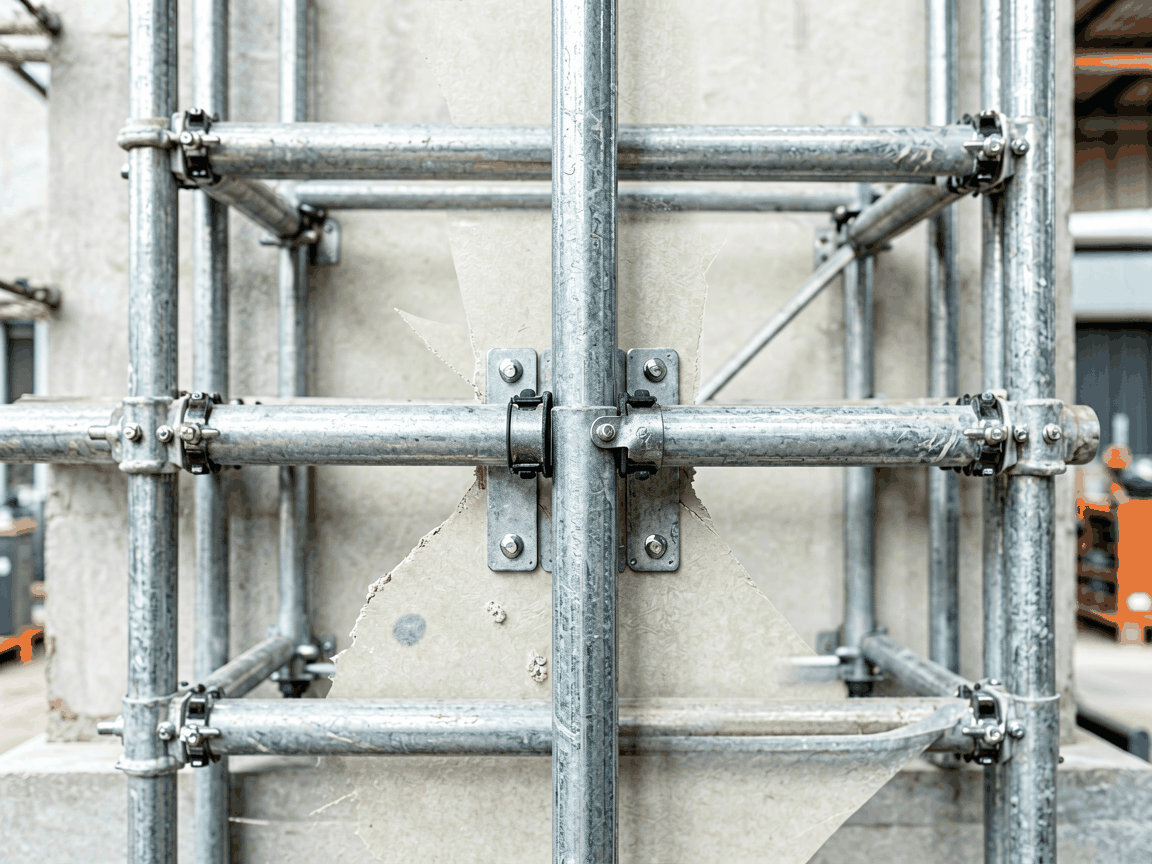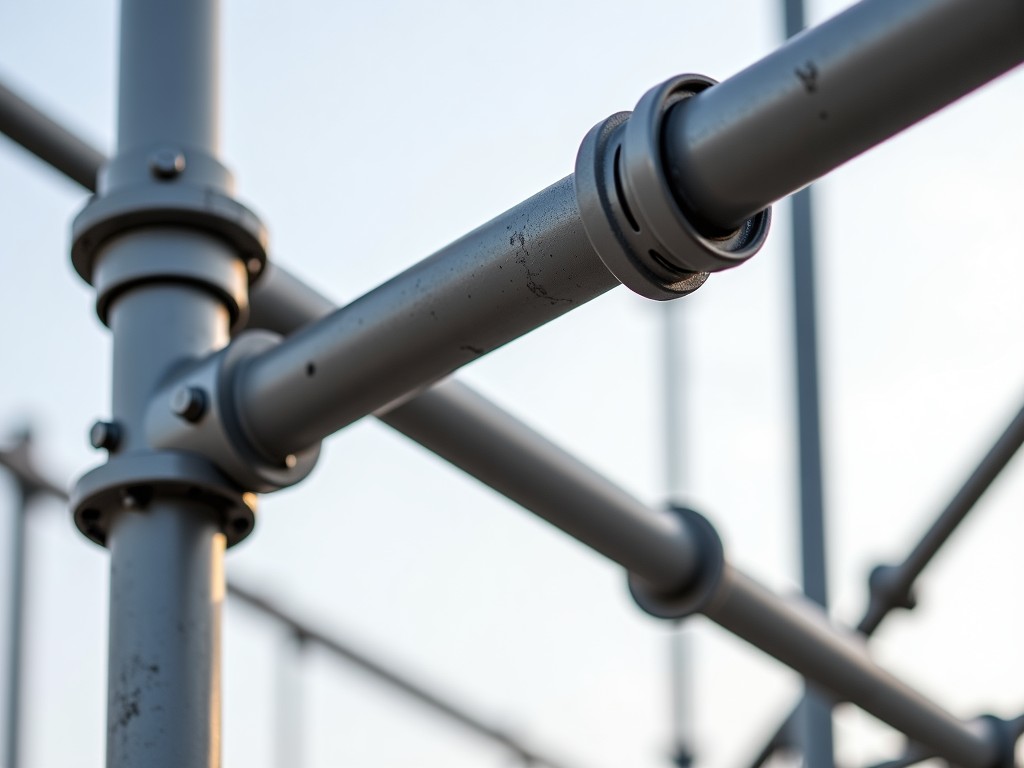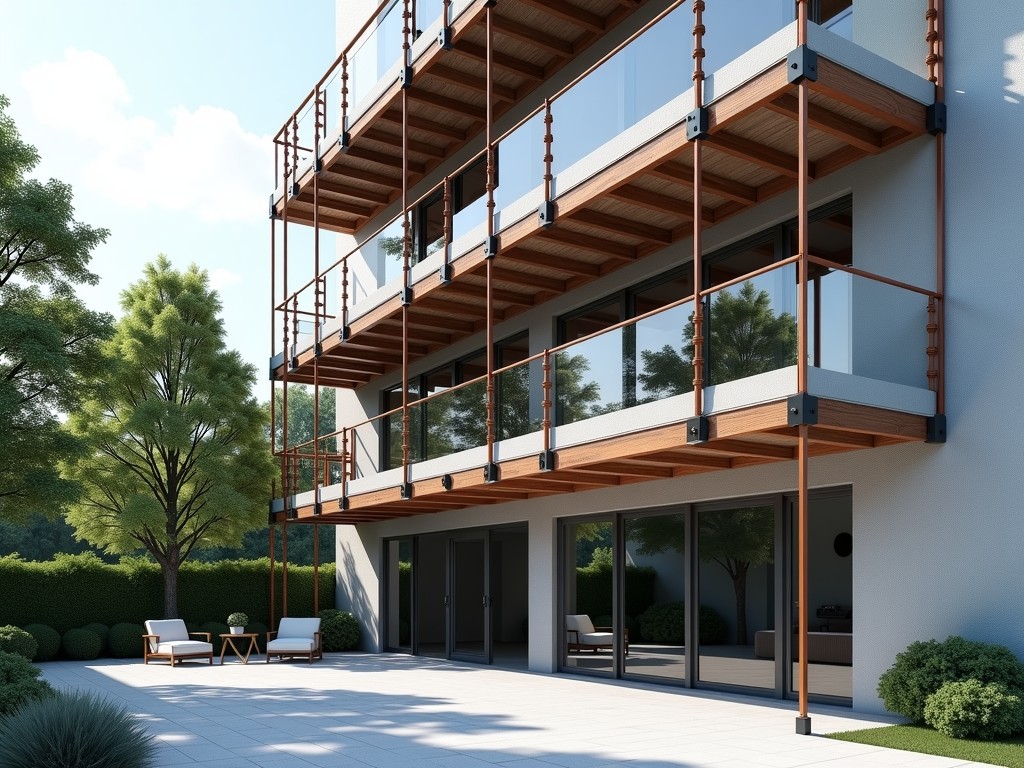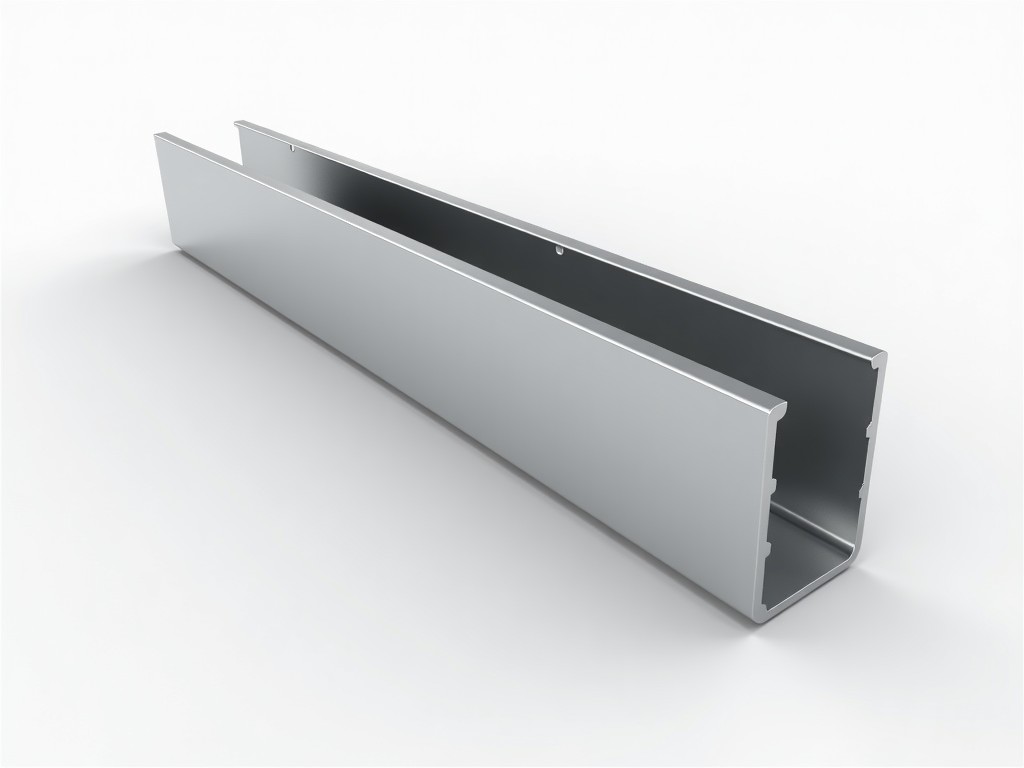
Side brackets are structural connectors used to extend working platforms outward from the main scaffold frame, enabling access to building facades, overhangs, or confined spaces where direct erection is impractical. These components transfer lateral and vertical loads from the extended platform back into the scaffold system, requiring precise engineering to maintain stability under dynamic site conditions. In high-rise construction, façade maintenance, and industrial plant access, side brackets must resist deformation, fatigue, and corrosion while maintaining dimensional accuracy under repeated assembly and disassembly cycles.
The primary function of a side bracket is to create a safe, level extension by cantilevering the platform beyond the scaffold’s standard width. Loads from workers, materials, and equipment on the extended platform induce bending moments and shear forces at the bracket’s connection points to the vertical standards. Effective design minimizes stress concentrations through optimized geometry, such as tapered sections or reinforced gussets, and ensures load paths align with the scaffold’s main structural axes. Connection interfaces—typically using forged couplers, bolted flanges, or wedge locks—must maintain rigidity under cyclic loading to prevent loosening or fretting wear over time.
Side brackets are predominantly manufactured from structural steel grades such as Q235 or Q345, chosen for their yield strength, ductility, and weldability. Q235 offers a minimum yield strength of 235 MPa and tensile strength of 370–500 MPa, suitable for general-purpose scaffolding under moderate loads. Q345, with a yield strength of 345 MPa and tensile strength of 470–630 MPa, provides higher load capacity and is preferred for heavy-duty applications or where bracket length increases bending stress. Material thickness typically ranges from 4 mm to 8 mm, depending on span and load requirements, with hot-dip galvanization applied to achieve a zinc coating of 55–85 μm for corrosion resistance in outdoor environments.
Side brackets are engineered to interface with specific scaffold systems, most commonly cuplock, ringlock, or frame types, with dimensions standardized to match tube diameters (typically 48.3 mm OD) and spacing modules (e.g., 600 mm or 900 mm). Extension lengths vary from 300 mm to 1500 mm, incremented in 100 mm steps to accommodate different overhang needs. The bracket’s vertical leg aligns with the scaffold’s upright spacing, while the horizontal platform support features pre-drilled holes or welded lugs to accept transoms or putlogs at 50 mm intervals, ensuring platform board compatibility and guardrail attachment.
Production begins with cutting steel plates or profiles to length using CNC saws or shears, followed by pressing or bending to form the bracket’s L- or T-shape. Connection elements—forged couplers, welded plates, or punched holes—are added via automated welding or fastening lines. Critical joints undergo full-penetration welding where required, with visual and dye penetrant inspection applied to detect surface cracks. Dimensional accuracy is verified using fixtures and gauges, ensuring hole alignment and angular tolerances remain within ±1.5 mm. Final inspection includes coating thickness measurement and load testing on sample units to validate performance against design specifications.
Side brackets enable safe access for bricklaying, plastering, and cladding installation on buildings with protruding architectural features such as balconies, cornices, or pipe ducts. In industrial settings, they facilitate maintenance of tall storage tanks, boiler housings, or conveyor systems where erecting a full scaffold enclosure is inefficient. For bridge work, they allow under-deck access without obstructing traffic or waterways below. The ability to quickly extend and retract the platform makes side brackets ideal for projects requiring frequent repositioning, reducing labor time and minimizing exposure to fall hazards during reconfiguration.
| Type | Typical Use Case | Load Capacity (UDL) | Adjustability |
|---|---|---|---|
| Fixed-length | Repetitive façade work | 2.0–3.0 kN/m | None |
| Telescopic | Variable overhangs | 1.5–2.5 kN/m | 50–150 mm range |
| Swivel | Angled surfaces | 1.8 kN/m | 0°–90° pivot |
*Values are typical; actual capacity depends on scaffold system, material grade, and connection integrity. Always verify with manufacturer data for specific configurations.
Manufacturers can adjust bracket length, plate thickness, and connection type to match unique scaffold geometries or load demands. For instance, extended brackets beyond 1200 mm may require reinforced gussets or higher-grade steel to limit deflection under load. Connection interfaces can be modified to suit non-standard tube diameters or proprietary locking systems. Surface treatments include hot-dip galvanization, powder coating, or stainless steel (e.g., 304 or 316 grade) for environments with high chloride exposure, such as coastal or chemical plants. Custom hole patterns or slot designs accommodate non-modular platform systems or specialized guardrail requirements.
Reliability is ensured through systematic validation rather than isolated testing. Material certificates (EN 10204 3.1) are maintained for all steel batches, confirming chemical composition and mechanical properties. Dimensional checks are performed at first article and during production using calibrated gauges. Weld quality is assessed via visual inspection per ISO 5817, with random samples subjected to macroetch or radiographic testing for critical joints. Load testing applies to representative samples, simulating worst-case scenarios with dynamic and static loads to verify safety factors of at least 1.6 against yield. Finished batches undergo sampling for coating adhesion and continuity, ensuring long-term protection against rust.
Side brackets are packed to prevent deformation and coating damage during transit. Common methods include bundling 10–20 units per steel strap with corner protectors, placed in wooden crates or on pallets lined with moisture barriers. For containerized shipping, brackets are oriented flat to minimize shifting, with dunnage bags used to fill voids. Each package includes a packing list detailing quantity, dimensions, weight, and material grade. Export shipments comply with ISPM 15 for wood packaging, and all documentation supports customs clearance. Typical lead times range from 15 to 30 days after order confirmation, depending on customization and volume.
The use of side brackets reduces the need for excessive scaffold material by enabling targeted platform extension, lowering overall steel consumption and transportation emissions compared to full-width systems. Hot-dip galvanizing provides a maintenance-free lifespan of 15–25 years in rural environments, decreasing replacement frequency and waste generation. Safety is enhanced through positive locking mechanisms that prevent accidental disengagement, and clear load ratings help prevent overloading. Designs avoid sharp edges or pinch points, and all surfaces are smoothed to reduce injury risk during handling. Compliance with regional standards such as EN 12810/12811 or ANSI/ASSE A10.8 is maintained through design adherence and quality control.
For technical inquiries, custom specifications, or quotations regarding side brackets for scaffold systems, please contact our engineering team. Provide details on your scaffold type, required extension length, expected load conditions, and environmental factors to receive a tailored solution that meets your project’s safety and performance requirements.
Contact Us for Technical Support