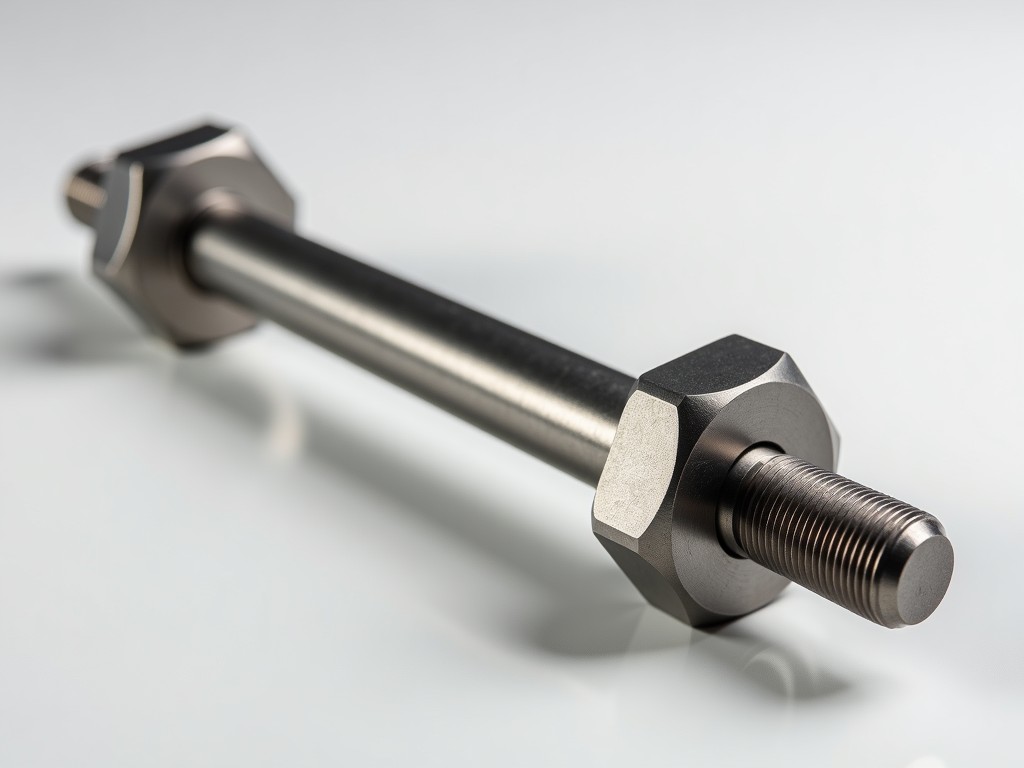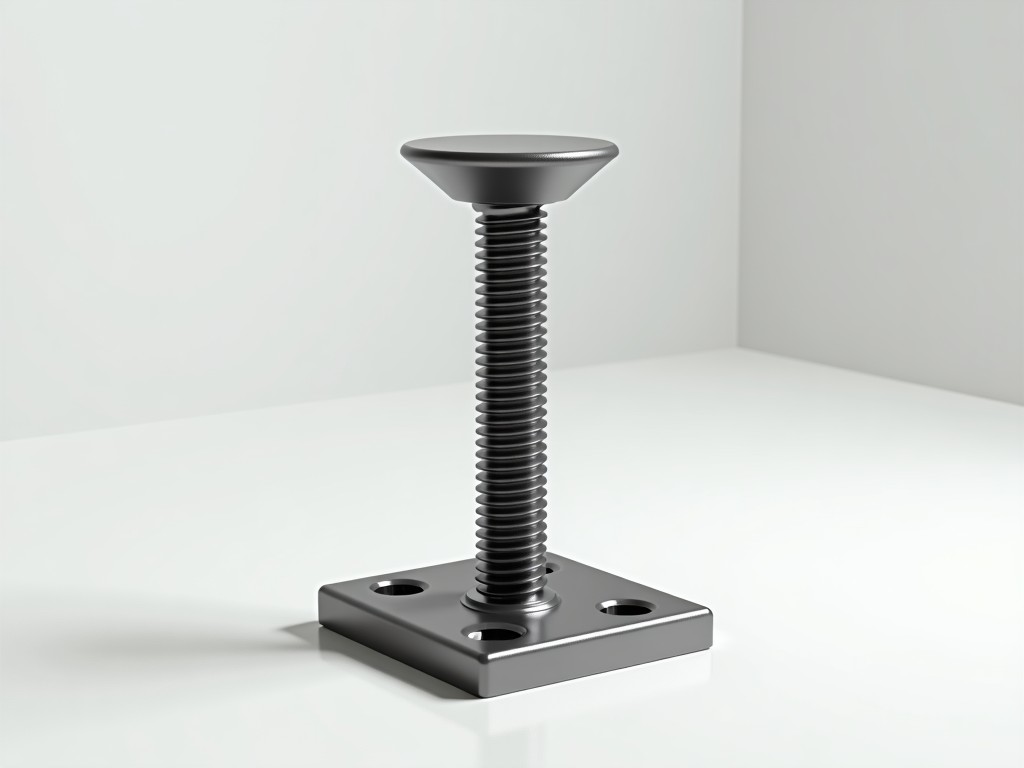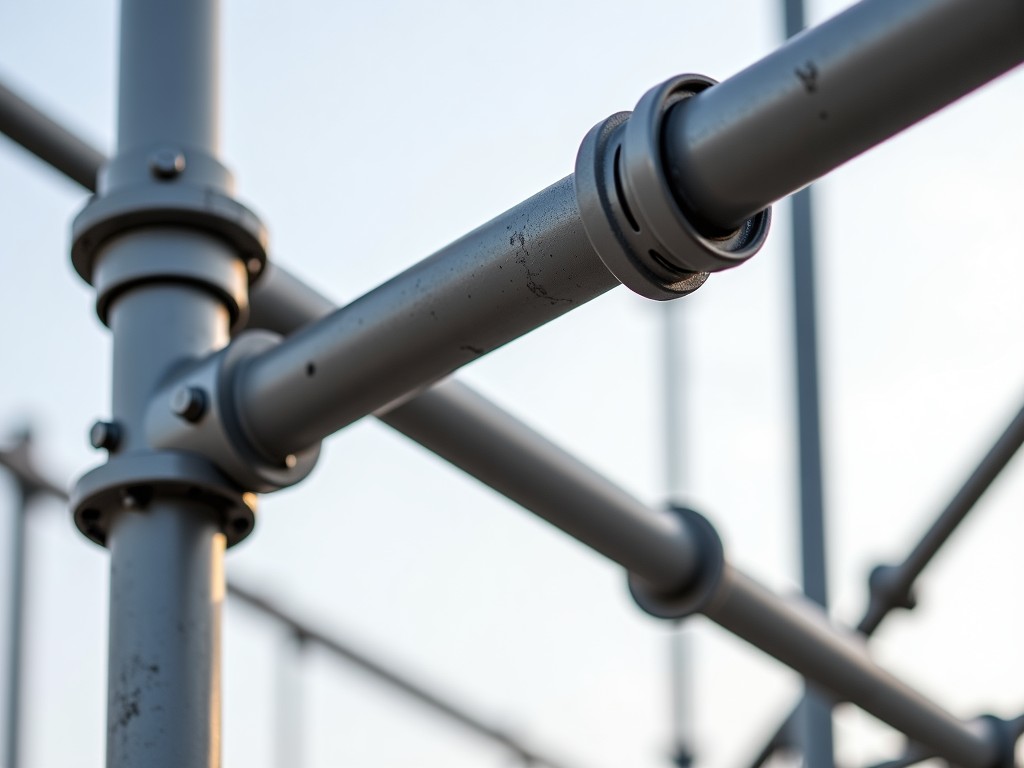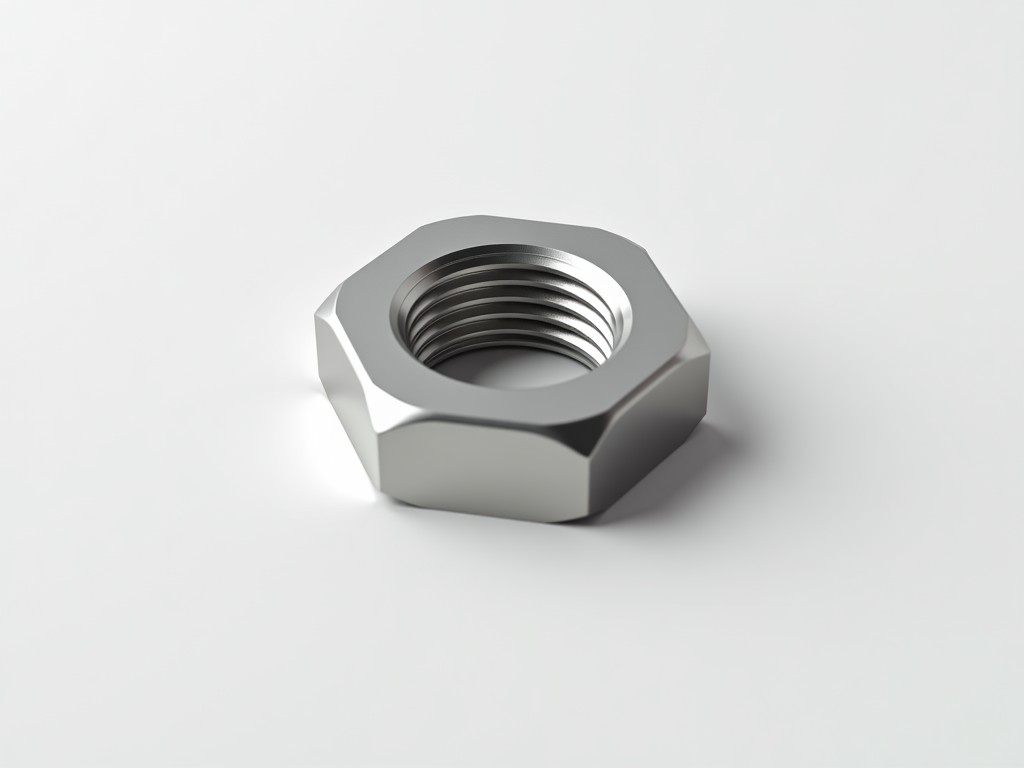
A prop nut with handle sleeve is a specialized fastening component designed to secure adjustable support props in temporary shoring, formwork, and scaffolding systems. The handle sleeve integrates a rotational interface onto the nut body, allowing manual adjustment of prop height without requiring additional tools. This configuration improves operational efficiency on construction sites where frequent height modifications are necessary under load-bearing conditions.
The nut body features internal threading matched to the prop’s outer thread, typically conforming to metric or imperial standards such as M24, M27, or 1”-8 UNC. The handle sleeve is either welded or mechanically fastened to the nut, designed to resist torsional forces during adjustment while maintaining alignment with the prop axis. Material selection prioritizes yield strength and wear resistance to prevent thread stripping or nut deformation under repeated cyclic loading.
The prop nut body is commonly manufactured from forged carbon steel grades such as C45 or 42CrMo, selected for their hardenability and resistance to torsional shear. Forging aligns the grain flow with stress concentrations at the thread root and handle interface, improving fatigue life compared to machined-from-bar equivalents. Surface hardness after quenching and tempering typically ranges from 28 to 34 HRC, balancing wear resistance with toughness to avoid brittle fracture under impact.
The handle sleeve is often produced from seamless steel tube (e.g., Q235 or S235JR) with a wall thickness between 3mm and 5mm, depending on prop load capacity. It is attached via resistance welding or shrink-fit techniques to ensure concentricity and prevent slippage under torque. In corrosive environments, both components may undergo hot-dip galvanization (Zn coating >60μm) or be supplied in stainless steel (AISI 304 or 316L) for chemical or marine applications.
The handle sleeve provides a radial extension that increases the effective lever arm during manual rotation, reducing the operator force required to adjust prop height. For a given torque requirement, doubling the handle diameter halves the needed tangential force, improving ergonomics and reducing fatigue during repeated adjustments. The sleeve’s outer diameter is typically sized between 40mm and 60mm to accommodate gloved hands while minimizing protrusion in confined formwork.
Internal threads are rolled rather than cut to enhance strength and surface finish. Rolled threads exhibit superior fatigue resistance due to compressive residual stresses and uninterrupted grain flow, critical for components subjected to repeated assembly and disassembly cycles. Thread pitch is standardized (e.g., 3mm for M24) to ensure compatibility with widely used prop systems, and thread engagement length is designed to prevent stripping at the nut’s maximum rated load.
A chamfered or radiused thread entry facilitates faster alignment and reduces cross-threading risk during installation. Some designs incorporate a captive washer or spring pin to prevent nut disengagement when the prop is fully retracted, improving safety during handling and transport. These features collectively reduce setup time and minimize human error in high-cycle shoring operations.
The prop nut with handle sleeve is rated according to the overall prop assembly’s safe working load (SWL), not as an isolated component. Typical SWL values for medium-duty props range from 20 kN to 40 kN, with heavy-duty variants exceeding 60 kN. The nut’s thread shear area is calculated to exceed the prop’s buckling capacity, ensuring that fastener failure does not govern system limits under axial compression.
Torque required to achieve full thread engagement varies with lubrication and thread condition but generally falls between 80 Nm and 150 Nm for M24 threads at maximum load. The handle sleeve length is designed to keep operator-applied force below 250 N under worst-case friction conditions, aligning with ISO 11228-1 guidelines for manual handling. These values are verified through torque-tension testing on representative samples during quality validation.
In concrete formwork systems, prop nuts with handle sleeves enable rapid reshoring during multi-story pours, where floor-to-floor heights vary and intermediate supports must be adjusted sequentially. The ability to modify prop height without wrenches or sockets reduces dependency on specialized tools, particularly beneficial in high-rise construction where tool logistics complicate workflow. Adjustments are typically performed at intervals of 15–30 minutes during early curing stages to manage deflection.
These components are also used in adjustable scaffolding bases, trench shoring systems, and temporary roof support structures where load paths are vertical and subject to frequent reconfiguration. In precast concrete erection, they facilitate fine-tuning of element placement to accommodate tolerance stack-ups. The handle sleeve’s rotational symmetry allows operation from any angular position, improving accessibility in tight spaces between formwork panels or reinforcement cages.
Unlike fixed-nut props, which require complete disassembly for height changes, the handled nut allows in-situ adjustment under partial load, minimizing downtime during remodeling or repair projects. This capability supports just-in-time shoring strategies in urban retrofit scenarios where space and time constraints limit conventional approaches.
Thread diameter and pitch can be customized to match proprietary prop systems, including non-standard sizes such as M30x3.5 or 1.25”-7 UNC, subject to tooling availability. Handle sleeve length, diameter, and wall thickness are adjustable based on required torque capacity and ergonomic constraints; longer sleeves reduce input force but increase swing radius, which may interfere with adjacent formwork in tight bays.
Surface treatments beyond galvanization include powder coating for corrosion protection in indoor environments or zinc-nickel plating for enhanced salt spray resistance (exceeding 500 hours in NSS testing). For stainless steel variants, passivation or electropolishing may be applied to improve surface integrity in hygienic or chemical exposure settings. Marking options include laser etching for load ratings, batch numbers, or supplier codes to support traceability.
Forging dies are designed to minimize flash and ensure dimensional consistency in critical areas such as thread runout and handle attachment zones. Secondary machining may be applied to sealing surfaces or registration features if tight concentricity is required. Prototype validation includes thread gauge inspection, torque-to-yield testing, and handle attachment strength verification before full production release.
Dimensional inspection focuses on thread pitch diameter, major/minor diameters, and handle sleeve concentricity relative to the nut axis, typically verified using go/no-go gauges and coordinate measuring machines (CMM). Thread accuracy is assessed against ISO 965-1 or ASME B1.1 standards, with acceptance criteria based on medium tolerance classes (6g/6H) to balance assemblability and load capacity. Runout of the handle sleeve is usually limited to 0.2mm FIM to prevent wobble during adjustment.
Mechanical properties are validated through hardness testing (Rockwell B or C) on cross-sections of forged blanks and tensile testing of machined coupons to confirm yield strength and elongation. Surface coating thickness is measured via magnetic induction or coulometric methods, with adhesion verified by cross-hatch tape testing (ASTM D3359). Visual inspection checks for forging laps, cracks, or incomplete welds at the handle interface under 10x magnification.
Functional testing includes simulated cycling tests where the nut is repeatedly adjusted under load to assess thread wear and handle retention. Sample sizes follow ISO 2859-1 sampling plans, with acceptance quality limits (AQL) set at 0.65% for critical defects and 2.5% for minor ones. Test reports and material certificates are available upon request for project-specific documentation requirements.
Units are typically packed in polypropylene woven bags or cardboard cartons, with quantities ranging from 50 to 200 pieces per container depending on size and weight. Inner packaging may include polyethylene liners or paper interleaving to prevent surface abrasion during transit. For corrosion-sensitive applications, desiccant packs or VCI (vapor corrosion inhibitor) sheets are included to maintain protective atmospheres in humid climates.
Palletized shipments use standard EPAL or ISO dimensions, secured with stretch wrap and corner boards to prevent shifting. Export packaging complies with ISPM 15 for wood materials when applicable. Marking on external cartons includes part number, quantity, net/gross weight, and handling symbols to facilitate warehouse identification and reduce mispicking. Lead times vary from 2 to 6 weeks based on material availability and order volume, with expedited options available for critical projects.
| Feature | Prop Nut with Handle Sleeve | Standard Hex Nut + Wrench | Spin-Nut with Release Lever |
|---|---|---|---|
| Tool Requirement | None (manual) | Wrench or socket | None (manual) |
| Adjustment Speed | Moderate | Slower | Fastest |
| Operational Force | Low (due to lever arm) | High | Low |
| Risk of Tool Loss | None | High | None |
| Compatibility with Locking Mechanisms | High | High | Limited |
| Cost Impact | Moderate increase | Baseline | Higher |
Compared to hex nuts requiring wrenches, the handle sleeve eliminates tool dependency and reduces adjustment time in repetitive tasks. While spin-nuts with release levers offer faster operation, they often sacrifice load retention security and are more prone to mechanical failure due to additional moving parts. The prop nut with handle sleeve provides a balanced solution: tool-free operation, high reliability, and compatibility with standard locking washers or cotter pins, making it suitable for safety-critical temporary structures where failure consequences are severe.
For technical inquiries, customization requests, or quotation support, please contact our engineering team to discuss your project-specific requirements.
Request Technical Specification