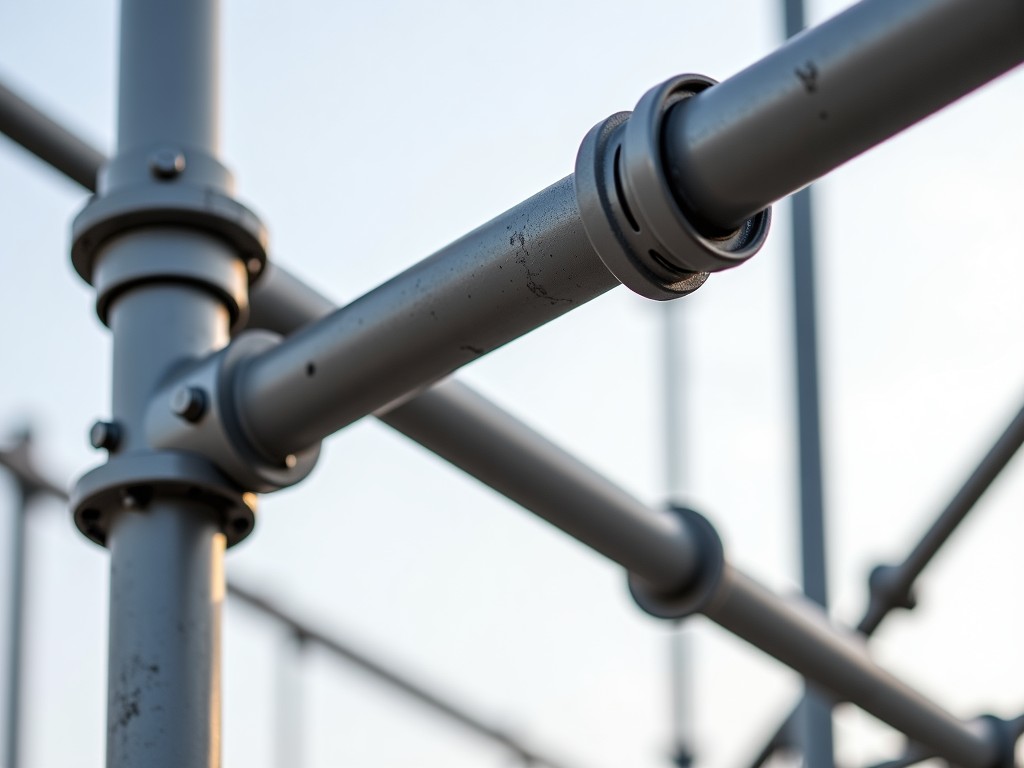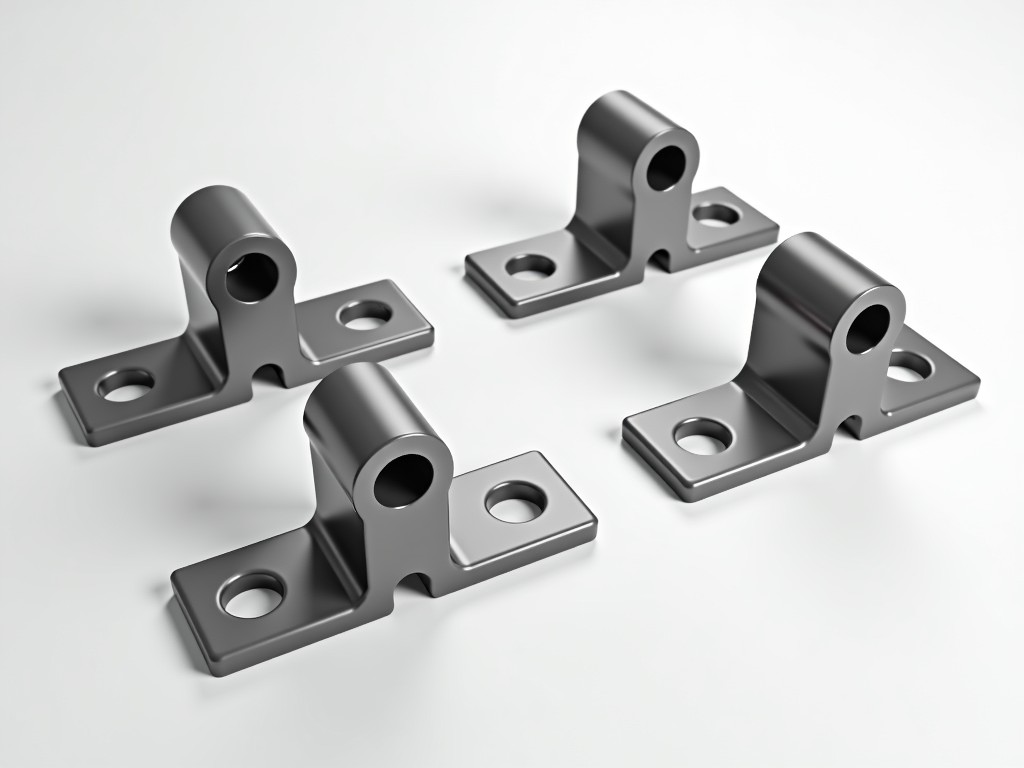
Four-way panel clamps are mechanical fastening devices designed to secure flat panels—such as metal sheets, composite boards, or insulation layers—by applying clamping force from four orthogonal directions. Unlike two-point or edge-only fastening systems, they distribute load evenly across the panel surface, minimizing localized stress, preventing warping, and maintaining dimensional stability under thermal cycling or mechanical vibration. This configuration is particularly valuable in applications where panel flatness and alignment precision directly affect assembly integrity or functional performance, such as in enclosure systems, machinery guarding, or architectural cladding.
The core mechanism of a four-way panel clamp typically consists of a central body with four adjustable arms or jaws, each capable of independent movement toward the panel surface. These arms are actuated via screw threads, cam levers, or toggle mechanisms, allowing precise control of clamping pressure at each corner. The contact points often feature replaceable pads made from nylon, PTFE, or rubber to prevent marring of sensitive panel finishes while maintaining sufficient friction to resist slippage. Many designs incorporate a floating or self-aligning joint in the arm linkage to accommodate minor panel thickness variations or surface irregularities without inducing binding or uneven load distribution.
Clamping force is generally adjustable through torque-controlled fasteners or preset spring mechanisms, enabling users to set and repeat specific pressure levels—critical in applications requiring consistent gasket compression or electrical contact integrity. Some models include reference scales or dial indicators to facilitate setup and validation. The overall geometry is often low-profile to minimize interference with adjacent components, and mounting options may include direct bolting, T-slot adapters, or magnetic bases for temporary fixturing scenarios.
The structural components of four-way panel clamps are commonly manufactured from carbon steel, stainless steel (grades 304 or 316), or aluminum alloy, depending on environmental exposure and load requirements. Carbon steel clamps, often zinc-plated or black oxide-coated, offer high strength-to-cost ratios for indoor, dry environments. Stainless steel variants resist corrosion in humid, chemical, or washdown settings, making them suitable for food processing, pharmaceutical, or outdoor installations. Aluminum versions provide lightweight alternatives where mass reduction is beneficial, though with lower wear resistance compared to steel.
Wear surfaces—such as screw threads, pivot pins, and cam interfaces—are frequently hardened or treated with coatings like nickel plating or DLC (diamond-like carbon) to extend service life under repeated adjustment cycles. The choice of pad material also influences longevity: nylon offers good abrasion resistance and electrical insulation, PTFE provides low friction and chemical inertness, while rubber or urethane pads deliver higher damping for vibration-prone applications. All materials are selected based on compatibility with the panel substrate, operating temperature range, and maintenance accessibility.
Four-way panel clamps are widely used in precision assembly and testing environments where panel alignment must be maintained without inducing distortion. In electrical enclosure manufacturing, they secure doors or panels during gasket compression testing to ensure uniform seal pressure across the entire perimeter—critical for achieving IP ratings. In CNC machining fixtures, they hold workpiece panels flat on vacuum tables or pallets, preventing spring-back or chatter during high-speed cutting operations. They are also employed in automated welding cells to hold thin-gauge metal sheets in place during tack welding, reducing the need for complex fixturing and minimizing heat-induced warping.
In transportation equipment manufacturing—such as rail interiors or truck body panels—these clamps assist in aligning composite or aluminum panels during adhesive bonding or riveting operations, ensuring consistent joint gaps and surface flushness. They are also used in cleanroom environments for holding filter panels or access covers during installation, where particulate generation from sliding or abrasive fasteners must be avoided. Their ability to apply balanced force without penetrating the panel surface makes them ideal for finished or coated components where drilling or tapping is undesirable.
Standard four-way panel clamps are available in a range of jaw spreads—typically from 50 mm to 300 mm—to accommodate different panel sizes. Custom lengths, arm geometries, or mounting interfaces can be engineered to match specific machine layouts or panel edge conditions. For instance, low-profile arms may be designed for tight clearance applications, while extended reach variants accommodate panels with flanges or recessed edges. The actuation mechanism can also be tailored: manual knobs for infrequent adjustments, ratchet handles for faster operation, or pneumatic/hydraulic actuators for integration into automated production lines.
Pad materials, shapes, and sizes are frequently customized based on panel surface characteristics—such as textured coatings, thin films, or delicate laminates. Some applications require non-marking, conductive, or thermally insulating pads, which can be specified during design. Mounting configurations may include flange plates, threaded studs, or dovetail slides to enable rapid repositioning on modular fixturing systems. Laser engraving or labeling for part identification and traceability is also commonly offered for OEM or regulated industry use.
Manufacturing consistency is verified through dimensional inspection of critical features—jaw parallelism, screw lead accuracy, and pivot hole alignment—using CMMs or optical comparators. Torque-to-clamping-force relationships are validated on sample units to ensure adjustability ranges meet design specifications. Surface treatments are checked for coating thickness and adhesion, particularly in corrosive environments. Functional testing includes repeated clamping cycles to assess wear on moving parts and pad degradation, with performance monitored over thousands of operations to predict maintenance intervals.
Material traceability is maintained for load-bearing components, with mill certificates available upon request for stainless steel or high-strength alloy parts. Final inspection includes visual checks for burrs, sharp edges, or contaminants that could compromise panel integrity. For cleanroom or medical device applications, additional cleaning and packaging protocols may be applied to meet ISO 14644 or similar standards. All quality practices follow documented procedures aligned with ISO 9001 principles, emphasizing process control over final inspection alone.
| Feature | Typical Range / Option |
|---|---|
| Jaw Spread (Adjustable Range) | 50 mm – 300 mm (standard); customizable beyond |
| Clamping Force per Jaw | 500 N – 5000 N (adjustable via torque) |
| Body Material | Carbon steel (zinc plated), 304/316 stainless steel, 6061-T6 aluminum |
| Pad Material | Nylon, PTFE, rubber, PTFE, urethane (replaceable) |
| Actuation Method | Manual knob, lever, ratchet; pneumatic/hydraulic available |
| Operating Temperature | -20°C to +120°C (depending on pad and body materials) |
Selecting the appropriate four-way panel clamp involves evaluating panel dimensions, material sensitivity, required clamping force, environmental conditions, and integration method with existing tooling or automation. Engineers should consider not only the maximum load capacity but also the uniformity of force distribution across all four contact points—especially when working with thin or compliant panels prone to buckling. The adjustability and repeatability of the clamping mechanism are often more important than peak force, as consistent pressure ensures reliable sealing, electrical contact, or bond line integrity over time.
For applications involving frequent panel changes or integration into robotic workcells, models with quick-release mechanisms or standardized mounting interfaces reduce setup time and improve operational efficiency. In contrast, semi-permanent installations in enclosures or machinery guards may prioritize corrosion resistance and long-term stability over adjustability. Consulting with a manufacturer to review panel material, thickness, surface finish, and cycle life expectations helps ensure the chosen clamp balances performance, durability, and total cost of ownership.
To discuss your specific panel clamping requirements, including custom dimensions, material options, or integration support, please reach out to our technical team. We provide detailed drawings, load calculations, and sample units upon request to validate fit and function before full-scale implementation.
Request Technical Consultation