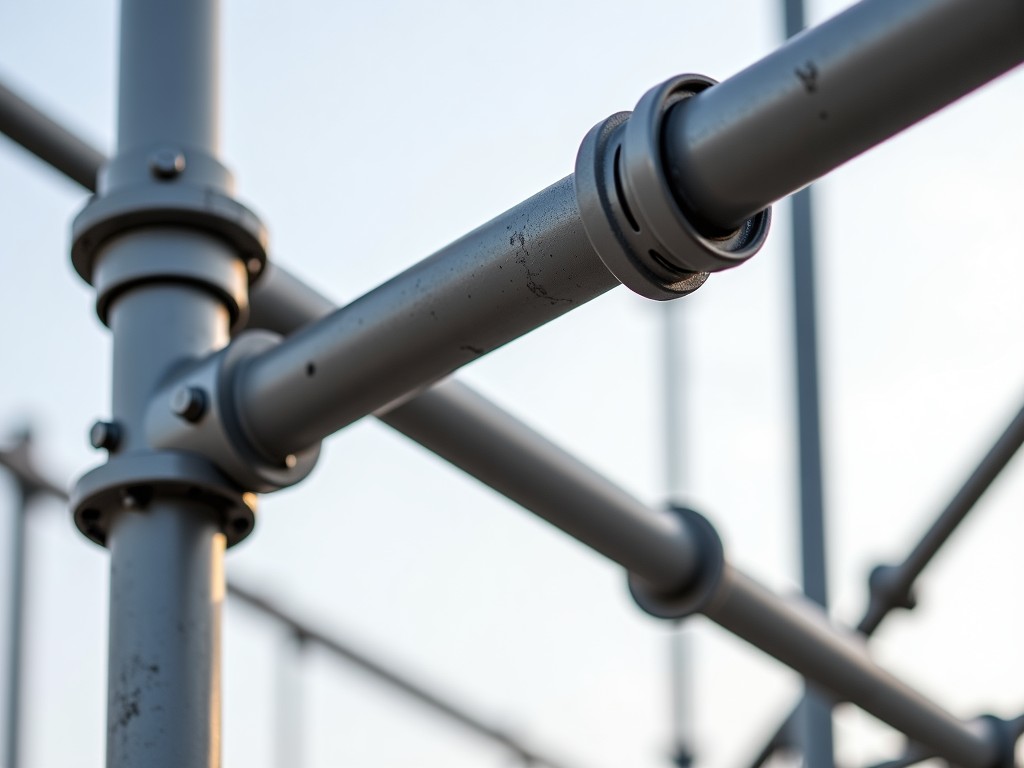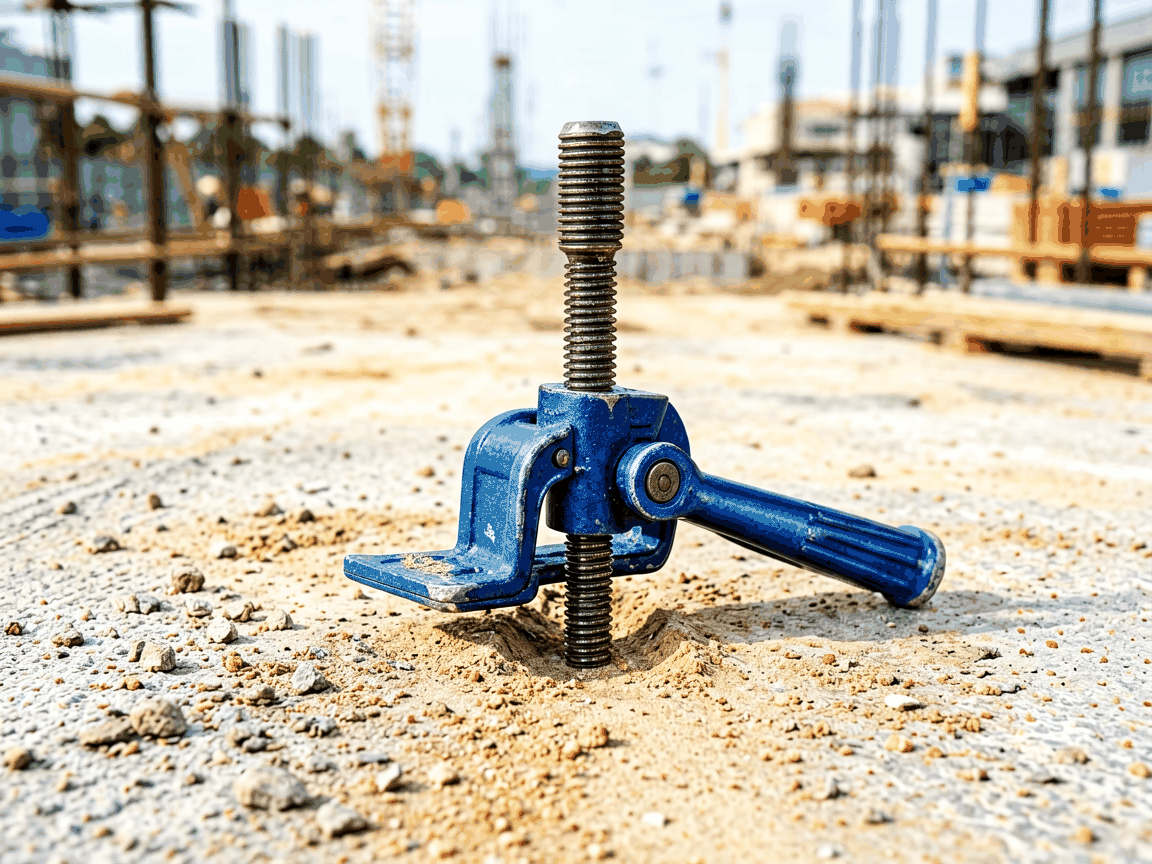
C clamps for shuttering are mechanical fastening devices designed to secure formwork panels, walers, and bracing elements in concrete construction. Their primary function is to apply controlled clamping force to maintain alignment and rigidity of temporary structures during concrete pouring and curing. Unlike welded or bolted connections, C clamps allow for rapid assembly, adjustment, and disassembly, making them essential for reusable formwork systems in high-rise, infrastructure, and precast applications.
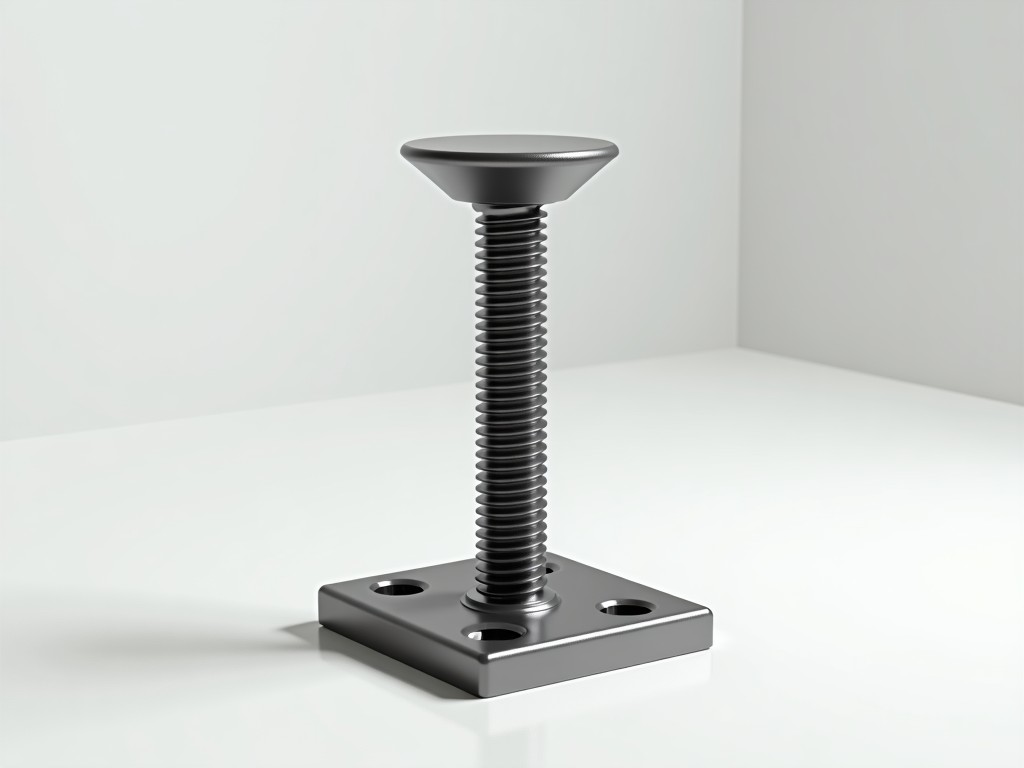
The design centers on a forged or cast C-shaped body with a threaded screw mechanism that converts rotational input into axial clamping force. The fixed jaw typically contacts the formwork panel, while the movable jaw, actuated by the screw, presses against a waler, stake, or secondary structural member. Load distribution depends on the throat depth, screw diameter, and material yield strength, all of which influence the safe working load (SWL) rating.
Industrial buyers evaluate C clamps based on compatibility with existing formwork geometry, required clamping force, fatigue resistance under cyclic loading, and ease of maintenance. Standardization with systems like Doka, PERI, or MEVA influences interchangeability, but many suppliers offer adapters or custom throats to bridge proprietary interfaces. Surface treatments such as hot-dip galvanizing or powder coating are selected based on exposure conditions and reuse cycles.
The clamping force generated by a C clamp is a function of screw thread pitch, handle length, and friction coefficients in the threads and jaw contact points. A typical acme or trapezoidal thread with a 3mm pitch, subjected to 250 N·m of input torque, can generate approximately 20–25 kN of clamping force, assuming 30% efficiency due to friction losses. This force must exceed the lateral pressure exerted by fresh concrete, which varies with pour height, slump, and vibration intensity.
Throat depth—the horizontal distance from the screw centerline to the inner jaw—determines the maximum thickness of material that can be clamped. Standard depths range from 120 mm to 220 mm, accommodating common formwork panel thicknesses (18–50 mm) plus waler dimensions (up to 100 mm). Deeper throats reduce effective screw leverage and may require larger diameters to prevent buckling under load.
Material selection directly impacts durability and SWL. Forged C45 steel is commonly used for bodies subjected to high cyclic loads, offering a tensile strength of 550–700 MPa and elongation >14%. Cast iron bodies (GG25) are suitable for lower-frequency applications where dampening vibration is beneficial, though they exhibit lower tensile strength (~250 MPa) and brittleness under impact. Screws are typically made from 8.8 grade alloy steel, hardened to HRC 22–28 for wear resistance.
Body materials are selected based on load requirements, environmental exposure, and expected reuse cycles. Forged steel provides superior impact resistance and fatigue life, making it ideal for rental companies and high-turnover projects. Cast iron offers cost advantages in low-cycle applications and inherent vibration damping, which can reduce formwork rattling during pouring. Both materials are amenable to machining and threading for precision jaw alignment.
Surface protection is critical for longevity in alkaline concrete environments and outdoor storage. Hot-dip galvanizing (Zn coating ≥60 µm) provides sacrificial protection against corrosion, extending service life to 5–10 years with proper maintenance. Powder coating (epoxy or polyester, 80–120 µm thickness) offers UV resistance and aesthetic uniformity but is less resistant to mechanical damage than galvanizing. Some suppliers offer duplex systems (galvanized + powder) for aggressive marine or industrial environments.
Threaded components often receive additional treatments: screw shafts may be nitrided to increase surface hardness to HRC 50–55, reducing galling and seizing. Nuts and handles are frequently zinc-plated or made from stainless steel (A2) in corrosive settings. Lubrication points are designed for grease nipple installation to maintain thread efficiency over hundreds of cycles.
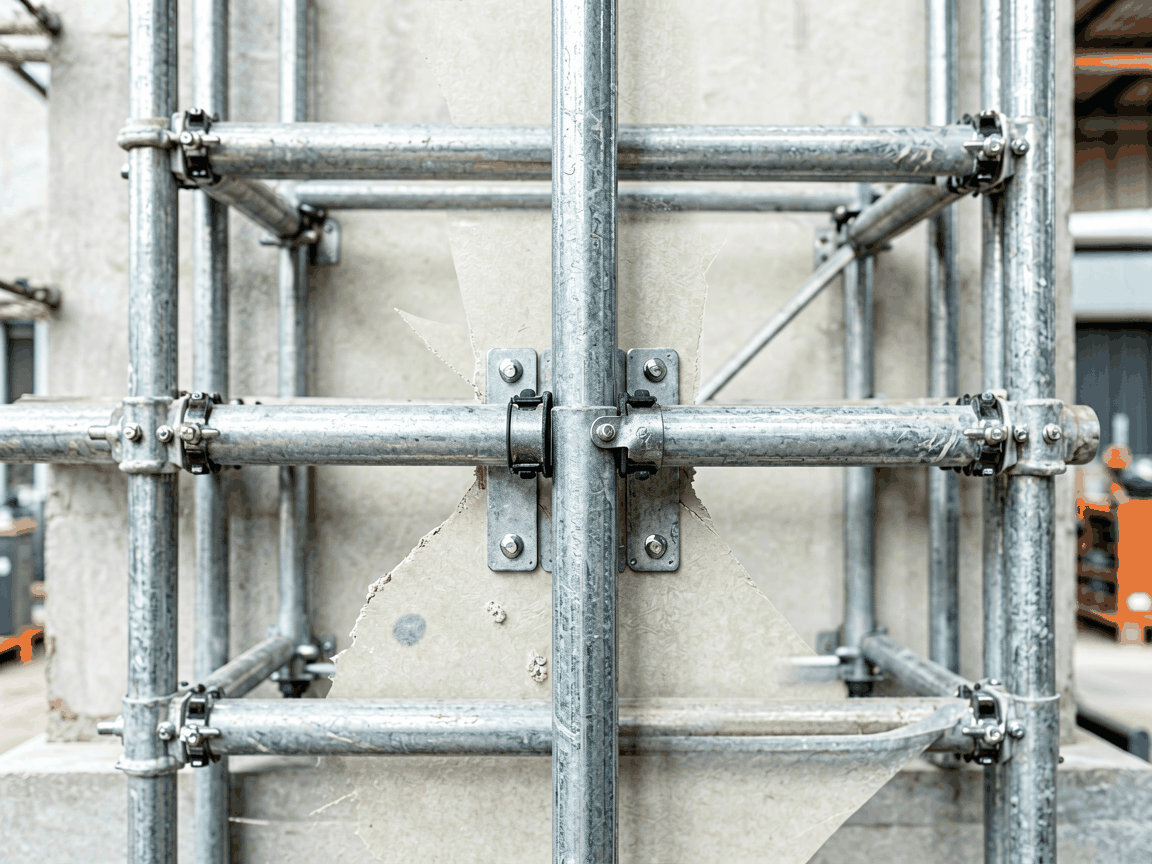
C clamps are primarily used to connect vertical formwork panels to horizontal walers or strongbacks, creating a rigid framework that resists lateral concrete pressure. In wall formwork, they secure plywood, steel, or aluminum panels to timber or steel walers at intervals of 600–800 mm vertically. The clamp’s ability to allow fine adjustment (±10 mm) ensures panel alignment within tolerances required for architectural concrete finishes.
In column and pier formwork, C clamps secure curved or segmented panels to adjustable steel yokes or clamping rings. Here, throat depth must accommodate the radius of the formwork segment plus the waler thickness. For circular columns, swivel-jaw variants are sometimes used to maintain perpendicular contact as the formwork diameter changes.
Beyond primary formwork, C clamps find use in securing scaffolding brackets, safety rails, and service conduits to formwork edges. They are also employed in precast yards to hold inserts, lifting loops, or reinforcement cages in place during concrete placement. Their versatility makes them a standard item in formwork contractor’s inventory, often specified in rental agreements and maintenance logs.
| Parameter | Light Duty (GG25) | Standard Duty (Forged C45) | Heavy Duty (Forged 42CrMo4) |
|---|---|---|---|
| Body Material | Cast Iron (GG25) | Forged Steel (C45) | Forged Alloy Steel (42CrMo4) |
| Typical Throat Depth | 120–160 mm | 160–200 mm | 200–250 mm |
| Screw Diameter | 16 mm Tr 10x3 | 20 mm Tr 12x3 | 24 mm Tr 14x4 |
| Estimated SWL (Static) | 15 kN | 30 kN | 50 kN |
| Surface Treatment | Hot-dip Galvanized | Hot-dip Galvanized | Hot-dip Galvanized + Nitrided Screw |
| Recommended Reuse Cycles | 50–100 | 200–500 | 500+ |
*SWL values are indicative and based on standard thread geometry and friction assumptions. Actual values depend on lubrication, alignment, and material condition. Custom configurations available upon request.
Suppliers commonly offer custom throat depths to match non-standard formwork geometries, such as insulated concrete forms (ICFs) or composite panels with embedded insulation. Extended throats up to 300 mm are achievable with larger screw diameters and reinforced body sections to prevent deflection. Jaw profiles can be modified to include V-notches for round members, serrated faces for slip resistance, or replaceable wear inserts made from hardened steel or polymer.
Handle designs vary based on torque requirements and operator ergonomics. Standard forged steel handles provide adequate leverage for clamps up to 30 kN SWL. For higher torque applications, removable steel pipes (typically 25–32 mm diameter) can be inserted into forged sockets to increase leverage. Some models feature foldable handles for compact storage or ratchet mechanisms for rapid tightening in confined spaces.
Integration with digital formwork management systems is emerging, with some suppliers offering RFID tags or QR codes etched onto clamp bodies for inventory tracking and maintenance scheduling. These identifiers link to databases recording usage cycles, inspection dates, and repair history, supporting predictive maintenance in rental fleets.
Manufacturing quality begins with material traceability. Forged bodies are supplied with mill certificates confirming chemical composition and mechanical properties. Each batch undergoes tensile testing (per ISO 6892-1) and hardness verification (HRB/HRC) to ensure conformance to grade specifications. Cast iron bodies are checked for tensile strength and hardness via ISO 18565, with microstructure analysis to detect shrinkage or porosity.
Thread integrity is validated through go/no-go gauge inspection and functional torque testing. A sample from each production lot is subjected to cyclic loading—typically 1,000 to 5,000 load-unload cycles at 80% of SWL—to assess fatigue resistance and screw/nut wear. Post-test inspections check for thread deformation, jaw cracking, or permanent set in the body.
Surface coating thickness and adhesion are measured using magnetic induction gauges (for galvanizing) and cross-hatch tape tests (per ASTM D3359). Salt spray testing (ASTM B117) is conducted on coated samples to verify corrosion resistance, with 500 hours being a common benchmark for hot-dip galvanizing. Final inspection includes dimensional verification of throat depth, jaw parallelism, and handle torque efficiency.
C clamps are typically packaged in bulk for industrial distribution. Standard packaging includes steel strapped bundles of 20–50 units, protected by corner guards and stretch film to prevent shifting during transit. For corrosion-sensitive applications, individual units may be wrapped in VCI (vapor corrosion inhibitor) paper before bundling. Palletized loads are designed for forklift handling, with maximum stack heights limited to 1.2 meters to avoid bottom-layer deformation.
Storage recommendations emphasize dry, ventilated environments to prevent moisture accumulation. Galvanized clamps should be stored off the ground on pallets or racks to allow air circulation. Long-term storage (>6 months) benefits from periodic inspection and light oiling of threads to prevent seizing. Impact damage from dropping or dragging must be avoided, as it can cause micro-cracks in forged bodies or distort jaw alignment.
Handling procedures for rental companies include pre-issue inspection: checking for thread damage, jaw wear, handle integrity, and coating condition. Units failing visual or functional checks are routed to maintenance for thread re-chasing, jaw resurfacing, or replacement. Documentation of each clamp’s service history supports compliance with ISO 9001 and local construction safety regulations.
Procurement engineers and formwork planners requiring technical specifications, customization options, or compatibility verification with existing systems are invited to submit detailed inquiries. To facilitate accurate response, please include: required clamping force (kN), throat depth (mm), panel and waler material dimensions, expected reuse cycles, environmental exposure (indoor/outdoor, marine/industrial), and any interface constraints with proprietary formwork systems.
Our technical team will respond with material recommendations, load calculations, lead times, and quotation details. Samples are available for evaluation upon request, subject to availability and project scope. We maintain engineering support throughout the product lifecycle, from selection and installation to maintenance planning and end-of-life recycling guidance.
Contact us to discuss your shuttering clamp requirements. We provide engineering-driven solutions focused on safety, durability, and operational efficiency in concrete construction.