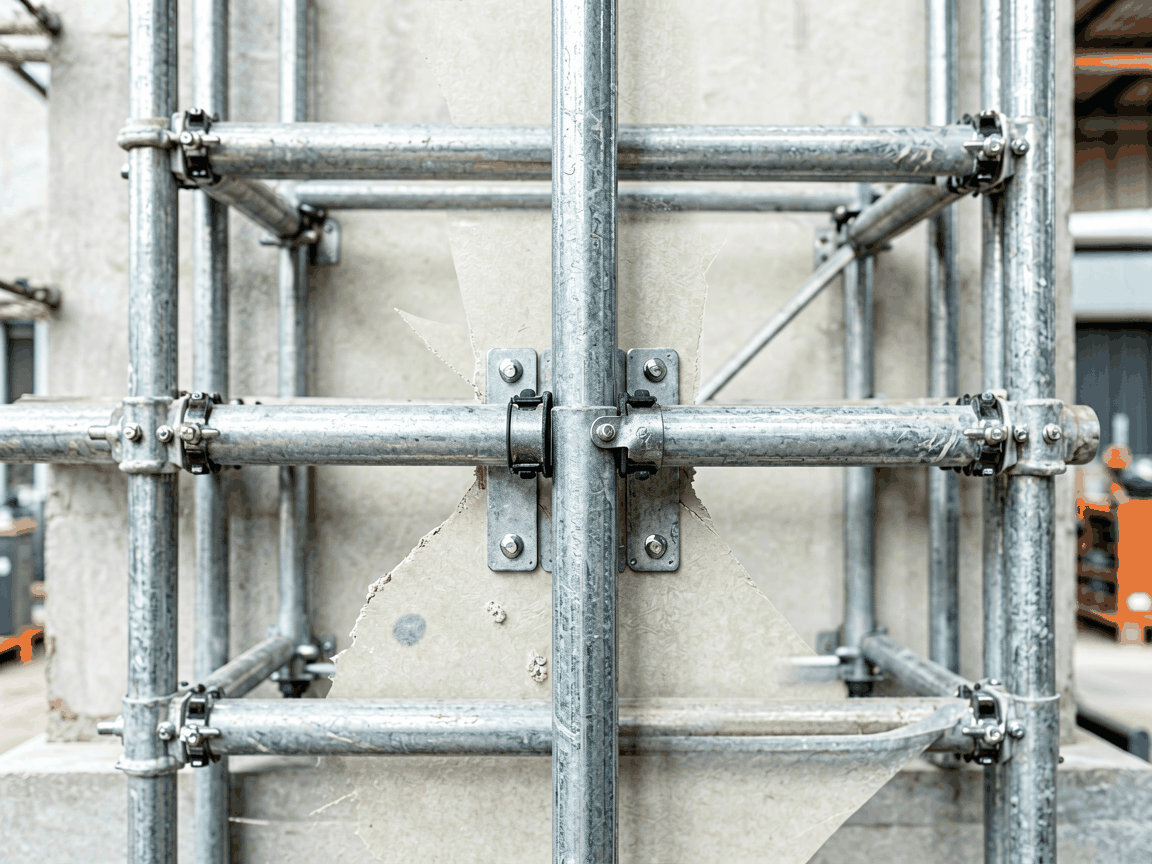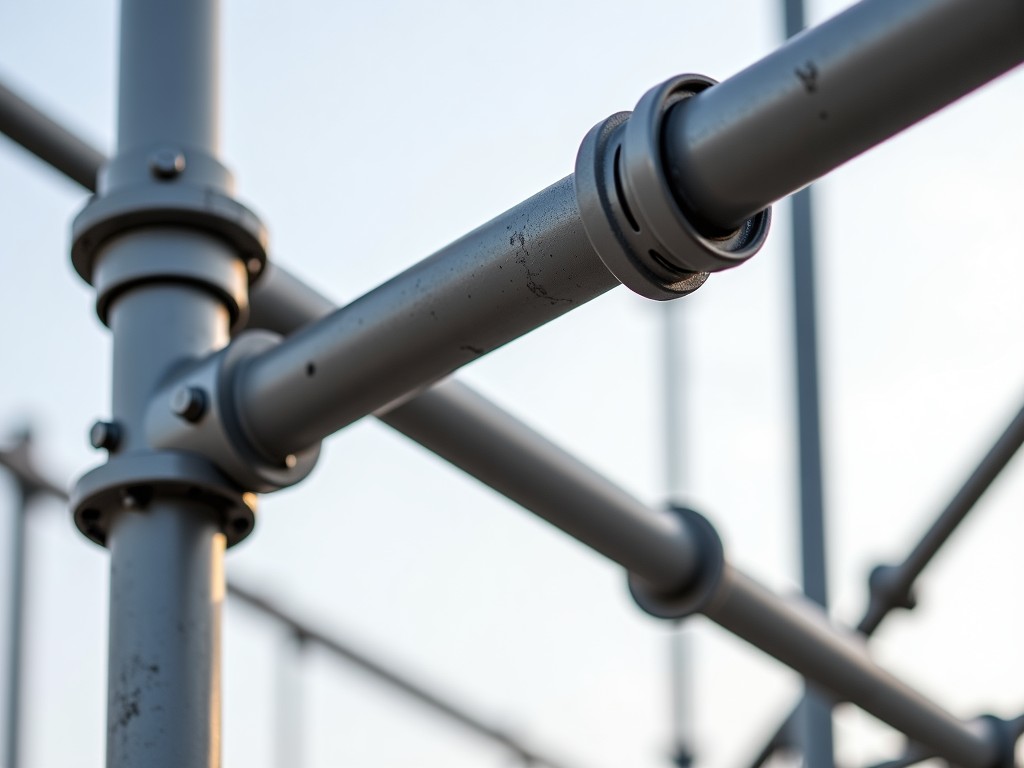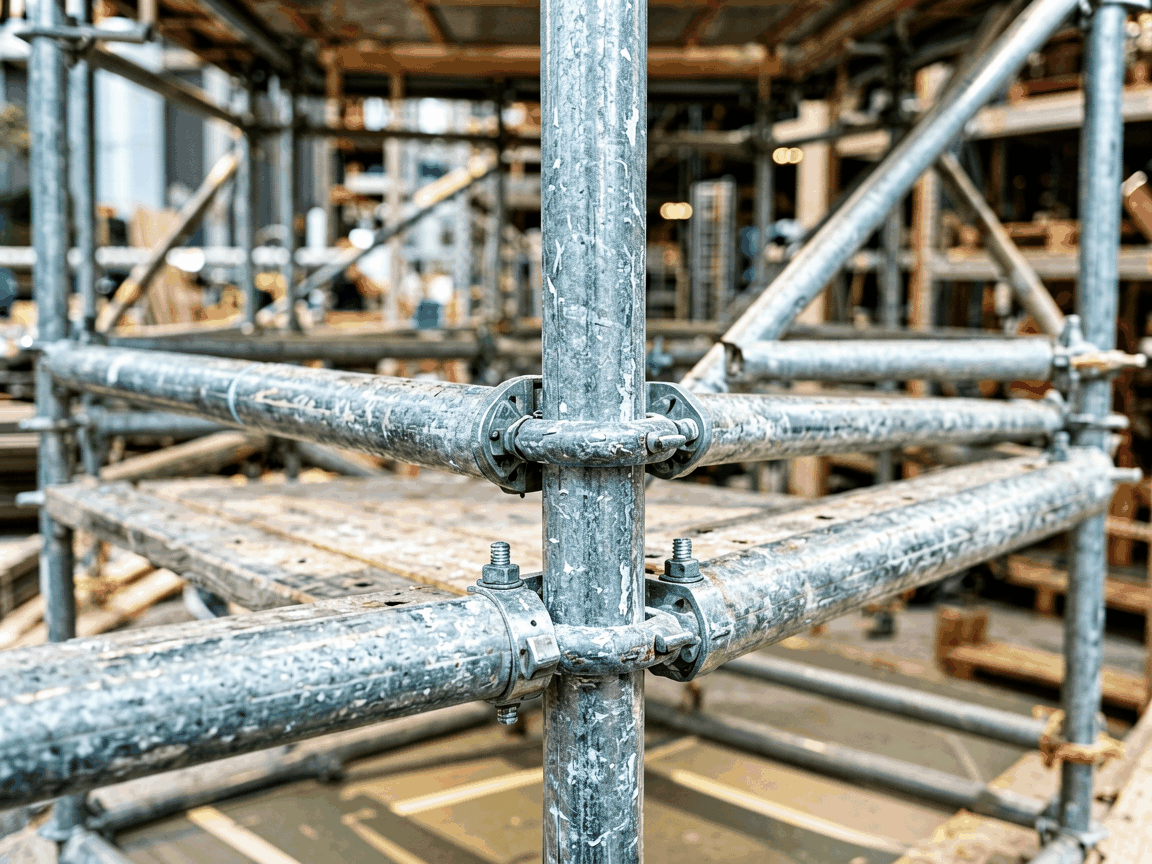
Board retaining couplers are critical connection components in modular scaffolding systems, designed specifically to secure scaffold boards or planks to horizontal ledgers or transoms. Their primary function is to prevent lateral displacement and uplift of working platforms under load, ensuring structural integrity and worker safety during construction, maintenance, and industrial access operations.
Unlike standard couplers that connect tubes, board retaining couplers interface directly with timber, steel, or composite scaffold boards. They typically feature a clamping mechanism that grips the board’s edge while simultaneously attaching to the scaffold tube via a swivel or fixed jaw. This dual-action design resists both vertical loads from personnel and materials and horizontal forces caused by wind, dynamic movement, or accidental impact.
The effectiveness of these couplers depends on precise dimensional compatibility with board thickness, tube diameter, and scaffold bay spacing. Engineers select them based on load classifications (e.g., EN 12810/12811 classifications), anticipated live and dead loads, and environmental exposure. Proper installation eliminates common failure modes such as board slippage, rocking, or disengagement, which are leading contributors to scaffold-related incidents.
Board retaining couplers are engineered to transfer loads efficiently between the scaffold board and the supporting tube structure. The clamping force must exceed the maximum expected uplift force to prevent disengagement, while the tube interface must resist slipping or rotation under torsional load. Material selection and geometric design directly influence these performance thresholds.
Most models are forged from structural-grade steel (e.g., S355JR or equivalent) to achieve high yield strength and ductility. The clamping jaws often incorporate serrated surfaces or teeth to increase friction against the board material, reducing reliance on bolt torque alone. Surface treatments such as hot-dip galvanizing (typically 55–85 µm zinc coating per EN ISO 1461) provide corrosion resistance suitable for outdoor and industrial environments.
Critical dimensions include jaw opening width (to accommodate board thicknesses from 22 mm to 50 mm), tube compatibility (commonly 48.3 mm outer diameter for steel scaffolding tubes), and swing clearance for installation in confined spaces. Some designs allow adjustable jaw positions to suit varying board thicknesses without changing parts.
Performance is validated through static load testing according to regional standards such as EN 74 (Europe) or ANSI/SSFI SC-100/5-00 (North America). These tests measure resistance to slip, pull-out, and deformation under combined vertical and horizontal loads. Ratings are expressed as safe working loads (SWL) with applied safety factors, typically 3:1 or 4:1 against ultimate failure.
For example, a typical board retaining coupler rated for Class 3 scaffolding (200 kg/m² uniform load) must resist an uplift force of at least 1.5 kN per connection point when tested on a 38 mm thick timber board. Lateral load resistance is evaluated by applying horizontal force at the board edge, with acceptable deflection limits usually set below 3 mm to maintain platform stability.
Designers must account for load distribution across multiple couplers per board. Over-reliance on edge fixings without adequate intermediate support can lead to board bending or cracking. Therefore, coupling frequency is often dictated by board span, material stiffness, and anticipated load patterns — not merely by tube spacing.
The base material is almost universally carbon steel due to its strength-to-cost ratio and ease of forging. However, the finish is selected based on environmental exposure and service life requirements. Hot-dip galvanizing remains the most common corrosion protection method for external use, offering sacrificial protection and durability in humid, coastal, or industrial atmospheres.
For internal or temporary applications where appearance and reusability matter, electro-galvanizing or powder coating may be specified. Powder coating provides uniform thickness and color options but offers less abrasion resistance than galvanizing in high-wear scenarios. Stainless steel variants (e.g., AISI 304 or 316) are available upon request for highly corrosive environments such as chemical plants or marine installations, though cost and weight increase significantly.
Custom material grades or coatings (e.g., sherardizing, zinc-nickel alloy) can be discussed for specialized projects requiring extended maintenance intervals or compliance with specific client specifications. These alternatives are evaluated case-by-case, with lead times and tooling adjustments factored into quotations.
Board retaining couplers are indispensable in any scaffolding system where workers or materials occupy the platform. Their use is not merely procedural — it directly addresses the physics of load transfer and platform stability. Without effective board retention, even a perfectly erected tube framework becomes unsafe due to platform instability.
In building construction, they secure timber or LVL boards to facade scaffolds, enabling safe access for bricklaying, window installation, and rendering. In industrial maintenance (e.g., refineries, power plants), they support steel or aluminum planks used during turbine inspections, boiler repairs, or piping modifications, where platform integrity is critical under vibration and thermal cycling.
They are also widely used in shoring and formwork systems where scaffold boards serve as walkways or material decks adjacent to concrete pours. Here, resistance to lateral surge from concrete pumping or worker movement is essential. Temporary event structures (stages, grandstands) rely on them to maintain platform rigidity under dynamic crowd loads, where failure could have catastrophic consequences.
Correct installation is as critical as the coupler’s design. The jaw must fully engage the board’s edge without gaps, and the tube fastener (bolt, pin, or wedge) must be tightened to the manufacturer’s specified torque — typically ranging from 50 to 70 Nm for M16 bolts — to prevent creep or loosening under cyclic load. Under-torquing risks slippage; over-torquing can deform the jaw or damage the board.
Compatibility extends beyond tube diameter. The coupler’s throat depth must allow sufficient reach over the board thickness while maintaining engagement with the tube. Some models are designed for specific board types (e.g., 38 mm timber vs. 45 mm steel plank), while others offer adjustable features. Always verify that the coupler’s rated board thickness range matches the actual material in use.
Mixing components from different manufacturers is discouraged unless cross-compatibility has been validated through testing or certification. Variations in tolerances, material hardness, or finish can compromise clamping force or lead to premature wear. When in doubt, consult technical data sheets or request sample validation before bulk procurement.
Manufacturing consistency directly affects reliability. Forging processes must ensure uniform grain flow in high-stress areas such as the jaw pivot and bolt hole. Dimensional inspections verify jaw opening, tube bore size, and swing angle compliance. Mechanical testing confirms yield strength and elongation properties of the base material meet specification.
Galvanized coatings are measured for thickness and adhesion using magnetic gauges and bend/taper tests. Batch traceability is maintained through laser etching or stamping with heat codes, production dates, and part numbers, enabling correlation with material certificates and test records. This supports compliance with ISO 9001 and facilitates recalls or investigations if needed.
Functional sampling is conducted on every production lot, where a percentage of units undergo simulated load testing to validate clamping force and deformation limits. Statistical process control monitors trends in dimensions and coating quality. Documentation including material test certificates (MTC), coating reports, and test summaries is available upon request for audited projects.
| Feature | Fixed Jaw Type | Swivel Jaw Type | Adjustable Jaw Type |
|---|---|---|---|
| Tube Connection | Fixed angle (usually 90°) | 360° rotation | Fixed or swivel base |
| Board Thickness Range | Fixed (e.g., 22–38 mm) | Fixed (e.g., 22–38 mm) | Adjustable (e.g., 22–50 mm) |
| Installation Speed | Fast (no adjustment) | Moderate (alignment needed) | Slower (thickness setting) |
| Typical Use Case | Standard facade scaffolding | Complex geometries, retrofits | Variable board systems, rentals |
| Cost Implication | Lowest | Medium | Highest |
Note: Values are typical ranges. Actual specifications vary by model and manufacturer. Confirm compatibility with scaffold tube diameter (usually 48.3 mm OD) and board material before selection.
Standard board retaining couplers are available in common configurations for immediate dispatch. These include fixed 90° jaw models for 48.3 mm tubes and 38 mm timber boards, hot-dip galvanized, with M16 bolts and nuts included. Non-standard requirements such as alternative tube sizes (e.g., 42.4 mm or 60.3 mm), stainless steel construction, custom jaw widths, or specialized coatings are manufactured to order.
To receive an accurate quotation, provide the following details: scaffold tube outer diameter, board material and thickness, required quantity, delivery destination, and any applicable project standards (e.g., EN 74, ANSI/ASSE A10.8). If the application involves unusual loads, environmental conditions, or inspection requirements, include those specifications as well.
Lead times typically range from 2 to 4 weeks for standard galvanized finishes and 4 to 8 weeks for stainless steel or custom-coated items, depending on raw material availability and production schedule. Samples can be arranged for validation prior to bulk order, with associated costs credited upon purchase confirmation.
For technical inquiries, quotations, or to discuss project-specific requirements for board retaining coupler scaffolding, please contact our engineering team.
Request Technical Specification or Quotation