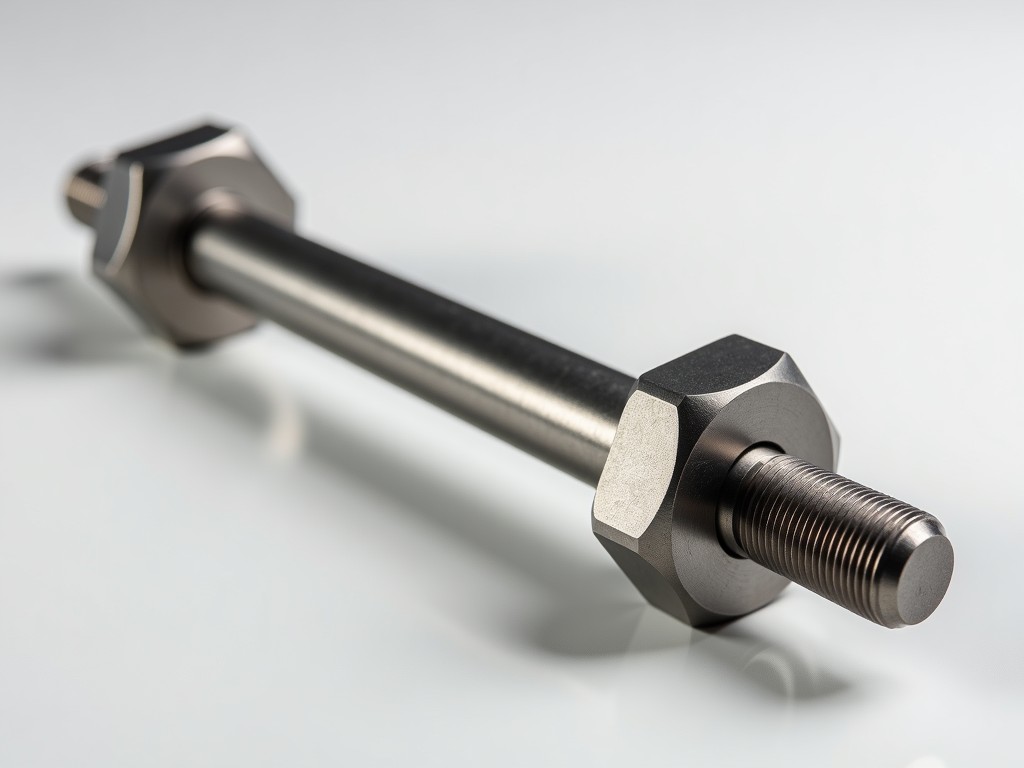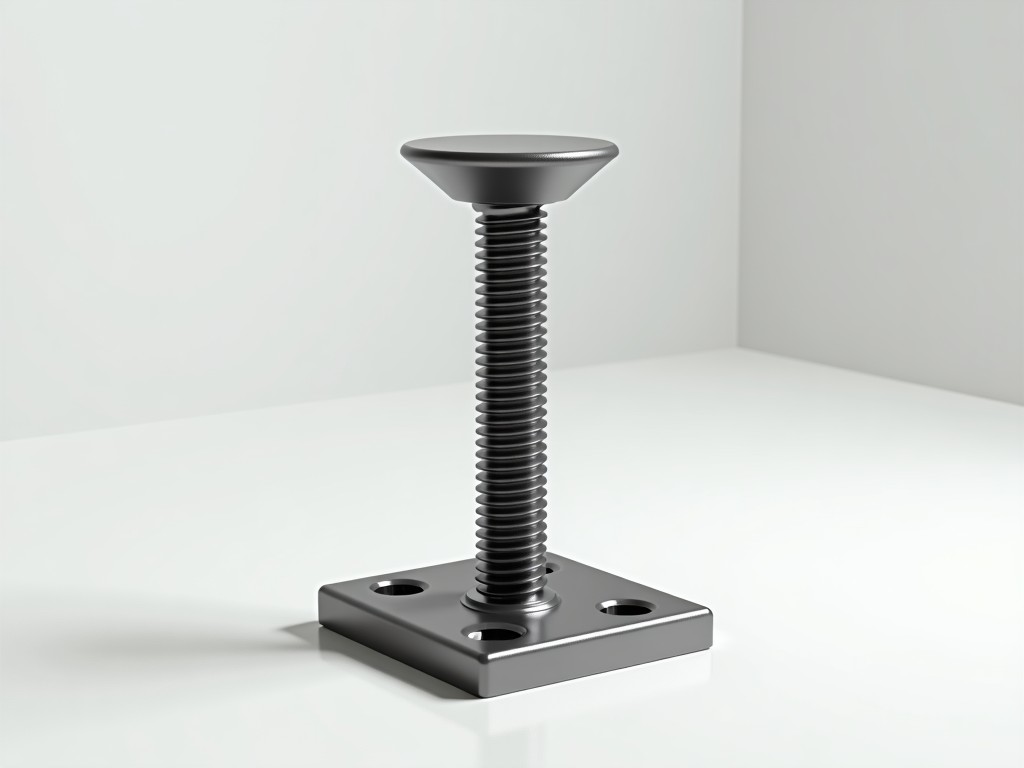
An adjustable screw jack post is a mechanical lifting and leveling device used to provide temporary or permanent support in structural applications where precise vertical adjustment is required. It consists of a threaded steel rod (screw) housed within a tubular outer sleeve, with a base plate at the bottom and a top plate or head at the top. Rotation of the screw via a handle or wrench raises or lowers the load-bearing surface, allowing for fine-tuned height control under load. These devices are commonly employed in construction, industrial maintenance, and equipment installation where foundation settlement, uneven substrates, or temporary shoring necessitate reliable, repeatable adjustment.
Unlike fixed shims or non-adjustable props, screw jack posts enable micro-adjustments after initial placement, compensating for long-term creep, thermal expansion, or dynamic loading without disassembly. The load is transferred axially through the screw threads, which must be engineered to resist buckling, thread stripping, and over-torque failure. Proper design ensures that the working load limit remains well below the material’s yield strength, maintaining a sufficient safety factor even under eccentric or vibratory conditions.
The performance of an adjustable screw jack post depends on several interrelated factors: screw thread geometry, material selection, column slenderness ratio, end restraint conditions, and lubrication. Acme or trapezoidal threads are typically used due to their efficiency in converting rotational motion to linear force while resisting back-drive under load. The outer tube provides lateral stability and protects the screw from environmental contaminants. End plates are welded or machined to ensure parallel, flat bearing surfaces that minimize point loading and eccentricity.
Critical design considerations include the critical buckling load (Euler load), which decreases significantly with increased unsupported length and depends on end fixity. For tall extensions, intermediate bracing or guided sleeves may be required to prevent lateral deflection. The screw material is often medium-carbon steel (e.g., C45 or 1045) hardened and tempered to achieve a tensile strength of 600–800 MPa, while the tube may use structural steel such as S235JR or S355J2. Thread lubrication with molybdenum disulfide or lithium-based grease reduces friction and wear, preserving adjustment precision over thousands of cycles.
Load capacity is not a fixed value but varies with extension height due to buckling risk. Manufacturers specify maximum working load at minimum extension, with derating curves provided for longer strokes. Typical working loads range from 5 kN to 50 kN (approximately 0.5 to 5 metric tons) depending on model size, with safety factors of 3:1 to 5:1 applied to ultimate failure loads. Adjustment range is determined by screw length and thread pitch; common strokes are 200 mm, 300 mm, or 450 mm, achieved through fine-pitch threads (e.g., 4 mm or 5 mm pitch) allowing approximately 0.5 mm of lift per handle turn.
| Model Designation | Min. Height (mm) | Max. Height (mm) | Working Load @ Min. Height (kN) | Thread Pitch (mm) | Lift per Handle Turn (mm) |
|---|---|---|---|---|---|
| SJ-L-200 | 250 | 450 | 25 | 4 | 0.5 |
| SJ-M-300 | 300 | 600 | 35 | 5 | 0.5 |
| SJ-H-450 | 400 | 850 | 45 | 5 | 0.5 |
| SJ-XH-600 | 500 | 1100 | 50 | 6 | 0.5 |
Values in the table represent typical configurations; actual ratings depend on material grade, thread integrity, and end-condition assumptions. For extensions beyond 75% of maximum height, consult derating factors — load capacity may reduce by 30–50% due to increased slenderness ratio. End conditions significantly influence buckling resistance: fixed-fixed ends (e.g., welded to base plate and constrained head) offer approximately four times the buckling load of pinned-pinned ends. Always verify application-specific loading with engineering review, especially under dynamic or impact conditions.
Material selection balances strength, machinability, corrosion resistance, and cost. The screw is commonly made from medium-carbon steel for its hardenability and wear resistance; surface induction hardening of the threads to HRC 50–55 extends service life in abrasive environments. The outer tube may use cold-formed or welded structural steel tubing, selected for straightness and dimensional stability. In humid or corrosive settings, zinc electroplating (minimum 8 µm thickness) or hot-dip galvanizing (typically 55 µm) provides barrier protection. For aggressive chemical or marine environments, stainless steel grades such as AISI 304 or 316 are available upon request, though they require careful thread lubrication to prevent galling.
Alternative treatments include phosphate coating for paint adhesion or black oxide for mild corrosion resistance in dry indoor use. Thread lubricants are chosen based on temperature range and contamination exposure — synthetic greases with EP additives perform well from -20°C to +120°C, while solid film lubricants (e.g., MoS₂) are preferred in dusty or high-temperature industrial settings. All materials are traceable to mill test reports, and dimensional inspections verify thread pitch diameter, straightness, and end-plate parallelism before shipment.
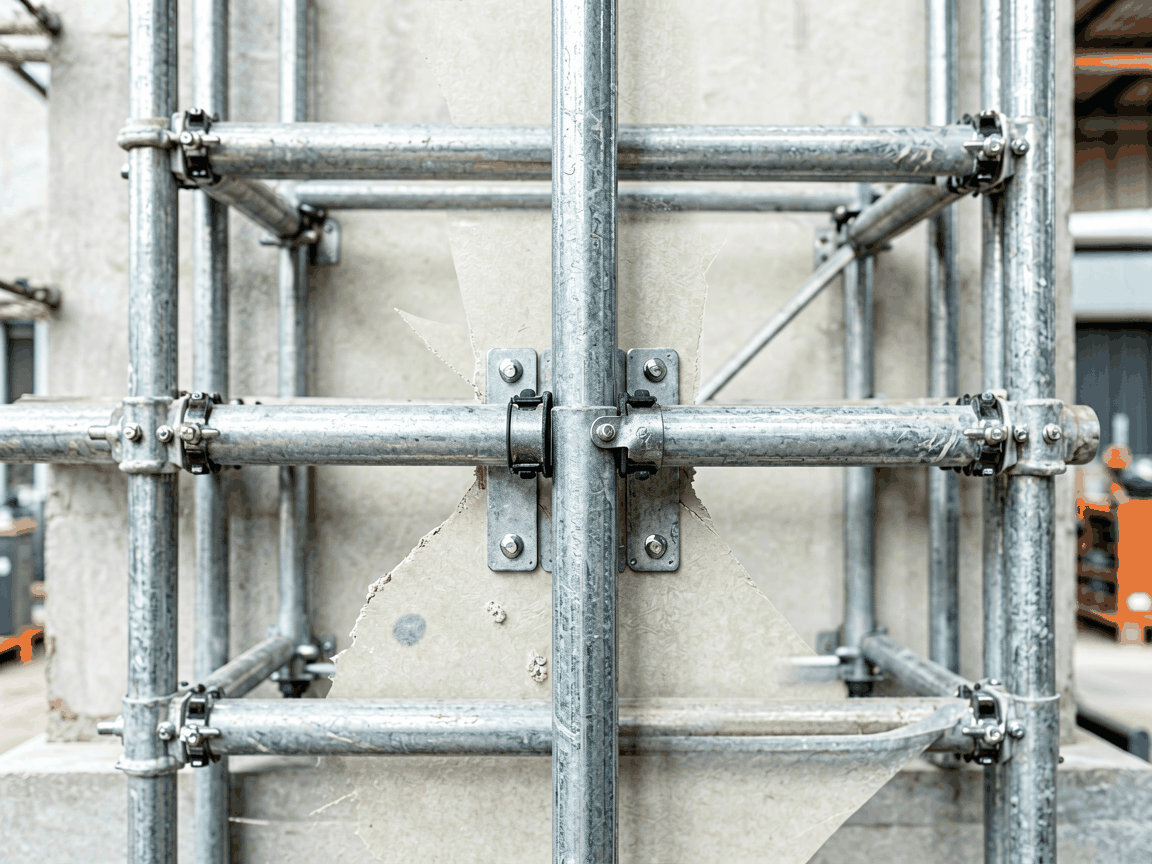
Adjustable screw jack posts are used where precise, repeatable elevation control is needed under load — a requirement that fixed shims, hydraulic jacks (without continuous pressure), or pneumatic systems cannot reliably meet over extended periods. In concrete formwork systems, they maintain exact slab elevation during pour and cure, compensating for formwork deflection and settlement. In machinery installation, they enable precise alignment of motors, gearboxes, or presses to within 0.1 mm, reducing vibration and wear on coupled components. During plant maintenance, they support overhead conveyors or piping runs during flange replacement, allowing safe removal of permanent supports.
Their self-locking nature — due to the low efficiency of Acme/trapezoidal threads under load — eliminates the need for continuous power or locking mechanisms, enhancing safety during unattended operation. Unlike hydraulic jacks, they do not creep or leak fluid over time. Compared to screw piles or adjustable pedestals, they offer higher lateral stiffness and are better suited for indoor, controlled-environment applications. In stage and event construction, they support lighting trusses and platforms where quiet, manual adjustment is preferred over noisy pneumatic systems.
Standard configurations serve common needs, but many applications require tailored solutions. Customization options include modified thread pitches for faster or finer adjustment, extended stroke lengths via screwed extensions or telescoping tubes, and special end fittings such as swivel heads, spherical washers, or threaded adapters to accommodate non-parallel loads. Base plates can be enlarged or fitted with spikes for soft soil, or machined to match existing flange patterns. For OEM integration, the jack post can be supplied as a sub-assembly with pre-drilled mounting holes or integrated limit switches for position feedback.
Material substitutions — such as using duplex stainless steel for chloride environments or applying PTFE-coated threads for food-grade compatibility — are evaluated case by case. Length restrictions for shipping may necessitate modular designs with coupler nuts. All customizations undergo engineering review to ensure that modified dimensions do not compromise buckling resistance, thread engagement, or load path integrity. Lead times for non-standard units typically range from 3 to 6 weeks, depending on complexity and material availability.
Reliability begins with material verification: incoming steel is checked for chemical composition and mechanical properties via mill certificates. Thread rolling or cutting is performed on calibrated CNC lathes, with pitch diameter and flank angle monitored using thread mics or optical comparators. Straightness of the assembled screw within the tube is verified using dial indicators on V-blocks, typically held to <0.5 mm/m. End plates are checked for flatness and parallelism using surface plates and feeler gauges, ensuring full-contact bearing surfaces.
Load testing is conducted on a sampling basis — applying 1.5 times the working load for 5 minutes while measuring residual deformation. Torque-to-lift efficiency is measured to confirm proper lubrication and thread condition. Surface treatments are validated for thickness and adhesion (e.g., galvanizing per ISO 1461). Final inspection includes functional cycling: 10 full extension-retraction cycles under 50% load to verify smooth operation and absence of binding. Non-conforming units are segregated and reworked or scrapped based on defect severity.
Note: All technical data provided is representative of standard configurations. Actual performance depends on installation, loading conditions, and maintenance. For critical applications, consult engineering support to verify suitability.
Adjustable screw jack posts provide a mechanically simple yet highly effective solution for applications demanding accurate, maintainable height control under load. Their reliance on fundamental screw mechanics — rather than fluids, seals, or external power — results in long service life, minimal maintenance, and predictable behavior across a wide range of environmental conditions. By focusing on load path integrity, thread durability, and buckling resistance, these devices deliver consistent performance where precision and safety are non-negotiable.
For technical inquiries, customization requests, or quotation preparation, please provide your application details including required load, height range, end conditions, and environmental factors. Our engineering team will review your specifications and recommend a suitable configuration.
Submit Technical Inquiry