When evaluating adjustable prop jacks for construction, shoring, or formwork applications, procurement decisions hinge on understanding load capacity, adjustability range, material durability, and total cost of ownership—not just unit price. This page explains the technical factors influencing price, how suppliers structure quotations, and what buyers should verify before committing to a purchase.
The price of an adjustable prop jack is primarily determined by its rated load capacity, extension range, wall thickness of the inner and outer tubes, and the type of locking mechanism. Higher load capacities (e.g., 20 kN vs. 10 kN) require thicker steel walls and larger tube diameters, directly increasing material and manufacturing costs. Extension range also affects price—jacks with longer adjustable strokes (e.g., 0.6–3.5 m) need more precise threading and stronger pin or collar systems to maintain stability under load.
Material selection significantly impacts both performance and cost. Most industrial prop jacks use cold-formed steel with a minimum yield strength of 345 MPa (S355JR or equivalent). Hot-dip galvanization adds corrosion resistance for outdoor or humid environments but increases unit cost by approximately 15–25% compared to painted finishes. Some suppliers offer stainless steel variants for aggressive chemical environments, which can cost 2–3 times more than carbon steel due to material and fabrication complexity.
The locking mechanism is another cost driver. Simple friction-lock collars are least expensive but may slip under vibrational loads. Positive-locking systems with hardened steel pins, spring-loaded latches, or ratchet mechanisms provide more secure load retention and are preferred in dynamic applications like tunnel formwork or seismic retrofitting, though they add 10–20% to the base price due to additional components and precision machining.
| Load Capacity | Extension Range | Wall Thickness (mm) | Finish | Typical Price Range (USD/unit) |
|---|---|---|---|---|
| 10 kN | 0.5–2.0 m | 2.0–2.5 | Painted | $18–$25 |
| 15 kN | 0.6–2.5 m | 2.5–3.0 | Hot-dip Galvanized | $28–$38 |
| 20 kN | 0.6–3.5 m | 3.0–3.5 | Hot-dip Galvanized | $40–$55 |
| 25 kN | 0.8–4.0 m | 3.5–4.0 | Stainless Steel (304) | $90–$120 |
Note: Prices are indicative ex-works costs for standard configurations. Actual pricing depends on order volume, customization (e.g., custom plate sizes, threaded collar length), packaging requirements, and incoterms. Bulk orders (500+ units) typically receive 5–15% discounts, while special finishes or certifications (e.g., EN 1065 compliance) may add surcharges.
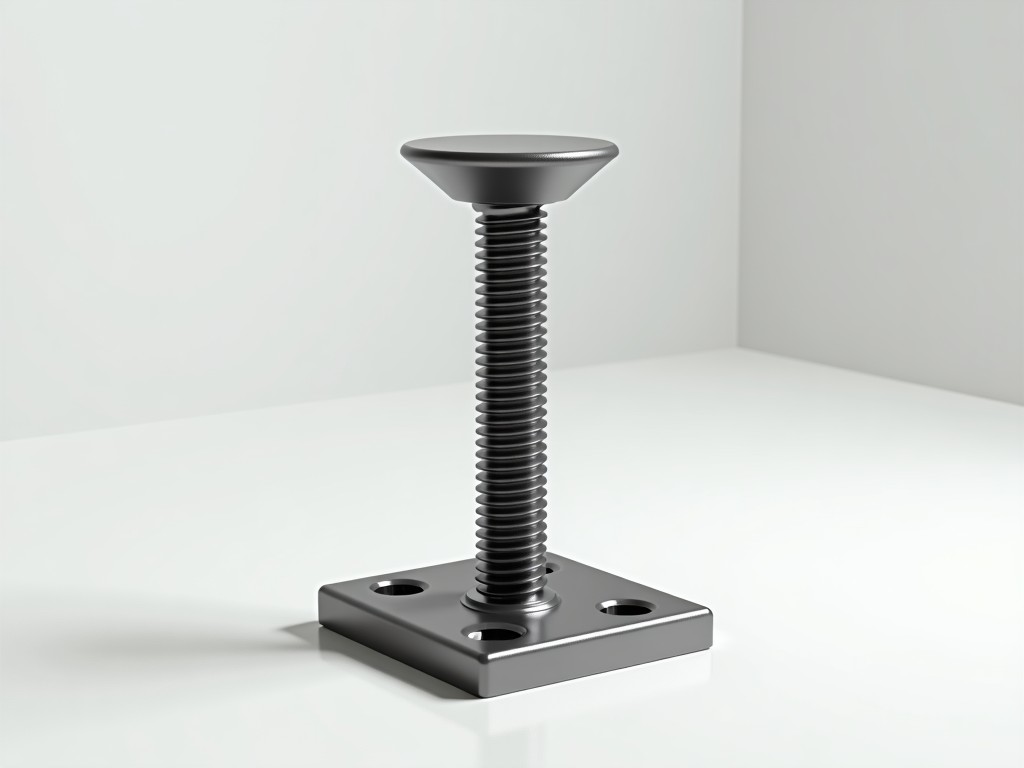
To receive an accurate and comparable quote, buyers should provide specific technical requirements rather than asking for a generic “price.” Essential details include: required safe working load (SWL), minimum and maximum extension height, preferred finish (painted, galvanized, stainless), base and top plate dimensions (e.g., 100x100 mm or 120x120 mm with hole pattern), quantity needed, delivery timeline, and destination for freight calculation.
Additionally, inquire about the supplier’s manufacturing standards—whether jacks are produced to EN 1065, ISO 9001, or regional equivalents. Ask for material test certificates (MTCs) for the steel tubes, batch traceability, and whether each unit undergoes proof load testing (typically 1.5× SWL) before shipment. Suppliers who cannot provide this documentation may be offering lower-cost, non-compliant products that pose safety risks.
Packaging also affects total cost and damage risk. Standard packaging includes bundles of 10–20 units secured with steel strapping and plastic edge protection. For export or long-distance transport, request additional corner guards, waterproof wrapping, or palletization with fumigated wood—these add cost but reduce in-transit deformation or corrosion.
In residential concrete slab formwork, lower-capacity jacks (10–15 kN) with painted finishes are often sufficient due to static loads and short-term use. Here, minimizing upfront cost aligns with project economics. However, in infrastructure projects like bridge underpinning or tunnel construction, where jacks remain under load for months and face vibration, moisture, and potential overload, investing in higher-capacity, galvanized units with positive locking reduces long-term risk of failure, rework, or liability—justifying a higher unit price.
Industrial maintenance and shipbuilding applications frequently require stainless steel jacks due to exposure to chlorides, chemicals, or frequent washdowns. Although the initial price is higher, the elimination of rust-related jamming, extended service life, and reduced maintenance needs often result in lower total cost over multiple projects. Suppliers should be able to provide lifecycle cost comparisons upon request.
Rental companies prioritize durability and ease of inspection. They often specify jacks with wear indicators on the threads, removable pins for quick maintenance, and standardized parts interchangeability across fleets. While these features increase base price, they reduce downtime and repair complexity—factors that directly affect rental utilization rates and profitability.
Many suppliers offer customization beyond standard catalog items. Common modifications include: altered thread pitch for faster adjustment, extended or reduced tube lengths for specific formwork geometries, customized base plates with anchoring holes or weld-on lugs, and integrated safety stops to prevent over-extension. Each modification requires separate tooling, programming, or welding steps, which increases unit cost—typically by 5–20% depending on complexity.
Logo engraving or custom paint colors for branding or site identification are low-cost additions (often <$0.50/unit) but require clear artwork files and minimum order quantities. For OEMs supplying to rental firms or contractors, private labeling can be a value-added service that justifies a slightly higher wholesale price.
Before approving custom work, request a detailed drawing for customer approval, confirm tolerances (e.g., thread accuracy, perpendicularity of plates), and verify whether the modified design still meets the required safety factor. Suppliers should be willing to provide FEA simulations or physical test reports for non-standard configurations.
Price variations between suppliers for seemingly similar specifications often reflect differences in quality control rigor. Reputable manufacturers perform dimensional checks on every tube (ovalicity, straightness), thread gauge inspections, and coating thickness measurements (for galvanization: typically 55–85 μm). They also conduct statistical process control on welding penetrations and locking mechanism engagement force.
Lower-priced alternatives may skip 100% inspection, rely on batch testing, or use recycled steel with inconsistent mechanical properties. While the initial savings appear attractive, the risk of premature deformation, thread stripping, or sudden collapse under load increases significantly. For critical shoring applications, the potential cost of failure far exceeds any unit price savings.
Ask suppliers for their quality control plan, inspection frequency, and whether they hold third-party certifications (e.g., TÜV, SGS, or BV audit reports). Transparency in QC procedures is a strong indicator of long-term reliability and justifies stable, competitive pricing over time.
To obtain a precise, comparable price for adjustable prop jacks that meet your project’s technical and safety requirements, provide your specifications including load capacity, extension range, finish, quantity, and delivery terms. A qualified supplier will return a detailed quotation with material certifications, lead time, and packaging options clearly outlined.