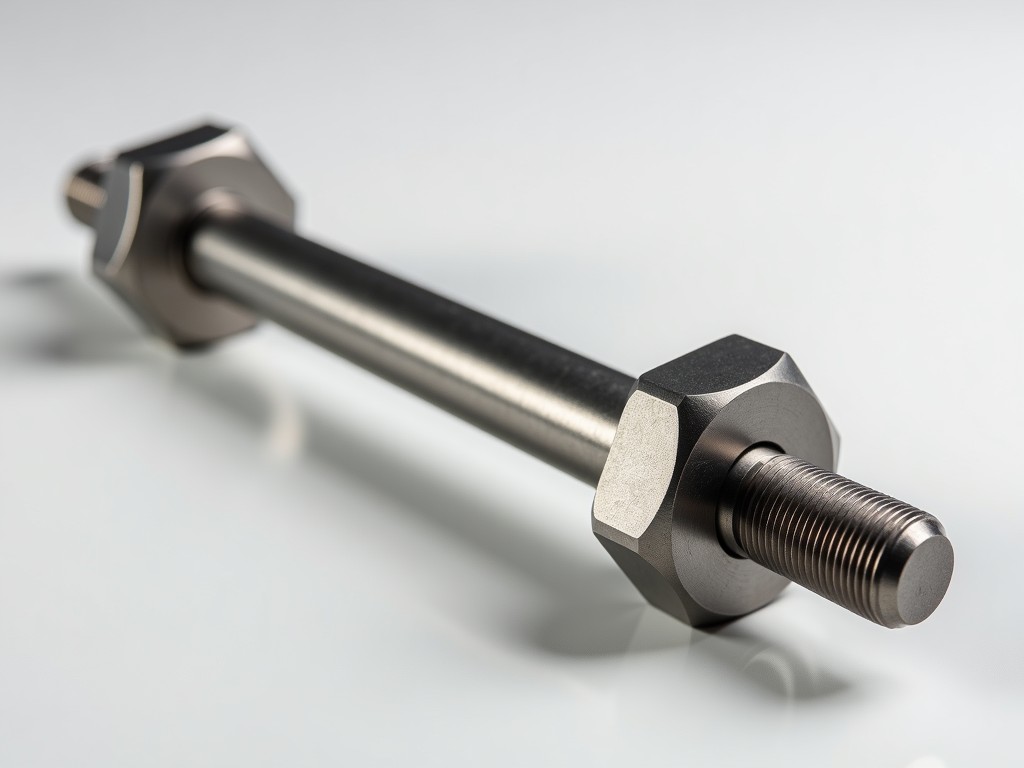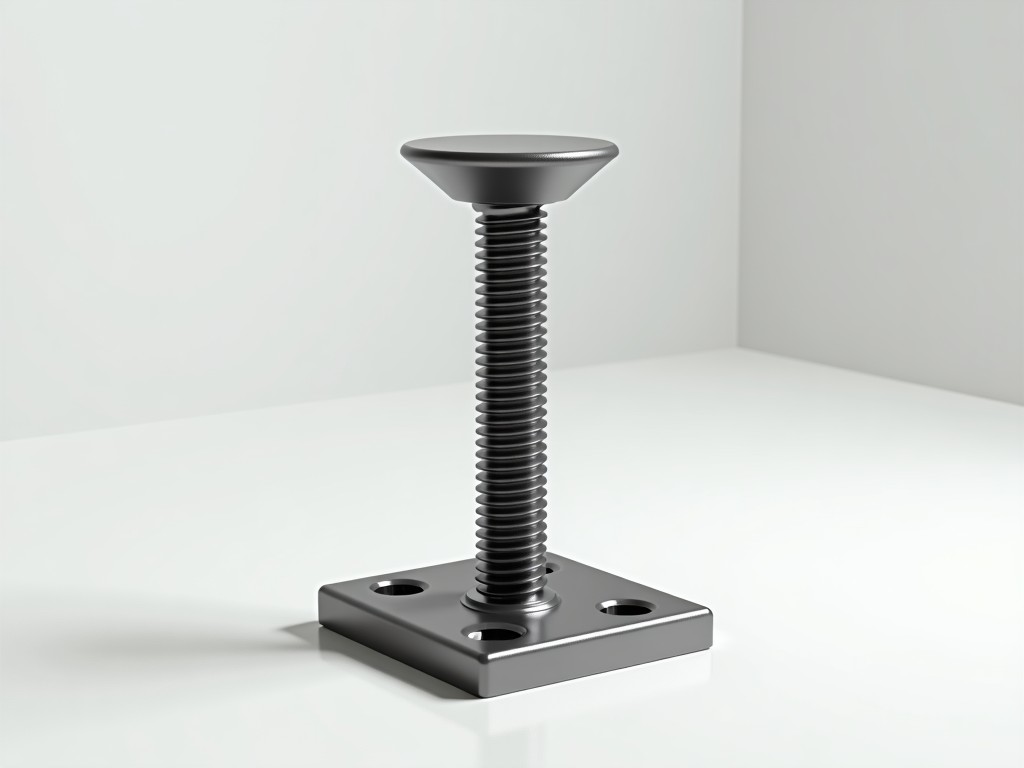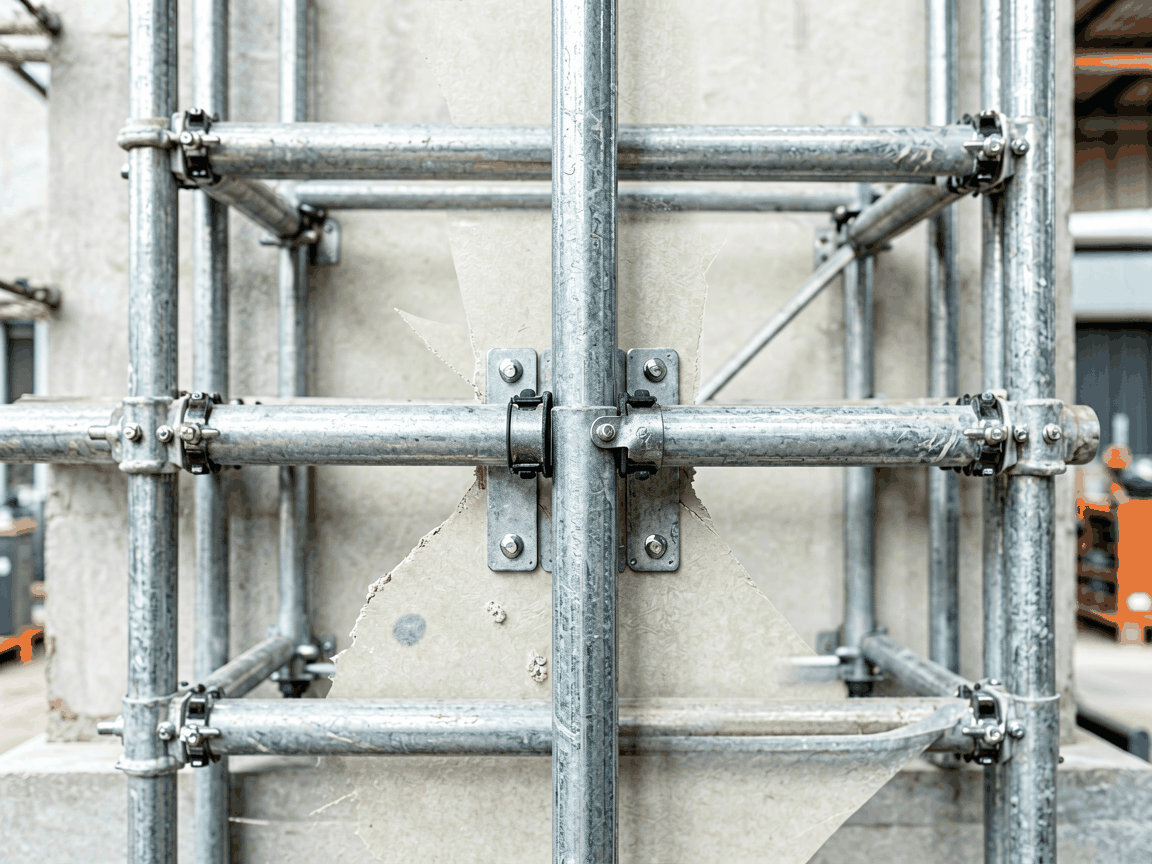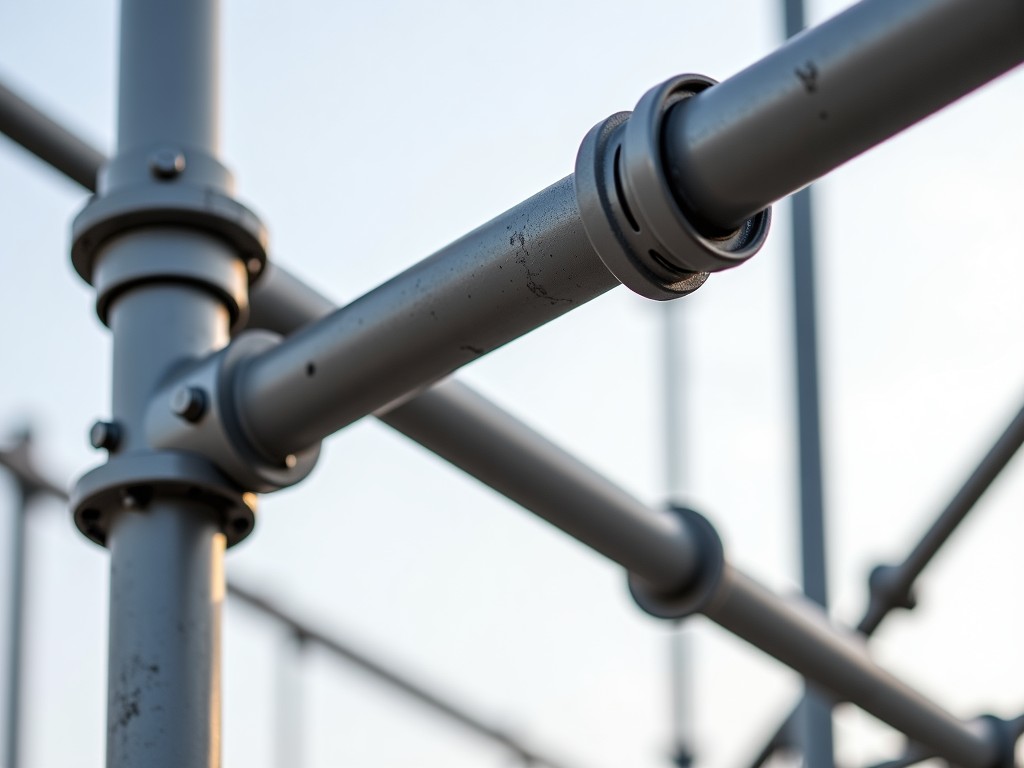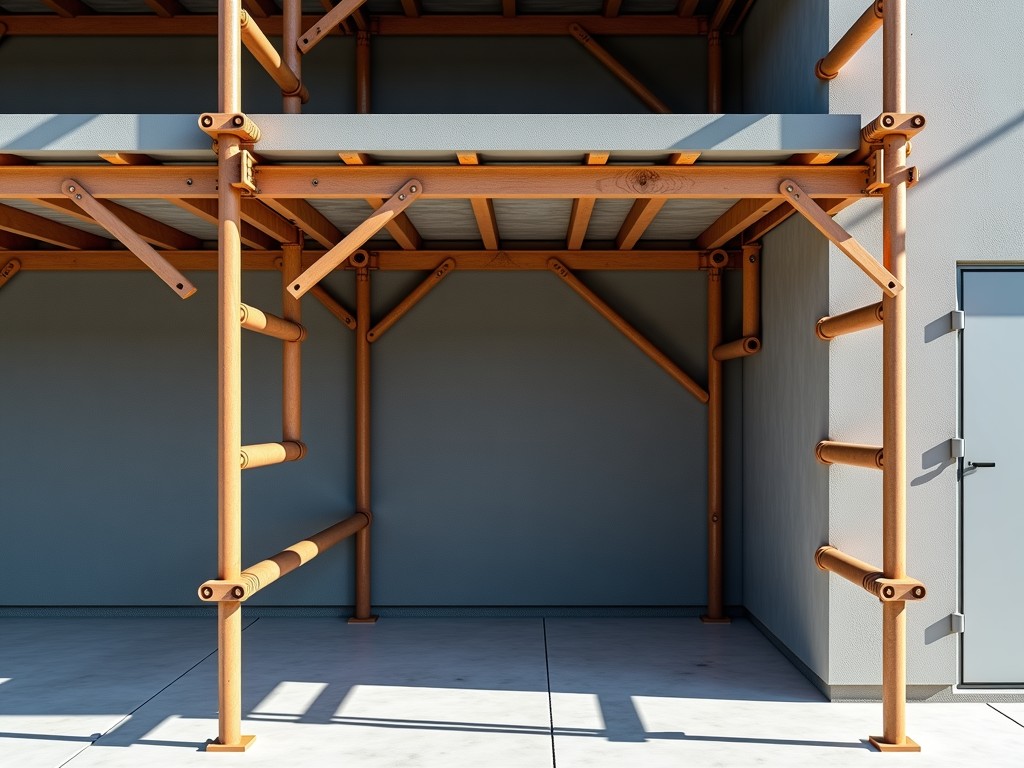
Shuttering jack steel props are adjustable vertical support systems used to transfer formwork loads safely to the ground or slab during concrete construction. They consist of a threaded inner tube, outer tube, base plate, top plate, and a pin-and-collar locking mechanism that allows precise height adjustment within a defined range.
Unlike fixed-length supports, steel props provide variable height adjustment, enabling contractors to accommodate uneven substrates, varying slab thicknesses, and multi-level pours without custom fabrication. This adaptability reduces material waste and on-site machining time.
Load capacity is determined by tube diameter, wall thickness, material grade, and extension length. Standard props are manufactured from cold-formed structural steel (S235JR or equivalent) with tubular sections designed to resist buckling under axial compression.
Adjustment range is achieved via a trapezoidal thread on the inner tube, engaged by a crank handle or spanner. Each full thread revolution typically provides 3–5 mm of vertical movement, allowing fine-tuned elevation control. The pin-and-collar mechanism secures the set height against accidental disengagement under vibration or load reversal.
| Parameter | Typical Value | Notes |
|---|---|---|
| Outer Tube Diameter | 48.3 mm | Nominal size; varies by model |
| Inner Tube Diameter | 42.4 mm | Ensures concentric guidance |
| Wall Thickness | 2.5–3.2 mm | Dependent on load class |
| Adjustment Range | 1.0–3.5 m | Model-dependent; custom lengths available |
| Safe Working Load (SWL) | 20–40 kN | At mid-extension; decreases with height |
| Thread Pitch | 5 mm/rev | Trapezoidal thread for self-locking |
| Base/Top Plate Size | 120×120 mm | With drainage holes; optional ribbing |
Tube sections are typically produced via electric resistance welding (ERW) from hot-rolled or cold-rolled steel strip. Wall thickness tolerance is maintained within ±0.2 mm to ensure consistent buckling resistance. Threads are rolled, not cut, to improve fatigue strength and surface hardness.
Base and top plates are stamped from low-carbon steel sheet, then welded to the tube ends using semi-automatic MIG/MAG processes. Weld penetration is verified via visual inspection and spot radiography on sample batches to detect lack of fusion or porosity.
Surface treatment options include hot-dip galvanizing (minimum 55 μm zinc coating per EN ISO 1461) or powder coating (typically 60–80 μm epoxy-polyester). Galvanizing provides sacrificial protection in humid or alkaline environments; powder coating offers UV resistance and color coding for site identification.
The threaded inner tube engages with a forged steel collar containing a hardened acme thread. Rotation of the collar (via handle or wrench) translates into linear motion. A spring-loaded pin passes through aligned holes in the inner and outer tubes to lock the assembly at the desired height, preventing back-drive under load.
To prevent accidental pin removal, some designs incorporate a captive pin tethered to the collar via a short chain. Over-rotation protection is achieved through a mechanical stop that limits thread engagement, preventing the inner tube from being ejected from the outer tube.
Load indicators — such as graduated scales or color-coded rings — may be added to the outer tube to visually approximate extension length, aiding in rapid setup and compliance checks.
Shuttering jacks are primarily used to support horizontal formwork for suspended slabs, beams, and crawl spaces where the soffit must be held at a precise elevation during concrete placement and curing. They transfer wet concrete, formwork, and live loads vertically to the ground or to a previously cured slab.
In high-rise construction, stacks of props are used with timber or steel beams to create falsework systems that can be jumped upward as each floor is completed. Their adjustability allows compensation for creep and elastic shortening in the permanent structure, maintaining correct geometry.
For renovation or shoring applications, steel props stabilize weakened walls, temporarily support openings during lintel replacement, or bear the load of damaged floors. Their modular nature allows rapid deployment in confined spaces where crane access is limited.
Dimensional inspection verifies tube straightness (typically <0.5% deviation over length), thread pitch accuracy, and plate flatness. Mechanical properties are validated through tensile and yield strength tests on material samples from each production batch.
Load testing is performed on a sample basis using hydraulic jacks to apply incremental axial loads until deformation or slip occurs. Results are compared against the rated SWL with a minimum safety factor of 1.5–2.0, depending on regional standards (e.g., EN 1065, ANSI/ASSE A10.8).
Functional tests include thread operation smoothness (measured torque per revolution), pin engagement reliability under vibration, and corrosion resistance via salt spray testing (typically 240+ hours for coated samples). Non-conforming units are segregated and reworked or scrapped.
While standard configurations cover most general contracting needs, certain projects benefit from tailored adjustments. Length, load capacity, and interface details can be modified based on slab thickness, access constraints, or integration with proprietary formwork systems.
Thread direction (left- or right-hand) may be specified to prevent accidental loosening under specific vibration patterns. Top plates can be furnished with U-heads, fork heads, or threaded adapters to connect to timber beams, steel walers, or clamp assemblies.
Base plates are available with screw jacks for slope compensation, spur plates for attachment to soft ground, or wheels for mobile shoring towers. Surface treatments can be upgraded to zinc-nickel alloy or duplex systems for marine or industrial environments.
Props are typically bundled in hexagonal or round steel straps for efficient handling with forklifts or cranes. Standard bundles contain 25–50 units, depending on length and weight, to optimize container utilization. Each bundle is tagged with heat numbers, model codes, and QC inspection stamps.
For export shipments, bundles are placed on fumigated pallets and secured with polyolefin strapping. Corner protectors prevent strap damage to the galvanized coating. Weather-resistant covers (PE film or woven polypropylene) are used when required by destination climate or port storage conditions.
Inner components (handles, pins, collars) may be packed separately in labeled cartons to prevent loss during transit. Custom packaging — such as reusable metal crates or VCI-treated wraps — is available upon request for long-term storage or high-humidity environments.