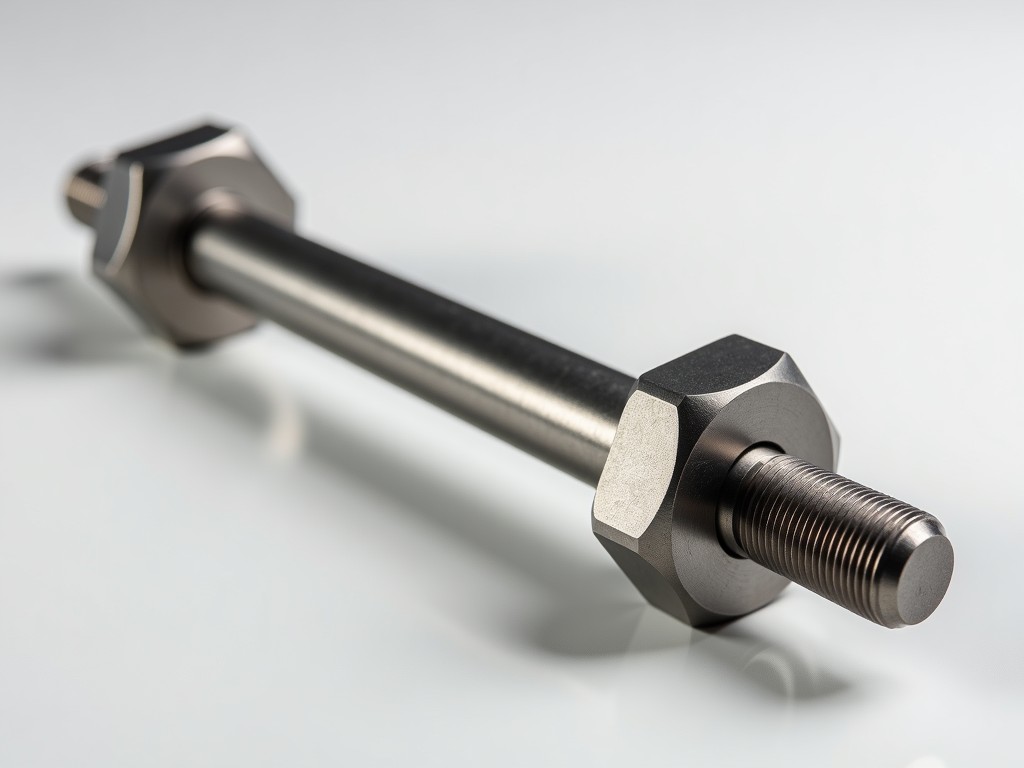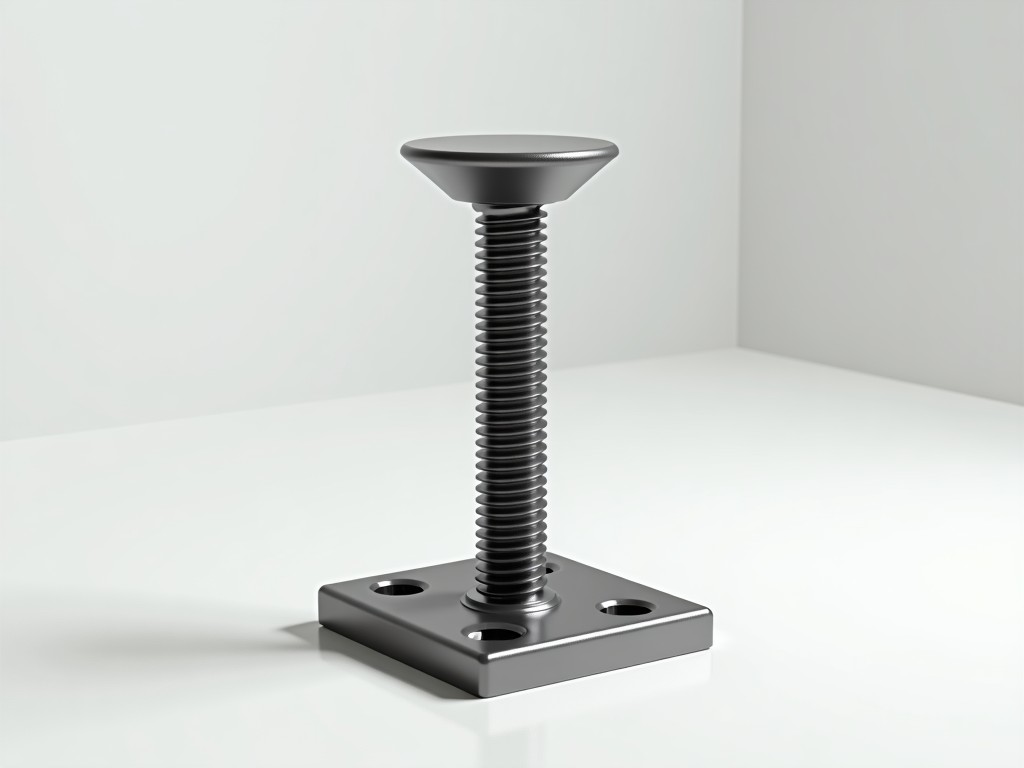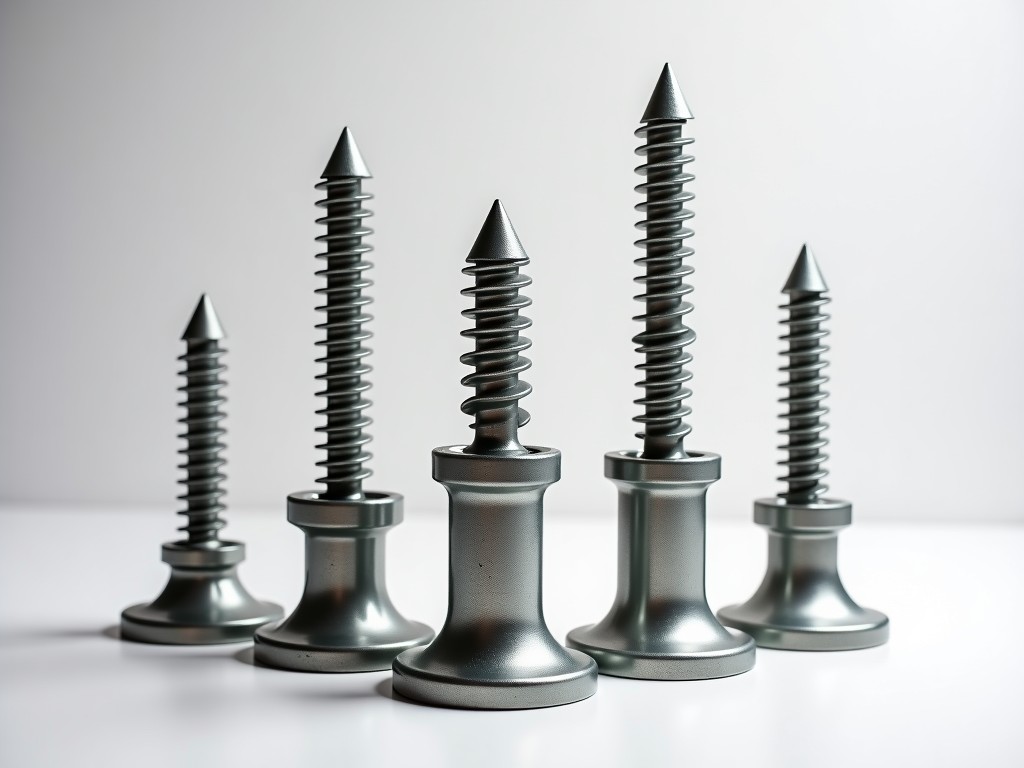
Shoring screw jacks are mechanical lifting devices designed to provide temporary vertical support in construction, renovation, and industrial applications. They consist of a threaded steel rod, a base plate, a top plate, and a handle or nut for manual adjustment. Unlike hydraulic systems, they operate through pure mechanical advantage, offering predictable load paths and zero risk of fluid leakage. Their simplicity allows for precise height control in millimeter increments, making them ideal for applications requiring staged load transfer or fine-tuned alignment.
The core function of a shoring screw jack is to resist compressive loads while allowing controlled vertical displacement. Load capacity is determined by the thread diameter, material grade, and effective bearing area of the top and base plates. Most standard models are engineered for axial loads between 20 kN and 500 kN, with safety factors typically ranging from 3:1 to 5:1 depending on the application code (e.g., OSHA, EN 1065, or local building regulations). Buckling resistance is critical; therefore, the unsupported length of the screw must be evaluated against Euler’s formula, particularly in tall configurations where lateral stability becomes a design driver.
The mechanical efficiency of a screw jack depends on the lead angle of the thread and the coefficient of friction between the nut and screw. Acme or trapezoidal threads are commonly used due to their balance of strength, wear resistance, and ease of manufacturing. A typical 20 mm diameter Acme thread with 4 mm pitch requires approximately 25 Nm of input torque to lift a 20 kN load under lubricated conditions. This torque value increases linearly with load and is unaffected by temperature extremes, unlike hydraulic systems whose viscosity changes with ambient conditions.
Material selection directly impacts durability and environmental suitability. The screw and nut are typically made from medium-carbon steel (e.g., C45 or 1045) hardened to HRC 22–28 for wear resistance, while the base and top plates are often fabricated from structural steel (S235JR or A36) with a minimum thickness of 8 mm to prevent local yielding under point loads. For corrosive environments—such as marine applications or chemical plants—hot-dip galvanization or epoxy coating is applied to all exposed surfaces. Stainless steel variants (AISI 304 or 316) are available upon request for hygienic or chloride-rich settings.
| Parameter | Typical Range | Notes |
|---|---|---|
| Screw Diameter | 16 mm – 42 mm | Determines axial capacity and buckling resistance |
| Thread Pitch | 3 mm – 6 mm | Affects lift speed per revolution and mechanical advantage |
| Max Static Load | 20 kN – 500 kN | Based on material strength and safety factor (typically 4:1) |
| Adjustable Height Range | 300 mm – 1200 mm | Custom lengths available; longer screws require intermediate bracing |
| Operating Temperature | -20°C to +80°C | Standard coating; extended ranges require special lubricants |
| Surface Treatment | Hot-dip galvanized, epoxy powder coat, or bare steel | Selected based on exposure conditions and maintenance protocol |
In concrete formwork systems, shoring screw jacks are used to support slab and beam molds during pouring and curing. Their ability to maintain constant pressure despite concrete shrinkage or thermal expansion prevents voids and ensures dimensional accuracy. Unlike fixed-height props, screw jacks allow incremental load release during stripping, reducing the risk of sudden deflection or cracking in green concrete. This controlled release is particularly valuable in post-tensioned or high-rise slab construction where differential settlement must be minimized.
During building renovation or structural retrofitting, these jacks serve as temporary load paths when removing load-bearing walls or columns. Engineers install them to transfer floor or roof loads to adjacent stable structures while work proceeds underneath. The precision adjustment enables millimeter-level alignment with existing structural elements, ensuring that the temporary system does not induce secondary stresses. In seismic retrofit projects, they are often used to support floors while base isolators or new shear walls are installed at the ground level.
In industrial maintenance, shoring screw jacks support heavy machinery during foundation repairs, alignment procedures, or component replacement. For example, when replacing a large motor base or realigning a conveyor drive, the jack provides stable, non-yielding support that maintains equipment position within tolerances. Their mechanical nature means they do not drift under vibration—a common issue with pneumatic or hydraulic supports—and require no external power source, making them suitable for remote or hazardous locations where electricity or compressed air is unavailable.
While standard configurations cover most general construction needs, project-specific requirements often necessitate modifications. The screw length can be adjusted to match the required working range, with longer versions available up to 2 meters for deep pit or tunnel applications. However, lengths exceeding 1.5 times the screw diameter typically require additional lateral bracing or guide tubes to prevent buckling under eccentric loads. Base and top plates can be enlarged or fitted with welded lugs to accommodate timber beams, steel sections, or concrete transfer beams, depending on the load distribution method.
Handle types vary based on operational preferences and site conditions. A standard T-handle provides adequate leverage for manual operation, while a ratchet handle allows incremental tightening without repositioning the grip—useful in confined spaces. For high-cycle applications or where operator fatigue is a concern, a socket-driven version compatible with impact wrenches or torque wrenches is available. Lubrication points can be added to the nut interface to reduce wear and maintain consistent torque characteristics over thousands of cycles.
Optional features include load-indicating washers that provide visual confirmation of preload, swivel-top plates to accommodate non-perpendicular loading surfaces, and threaded extensions for use in stacked configurations. All customizations are subject to engineering review to ensure that modifications do not compromise the rated load capacity or stability characteristics. Drawings and calculations are provided upon request for critical applications.
Each shoring screw jack undergoes dimensional inspection of critical features: thread pitch diameter, lead angle, and straightness of the screw shaft. The nut is checked for proper engagement and backlash, which must remain below 0.15 mm to ensure precise adjustment. Base and top plates are verified for flatness and perpendicularity to the screw axis, as any angular deviation can induce bending stresses in the screw under load. These checks are performed using calibrated gauges and coordinate measuring machines (CMMs) where applicable.
Load testing is conducted on a sampling basis per production batch. Samples are subjected to incremental static loads up to 125% of the rated capacity, with hold times of 10 minutes at each step to detect creep or permanent deformation. After unloading, residual set is measured; acceptable limits are typically less than 0.2% of the original length. Thread wear is assessed after 500 cycles of loading and unloading under lubricated conditions. Surface coating adhesion and thickness are verified using pull-off tests and magnetic gauges to ensure corrosion protection meets ISO 12944 or equivalent standards.
Traceability is maintained through batch numbers etched or stamped on each component. Material test certificates (MTCs) for the steel used in screws, nuts, and plates are available upon request. While third-party certifications such as CE marking or ISO 9001 compliance are common for manufacturers, the product’s suitability for a specific application ultimately depends on the user’s risk assessment and adherence to local safety codes. Users are advised to consult structural engineers when deploying screw jacks in life-safety or permanent support scenarios.