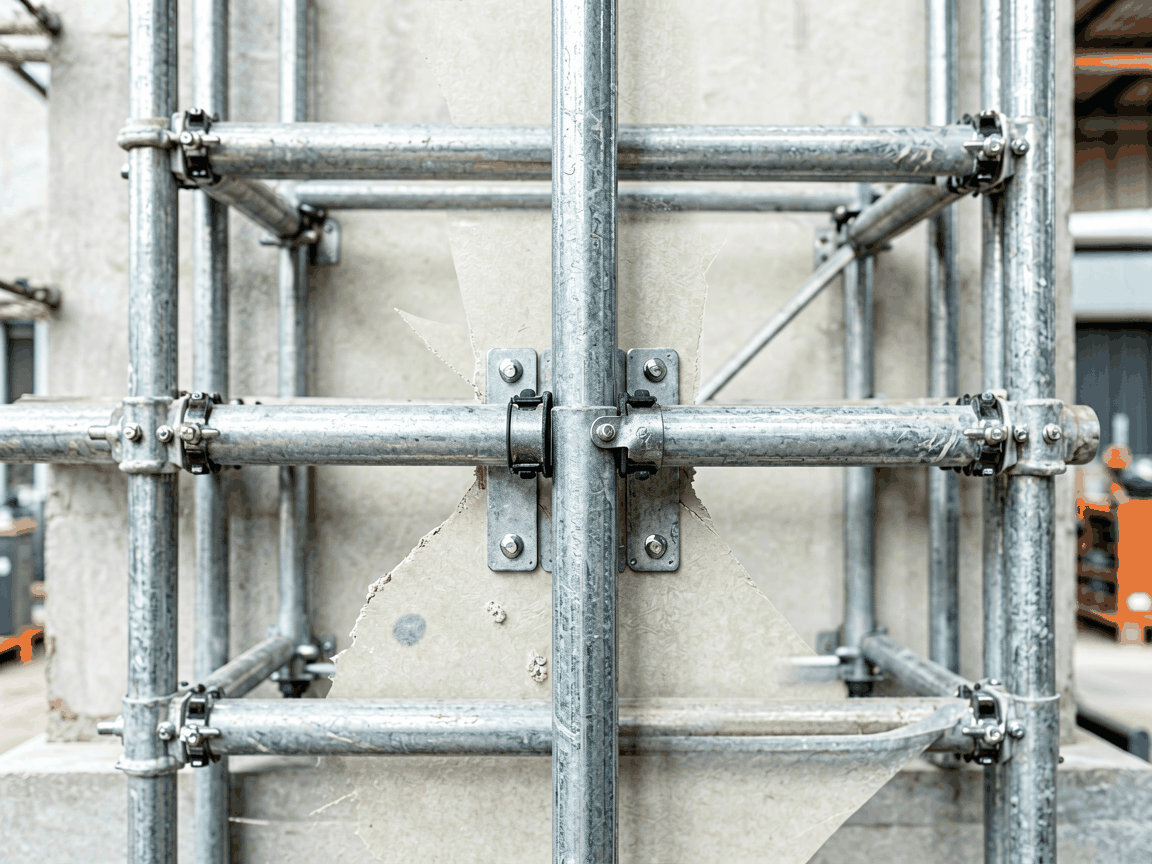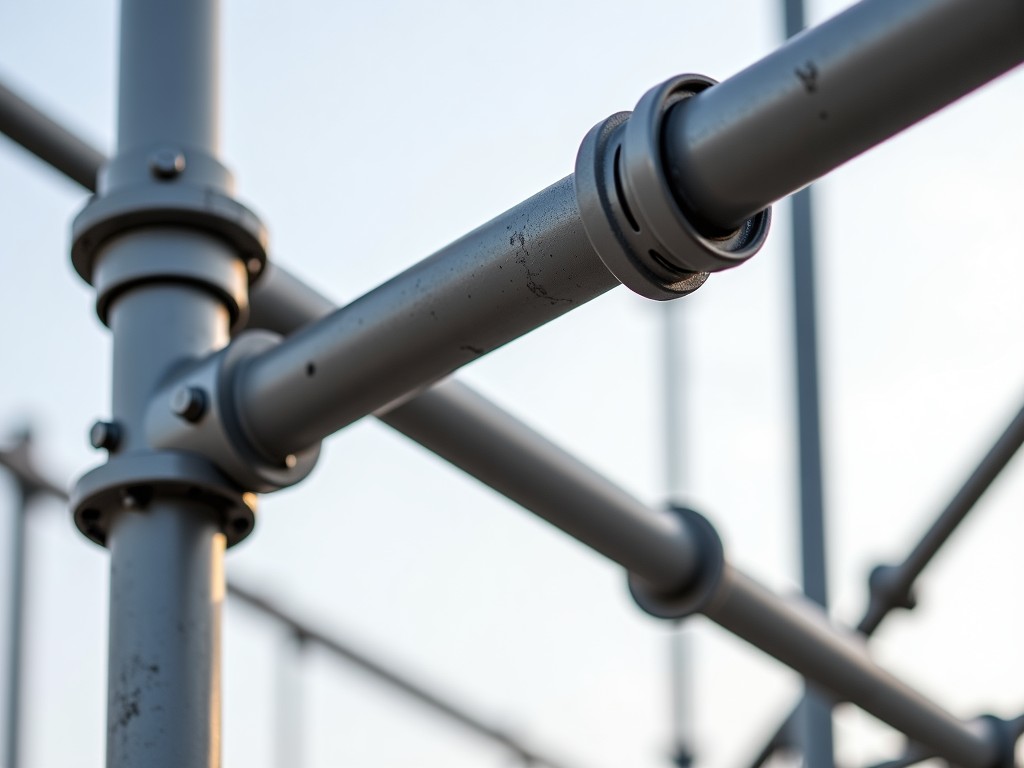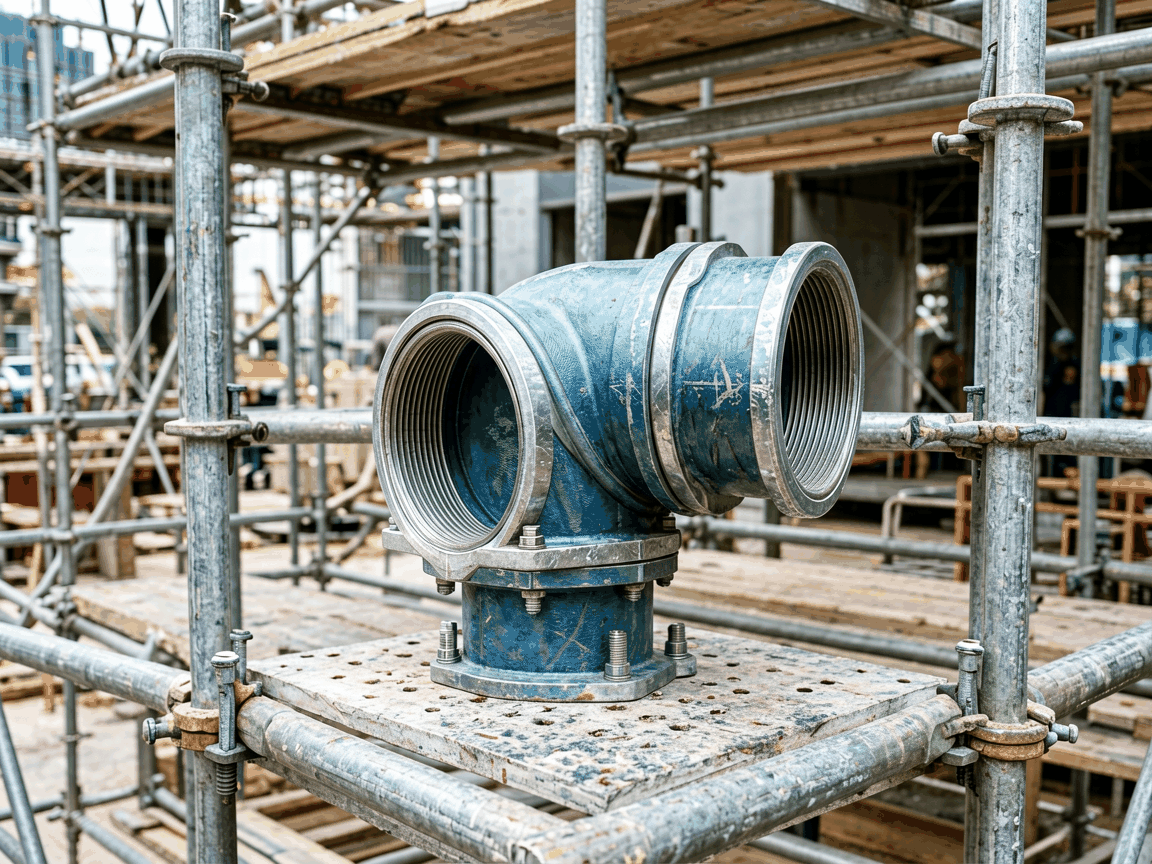
A scaffolding right angle coupler swivel is a critical connection component used to join two scaffold tubes at a 90-degree angle while allowing rotational adjustment. Unlike fixed right angle couplers, the swivel variant enables precise alignment of tubes in three-dimensional space, accommodating minor deviations in erection geometry without forcing tube deformation. This flexibility reduces installation time and minimizes stress on both the coupler and connected tubes.
The swivel mechanism typically consists of a central pivot pin or ball joint housed within a forged steel body, allowing one arm to rotate relative to the other while maintaining structural integrity under load. This design is particularly valuable in complex scaffolding systems where tubes must intersect at non-standard angles due to building façades, equipment obstructions, or irregular structural layouts.
Industrial buyers prioritize swivel couplers for applications requiring adaptability, such as suspended scaffolds, birdcage scaffolds, and shoring systems where exact 90-degree alignment is difficult to achieve due to site constraints. The ability to rotate under load also facilitates easier disassembly and reconfiguration during project phases.
The body of a scaffolding right angle coupler swivel is typically manufactured from hot-forged carbon steel, commonly grades such as Q235 or S275JR, selected for their balance of tensile strength, ductility, and resistance to fatigue under cyclic loading. Forging aligns the grain structure, enhancing mechanical properties compared to cast or machined alternatives, particularly in high-stress zones around the bolt holes and swivel joint.
The swivel mechanism incorporates hardened steel pivot pins or bushings, often surface-treated via carburizing or nitriding to improve wear resistance where rotational movement occurs. These components are designed to maintain smooth operation even after prolonged exposure to dirt, moisture, and debris common on construction sites.
Surface protection is applied through hot-dip galvanizing per ISO 1461 or equivalent standards, providing a zinc coating thickness of typically 55–85 μm to inhibit corrosion in outdoor environments. Alternative finishes such as powder coating or electro-galvanizing may be offered upon request for specific aesthetic or environmental requirements.
The load-bearing capacity of a scaffolding right angle coupler swivel is determined by the shear and tensile strength of the forged body, the bolt grade used for clamping, and the integrity of the swivel joint under combined axial and lateral forces. Typical safe working loads (SWL) for standard 48.3 mm OD tube couplers range from 6.2 kN to 8.5 kN per coupler when tested per EN 74 or ANSI/ASSE A10.8 standards, depending on bolt torque and tube interface condition.
Rotational resistance in the swivel joint is engineered to allow manual adjustment under no-load conditions while maintaining positional stability under design loads. Excessive play or looseness in the swivel mechanism can indicate wear or deformation and should be inspected regularly. Torque specifications for the clamping bolts are typically provided by the manufacturer, often in the range of 50–70 Nm for M12 bolts, to ensure adequate frictional grip without overstressing the tube.
Fatigue performance is a key consideration in long-term use; swivel couplers are subjected to repeated load cycles during erection, use, and dismantling. The forged construction and proper heat treatment of critical zones help mitigate crack initiation, particularly at stress concentrators such as bolt hole edges and the swivel pivot point.
Scaffolding right angle coupler swivels are designed to interface with standard scaffold tubes, most commonly 48.3 mm outer diameter (OD) steel tubes with a wall thickness ranging from 3.2 mm to 4.0 mm. The internal jaw dimensions are precision-machined or forged to provide a snug fit that maximizes contact area and minimizes tube deformation under clamping force.
Compatibility with other tube sizes, such as 42.4 mm OD or 60.3 mm OD, is available upon request but requires custom jaw profiling and may affect load ratings. The swivel arm length and bolt center-to-center distance are standardized to match common scaffold bay dimensions, typically ranging from 180 mm to 220 mm depending on the design, to ensure interchangeability with other system components.
The clamping mechanism usually employs two M12 or M16 hex bolts with nuts and washers, arranged to apply even pressure across the tube surface. Some designs incorporate anti-slip features such as knurled jaws or serrated contact surfaces to enhance grip, particularly on galvanized or painted tubes where friction coefficients may be lower.
The primary advantage of a swivel right angle coupler lies in its ability to compensate for angular misalignment during scaffold erection, which is frequent in retrofitting, renovation, and complex geometric structures. For example, when scaffolding must follow the contour of a curved building façade or navigate around protruding HVAC units, the swivel allows tubes to meet at a true 90-degree structural angle while the coupler body rotates to match the actual tube orientation.
In shoring and formwork systems, swivel couplers enable the construction of angled support frames where vertical posts must connect to horizontal beams at non-perpendicular angles due to sloping foundations or uneven terrain. This eliminates the need for custom-fabricated brackets or angled adapters, reducing both material cost and lead time.
Suspended scaffolds, particularly those used for facade maintenance or window installation, benefit from swivel couplers at junction points where suspension ropes or tie-backs introduce lateral forces that can shift tube alignment. The rotational capacity allows the system to self-adjust under load, maintaining stability without inducing bending moments in the tubes.
| Characteristic | Swivel Right Angle Coupler | Fixed Right Angle Coupler |
|---|---|---|
| Angular Adjustment | Full 360° rotation capability | Fixed 90° angle only |
| Installation Flexibility | High – accommodates tube misalignment | Low – requires precise tube positioning |
| Load Capacity (Typical) | 6.2–8.5 kN SWL | 6.5–9.0 kN SWL |
| Rotational Play Under Load | Minimal – designed to lock under load | N/A – no rotation |
| Preferred Use Case | Complex façades, shoring, suspended scaffolds | Standard birdcage, facade scaffolds with regular grids |
| Inspection Focus | Swivel joint wear, bolt torque, corrosion | Bolt torque, jaw deformation, corrosion |
Note: Values are typical ranges; actual performance depends on tube condition, bolt torque, and environmental factors. Always refer to manufacturer specifications and local safety regulations.
Manufacturing quality control begins with material verification, including mill test certificates for the forged steel bodies and mechanical testing of sample couplers for tensile strength, yield strength, and elongation. Dimensional inspections are conducted using calibrated gauges to ensure jaw dimensions, bolt hole positions, and swivel axis alignment meet tolerances, typically within ±0.5 mm for critical interfaces.
Load testing is performed on representative samples to validate safe working load ratings, often conducted to 2.5 times the rated SWL to confirm ultimate strength. Swivel torque resistance is measured to ensure the joint offers sufficient resistance to unintended rotation under load while allowing manual adjustment when unloaded. Surface coating thickness and adhesion are verified per ISO 1461 and ASTM D1186 for galvanized finishes.
Non-destructive testing methods such as magnetic particle inspection may be applied to detect surface or near-surface cracks in high-stress areas, particularly after forging or heat treatment. Final inspection includes functional verification of the swivel movement, bolt thread integrity, and absence of burrs or sharp edges that could compromise safety or damage tubes during handling.
While standard scaffolding right angle coupler swivels are designed for 48.3 mm OD tubes, customization is available for non-standard tube sizes, such as 42.4 mm, 50.8 mm, or 60.3 mm OD, to accommodate specialized scaffolding systems or regional material variations. Jaw profiles can be adjusted to match specific tube ovality or wall thickness tolerances.
Bolt sizes and grades can be modified based on project requirements—for example, upgrading to M16 high-tensile bolts for increased clamping force in high-load applications, or using stainless steel fasteners in corrosive environments. The swivel mechanism can also be tailored for increased rotational resistance or modified stop pins to limit rotation to a specific angular range if required for structural stability.
Surface finishes beyond standard hot-dip galvanizing include thermoplastic coatings for enhanced UV resistance, epoxy primers for offshore or marine environments, or color-coding for site identification. Packaging options range from bulk palletizing to individual corrosion-protected sleeves with desiccant, depending on shipment duration and storage conditions.
For technical inquiries, material certifications, or to discuss project-specific requirements for scaffolding right angle coupler swivels, please contact our engineering team.
Request Technical Specification