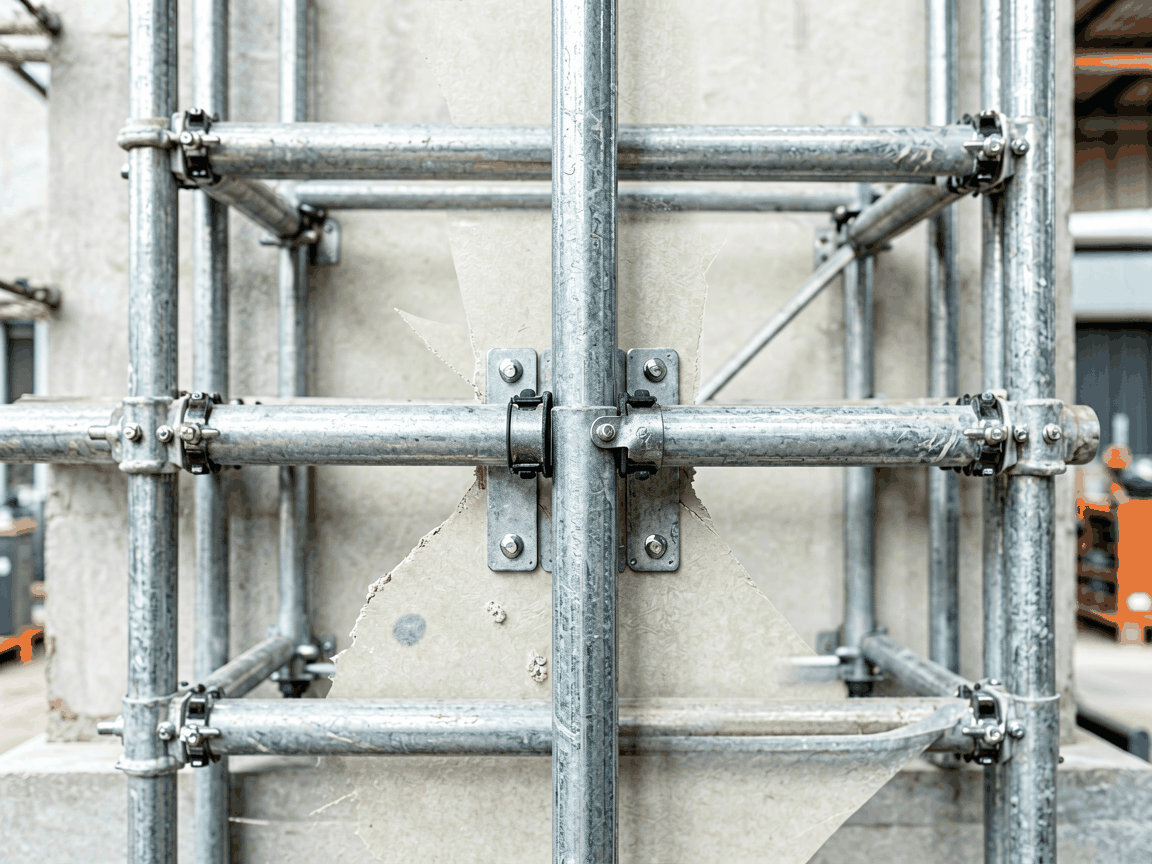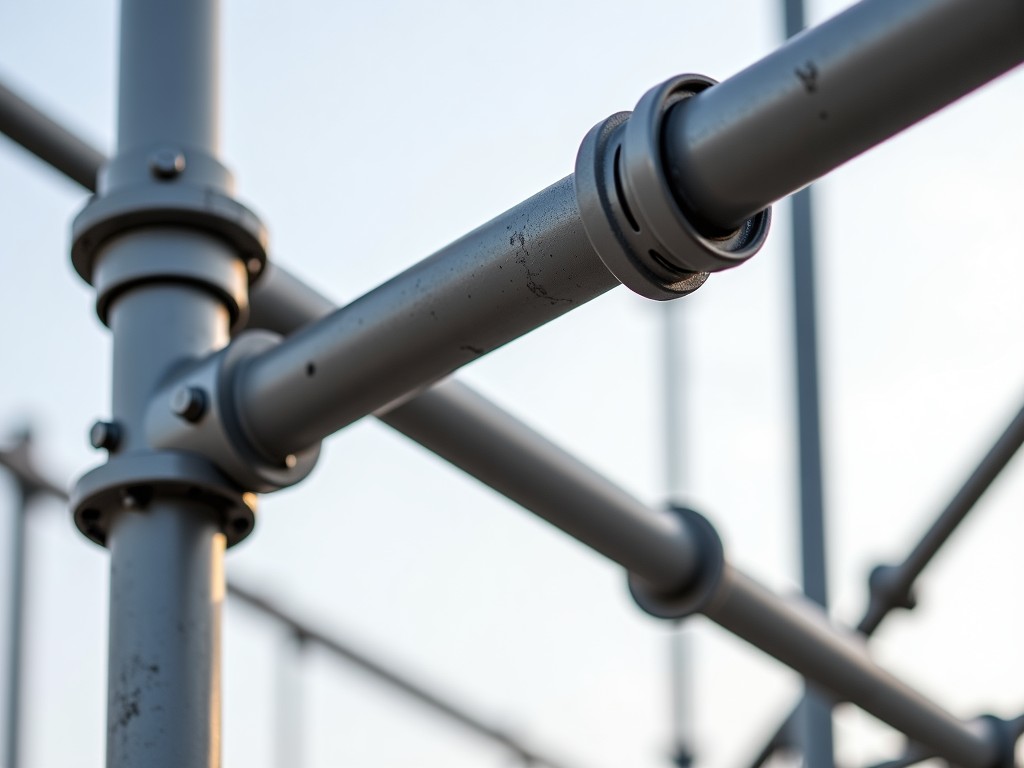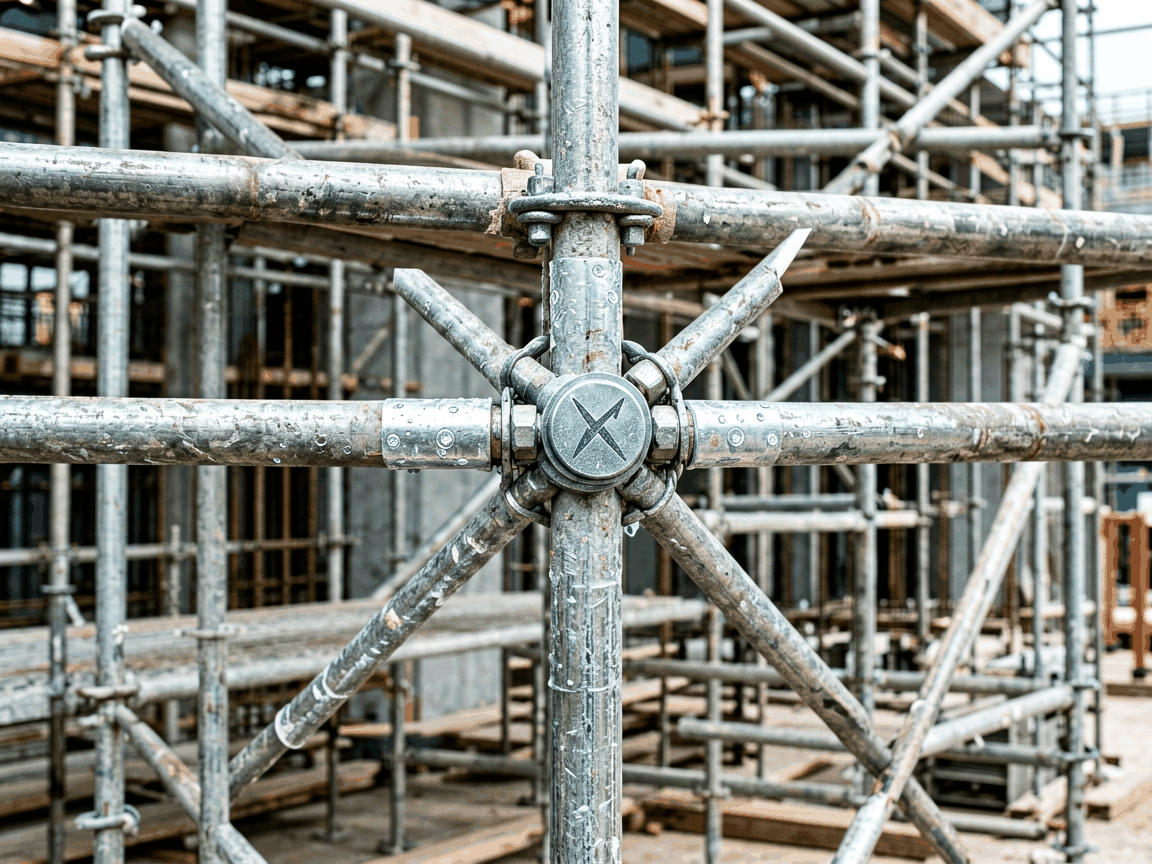
Scaffolding joint pins are critical load-transfer components that connect vertical standards and ledgers in modular scaffolding systems. Their dimensional accuracy, material grade, and surface treatment directly influence structural integrity, assembly speed, and long-term reusability. This page details the technical specifications and pricing variables for standard and custom joint pins used in tube-and-coupler, frame, and system scaffolding applications.
Joint pins are manufactured from hot-rolled carbon steel bars conforming to EN 10083-2 or ASTM A29 grades, typically C45 or 1045, selected for their hardenability and tensile strength consistency. After machining, pins undergo quenching and tempering to achieve a core hardness of 28–34 HRC, ensuring resistance to shear deformation under cyclic loading. Surface carburizing may be applied to high-wear variants to increase case depth to 0.8–1.2 mm with surface hardness exceeding 55 HRC.
Tensile strength ranges from 600–800 MPa depending on heat treatment cycle, with elongation maintained above 14% to prevent brittle failure. These properties are verified per batch via tensile testing and hardness mapping, with mill test certificates available upon request. Alternative materials such as stainless steel (AISI 304 or 316) are available for corrosive environments, though they reduce shear capacity by approximately 18–22% compared to quenched-and-tempered carbon steel.
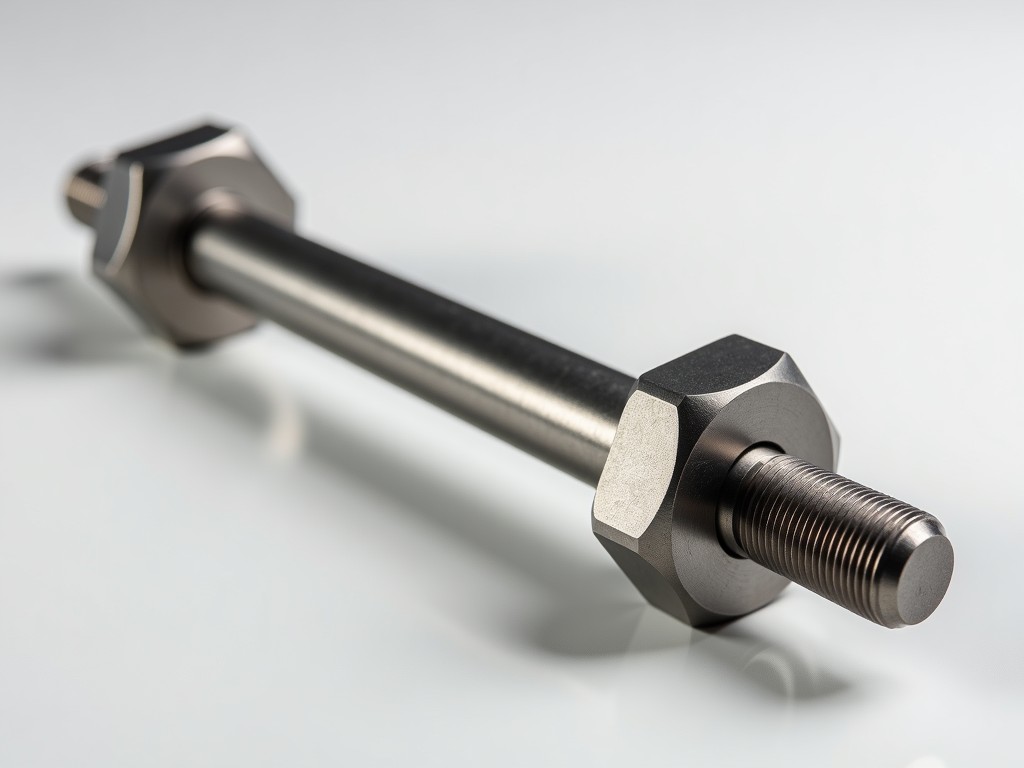
Standard joint pins for scaffolding systems follow ISO 10816 or EN 74-2 specifications, with nominal diameters of 16 mm, 19 mm, or 22 mm corresponding to tube inner diameters of 48.3 mm, 51 mm, and 60.3 mm. Length varies by coupling type: 65–75 mm for spigot pins in frame scaffolding, 90–110 mm for pin-and-collar connections in system scaffolding, and 45–55 mm for brace-to-standard pins in shoring towers.
Machined tolerances are held to ±0.1 mm on diameter and ±0.5 mm on length to ensure proper interference fit without galling during repeated assembly/disassembly. Chamfer angles of 15°–20° on both ends facilitate alignment, while undercut grooves (if present) are maintained within ±0.2 mm width to retain locking clips or cotter pins. Custom lengths, stepped diameters, or threaded ends are available for specialized formwork or suspended scaffolding adaptations.
Uncoated pins are supplied with a light oil preservative for short-term storage but require field application of protective coatings in outdoor environments. Standard hot-dip galvanizing per EN ISO 1461 provides a zinc coating thickness of 55–85 µm, offering 5–7 years of maintenance-free service in C3 urban atmospheres. For marine or industrial zones (C4–C5), zinc-nickel alloy plating (12–15 µm) or duplex systems (galvanized + epoxy primer) are recommended to extend service life beyond 10 years.
Mechanical plating (zinc flake) is available for applications requiring hydrogen embrittlement resistance, particularly in high-strength pins (>800 MPa tensile). All coatings are tested for adhesion (cross-hatch per ASTM D3359) and thickness (magnetic induction per ISO 2178), with test reports included in shipment documentation. Painted finishes (RAL colors) are available upon request for visibility coding but add no corrosion benefit and are not recommended for structural pins.
| Specification | Typical Price Range (USD per unit) | Minimum Order Quantity |
|---|---|---|
| Carbon steel, Ø16mm × 70mm, hot-dip galvanized | $0.85–$1.20 | 5,000 pcs |
| Carbon steel, Ø19mm × 90mm, hot-dip galvanized | $1.10–$1.50 | 3,000 pcs |
| Carbon steel, Ø22mm × 100mm, hot-dip galvanized | $1.40–$1.90 | 2,000 pcs |
| Stainless steel (AISI 304), Ø19mm × 90mm, passivated | $2.80–$3.60 | 1,000 pcs |
| Custom length/threaded end, carbon steel, galvanized | Base price + $0.30–$0.70 | Depends on complexity |
Pricing is based on ex-works (EXW) factory loading and assumes standard packaging in bulk cartons (25 kg per carton, 40–60 pins per layer). Volume discounts apply incrementally: 5% for orders exceeding 50,000 units, 10% for 100,000+, and 15% for 250,000+ of the same specification. Tooling fees for non-standard diameters, lengths, or features (e.g., grooves, threads, flats) range from $150–$400 and are amortized over orders exceeding 10,000 units.
Raw material surcharges are adjusted monthly based on LME carbon steel scrap and ferronickel indices. Galvanizing costs fluctuate with zinc LME prices and are quoted separately for projects exceeding 6-month lead times. Stainless steel variants are subject to nickel and chromium alloy premiums, typically adding 120–180% to base carbon steel pricing. All prices exclude freight, insurance, import duties, and value-added tax.
Each production lot undergoes 100% dimensional inspection via automated gauging for diameter and length, with statistical process control (SPC) monitoring critical dimensions. Surface hardness is verified at three points per pin using Rockwell C testers on 5% sample size, with acceptance criteria of ±2 HRC from target. Visual inspection under 10x magnification checks for burrs, cracks, or tool marks, with reject rates maintained below 0.5% for critical dimensions.
Traceability is maintained via laser etching or ink jet marking on the pin head, containing heat treatment batch code, diameter code, and production date. Mill test certificates (EN 10204 3.1) are provided for material composition and mechanical properties, while coating thickness reports accompany galvanized batches. Third-party inspection (e.g., SGS, BV) is available upon request and adds approximately 8–12% to inspection costs.
Joint pins transfer axial and lateral loads between scaffolding components through bearing contact and shear resistance. In a standard 48.3 mm tube system with Ø19 mm pin, the theoretical shear capacity exceeds 25 kN per pin under static load, assuming full bearing engagement and material yield strength of 600 MPa. Real-world design values apply a factor of safety of 2.5–3.0, resulting in recommended working loads of 8–10 kN per connection.
Fatigue life is influenced by surface finish and stress concentration at grooves or threads. Pins with rolled threads or machined grooves exhibit 30–50% higher fatigue resistance than ground surfaces under cyclic loading (10⁵–10⁶ cycles) due to compressive residual stresses. For shoring and formwork applications where dynamic loads dominate, pins with undercut grooves and locking clips are preferred to prevent rotational slippage under vibration.
In suspended scaffolding or swing stages, joint pins are used to secure stirrups to suspension ropes or outriggers, where tensile loads dominate. Here, pins with threaded ends and nuts are standard, requiring proof load testing to 2× working load. Corrosion resistance becomes critical in these applications due to constant exposure and limited inspection access, making duplex-coated or stainless steel variants economically justified despite higher unit cost.