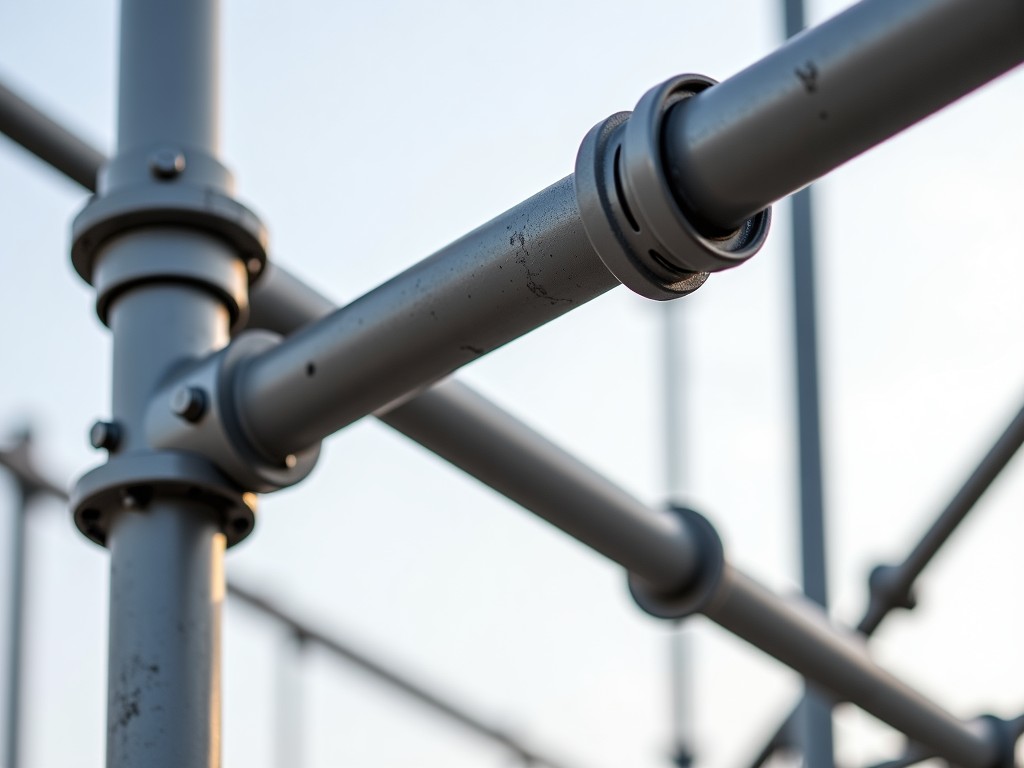
Understanding the cost of scaffolding half putlog couplers requires evaluating material specifications, manufacturing standards, and application-specific requirements. These components serve as critical connection points in tube-and-coupler scaffolding systems, securing transoms to standards at 90-degree angles. Pricing reflects not only raw material costs but also compliance with regional safety regulations, surface treatment durability, and batch consistency—factors that directly impact long-term project safety and lifecycle value.
Half putlog couplers are typically manufactured from hot-rolled structural steel grades such as S235JR or equivalent, selected for their balance of tensile strength (≥360 MPa) and ductility under cyclic loading. The forged body and pressed steel components are designed to resist deformation under service loads, with clamp jaws engineered to grip scaffold tubes (typically 48.3mm outer diameter) without slippage under a 6.25kN design load per BS EN 74:2005+A1:2009. Material thickness in critical stress zones—such as the web and tightening nut housing—is maintained at minimum 6mm to prevent localized yielding.
Surface protection significantly influences both cost and service life. Hot-dip galvanization per ISO 1461 provides a zinc coating thickness of 55μm minimum, offering corrosion resistance in humid or mildly aggressive environments for 15+ years. Alternatively, pre-galvanized steel or powder-coated finishes may reduce initial cost but require more frequent inspection in outdoor applications. The choice of finish directly affects total cost of ownership, particularly in coastal or industrial zones where chloride exposure accelerates degradation.
Dimensional accuracy is critical for coupler function. Internal jaw width must maintain 48.3mm ±0.5mm to ensure proper tube engagement without excessive play or installation force. The pivot bolt hole diameter is typically 14mm ±0.2mm to accommodate Grade 8.8 bolts while allowing controlled rotation during tightening. These tolerances are verified through statistical process control during forging and machining, with 100% dimensional inspection on first article and periodic sampling thereafter.
Load testing follows BS EN 74 Annex B procedures, where couplers are subjected to incremental loads until deformation or slip occurs. Acceptable performance requires no visible deformation at 6.25kN and a characteristic strength exceeding 15kN. Manufacturers maintain test records for each batch, linking serial or lot numbers to test certificates—a practice that supports traceability and reduces liability risk for contractors. Couplers failing to meet these criteria are rejected, directly affecting yield and unit cost.
Raw material volatility remains the largest variable in pricing. Steel scrap rates, energy costs for forging, and zinc prices for galvanization collectively account for 60–70% of unit cost. A 10% fluctuation in hot-rolled coil prices can shift coupler pricing by €0.15–0.25 per unit. Additionally, regional differences in labor rates and regulatory overhead (e.g., CE marking documentation, REACH compliance) contribute to price variations between manufacturers in Eastern Europe, Asia, and North America.
Order volume significantly impacts unit economics. Small batches (<500 units) incur higher per-unit costs due to setup time, tooling wear, and inspection overhead. Volume orders exceeding 5,000 units typically reduce unit price by 20–30% through optimized material handling, continuous furnace operation, and reduced inspection frequency per piece. Lead time also correlates with pricing: standard stock items ship in 5–7 days, while custom lengths or special coatings may extend delivery to 3–4 weeks and add a 15–25% premium.
| Specification | Typical Unit Price Range (EUR) | Conditions |
|---|---|---|
| Hot-dip galvanized, S235JR, 48.3mm | 0.85 – 1.20 | MOQ 1,000 units, ex-works |
| Pre-galvanized, S235JR, 48.3mm | 0.65 – 0.90 | MOQ 1,000 units, ex-works |
| Hot-dip galvanized, custom tube size | 1.10 – 1.60 | MOQ 2,000 units, tooling may apply |
| Stainless steel (AISI 304), passivated | 3.50 – 5.00 | MOQ 500 units, for corrosive environments |
These prices represent ex-works costs for standard configurations and exclude freight, duties, and value-added tax. Actual pricing depends on final specifications, delivery terms, and contractual agreements. For projects requiring certified test reports (EN 10204 3.1) or third-party inspection (e.g., SGS, Bureau Veritas), expect an additional 8–12% to cover documentation and testing overhead. Long-term framework agreements often lock in pricing for 12–24 months, mitigating raw material volatility.
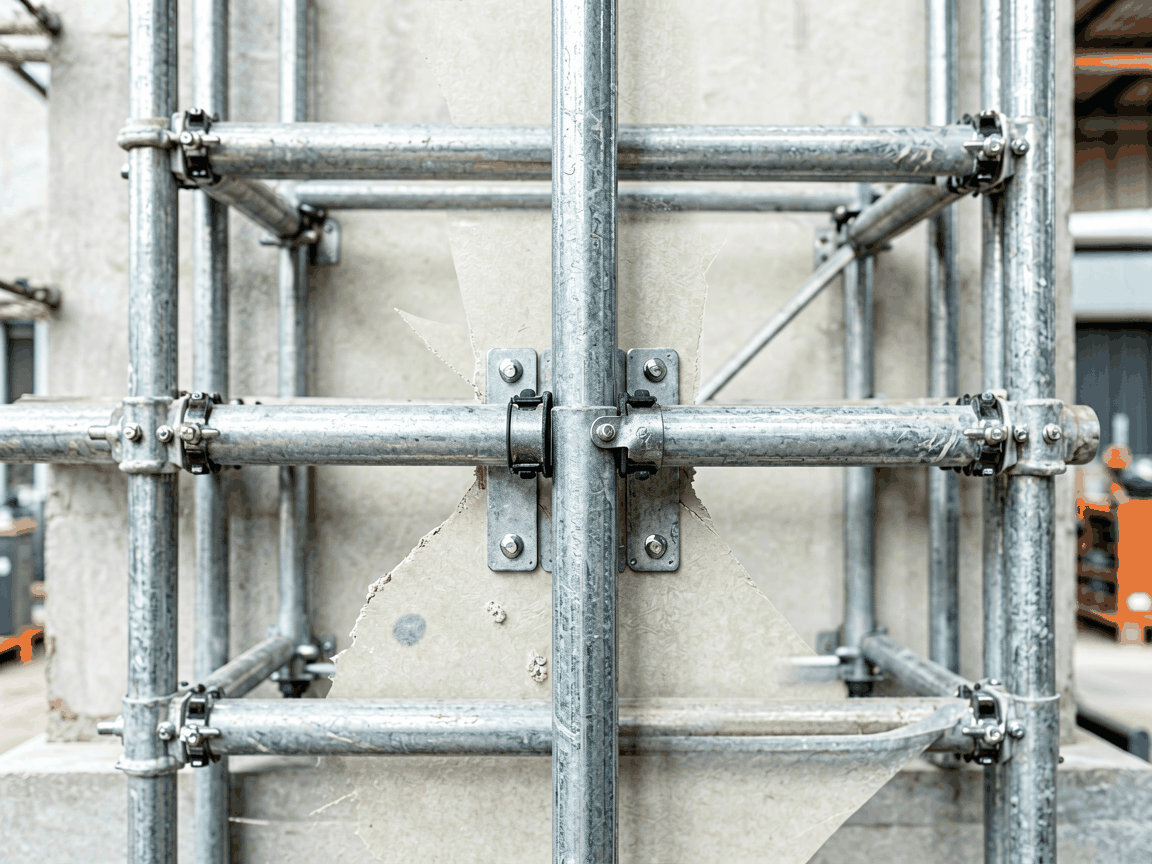
In facade scaffolding for residential construction, hot-dip galvanized half putlog couplers provide adequate corrosion resistance for typical 6–18 month project durations. Their cost-effectiveness makes them the default choice for low-rise developments where maintenance access is infrequent. However, in suspended access systems or renovation projects involving chemical cleaning (e.g., facade degreasing), the alkaline or acidic washdowns can degrade zinc coatings over time, necessitating powder-coated or stainless steel alternatives despite higher initial cost.
Industrial maintenance scaffolding in refineries or power plants often requires couplers with enhanced corrosion resistance due to exposure to sulfur compounds, chlorides, or thermal cycling. In these environments, the total cost of failure—including downtime, rework, and safety incidents—far exceeds the premium for stainless steel or duplex-grade couplers. Engineers should evaluate chloride concentration levels and temperature cycles when selecting materials, as ASTM G48 testing shows significant differences in pitting resistance between standard galvanized and 316L stainless steel in chloride-rich atmospheres.
Technical Inquiry
For project-specific pricing, material certification details, or lead time confirmation, contact our technical sales team. Provide scaffold tube diameter, required finish, quantity, and delivery location to receive an accurate quotation with applicable compliance documentation.
Request Quotation