Scaffolding drop lock pins are critical safety components used to secure modular scaffold frames, braces, and accessories by preventing unintended disengagement under load. These pins function: mechanical locking. Each pin consists of a hardened steel shaft, a spring-loaded detent mechanism, and a tethered retaining clip or lanyard to prevent loss during installation or removal. These components are designed to withstand repeated cyclic loading, corrosion exposure, and mechanical abuse common in construction environments. Material selection directly impacts service life and reliability under field conditions.
Standard drop lock pins are manufactured from AISI 4140 or 8620 alloy steel, chosen for its high tensile strength, toughness, and hardenability. After forging, pins undergo quenching and tempering to achieve a core hardness of 38–42 HRC, with surface induction hardening to 50–55 HRC on the shaft and locking lugs. This dual-hardness design resists deformation under shear loads while maintaining ductility to absorb impact forces. The spring detent is typically made from music wire (ASTM A228) or stainless steel (302) for consistent rebound force and corrosion resistance. Surface treatments include zinc plating (minimum 8µm thickness) or mechanical galvanizing to meet ASTM B633 Type II specifications for atmospheric corrosion protection.
Drop lock pins are engineered to match specific scaffold tube diameters and collar geometries defined by international standards such as EN 74, BS 1139, and ANSI/ASSE A10.8. Common shaft diameters range from 16mm to 22mm, with locking lugs positioned to engage recesses in scaffold couplers or frame brackets. The pin’s overall length—typically between 75mm and 120mm—is calibrated to ensure full engagement while allowing manual insertion and removal with gloved hands. Tether length varies from 150mm to 300mm, constructed from UV-stabilized polypropylene or stainless steel cable to prevent pin loss without interfering with adjacent components. Compatibility must be verified against the scaffold system’s technical datasheet before procurement.
The primary load path in a drop lock pin transfers shear forces from the scaffold tube to the locking lugs, which resist radial displacement. Finite analysis shows peak stress concentrations at the lug root and shaft transition zone under off-axis loading. Minimum shear strength is rated at 25 kN for 16mm pins and 40 kN for 20mm variants, based on material yield strength and cross-sectional area. Manufacturers apply a minimum safety factor of 4:1 against static failure, meaning the pin must withstand 100 kN (16mm) or 160 kN (20mm) before yielding. Dynamic load testing includes 10,000 cycles at 60% of rated capacity to verify fatigue resistance. These values are derived from material specifications and geometric calculations, not batch testing of every unit.
Construction sites expose drop lock pins to moisture, chlorides, alkaline cleaners, and ultraviolet radiation. Zinc-plated pins provide sacrificial protection in mild environments, with white rust appearing after 96 hours salt spray exposure (ASTM B117) and red rust after 200 hours. For marine, industrial, or high-humidity applications, hot-dip galvanizing (minimum 55µm coating) or stainless steel (304/316) options are available. Stainless variants eliminate coating degradation risks but increase cost by 40–60%. Tether materials are selected to match environmental exposure: polypropylene resists UV degradation for 2+ years outdoors, while stainless steel cables maintain integrity in chemical splash zones. Routine inspection should verify coating integrity and spring function.
Production follows ISO 9001:2015 quality management principles, with in-process checks at forging, machining, heat treatment, and assembly stages. Each batch undergoes dimensional verification using calibrated gauges to confirm shaft diameter, lug position, and overall length within ±0.1mm tolerance. Spring force is measured via load cell to ensure detent engagement requires 8–12N of axial pressure, preventing accidental release while allowing manual operation. Surface coating thickness is tested using magnetic induction probes on 5% of lot size. Final inspection includes functional testing: 100% of pins are checked for smooth insertion, positive lock engagement, and tether integrity. Lot numbers are laser-etched or stamped on the pin head for traceability to raw material certificates and heat treatment logs.
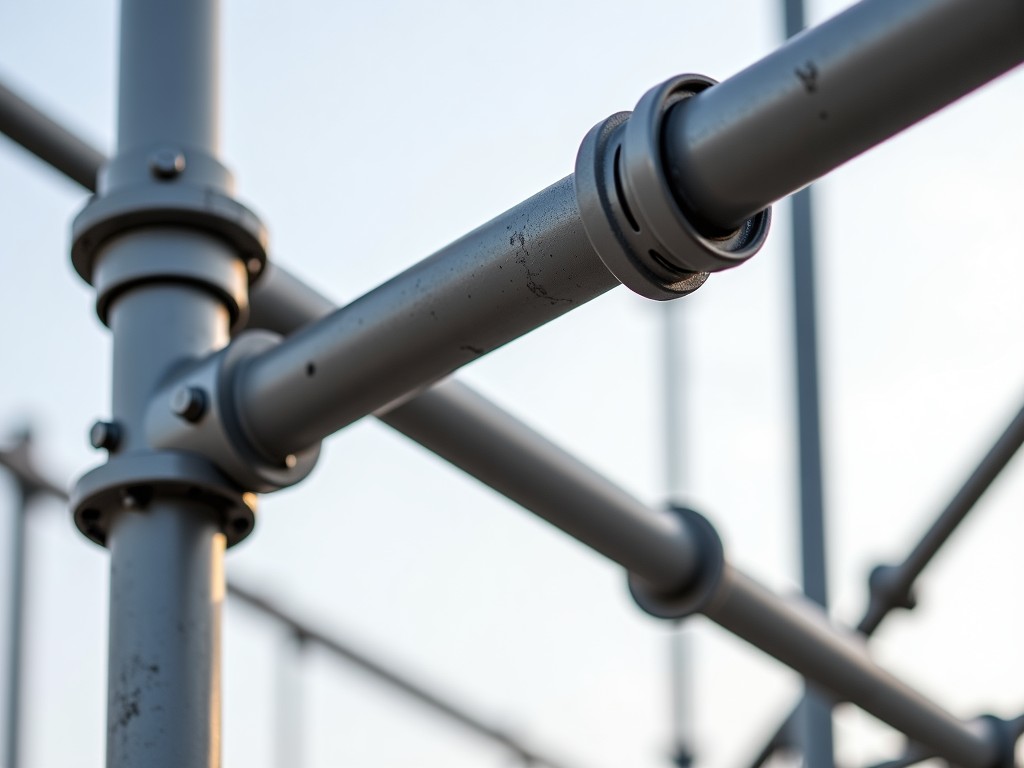
Drop lock pins are used in tube-and-coupler, frame, and system scaffolds where rapid assembly and disassembly are required. In facade scaffolding, they secure horizontal ledgers to vertical standards, preventing uplift caused by wind loads or dynamic loads from material handling. In shoring and falsework applications, pins lock adjustable base plates and screw jacks to maintain precise elevation under concrete pour loads. Accessory attachments—such as toe boards, guardrails, and ladder brackets—rely on drop lock pins to resist vibrational loosening. Their use reduces reliance on secondary fastening methods like bolts or wire ties, which are prone to human error or theft. Proper pin selection ensures compliance with local safety regulations governing scaffold integrity.
| Parameter | Typical Value | Notes |
|---|---|---|
| Shaft Diameter | 16mm, 20mm, 22mm | Matches scaffold tube ID |
| Overall Length | 75–120mm | Varies by coupler design |
| Shear Strength (Min) | 25 kN (16mm) | 4:1 safety factor applied |
| Surface Coating | Zinc plating (8µm min) | ASTM B633 Type II |
| Tether Material | UV-stabilized PP or SS cable | 150–300mm length |
| Spring Force | 8–12N | Axial detent engagement |
| Operating Temp. | -20°C to +80°C | With standard coatings |
While standard configurations cover most scaffold systems, non-standard geometries or performance requirements may necessitate engineering adjustments. Customization options include altered lug positioning to match proprietary coupler designs, extended shaft lengths for deep-reach applications, or reinforced shanks for high-vibration environments. Material substitutions—such as duplex stainless steel for offshore platforms or coated alloys for chemical plants—are available upon request. Tether length and attachment method (swivel loop, crimp sleeve, or molded tab) can be adapted to site-specific ergonomics or FMEA findings. Surface treatments like cadmium-free zinc-nickel plating or PVD coatings are offered for enhanced corrosion resistance in aggressive atmospheres. All custom variants require submission of scaffold manufacturer drawings or physical samples for validation.
Standard drop lock pins are typically stocked in common diameters and lengths, enabling shipment within 3–5 business days for domestic orders. Custom configurations require 2–4 weeks for tooling setup, sample approval, and production, depending on complexity and material availability. Minimum order quantities apply to non-standard runs, usually starting at 500 units for material changeovers and 1,000 for geometric modifications. Packaging options include bulk packs in corrugated cartons (100–200 units per box) or smaller quantities in resealable polybags with desiccant for moisture-sensitive environments. Export shipments comply with ISPM 15 wood packaging regulations and include corrosion-inhibiting vapor capsules in sealed containers. Technical datasheets, material certificates, and ISO 9001 conformity declarations are provided with each shipment.