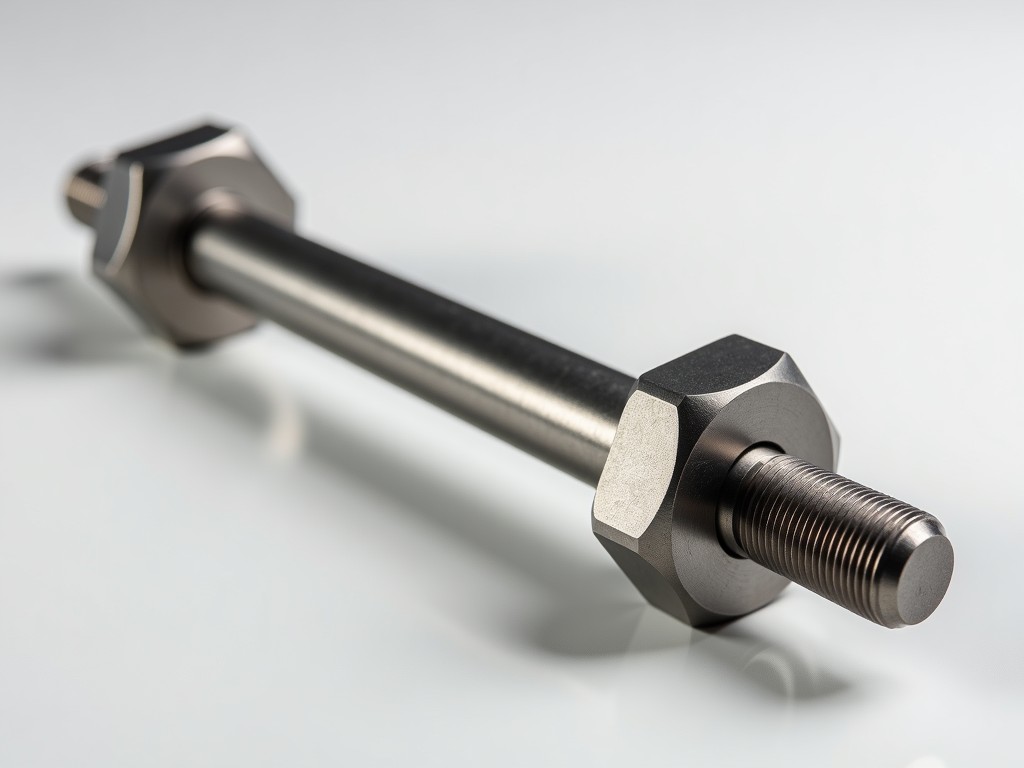
Formwork wedge pins are precision-engineered fastening components used to secure wedge-type scaffolding systems to formwork panels, ensuring structural stability during concrete pouring and curing. These pins transfer lateral and vertical loads between the scaffolding frame and the formwork facing, preventing movement that could compromise alignment or surface finish. Their design relies on a tapered wedge mechanism that locks into place when driven into the scaffolding node, creating a mechanical interference fit without requiring threads or welding. This allows for rapid assembly and disassembly while maintaining consistent clamping force across multiple reuse cycles. Proper selection of wedge pins directly impacts job site efficiency, safety compliance, and the quality of the final concrete surface.
The performance of formwork wedge pins is governed by material hardness, dimensional tolerance, and wedge angle geometry. Most pins are manufactured from medium-carbon steel (such as C45 or 1045) hardened to a surface Rockwell C value of 45–55 to resist deformation under repeated impact and shear loads. The tapered section typically features a 1:8 or 1:10 wedge ratio, ensuring self-locking behavior when driven into the mating scaffolding socket. Pin diameters commonly range from 16 mm to 22 mm, with lengths between 75 mm and 120 mm, selected based on the scaffolding system’s node thickness and required embedment depth. Dimensional tolerances are held to ±0.2 mm on critical diameters and ±0.5 mm on length to ensure consistent fit and prevent play or binding during installation.
Shear strength is a critical design parameter, with typical values ranging from 25 kN to 40 kN depending on diameter and material treatment. This capacity must exceed the expected lateral loads from formwork pressure, wind, and worker activity, which are calculated based on pour height, concrete density, and panel spacing. Unlike threaded fasteners, wedge pins do not rely on torque control; instead, their holding power comes from frictional resistance generated by the wedge action. Over time, surface wear on the taper can reduce holding capacity, making periodic inspection for galling, deformation, or cracking essential. Pins showing visible mushrooming, bending, or loss of taper should be removed from service to maintain system integrity.
Material choice balances toughness, wear resistance, and cost-effectiveness for high-cycle reuse environments. While C45 steel is common for standard applications, some manufacturers use alloy steels like 4140 or 4340 for enhanced core strength and fatigue resistance in high-rise or heavy-load scenarios. Surface treatments such as quenching and tempering improve through-hardness, while optional coatings like zinc plating or black oxide provide corrosion resistance in humid or coastal environments. However, coatings must be applied carefully to avoid altering wedge dimensions or reducing friction characteristics. In environments where abrasion from concrete fines is significant, some pins feature case-hardened surfaces to extend service life without compromising ductility in the core.
The core must retain sufficient ductility to absorb impact loads without brittle fracture, particularly during cold-weather installation. Impact toughness is often evaluated using Charpy V-notch tests, with minimum values of 27 J at -20°C considered acceptable for temperate climates. Manufacturers may specify different material grades based on regional climate conditions or project duration. For temporary works expected to exceed 50 reuse cycles, higher-alloy materials or specialized heat treatments may be justified to reduce lifecycle costs. All material selections should be traceable to mill certificates, and batch testing is recommended for critical infrastructure projects.
Formwork wedge pins are primarily used in modular frame scaffolding systems where horizontal and vertical members connect via wedge-locking nodes, such as in Cuplock, Ringlock, or proprietary frame systems. These pins pass through aligned holes in the scaffolding node and the formwork panel’s stiffener or walers, clamping the assembly securely. Their primary function is to resist outward bulging of the formwork under hydrostatic pressure from wet concrete, which can exceed 150 kPa for pours over 3 meters high. By maintaining tight contact between the formwork facing and the backing structure, wedge pins help prevent defects such as fins, bulges, or surface irregularities that require costly remediation.
In wall formwork, pins are typically installed at vertical intervals of 600 mm to 800 mm, aligned with walers or strongbacks to distribute load effectively. For column formwork, circular or polygonal configurations require pins spaced circumferentially to counteract radial pressure. In slab edge applications, wedge pins secure perimeter formwork to scaffolding brackets, preventing sag or deflection under concentrated loads. The speed of installation—often achievable with a standard hammer—makes wedge pins preferable to bolted connections in high-cycle construction environments where labor efficiency is critical. Their simplicity also reduces the risk of incorrect assembly, as there are no torque specifications or thread engagement concerns to verify.
| Parameter | Typical Range | Notes |
|---|---|---|
| Pin Diameter | 16 mm – 22 mm | Selected based on node hole size and load requirements |
| Overall Length | 75 mm – 120 mm | Depends on scaffolding thickness and embedment depth |
| Wedge Angle | 1:8 to 1:10 | Ensures self-locking under load |
| Shear Capacity | 25 kN – 40 kN | Varies with diameter and heat treatment |
| Surface Hardness (HRC) | 45 – 55 | Surface layer only; core remains tougher |
| Material | C45, 1045, 4140 (optional) | Higher alloys for extended life or harsh conditions |
Dimensional inspection is performed using calibrated gauges or coordinate measuring machines (CMM) to verify diameter, length, and taper angle. The taper is often checked using a plug gauge or optical comparator to ensure conformity to the 1:8 or 1:10 ratio. Surface defects such as cracks, laps, or seams are identified through magnetic particle inspection or visual examination under adequate lighting. Hardness testing is conducted on a sample basis using Rockwell C scale instruments, with readings taken at multiple points along the taper and shank to confirm consistent treatment. Batch samples may also undergo tensile or shear testing to validate mechanical properties against specifications.
For reusable components, wear limits are defined based on maximum allowable diameter reduction or taper deformation. A common criterion is to retire pins if the diameter has worn by more than 10% or if the taper shows visible rounding that could reduce locking effectiveness. Some manufacturers implement color-coding or batch marking to track usage cycles and facilitate inspection tracking. Documentation of test results, material certificates, and inspection records should be maintained for traceability, particularly for projects subject to audits or safety regulations. Suppliers should be able to provide conformity declarations upon request.
While standard dimensions cover most scaffolding systems, customization is available for non-standard node geometries or specialized formwork configurations. Length can be adjusted to accommodate thicker scaffolding sections or deeper embedment requirements in heavy-duty applications. Diameter options may be extended beyond the typical range for high-load scenarios, though this requires corresponding changes to the mating socket. Wedge angle can be modified for specific locking characteristics, although deviations from 1:8–1:10 may affect self-locking behavior and require engineering validation. Material upgrades to stainless steel or specialized alloys are possible for corrosive environments, though cost and availability may vary.
Additional features such as drilled holes for safety cotter pins, grooves for retaining clips, or flattened heads for hammer access can be incorporated based on user preference. Surface treatments like hot-dip galvanizing or fluoropolymer coatings are available for extreme corrosion resistance, though they must be evaluated for potential interference with wedge friction. Custom packaging—such as bulk bags, segmented trays, or labeled boxes by size—can be arranged to improve site logistics. All customizations should be reviewed for compatibility with existing scaffolding inventory and approved by a qualified engineer before deployment.